From ‘Essential Points on Clinical Patterns in the Shanghan Lun’. [刘渡舟-伤寒论临证指要]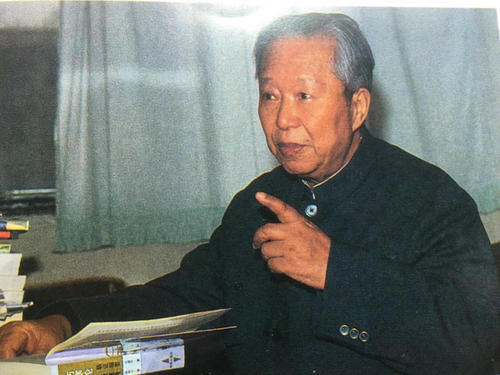
The following is a direct translation from the water chapter in Professor Liu’s brief but mighty text ‘Essential Points on Clinical Patterns in the Shanghan Lun’. My plan is to translate the entire chapter over the next little while as time permits, with the eventual goal of translating the entire text. This first section provides an overview of the concept and generation of water pathologies. Later sections will discuss the main presentations and treatments.
水证”,指的是因于水邪伤人所致的各种病证。
水是构成人体的重要物质。《佛经》言人禀四大而成形(即地、水、火、风),《内经》言人禀五行而生(即水、火、木、金、土)。但水能载舟,亦能覆舟,有二重性,有其用,亦有其害。今援引《伤寒论》和《金匮要略》两书中的有关水证之文,并参以己意,试论如下。
The term ‘water patterns’ 水证 refers to the various illnesses caused by damage due to pathogenic water.
Water is an essential substance in the human body. In the Buddhist scriptures, it is said that humans inherit the four elements to form their bodies (earth, water, fire, and wind), while in the Neijing, it says that humans inherit the five phases to live (water, fire, wood, metal, and earth). However, water, with its dual nature of being able to carry a boat or overturn it, can be both beneficial and harmful. I will now cite the relevant lines on water patterns from the Shanghan Lun and Jingui Yaolue as well as add personal insights, and analysis below.
水证的形成
水为有形之邪,其性寒冽,最伤阳气。水在人体的新陈代谢,正如《素问•经脉别论》所说:“饮人于胃,游溢精气,上输于脾,脾气散精,上归于肺,通调水道,下输膀胱,水精四布,五经并行,合于四时五脏阴阳,揆度以労常也”。
考本文之义,是指脏腑气化对水液的代谢而言。
Formation of Water Disorders
Water, as a tangible evil, has a cold and icy nature, which is extremely damaging to yang qi. In its discussion on water metabolism in the human body, the chapter on the ‘Differentiation of Channels’ in the Suwen says:
“Water is ingested into the stomach, circulates and overflows its essence and qi upward to the spleen, where the spleen’s qi disperses the essence, which ascends to the lungs, [which then] regulate the water pathways, descends [water] to the bladder, and distributes water essence through the four limbs and the five vessels simultaneously. [When] this process aligns with the interaction of the four seasons, the five organs, and yin-yang balance, the estimates and measures [text] regards this as normal.”
In the context of this text, it refers to the qi transformation of the organs in relation to the metabolism of water and fluids.
水先入于胃,藉胃气的腐熟之功,使水液游行于下,并摄取水之精气而上运于脾。夫脾与胃相表里,而又能为胃行其津液,故脾又将水精而上归于肺。归肺之水精,处于上升的阶段,故称“地气上为云”。水至高源,又借肺气的呼吸与“通调”,才能或散或降,而润泽周身。所谓“通调”指肺有通达,调节三焦水道的功能。使水津或向外宣发叫“浮”,或向内下降叫“沉”。若与上述的“地气上为云”对照,这个阶段则叫“天气下为雨”
Water first enters the stomach, undergoes the fermenting function of stomach qi, allowing the fluid to circulate downward and absorb the essence of water, which then rises to the spleen. The spleen and stomach are interiorly and exteriorly related, and the spleen assists the stomach in managing its fluids, whereas the spleen further transports the essence of water to the lungs. The water essence which has returned to the lungs in the ascending phase, is termed “earthly qi rising as clouds.” When the water reaches its highest source, it relies on the lung qi’s breathing and regulation as well as its “freeing and regulating” [effect] in order to scatter and descend, thereby moistening the entire body. The term “freeing and regulating” refers to the lung’s function in coordinating the water pathways of the Triple Burner. The movement of water-fluids towards the exterior through diffusion and effusion is referred to as “floating”, [while] downward descending internally is referred to as “sinking”. This process, compared to the earlier phrase “earthly qi rising as clouds,” is described as “heavenly qi descending as rain.”
凡下行之水,最后必归于肾,藉肾的气化功能,又使水之清者,上升于肺;水之浊者,则下输膀胱,或蓄或泻,以为生理之常。这就不难看出,水的代谢,是由胃、脾、肺、肾、三焦五经之气;经过升、降、浮、沉的生理运动,方成其“水精四布,五经并行”的新陈代谢作用. 如果“五经”之气化失调,则使司水之功能受到障碍,尤以阳气不能化阴,气机不能行水之故,则使水的代谢,不能顺利进行,因而构成气寒水凝,或流溢失序,或上冒清阳,水之气为寒,寒阴邪必犯阳气,因此,水寒浩淼难制,在表在里,沿三焦以为害,于是各种水证逐次发生。
All descending water ultimately returns to the kidneys. Through the kidney’s transformative function, clear water ascends to the lungs, and turbid water descends to the bladder, either accumulating or releasing, maintaining a physiological balance. It is evident that water metabolism involves the qi of the stomach, spleen, lungs, kidneys, and the Triple Burner, undergoing physiological movements of ascending, descending, floating, and sinking, resulting in the dynamic metabolic functions of “distributing water essence through the four limbs and the five vessels simultaneously.”
If there is an imbalance in the qi transformation of the “five vessels,” hindering the water regulatory functions, especially the inability of yang qi to transform yin, and the inability of the qi mechanism to manage water, water metabolism cannot proceed smoothly. This disruption leads to the formation of cold-water congealment, chaotic overflow, or the upward surge of clear yang. As the qi of water is cold, this invariably invades yang qi. As a result, this vast cold water is difficult to control, causing harm both externally and internally along the Triple Burner, leading to the successive occurrence of various water disorders.
“水肿”,肿之由于水气者。《灵枢•水胀篇》曰:“水始起也。目窠上微肿,如新卧起之状,其颈脉动时咳,阴股间寒,足胫肿,腹乃大,其水已成矣。以手按其腹,随手而起,如裹水之状,此其候也”。
《素间•气厥论》曰:“肺移寒于肾,为涌水。涌水者,按腹不坚,水气客于大肠,疾行则鸣濯濯,如囊裹浆,水之病也”。
Water swelling/edema [水肿] is a condition caused by water qi. The Lingshu, Water distention chapter states:
“[When] water begins to rise the eye sockets are slightly swollen, like the appearance upon waking. The neck pulses move with coughing at times. [When] there is cold between the yin thighs [inside of the thighs], swelling of the legs and ankles, and the abdomen becomes large, [this[ indicates that water has already accumulated. When pressing the abdomen with the hands, it rises along with the hands, resembling a water-filled state. These are its signs.”
The Suwen, Discourse on qi desertion says:
“If the lungs transmit cold to the kidneys, it results in surging water. In surging water, the abdomen is not firm when pressed. Water qi has settled in the large intestine. [If] the patient moves quickly, there are gurgling sounds, similar to a bag holding fluids. This is a water disease.”
《水热穴论》“肾何以能聚水而生病?肾者,胃之关也,关门不利,故聚水而从其类也。上下溢于皮肤,故为附肿。胕肿者,聚水而生病也”。
水肿为脾、肺、肾三脏之病变。盖水为至阴,其本在肾;水化于气,其标在肺;水惟畏土,其制在脾。若肺虚则气不化精而化水;脾虚则土不制水而反乘,肾虚则水无所主而妄行。水不归经,则逆而上泛,故传人于脾,则肌肉浮肿;传入于肺,则气息喘急。分而言之,三脏各有所主;合而言之,则总由火气衰微,肾中之气不能化,故水道不通,溢而为肿.
The Suwen, Discourse on Acupoints to treat Water and Heat says:
“The kidneys, how can they generate disease by gathering water? The kidneys are the gate of the stomach. If the gate is not [opening] freely, water accumulates and follows its kind. Above and below it overflows to the skin, causing attached swelling. Swelling is the result of water accumulation.”
Edema is a pathological change involving the spleen, lungs, and kidneys. Since water is extreme yin, its root is in the kidneys; water transforms into qi, and its manifestation is in the lungs; water fears earth, and its control is in the spleen. If the lungs are deficient, qi cannot transform into essence but transforms into water. If the spleen is deficient, earth cannot control water and, instead, is overcome by it. If the kidneys are deficient, water has no master and flows recklessly. When water does not follow its channel, it runs counterflow and floods upwards. When it enters the spleen, muscles become swollen; when it enters the lungs, breathing becomes rapid. In summary, each organ has its respective role, but it is ultimately due to the decline of fire qi, resulting in the inability of kidney qi to transform, leading to obstruction of the waterways, overflow, and swelling.
 Eran Even, Ph.D., Dr. TCM.