On the Therapeutic Principles and Clinical Applications of Wumei Wan

Gao Tisan 高体三
Department of Formula Studies, Henan College of Chinese Medicine

Henan Chinese Medicine Journal, December 1978

Translated by Eran Even

In recent years, increasing numbers of physicians have used Wumei Wan from the Shanghan Lun to treat biliary ascariasis, achieving remarkable clinical results. Consequently, many people have come to regard Wumei Wan simply as the representative formula for expelling parasites. In reality, expelling parasites is only one of its functions and does not fully reflect the therapeutic capabilities of the formula.

In order to inherit, develop, and further advance the medical heritage of our country, thereby achieving the goal of “making the ancient serve the present,” I believe it is necessary to further investigate the therapeutic principles and clinical applications of Wumei Wan. In my opinion, such an investigation must begin with the following points.

I. The Physiology and Pathology of Jueyin Must Be Understood Through the Relationships of the Three Yin Channels of the Foot

Both traditional medical theory and clinical practice fully demonstrate the intimate relationship among the three yin channels of the foot. Concepts such as “Yi and Gui share the same source” (乙癸同源), “Spleen and Kidney Yang deficiency,” and the statement, “When disease is seen in the Liver, one knows that it will transmit to the Spleen; therefore, one should first strengthen the Spleen,” all describe the physiological and pathological relationships among these three systems.

The three yin channels of the foot refer to the Foot Jueyin Liver, Foot Shaoyin Kidney, and Foot Taiyin Spleen. Wumei Wan is one of the representative formulas of the Jueyin Liver channel. To fully understand its composition, therapeutic principles, and range of clinical applications, one must study it through the interrelationship of the Liver, Spleen, and Kidney. Only then can the full therapeutic significance of Wumei Wan be appreciated.

The opening line of the Jueyin chapter of the Shanghan Lun states:

When disease is in Jueyin, there is wasting thirst, Qi surges upward to strike the Heart, heat and pain in the Heart, hunger without desire to eat; if food is taken, vomiting of roundworms occurs; after purgation, diarrhea continues unabated.

Judging from the patterns described in this passage, it clearly encompasses more than a disorder confined solely to the Liver channel. It also includes the persistent diarrhea resulting from Spleen and Kidney deficiency cold, together with wasting thirst arising from upward blazing heat. Only by considering the interrelationship of the Liver, Spleen, and Kidney can one arrive at a comprehensive understanding of Wumei Wan.

The Foot Jueyin Liver governs wind and wood and occupies the position between water and fire. Water is the mother of the Liver, while fire is its child. Liver wood arises from Kidney water and gives rise to Heart fire, thereby assisting water in ascending to nourish fire.

The Foot Shaoyin Kidney transforms Gui water upward to communicate with Heart fire. Under normal physiological conditions, Kidney water ascends to unite with fire, while Heart fire descends to unite with water. Water and fire mutually support one another, Yin and Yang are rooted in each other, and the two qi harmonize. Consequently, fire does not flare upward and water does not descend into coldness. This is the physiological state of health.

The mutual communication of water and fire, however, depends to a certain extent upon the Liver’s ability to assist the ascent of water. If Liver wood fails to assist water in ascending to nourish fire, the characteristic Jueyin pattern of upper heat and lower cold develops.

The Liver belongs to wood. Whether cold or heat predominates depends upon the relative strength of opposing influences. When the influence of the child predominates, heat develops; when the influence of the mother predominates, cold develops. heat represents the potential for recovery, whereas reversal cold indicates the approach of serious disease. Between these two extremes, the strength or weakness of the Central Qi is the decisive factor.

When the Central Qi is abundant, Yang is restored. When the Central Qi declines, cold reversal develops.

The Central Qi belongs to Earth.

The Foot Taiyin Spleen governs Damp Earth. When healthy, no pathology arises, but once diseased it is characterized by Dampness and deficiency. Under normal circumstances, the Spleen not only transforms food and fluids and generates Qi and Blood, but also nourishes Liver wood and restrains Kidney water.

When Taiyin deficiency develops, however, the Spleen is no longer able to nourish wood or control water. Instead, water overacts upon Earth while wood is deprived of nourishment. Therefore, deficiency cold patterns of both the Liver and Kidney are closely related to deficiency of the Taiyin Central Earth.

Although Wumei Wan was established for disorders of the Jueyin Liver channel, the inclusion of Renshen, Fuzi, and Ganjiang is intended to supplement Spleen deficiency and warm Kidney Yang, thereby harmonizing the water and Earth of the Spleen and Kidney so that they may nourish and support the growth of Liver wood.

From this it is evident that the Wumei Wan pattern is by no means confined solely to the Liver channel. Rather, it bears a very close relationship to Taiyin Spleen deficiency and Shaoyin Kidney cold.

As the saying goes:

“The Liver belongs to wood. It is the residence of the generating Qi and the storehouse of Blood. Its nature is firm yet it delights in free coursing. It must be nourished by water and supported by Earth before it can fulfill its function of growth and development.”

This statement likewise illustrates the intimate relationship among the Liver, Spleen, and Kidney. Accordingly, the Wumei Wan pattern of the Jueyin channel necessarily involves both the pathology and therapeutic methods of the Taiyin and Shaoyin systems.

II. The Therapeutic Principles of Wumei Wan Must Be Understood Through the Physiology and Pathology of the Foot Jueyin Liver

The Liver governs ascending movement and prefers free coursing. It depends upon the supportive functions of the Spleen and Kidney so that it has an adequate source of nourishment, allowing it to flourish and grow freely with wood in harmony and wind remaining calm. The cold pattern of the Jueyin zang is closely related to the inability of the deficient Spleen and Kidney to nourish and support it.

Accordingly, Wumei is used as the chief herb because of its sour and warm nature, which enters the Liver. It is combined with the sweet, acrid, and warm Guizhi and Danggui to nourish the Blood and soothe the Liver. Renshen, which enters the Spleen, supplements the Central Qi and strengthens Spleen Earth. Fuzi, Ganjiang, Xixin, and Huajiao, all intensely warming herbs, warm Kidney Yang and dispel cold of the zang organs.

Since the Liver is unable to assist water in ascending to nourish fire, the pattern manifests as upper heat with wasting thirst. Therefore, Huanglian and Huangbo are added as bitter and cold medicinals to drain fire and treat the heat above.

This demonstrates that Wumei Wan primarily supplements the Liver and nourishes the Blood, secondarily warms the Spleen and Kidney, and additionally clears the upper heat. As for the formula’s ability to expel parasites, this will be discussed below.

III. The Clinical Applications of Wumei Wan Must Be Understood Through Its Therapeutic Principles

Supplementing the Liver, nourishing the Blood, expelling parasites, strengthening the Spleen, warming the Kidney, and clearing heat above constitute the fundamental therapeutic principles underlying Wumei Wan.

Because Liver disease readily overacts on the Spleen, Zhang Zhongjing stated in the Jingui Yaolue:

“When disease is seen in the Liver, know that it will transmit to the Spleen; therefore, one should first strengthen the Spleen.”

This makes it clear that in the cold pattern of the Jueyin zang, Wumei Wan must include medicinals that supplement the Center and strengthen the Earth.

Likewise, in discussing the treatment of Shaoyin disease, Zhang Zhongjing wrote in the Shanghan Lun:

“When Shaoyin receives Yang, it is favorable.”

This further illustrates that when Kidney water is cold, it is unable to nourish Liver wood and will inevitably overact upon Spleen Earth, leaving Liver wood without a source of nourishment. Therefore, in treating the cold pattern of the Jueyin zang, Wumei Wan necessarily includes herbs that warm the Kidney.

The Liver normally assists water in ascending to nourish above. When disease prevents this function, upper heat develops; consequently, Wumei Wan also contains herbs that clear the upper region.

Because cold within the zang organs is unfavorable for the survival of roundworms, and because roundworms prefer warmth, they flee the cold below and move upward toward the heat above, producing vomiting of roundworms. Although Wumei Wan contains no typical vermicidal herbs, an examination of the flavors of its ingredients reveals a definite antiparasitic effect.

Wumei is sour, and sourness restrains the worms.

Xixin and Huajiao are acrid, and acrid herbs drive out the worms.

Huanglian and Huangbo are bitter, and bitterness directs the worms downward.

For this reason, Wumei Wan has demonstrated remarkable efficacy in the treatment of biliary ascariasis.

Nevertheless, one must not overemphasize its antiparasitic action while overlooking its much broader functions of supplementing the Liver and nourishing the Blood, strengthening the Spleen, and warming the Kidney.

Accordingly, in addition to treating ascariasis, Wumei Wan may be modified for disorders arising from deficiency cold of the Liver, Spleen, and Kidney, including cold-type dysmenorrhea, deficiency-cold abdominal pain, chronic adnexitis, leukorrhea due to deficiency cold, chronic enteritis, chronic colitis, chronic dysentery, deficiency-cold stomach pain, chronic prostatitis, impotence, enuresis, sciatica, chronic trigeminal neuralgia, rectal prolapse, uterine prolapse, and similar disorders. Clinical experience has shown that the formula is frequently effective in such conditions.

This demonstrates that Wumei Wan is not merely an excellent prescription for biliary ascariasis, but an important formula for a wide range of chronic disorders resulting from deficiency cold of the Liver, Spleen, and Kidney.

Conclusion

In summary, the key to understanding both the therapeutic principles and the indications of Wumei Wan lies in approaching it through the relationship of the three yin channels of the foot. Once the physiology and pathology of the Liver, Spleen, and Kidney are understood, the rationale underlying the composition of Wumei Wan becomes clear.

Only then can one avoid the mistaken belief that Wumei Wan is merely a formula for expelling parasites while neglecting its powerful actions of supplementing the Liver, nourishing the Blood, strengthening the Spleen, and warming the Kidney.

In short, Wumei Wan was designed for roundworm disorders occurring in the presence of deficiency cold of the Liver, Spleen, and Kidney, rather than for all cases of roundworm disease regardless of constitutional state.

Therefore, in addition to treating zang cold with roundworm reversal, it may be modified for many chronic disorders arising from deficiency cold of the three yin systems. When upper heat is absent, Huanglian and Huangbo may be omitted.

Because it simultaneously employs both warming and cooling medicinals, Wumei Wan is particularly effective for patterns of upper heat and lower cold. Its clinical applications are broad and deserve continued attention and investigation.

Owing to the limitations of my knowledge and clinical experience, my understanding is undoubtedly incomplete. I respectfully welcome correction from my colleagues.

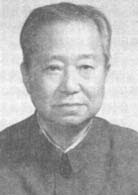
Gao Tisan 高体三 (November 1920–2011) was a renowned Chinese medicine physician, educator, and scholar from Yuanchang Village, Qinghua Township, Wolong District, Nanyang County, Henan Province (now part of Dengzhou City). A member of the Chinese Communist Party, he served as Professor and Chief Physician at Henan College of Chinese Medicine. He was a director of the Henan Branch of the China Association of Traditional Chinese Medicine, a member and consultant for the editorial committee of the Chinese medicine textbook series for the five central-southern provinces, a member of the Fifth and Sixth Henan Provincial Committees of the Chinese People’s Political Consultative Conference (CPPCC), and was recognized by the Ministry of Health, the Ministry of Personnel, and the State Administration of Traditional Chinese Medicine as one of China’s nationally renowned senior Chinese medicine experts and clinical mentors. He is regarded as the founding figure of the Formula Studies (Fangji) discipline at Henan College of Chinese Medicine.

Gao inherited his family’s medical tradition from an early age, studying under his father. In 1943, he established his own medical practice in Deng County. In 1958, he was recommended for advanced study at the Henan Provincial School of Chinese Medicine, where he remained after graduation in 1959 to join the faculty, serving as Head of the Department (later Division) of Formula Studies. He retired in 1990 but was subsequently reappointed to continue clinical practice at the National Medicine Clinic of the Third Affiliated Hospital of Henan College of Chinese Medicine.

Over more than sixty years of clinical practice, Gao developed the academic theory of “Water Warm, Earth Harmonized, Wood Flourishes” (水暖土和木达). He emphasized pattern differentiation based on the three yin channels of the foot (Taiyin, Shaoyin, and Jueyin) and was especially skilled in the use of classical formulas (Jingfang) and warming medicinals for the treatment of difficult and complex disorders.

He authored numerous textbooks and monographs, including Lecture Notes on Chinese Medical Formula Studies, Lecture Notes on Common Diseases in Chinese Medicine, Clinical Chinese Materia Medica, Treatment Methods and Formulas, and A New Interpretation of the Tangtou Gejue (Songs of Decoctions), the latter of which has been reprinted multiple times. His development of the Weijinkang Health Beverage (维金康保健饮料) received the Second Prize for Scientific and Technological Progress from the Henan Provincial Department of Light Industry in 1993. In 2008, he was awarded the Lifetime Achievement Award for Traditional Chinese Medicine in Henan Province by the Henan Provincial Administration of Traditional Chinese Medicine. His academic theories and clinical experience were also incorporated into China’s Tenth and Eleventh Five-Year National Key Science and Technology Support Programs.

Liu Duzhou on Water Patterns [水证论] – Part 3

二、皮水

皮水是由于脾虚,不能运化水湿,水湿阻塞中焦,故腹中胀满;肺气虚则不能通调三焦,以致水湿停留,故下肢踝部浮肿,按之没指,为水性润下之徵。父言皮水之脉浮与风水同。但无恶风身痛等证为异。

2. Skin Water

Skin water is caused by spleen deficiency, which is unable to transport and transform water dampness. The blocked water dampness obstructs the middle burner, resulting in abdominal distension. If lung qi is deficient it is unable to free and regulate the triple burner, causing water dampness to accumulate. Consequently, there is swelling in the ankles and the lower limbs, with the characteristic of indentation when pressed, indicating a manifestation of dampness with a watery nature. The older generations say that the pulse of skin water is floating and shares similarities with wind-dampness, but it differs in the absence of symptoms such as aversion to wind and body pain.

皮水治法:皮水脉浮为水在表,因势利导而发其汗,可用越婵加术汤。如果皮水为病,四肢肿;水气在皮肤中,四肢聂聂动者,可用防已茯苓汤主之(防己三两,黄芪三两,桂枝三两,茯苓六两,甘草二两。以水六升,煮取二升,分温三服)。

Skin Water Treatment: In skin water, the pulse is floating, indicating that there is water in the surface, and in order to help it along its course, one should promote sweating. This can be achieved with the use of Yuèbì Jiā Zhú Tāng (越婵加术汤).  In skin water disease, there is swelling in the limbs, and slight movements of the limbs, which indicates that water qi is in the skin, and one can use Fángjǐ Fúlíng Tāng (防已茯苓汤), [Fángjǐ 3 liang, Huángqí 3 liang, Guìzhī 3 liang, Fúlíng 6 liang, Gāncǎo 2 liang. Boil in six sheng of water, reduce to two sheng, and take warm in three doses].

尤怡认为“皮中水气,浸淫四末,而壅遏卫气,气水相逐,则四肢聂聂动也。防己,茯苓善驱水气,桂枝得茯苓,则不发表而反行水,且合黄芪、甘草助表中之气,以行防己、茯苓之力也”。

According to Yóuyí, “[When there is] water qi in the skin, it seeps and spreads to the four limbs, and congests and obstructs the defense qi, leading to the mutual chasing of qi and water, [and thus] the limbs exhibit slight movements. Fángjǐ and Fúlíng are good for expelling water qi. Guì Zhī, enhances the effect of Fúlíng, and thus avoids effusing the surface but instead moves water. Moreover, the combination of Huángqí and Gāncǎo assists the qi in the surface to support the actions of Fángjǐ and Fúlíng.”

三、正水

正水是由于脾肾阳虚,不能气化以蒸发水湿之邪,以致水停于里而不行,故腹满而脉沉迟。水多则外溢而身体浮肿;水气上迫于肺因而作喘;若水凌于心阳,则身重短气不得卧;火不温肾,水寒下控其人则阴肿而烦躁不安;若水邪侵肝,气机被阻,故胁下与腹作痛。肝之疏泄功能乖戾,其气时而上冲,时而下降,水液随气上升,则时时津液微生; 水液随肝气下降,则小便续通;肝病犯脾,不能运化水湿,所以腹部胀大;如果水邪侵脾,脾失转输之常,不能升清降浊,水湿聚中,流于四肢,故腹胀大,四肢苦重难于活动。

3. Regular Water 

Regular water is due to the deficiency of spleen and kidney yang, which leads to the inability of qi transformation to evaporate pathogenic water dampness, to the extent where water settles internally and does not move, resulting in abdominal fullness and a deep-slow pulse. Copious water overflows into the surface resulting in generalized body swelling; Water qi rises upwards and distresses the lungs causing panting; If water intimidates the heart yang, it will result in generalized heaviness, shortness of breath, and an inability to sleep. [If] fire fails to warm the kidneys, water cold controls the lower [body] resulting in genital swelling as well as vexation, agitation, and disquietude; If pathogenic water invades the liver, the qi mechanism becomes obstructed, resulting in sub-costal and abdominal pain.  

肝之疏泄功能乖戾,其气时而上冲,时而下降,水液随气上升,则时时津液微生; 水液随肝气下降,则小便续通;肝病犯脾,不能运化水湿,所以腹部胀大;如果水邪侵脾,脾失转输之常,不能升清降浊,水湿聚中,流于四肢,故腹胀大,四肢苦重难于活动。

[If] the liver’s free coursing function is disrupted, the qi will occasionally surge upwards as well as occasionally descend. Fluids will follow the qi and ascend, resulting in the intermittent engendering of fluids. Fluids will [also] follow liver qi and descend, resulting in continuous and free urination.  [When] the liver invades the spleen, [the spleen] will be unable to move and transform water damp, resulting in abdominal distention and enlargement. If pathogenic water invades the spleen, the spleen [function] of transformation will be abnormal, and it will be unable to upbear the clear and downbear the turbid. Water damp will accumulate in the centre, flow into the four limbs and lead to abdominal distention and enlargement, and the four limbs will suffer from heaviness and have difficulty moving. 

脾为水困,津液不生,气亦不足,故见口渴、少气。脾不散精于肺,肺不通调水道以行决渎,故小便难;如果水寒之邪盛于下,肾阳衰弱,不能温化水气,水气增多,故腹大,脐肿,腰痛,不得溺也。肾阳不温阳气不充,故阴下湿如牛鼻上汗,其足逆冷;阳气不华于上,其面反瘦。

The spleen, when encumbered by water, fails to generate bodily fluids, resulting in insufficient qi, which manifests with thirst and shortness of breath. [When] the spleen fails to distribute essence to the lungs, the lungs are unable to regulate the water ways in order to move and keep the sluices clear, which results in difficult urination. If pathogenic cold water is exuberant in the lower [body], kidney yang [becomes] depleted and is unable to warm and transform water qi. Water qi will increase, resulting in an enlarged abdomen, swelling of the umbilicus, lumbar pain, and an inability to urinate. [When] kidney yang fails to warm and yang qi is insufficient, this leads to the descent of damp with [conditions] such as ox’s nose, upper sweating and counterflow cold. [When] yang qi fails to [supply] luster to the upper, the face becomes thin. 

五脏水邪,因其生理各异,故病理与证候而不相同。然而五脏水邪病,其中肺、脾、肾三脏阳气之虚衰,不能行气化津而使水邪内停则是它们的共性。因此,在治疗申总以通阳化气,消阴利水之法实为上策。

The pathologies of pathogenic water in the five viscera differ due to their distinct physiological functions, resulting in varying patterns and symptoms. However, a commonality among diseases involving pathogenic water in the lungs, spleen, and kidneys is the deficiency and debilitation of yang qi in these organs. This deficiency hinders the proper movement of qi and transformation of fluids, which leads to the internal collection of water. Therefore, in the treatment of these conditions, prioritizing methods that free yang, transform qi, disperse yin, and disinhibit water are considered the optimal strategies.

后世医家,将水分为阴、阳两类,阳水为热为实,治以驱邪为主。如水气逼肺而作喘,通调不利而小便短涩,治用苏葶丸(苏子、葶苈子)或沉香琥珀丸(苦葶苈子、郁李仁、防己、沉香、陈皮、琥珀、杏仁、苏子、赤茯苓、泽泻、麝香)。若通身水肿,二便不利,脉来浮滑,其人体力不衰者,可用疏凿饮子,外散内利(椒目、赤小豆、槟榔、商陆、木通、羌活、秦艽、大腹皮、茯苓皮、泽泻);如果形气稍差,或年老体弱之人,则用外散内利两解之法,如茯苓导水汤最为理想(泽泻、茯苓、桑皮、木香、木瓜、砂仁、陈皮、白术、苏叶、大腹皮、麦冬、槟榔)。

Later generations of medical practitioners, categorized water into yin and yang. Yang water is considered hot and excess, and the primary focus in treatment is to expel pathogenic factors. For instance, if water and qi oppress the lungs causing wheezing or inhibit smooth flow leading to short and hesitant urination, treatments such as Sūtíng Wán (zi su zi and ting li zi) or Chénxiāng Hǔpò Wán (ku ting li zi, yu li ren, fang ji, chen xiang, chen pi, hu po, xing ren, su zi, chi fu ling, ze xie, and she xiang) are recommended. If there is generalized edema, inhibited urination and bowel movements, with a floating and slippery pulse, and the patient is strong, then Shūzáo Yǐnzǐ, a method that scatters the exterior and disinhibits the interior (containing jiao mu, chi xiao dou, bing lang, shang lu, mu tong, qiang huo, qin jiao, da fu pi, fu ling pi, ze xie) may be used. If the person’s constitution is slightly weak or they are elderly and frail, a combination of a surface scattering and internal disinhibition method may be used to resolve [the condition]. The ideal choice in such cases is Fúlíng Dǎoshuǐ Tāng (ze xie, fu ling, sang pi, mu xiang, mu gua, sha ren, chen pi, bai zhu, su ye, da fu pi, mai dong, bing lang).

阴水为寒为虚,如果大便溏薄,畏寒气怯、脉软肢冷者,宜用温补之法,如补中益气汤(人参、黄芪、炙甘草、白术、陈皮、升麻、柴胡,当归、生姜、大枣)。或用实脾饮、(白术、茯苓、炙草,木香,木瓜、附子、槟榔、草果、干姜):如果脉沉面黧,小便不利心悸、头眩、背恶寒者,可用真武汤(附子、白本、生姜、白芍、茯苓)。如果尺脉沉迟,或见细小,小便不利,而又腰酸脚弱者,可用金匮肾气丸缓治为上。

Yin water is considered cold and deficient. If there are thin sloppy stools, a fear of  cold, qi timidity, and a soft pulse with cold limbs, a warming and supplementing method is appropriate. For instance, Bǔzhōng Yìqì Tāng (ren shen, huang qi, zhi gan cao, bai zhu, chen pi, sheng ma, chai hu, dang gui, sheng jiang, da zao) can be used. Alternatively, Shípí Yǐn (bai zhu, fu ling, zhi [gan] cao, mu xiang, mu gua, fu zi, bing lang, cao guo, gan jiang) may be used. If the pulse is deep, complexion yellowish-black, [and there is] inhibited urination, palpitations, dizziness, and a cold back, Zhēnwǔ Tāng (fu zi, bai shao, sheng jiang, bai shao, fu ling) is recommended. If the chǐ pulse is deep and slow, or thin and small, with inhibited urination, accompanied by lower back pain and weak legs, Jīnguì Shènqì Wán is valued above else. 

清人吳谦有外治之法,其中的“贴脐琥珀丹”颇具巧思,用之多验(巴豆去油12.克,轻粉6克,硫黄 3克,研匀成饼。先用新棉一片布脐上,内饼,外用帛缚,时许自然泻下恶水,待下三五次后,去掉药饼,以粥补住。日久形羸,隔一日取一次,一饼可救三五人)。

The Qing Dynasty physician, Wúqiān had [several] external treatment methods. Among them, his “Tiēqí Hǔpò Dān” was particularly ingenious, and its use was highly effective. To prepare, take 12 grams of Bādòu (with oil removed), 6 grams of Qīngfěn, and 3 grams of Liúhuáng. Grind evenly and form into cakes. First, a fresh piece of cotton is placed over the navel, the cake placed inside, and secured with silk. Over some time, malign water will naturally drain. After three to five drainages, remove the medicinal cake and replace it with a gruel dressing. Over time, the appearance will fade, and the treatment is administered once every other day. One cake can benefit three to five individuals.

吴谦认为肿胀之病,“属虚寒者,自宜投诸温补之药,而用之俱无效验者,虚中必有实邪也。欲投诸攻下之药而又难堪,然不攻之终无法也。须行九补一攻之法,是用补养之药九日,俟其有可攻之机,而一日用泻下之药攻之。然攻药亦须初起少少与之,不胜病渐加之,必审其药与元气相当,逐邪而不伤正始为法也。其后或补七日、攻一日;补五日、攻一日;补三日、攻一日。缓缓求之,以愈为度”。

Wúqiān believed that for swelling diseases, if they are attributed to deficiency and cold, the use of warm-supplementing medicinals alone may prove ineffective. He theorized that if there is no improvement with the sole use of supplementing medicinals, there must be excess pathogens within deficiency.  While wanting to resort to offensive purgative [medicinals] is challenging, avoiding their use altogether is also not a feasible solution. He proposed a method of [using] supplementation for nine days followed by one purging day. This involves administering supplementing medicinals for nine days, and afterwards attacking the mechanism, by using draining medicinals for one day. The purgative medicinals should be administered gradually, starting with a small amount and increasing it as the disease progresses. It is essential to ensure that the medicine matches the [patients] original qi, expelling the pathogenic factor without damaging the right [qi]. Afterwards [one] may possibly supplement for seven days, attack for one; supplement for five days, attack for one; and supplement for three days, attack for one. Gradually seek it out, using the cure [as] the measure.  

余在临床,治此病颇能体会吴氏用心之苦,因而勤求博采,对肿胀大症,如用补药无效而又不能峻攻时,受用自制方,名曰“白玉消胀汤”甚佳(茯苓30克,玉米须30克,白茅根30克,抽葫芦12克,冬瓜皮30克,大腹皮10克,益母草15克,车前草15克,土元10克,茜草10克,川棟子10克,延胡10克,紫菀10克,枳壳10克)。

此方通气行水,活血助疏,上利肺气以行治节,下开水府而畅三焦。虽亦有逐邪之力,然无伤正损人之弊,施诸补药以后而肿胀不减者用之,每获良效。

In the clinical setting, I deeply empathize with the challenges faced by Dr. Wú [Qiān] in treating this disease. Therefore, I have been diligent in seeking knowledge and when dealing with conditions of significant swelling, especially when supplementing medicinals prove ineffective and drastic attacking methods are not suitable, I have found great success in using a personal formula I’ve named “Báiyù Xiāozhàng Tāng [White Jade Distention Dispersing Decoction]”, which consists of fu ling 30g, yu mi xu 30g, bai mao gen 30g, chou hu lu 12g, dong gua pi 30g, da fu pi 10g, yi mu cao 15g, che qian zi 15g, tu yuan 10g, qian cao 10g, chuan lian zi 10g, yan hu suo 10g, zi wan 10g, zhi qiao 10g.

This formula frees qi, moves water, quickens the blood, and assists coursing. In the upper [body] it disinhibits lung qi in order to conduct management and regulation, and in the lower [body] it opens the water mansion and frees the triple burner.  Although it possesses the ability to expel pathogenic factors, it does so without damaging the right [qi] and causing harm to the patient. It is particularly effective when used after supplementing medicinals have failed to reduce swelling, consistently yielding positive results.

水肿是一个病状,有许多原因可以引发,如肝硬化腹水,肾炎病的水肿,心脏病水肿,营养不良水肿等,则实非本文所能全部概括。

Edema [water swelling] is a medical condition with numerous potential causes, such as ascites due to liver cirrhosis, edema due to nephritis, cardiac edema related to heart disease, malnutrition-induced edema, etc. It is beyond the scope of this article to comprehensively cover all possible causes of edema.

四、石水

石水是由于肾阳虚衰,不能温化水湿,水气不能从小便排出体外,而下结于少腹,故腹胀如石坚硬。病在下焦,属于水气内结,切其脉沉而不起。水结于下,未及于肺,所以其人不喘。水气在肾而凌于肝,可见胁下胀满疼痛等证。

4. Stone Water

Stone-water is a condition resulting from the deficiency and debilitation of kidney yang, leading to the inability of warming and transforming water dampness. [Therefore] water qi is unable to be expelled from the body through the urine, causing binding in the lower abdomen, which manifests with abdominal distention, which is hard and rigid resembling a stone. The pathology is focused in the lower burner, and characterized by the internal binding of water qi, with a pulse that is deep and fails to rise. As the water binds in the lower region and has not reached the lungs, individuals with this condition do not exhibit wheezing. When water qi is in the kidneys and affects the liver, symptoms such as fullness, distension, and pain below the ribs may be observed.

总而言之,四水之中,风水与皮水相类属表;正水与石水相类属里;但风水恶风,皮水不恶风;正水自喘,石水不自喘为异,临证之时须加以鉴别。

石水的治疗,可选用温补脾肾,佐以舒肝通络之法,如真武汤加桂枝,川棟子、元胡、石楠藤,小茴香等药物。

In summary, among the four types of water [conditions], wind-water and skin-water are associated with the exterior, while regular-water and stone-water are associated with the interior. However, wind-water is associated with aversion to wind, while skin-water does not have this aversion. Regular-water may cause wheezing on its own, while stone-water does not. It is essential to differentiate between them in clinical practice. 

For the treatment of stone-water, [one] may first use warming and supplementing medicinals for the spleen and kidneys, along with assistant medicinals to course the liver and free the network vessels. Examples include Zhēnwǔ Tāng with added gui zhi, chuan lian zi, yuan hu, shi nan teng, as well as aromatic herbs like xiao hui xiang.