Hu Xi-Shus’ approach in the treatment of coughs

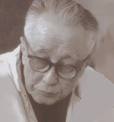
According to Dr. Hu Xi-Shu, the main cause of coughing is the invasion of phlegm-rheum, which should be treated by warm transformation, descending counterflow, and calming (the cough). hu xi-shu.jpg

When treating coughs in general, there are numerous formulas to choose from, some may even go so far as to say that there are thousands upon thousands, but Dr. Hu would most commonly use the formula Ban Xia Hou Po Tang (Pinellia and Magnolia decoction). When asked about the reasoning for this, he would answer that in the Jin Gui Yao Lue’s (Essential formulas from the golden cabinet) section on coughs it is said that there exists an intimate relationship between phlegm-rheum and coughs, and that many cases are in fact due to the upward invasion of phlegm-rheum, which causes qi counterflow with an inability to descend. In regards to the treatment of phlegm-rheum, it is said in the Jin Gui Yao Lue,

“In phlegm-rheum diseases, one must harmonize with warm medicinals”. 

This is the most important main treatment principle when treating phlegm-rheum conditions, and in addition is the main treatment principle when treating coughs. When adapting this principle (in the treatment of coughs), one must also use appropriate medicinals to guide the treatment downwards in order to descend (counterflow). Clinical practice offers us many opportunities to promptly offer a resolution of this symptom.

To read one of Dr. Hu’s cases utilizing this formula, click here.

Hu Xi-Shus’ unique approach and commonly used formulas for treating wheezing and panting

Patterns where phlegm –rheum is the primary cause of wheezing and panting

A commonly seen presentation in wheezing and panting is the contraction of an external pathogenic factor with simultaneous retention of phlegm-rheum.  In patients who are constitutionally predisposed to phlegm-damp retention, usually the initial attack by an external factor will stir the interior phlegm which will counterflow into the lung, invariably causing the wheezing and panting.  This pattern is mentioned in the Shang Han Lun, where it states:

“In cold damage where the exterior is unresolved, (and) there is water qi below the heart….”

In these cases treatment generally involves, effusion to resolve the exterior, with simultaneous warm transformation of fluids.  The various manifestations of this condition can be treated with the following prescriptions:

She Gan Ma Huang Tang: (Belamcanda and Ephedra Decoction)

射干麻黄汤

Main signs:  Aversion to cold, generalized body pain, copious phlegm, and the sound of phlegm in the back of the throat.  If this pattern is accompanied by signs such as a dry mouth, dry tongue, and heart vexation, Sheng Shi Gao may be added.

Xiao Qing Long Tang: (Minor Blue-Green Dragon Decoction)

小青龙汤

Main signs:  Aversion to cold, generalized body pain, an absence of sweating, coughing with a need to rest and lean up against something, yet unable to lie down.  (This is normally due to the presence of copious phlegm), severe coughing with frothy phlegm.  If this is accompanied by signs such as a dry throat, vexation and agitation, Sheng Shi Gao may be added.

Ge Gen He Xiao Xian Xiong Tang: (Minor Sinking into the Chest Decoction with Pueraria)

葛根和小陷胸汤

Main signs:  Hypertonic back and nape, chest fullness, oppression or pain, heat effusion, aversion to cold and panting.  If heart vexation is quite obvious, then Sheng Shi Gao may be added.

Ling Gan Wu Wei Jiang Xin Xia Xing Tang: (Poria, Licorice, Schisandra, Ginger, Asarum, Pinellia and Apricot Seed Decoction)

苓甘五味姜辛夏杏汤

Main signs:  Coughing, panting with chest fullness, spitting up of frothy phlegm and a normal taste in the mouth.

Ma Huang Fu Zi Xi Xin Tang: (Ephedra, Asarum and Prepared Aconite Decoction)

麻黄附子细辛汤

Main signs:  Aversion to cold, absence of sweating, perhaps an aversion to cold felt in the back, counterflow cold of the extremities, a fatigued spirit, and a deep-thin pulse.

Patterns where blood stasis is the primary cause of wheezing and panting.

Originally when blood stasis is laying dormant in the interior, any changes caused by external contraction, food damage or damage from the seven affects will induce and entice the movement of blood stasis which will eventually invade the liver and lungs and cause wheezing and panting.  If this stasis is not eliminated than the wheezing and panting will endure and recovery would be difficult to achieve.  Therefore many cases of wheezing and panting due to cold, or summer-heat that fail to resolve, usually contain elements of static blood.  The following are a couple formulas that can effectively treat these presentations.

Da Chai Hu Tang He Gui Zhi Fu Ling Wan (Major Bupleurum Decoction combined with Cinnamon Twig and Poria Pill)

大柴胡汤和桂枝茯苓丸

Main signs:  Chest and rib-side bitter fullness, difficulty breathing, hypertonic epigastrium, bitter taste in the mouth, dry throat, and dry bowel movements.

Da Chai Hu Tang He Tao He Cheng Qi Tang (Major Bupleurum Decoction combined with Peach Pit Decoction to Order the Qi)

大柴胡汤和桃核承气汤

Main signs:  Similar symptoms to the above, with the addition of abdominal distension and fullness, and difficult bowel movements.

Modifications to the above formulas: 

With signs of dry mouth, throat or tongue, vexation, agitation and/or vexation thirst, add Sheng Shi Gao

With signs of external contraction with symptoms of heat effusion, aversion to cold and an absence of sweating, combine with Ge Gen Tang.

With signs of sweating and significant wheezing, combine with Ma Xing Shi Gan Tang

Patterns where both phlegm-rheum and blood stasis are the primary cause

  If for example our patient presents with a Xiao Qing Long Tang presentation with elements and signs of Da Chai Hu Tang He Gui Zhi Fu Ling Wan, then these three formulas may be combined.

With difficult bowel movements it is easy to see signs of either Gui Zhi Fu Ling Wan or Tao He Cheng Qi Tang.  If in this case a She Gan Ma Huang Tang presentation exists, then the combination of these formulas would be applicable.

If signs of mouth or tongue dryness, or vexation and agitation are seen with the above formulas, then Sheng Shi Gao may be added.

Why Da Chai Hu Tang?


Dr Hu explained that many patients presenting with wheezing and/or panting manifest a Shao-Yang, Yang-Ming combination disease. Therefore, the cardinal Shang Han Lun formula Da Chai Hu Tang (Major Buplureum Decoction) may be used with quite astonishing results. Many of Dr. Hu’s students would often ask him why when treating wheezing he wouldn’t just use Ma Huang (Radix Ephedra)? He would simply state that unless the case presenting was a Ma Huang pattern, its use was not warranted. In the Shang Han Lun (On Cold damage) it states that “In wheezing with chest fullness, Ma Huang is appropriate, but in wheezing with abdominal fullness, Ma Huang should not be used”. 


Dr. Hu would explain that in order to diagnose a Shao-Yang Yang-Ming case of wheezing and panting, we need to look for symptoms such as; wheezing and panting with occasional chest fullness, rib-side pain, sweating, dry throat, dry bowel movements, etc.
What is Pre-Birth Acupuncture?

Pre-birth acupuncture is recommended for woman from week 36 onwards and weekly thereafter.  Weekly acupuncture promotes a healthy and natural birth, by boosting energy, softening the ligaments and tendons prior to labour and aiding in cervical dilation.  It also promotes relaxation and nourishes the blood in the body (which helps you to sleep better, have more energy, and a greater sense of wellbeing).  Midwives who have attended births where their patient had pre-birth acupuncture, noted that the length of labour was reduced, the need for medical interventions were reduced (less medical induction, epidural and caesarean births), and saw an increase in normal vaginal deliveries, which is optimal for the health of the baby and mother.

Research shows that pregnant women who receive pre-birth treatment are more likely to go into labour around their due dates, or if induction is required, they respond well to acupuncture induction and move efficiently into a natural labour.  To see if pre-birth acupuncture is right for you, contact Rocky Point Acupuncture and book an appointment.  778-355-9777

Two Cases on the use of Si Ni San

A Collection of the Clinical Experience of He Ren%E4%BD%95%E4%BB%BB.jpg

何任临床经验辑要

Case #1

On April 8 1983, a 48 year old female presented with irregular menstruation.  She was a very sceptical woman and was easily angered.  Her sleep was poor with copious dreaming, she experienced rib side pain, abdominal distension, her bowel movements alternated between hard and loose, her tongue had a thin white coat and her pulse was wiry.  In this case it is appropriate to harmonize and scatter the depression, course the liver, and regulate qi.  The following formula was prescribed;

Zhi Shi 9g

Chai Hu 9g

Sheng Gan Cao 9g

Dang Gui 9g

Bai Shao 15g

Huai Xiao Mai 30g

Zhi Xiang Fu 9g

Da Zao 7 pieces

5 packages were administered.

Follow up consultation on April 15 1983:  After taking the above formula, her sleep had improved and she felt calmer.  The abdominal distension had decreased, her bowel movements were regular, but the rib side pain was still occasionally present.  Tongue coating was still thin and the pulse was wiry.  A modified version of the original formula was prescribed.

Zhi Shi 9g

Chai Hu 9g

Sheng Gan Cao 9g

Yu Jin 9g

Bai Shao 15g

Zhi Xiang Fu 9g

Huai Xiao Mai 30g

Da Zao 7 pieces

5 packages were administered.

Commentary:  The patient in this case originally suffered from neurosis occurring alongside menopause.  Therefore we have a pattern of qi and blood disharmony with liver depression, causing rib side pain and abdominal distension.  This pattern is effectively treated with a combination of Si Ni San and Gan Mai Da Zao Tang.  On follow up after finishing the formula, the patient reported a full resolution of symptoms.

Case #2

A 41 year old male presented on August 17, 1981 with a depressed spirit, irritability and anger.  In addition he had epigastric pain, an increase in bowel movements, with occasional diarrhea, cold fingers and toes, slight sweating, fatigue, a wiry-rapid pulse, and a thin yellow tongue coat.  In this case it is appropriate to course the liver, regulate qi and resolve depression.  The following formula was prescribed;

Chai Hu 9g

Bai Shao 9g

Sheng Gan Cao 9g

Zhi Shi 9g

Chun Yang Zheng Qi Wan 3g* (separated into two doses and taken with decoction)

*Pure Yang to Rectify the Qi pills is a patent formula containing Chen Pi, Cang Zhu, Rou Gui, Ding Xiang, Huo Xiang, Bai Zhu, Fu Ling, Zhi Ban Xia, and Qing Mu Xiang.

Four packages were administered.

Commentary:  The patient in this case suffered from a depressed spirit.  He tended to think excessively and was easily angered.  This patient was initially diagnosed during the summer, and was manifesting a Si Ni San presentation.  Taking the season into consideration and the conditions of his diet with the mild reversal symptoms, we are unable to say that this is a pure case of binding depression of liver qi.  Due to these factors, Chun Yang Zheng Qi Wan was added to clear the stomach and intestines and eliminate seasonal pathogenic factors.  After taking two packages of the formula his (epigastric) pain and diarrhea had completely resolved, and he felt much calmer.

The clinical scope of Si Ni San is quite vast.  In all cases of qi stagnation, qi depression, and qi reversal the pattern and presentation of Si Ni San is often present with several opportunities for use.  The formula is applicable in cases of cholelithiasis, cholecystitis, intercostal neuralgia, weak digestive system functioning, stomatitis, panting, palpitations, colitis, neurological disorders, menopause, and several other conditions.  Generally when the pattern is correctly identified and the herbs and/or formula are matched to the presentation, our results can be 100% effective.

Stomach Pain and Irregular menstruation rectified with Si Ni Huang Lian (Tang)

A case of Professor Fan Zheng-Lun (樊正伦)

Recently a 37 year old female presented at the clinic.  She was thin and pallid and was covering her abdomen with both hands.  She complained of stomach pain for several months occurring before or after meals.  Her abdomen feared cold and enjoyed warmth, she often felt nauseous with the occasional desire to vomit.  Her bowel movements seemed to be unaffected.  Her stomach pain occurred prior to her menstrual cycle which had also become quite long, dark and unsmooth.  In addition the soles of her feet often felt warm.  Her mother, who was sitting next to her commented that her daughter really enjoyed spicy foods and ate too much of them, which was probably causing some of her pain.  Her mother recently restricted her consumption of these foods.

Her tongue was purplish-dark with stasis macules on both edges.  Her right pulse was wiry-thin, and the left pulse was deep-weak.  At this point, Professor Fan kindly asked her, “Do you find that you easily get angry”?  The patient nodded her head and said “yes, I don’t have a very good temper”.

Professor Fan said that this is a case of Liver Qi depression with a disharmony of the Spleen and Stomach, which can be treated with ‘Huang Lian Tang’ and ‘Si Ni San’ with additions and subtractions.

Formula:

Gui Zhi 9g

Bai Shao 9g

Fa Ban Xia 9g

Gan Jiang 9g

Zhi Gan Cao 15g

Chai Hu 9g

Zhi Shi 9g

Zhi Xiang Fu 9g

Dang Gui 9g

Dang Shen 12g

Da Zao 4 pieces

Sheng Sha Pu Huang 6g

Huang Lian 6g

7 Packages were administered.

A week later the patient returned for a follow up consultation and said her spirits were up and turning for the better.  She was so happy to report that after taking the herbs, her stomach felt very comfortable.  She was still having one bowel movement a day.  Her cycle came and only lasted 4-5 days, was not very heavy and contained small clots.  She has had no abdominal pain, her soles no longer felt warm, and occasionally there was a gurgling sound in her abdomen.

Her tongue edges were purplish-dark and her pulse was wiry.

Professor Fan felt that the formula was addressing her condition and prescribed another seven packages of the original formula to consolidate the treatment.

In clause 173 of the ‘Shang Han Lun’ it says;

“When in Cold damage, there is heat in the chest, evil qi in the stomach, abdominal pain, and a desire to vomit, Huang Lian Tang (Coptis Decoction) governs”

In actuality, Huang Lian Tang is Ban Xia Xie Xin Tang with the removal of Huang Qin and the addition of Gui Zhi.  It treats stomach heat and spleen cold, while Ban Xia Xie Xin Tang treats damp heat in the spleen and stomach.

Within the formula, bitter Huang Lian is used to descend heat in the upper body, as per the adage “To treat upper body heat, drain with bitterness”.  Acrid warm Gui Zhi, Gan Jiang, and Fa Ban Xia are used to raise spleen yang.  “With cold in the lower body, scatter with acridness”.  Ren Shen, Gan Cao, and Da Zao are used for their sweet flavour to boost the stomach, remembering the adage “The spleen desires warmth, so with tension use sweet foods to moderate”.

Huang Lian Tang is a very useful formula for treating spleen and stomach conditions resulting from spleen cold and stomach heat.  When combined with Si Ni San It is able to course the liver, regulate qi and protect liver wood from exploiting spleen earth.  In clinical practice we are often able to achieve positive clinical outcomes through this combination.

In this patients’ case, aside from the above mentioned formulas, Professor Fan added Zhi Xiang Fu in order to strengthen the formulas function of coursing the liver.  Dang Gui and Sheng Sha Pu Huang were added to nourish and move the blood, and transform stasis.

This case was adapted and condensed from ‘A Taste of Chinese Medical Chicken Soup’ by Xiong Hong

A Case of Rheumatic Arthritis

He Bei Chinese Medicine, 1984; (3): 40

Found in ‘A Brief Guide to Cold Damage Formula Patterns’ by Liu Shao-Yi (伤寒方证便览)

Huang a 49 year old male presented with joint pain in both legs and knees which had started the previous year and has gradually become worse. At a local hospital, he was diagnosed with rheumatic arthritis, and received treatments for over a month with no positive effects. 

Recently his pain has become quite severe, especially in both knee joints. He experiences pulling pain, which prevents him from walking. Both legs and knees were cold, and his pain intensifies with any changes in weather or on cold rainy days. His tongue had a greasy white coating and his pulse was deep and thin.

This pattern is usually the result of living in wet-damp locations for extended periods of time allowing wind and dampness to amass in the joints. The following formula was administered: %E9%A3%8E%E6%B9%BF.jpg

Zhi Gan Cao 6g (Glycyrrhizae Radix preparata)

Bai Zhu 9g (Atractylodis macrocephalae Rhizoma)

Gui Zhi 9g (Cinnamomi Ramulus)

Pao Fu Zi 15g (Aconiti Radix lateralis preperata)

Niu Xi 9g (Achyranthis bidentatae Radix) 

1 package was to be taken daily. 

After taking 3 packages, both limbs felt warmer and the pain had decreased slightly. The above formula was repeated with an increase in herb dosages. 

Zhi Gan Cao 9g (Glycyrrhizae Radix preparata)

Bai zhu 24g (Atractylodis macrocephalae Rhizoma)

Gui Zhi 15g (Cinnamomi Ramulus)

Pao Fu Zi 30g (Aconiti Radix lateralis preperata)

Niu Xi 15g (Achyranthis bidentatae Radix) 

After another 3 packages, his legs felt warmer, there was mild sweating, a white tongue coat and a harmonious moderate pulse. The joint pain in the legs had now been eliminated and he was even able to walk the 3 miles to the hospital for a follow up visit. In order to consolidate the treatment and eliminate the wind damp, another 5 packages of the previous prescription (with the lower dosages) was used. On a recent follow up visit there had been no relapse of the condition.

**The following case was found in the above mentioned book’s section on ‘patterns of wind and damp retention in the joints’ with the representative formula being Gan Cao Fu Zi Tang (Licorice and Aconite formula)

Hu Xi Shu (胡希恕)Case #5- Foot pain


A 19 year old male presented on February 15, 1966 complaining of left foot swelling and pain for over 5 years. Over the last two years the pain has gotten quite severe. X-ray imaging confirmed osteogenesis of the heel.

Current symptoms: swelling and pain in the left foot, fear of cold, severe pain after walking, normal taste in the mouth, no desire to drink, a thin-white tongue coating and a deep-wiry pulse.

This is wind-dampness in the Shao-Yin and Tai-Yin, and is therefore a Gui Zhi Shao Yao Zhi Mu Tang (Cinnamon Twig,Peony and Anemarrhena Decoction) pattern.

Formula: 

Gui zhi 4 qian (Cinnamomi Cassiae, Ramulus)

Ma Huang 2 qian (Ephedrae, Herba)
Bai Shao 3 qian (Paoniae Lactiflorae, Radix)
Zhi Mu 4 qian (Anemarrhena Asphodeloidis, Rhizoma)
Sheng Jiang 4 qian (Zingiberis Officinalis Recens, Rhizoma)
Chuan Fu Zi 2 qian (Aconiti Carmichaeli Preparata, Radix Lateralis)
Fang Feng 4 qian (Ledebouriellae, Radix)
Cang Zhu 4 qian (Atractylodis, Rhizoma)
Zhi Gan Cao 2 qian (Glycyrrhizae Radix Preperata)

Results: After taking seven packages of the above formula, the foot pain had decreased. He still experienced pain after walking but would recover quickly after taking a rest. Chuan Fu Zi (Aconiti Carmichaeli Preparata, Radix Lateralis) was increased to 3 qian and after taking the above formula for another month the swelling in the foot had resolved and the pain was no longer present.

Hu Xi Shu’s Love affair with Da Chai Hu Tang 胡希恕真的爱大柴胡汤!!


Using high dosages of Bai Hua She She Cao in the treatment of Acne

Chinese Medical department affiliated with Ning Xia medical school
Ma Xiao-Yong, Ding Yu-Mei

Journal of Traditional Chinese medicine, 2008, Vol. 49, No. 8

Bai Hua She She Cao (Herba Hedyotidis Diffusae) 白花蛇舌草 is slightly bitter, sweet and cold. This medicinal enters the stomach, large intestine and small intestine channels. Its main functions are to clear heat, disinhibit dampness, resolve toxicity and disperse abscesses. This year we have been employing Bai Hua She She Cao quite often in combination with other medicinals in the treatment of acne. The following are a couple of case studies representing the positive results we have experienced.

Case 1: Wang, a 26 year old male presented in December 2006 with red papules on his face that had been present for 3 months. The papules were pus filled, nodular, painful and quite itchy. This was accompanied with a bitter taste in the mouth, dry stools, red tongue, slippery-yellow tongue coat, and a wiry-slippery pulse. The diagnosis was acne with the pattern belonging to accumulation and exuberant toxic heat in the Lungs and Stomach. The formula prescribed was:

Bai Hua She She Cao 60g
Sheng Shi Gao 45g (cooked first)
Huang Qin 15g
Bai Xian Pi 15g
Pu Gong Ying 15g
Sheng Di Huang 10g
Kun Bu 10g
Chi Shao 10g
Hong Hua 12g
San Leng 12g
E Zhu 12g
Yan Hu Suo 12g
Dan Shen 20g
Da Huang 10g
Gan Cao 6g

After taking 7 packages of the above formula the papules along with the pus were beginning to recede and were more of a pale color. The nodules were slightly softer, bowel movements were smoother and the bitter taste in the mouth, pain and itching were pretty much resolved. The tongue coat was now thin slippery-yellow. The above formula was given with Da Huang reduced to 5g and with the additions of Cang Zhu 12g and Sha Ren 6g. After taking 30 packages of this formula, the papules and pustular nodules had receded. The patient was advised to eat less acrid, spicy and greasy foods. On a two month follow up, the patients’ condition had completely resolved.

Case 2: A 21 year old female patient presented in January 2006, with small red facial papules, that had been present for 2 years. The papules were slightly itchy and were accompanied with a sticky bitter taste in the mouth, slightly dry stools, a slightly red tongue with a thin slippery-yellow coat and a slippery pulse. She had previously used an external cream with no effect. The diagnosis was acne with the pattern belonging to heat exuberance in the lungs and stomach. The formula prescribed was:

Bai Hua She She Cao 30g
Huang Qin 15g
Sheng Di Huang 10g
Chi Shao 10g
Mu Dan Pi 10g
Bai Xian Pi 10g
Hong Hua 12g
Sang Bai Pi 12g
Dan Shen 20g
Da Huang 6g
Gan Cao 6g
Zhu Ye 6g

After taking 7 packages of this formula, the papules were clearly improving. The bitter-sticky taste, and itchiness were relieved to some extent but she was experiencing thin and watery bowel movements occurring twice daily. Da Huang was removed from the above formula, while Bai Hua She She Cao was increased to 60g and 10g each of Sha Ren and Huo Xiang were added to the formula. After taking 14 packages of the formula the papules had disappeared and the condition had resolved.

In Traditional Chinese medicine acne is commonly seen in conditions of the Lungs and Spleen. The ‘Orthodox Lineage of External Medicine’ says “Acne belongs to the lungs, while red sores on the nose belong to the spleen. This is caused by the non scattering of depressed and stagnant blood heat”. According to this passage in order to treat acne we must clear and diffuse heat in the lungs and stomach. Due to Bai Hua She She Cao’s functions, it is commonly combined with heat clearing, blood cooling medicinals in order to soften hardness, clear heat in the lungs and stomach, harmonize Qi and blood and resolve papular eruptions.

Hu Xi-Shu’s commonly used formulas for impediment syndrome (痹证 Bi Zheng)

Dr. Hu was a master at utilizing classical formulas for the treatment of a wide array of syndromes. The following is a list of his most commonly used formulas and their specific patterns for the treatment of pain. hu xi-shu.jpg

I. Ge Gen Jia Zhu Tang (Kudzu Decoction plus Atractylodes Decoction)(葛根加术汤):

Neck and nape tightness and pain, heat effusion, aversion to cold, lumbar soreness, generalised heaviness, white tongue coating, wiry-slippery pulse.

Ge Gen 4 qian (Radix Puerariae)

Ma Huang 3 qian (Ephedrae, Herba)

Gui Zhi 2 qian (Cinnamomi Cassiae, Ramulus)

Sheng Jiang 3 qian (Zingiberis Officinalis Recens, Rhizoma)

Bai Shao 2 qian (Paoniae Lactiflorae, Radix)

Zhi Gan Cao 2 qian (Glycyrrhizae Radix Preperata)

Da Zao 4 pieces (Zizyphi Jujubae, Fructus)

Cang Zhu 5 qian (Atractylodis, Rhizoma)

This formula is used in both acute and chronic inflammatory joint problems, especially when manifesting with heat effusion, an absence of sweating and aversion to cold. The use of this formula is still warranted in cases of acute joint inflammation without the presence of neck and nape pain. This formula may be utilised in treating cases of lumbar muscular injury, hyperosteogenesis, ankylosing spondylitis and chronic arthritis.

II. Ma Xing Yi Gan Tang (Ephedra, Apricot Kernel, Coicis, and Licorice Decoction)

(麻杏薏甘汤):

Whole body joint pain, late afternoon heat effusion, body heaviness or swelling of the joints in the four extremities, harmony in the mouth* or sticky taste in the mouth, greasy-white tongue coating, deep-wiry-slippery pulse.

Ma Huang 3 qian (Ephedrae, Herba)

Xing Ren 2 qian (Pruni Armeniacae, Semen)

Yi Yi Ren 6 qian (Coicis Lachryma-jobi, Semen)

Zhi Gan Cao 2 qian (Glycyrrhizae Radix Preperata)

This formula pattern is commonly seen in cases of chronic and acute rheumatoid arthritis with a tendency towards damp heat. 

*Harmony of the mouth is described as a normal taste in the mouth without any dryness, stickiness or thirst, and is commonly observed in relatively healthy individuals or in mild conditions. 

III. Gui Zhi Shao Yao Zhi Mu Tang (Cinnamon Twig, Peony, and Anemarrhena Decoction) (桂枝芍药知母汤):

Whole body joint pain, joint swelling in the extremities or knees, stiffness and/or deformities in the extremities, fingers or toes, dizziness, shortness of breath, white tongue coating, wiry pulse.

Gui Zhi 4 qian (Cinnamomi Cassiae, Ramulus)

Ma Huang 2 qian (Ephedrae, Herba)

Bai Shao 3 qian (Paoniae Lactiflorae, Radix)

Sheng Jiang 5 qian (Zingiberis Officinalis Recens, Rhizoma)

Bai Zhu 5 qian (Atractylodis Macrocephalae, Rhizoma)

Zhi Mu 4 qian (Anemarrhena Asphodeloidis, Rhizoma)

Fang Feng 4 qian (Ledebouriellae, Radix)

Pao Fu Zi 2 qian (Aconiti Carmichaeli Preparata, Radix Lateralis)

Gan Cao 2 qian (Glycyrrhizae Uralensis, Radix)

This formula pattern is commonly seen in chronic rheumatic cases such as damp-heat type rheumatoid arthritis and is classified as a combination of the Shao-Yin and Tai-Yin disease stages. This formula is especially indicated in cases of swelling with joint deformities accompanied by upward rising qi and nausea. In cases where redness, swelling and heat are significant, Sheng Shi Gao (Gypsum) may be added to the above formula. 

IV. Gui Zhi Jia Ling Zhu Fu Tang (Cinnamon Twig plus Poria, Atractylodis, and Aconite Decoction) (桂枝加苓术附汤):

Lumbar, knee or shoulder joint pain, head, neck and nape pain, possibly accompanied by palpitations, epigastric pain, sweating, aversion to wind, cold extremities, harmony of the mouth, white tongue coating, wiry pulse. 

Gui Zhi 2 qian (Cinnamomi Cassiae, Ramulus)

Bai Shao 3 qian (Paoniae Lactiflorae, Radix)

Zhi Gan Cao 3 qian (Glycyrrhizae Radix Preperata)

Sheng Jiang 3 qian (Zingiberis Officinalis Recens, Rhizoma)

Da Zao 4 pieces (Zizyphi Jujubae, Fructus)

Cang Zhu 3 qian (Atractylodis, Rhizoma)

Fu Ling 3 qian (Poriae cocos, Sclerotium)

Pao Fu Zi 3 qian (Aconiti Carmichaeli Preparata, Radix Lateralis)

This was one of Dr. Hu’s most commonly used formulas. If joint pain was more evident on one side of the body, he would consider this obstruction and stasis of blood and would add a small dose of Da Huang (Radix Rhubarb) in order to quicken the blood and free the collaterals. 

V. Gui Zhi Jia Huang Qi Tang (Cinnamon Twig plus Astragali Decoction)

(桂枝加黄芪汤):

Enduring joint pain, obvious sweating and aversion to wind, cold extremities, with perhaps a warm body and numbness in the extremities. Thin-white tongue coating, moderate pulse. 

Gui Zhi 3 qian (Cinnamomi Cassiae, Ramulus)

Bai Shao 3 qian (Paoniae Lactiflorae, Radix)

Sheng Jiang 3 qian (Zingiberis Officinalis Recens, Rhizoma)

Da Zao 4 pieces (Zizyphi Jujubae, Fructus)

Zhi Gan Cao 2 qian (Glycyrrhizae Radix Preperata)

Huang Qi 3 qian (Astragali Membranacei, Radix)

This formula is used in cases of exterior vacuity combined with water-damp evils seen in cases of impediment pain, numbness and sores. 

VI. Chai Hu Gui Zhi Gan Jiang Tang combined with Dang Gui Shao Yao San (Bupleurum, Cinnamon Twig, and Ginger Decoction, plus Tangkuei and Peony Powder)

(柴胡桂枝干姜汤合当归芍药散):

Lumbar and/or pelvic pain, neck and back pain, weak knees, palpitations, fullness below the heart, spontaneous or night sweating, lower extremity oedema, white tongue coating, deep-thin-wiry pulse.

Chai Hu 4 qian (Bupleuri, Radix)

Gui Zhi 3 qian (Cinnamomi Cassiae, Ramulus)

Gan Jiang 2 qian (Zingiberis Officinalis, Rhizoma)

Huang Qin 3 qian (Scutellariae Baicalensis, Radix)

Hua Fen 4 qian (Trichosanthis Kirilowii, Radix)

Sheng Mu Li 5 qian (Ostreae, Concha)

Dang Gui 3 qian (Angelicae Sinensis, Radix)

Bai Shao 3 qian (Paoniae Lactiflorae, Radix)

Chuan Xiong 2 qian (Ligustici Chuanxiong, Radix)

Bai Zhu 3 qian (Atractylodis Macrocephalae, Rhizoma)

Ze Xie 5 qian (Alismatis Orientalis, Rhizoma)

Fu Ling 4 qian (Poria cocos, Sclerotium)

Zhi Gan Cao 2 qian (Glycyrrhizae Radix Preperata)

This formula is commonly used in the treatment of lumbar and cervical hyper-osteogenesis, osteoporosis, ankylosing spondylitis and wind-damp type rheumatic disorders. The location of this disease is found in both the Jue-Yin and Tai-Yin levels and is a pattern of blood vacuity with damp exuberance therefore treatment involves resolving the two Yin’s nourishing the blood and disinhibiting water. 

According to numerous recorded cases studies, Dr. Hu commonly employed this formula in the treatment of Systemic Lupus erythematosus (SLE).