Fú Líng Yǐn (Poria Drink) 茯苓饮

Today, I am eager to share some insights and offer a comprehensive overview of a formula that often goes overlooked but possesses remarkable effectiveness. Through the presentation of its original lines, patient characteristics, suitable conditions, and a case study, my aim is to illuminate the precise contexts, timing, and rationales behind the application of this formula.

治心胸中有停痰宿水,自吐出水後,心胸間虛,氣滿不能食,消痰氣,令能食。
A treatment for collected phlegm and abiding water in the heart and chest with a vacuity of the
heart and chest, fullness of qi, and an inability to eat following the spontaneous vomiting of water.
[This formula] disperses phlegm-qi, and enables one to eat.

Jingui Yaolue 12

Composition:

Fu Ling 3 liang
Ren Shen 3 liang
Bai Zhu 3 liang
Zhi Shi 2 liang
Ju Pi 2.5 liang
Sheng Jiang 4 liang

Formula Presentation:

  • Stifling sensation in the chest
  • Abdominal distention
  • Vomiting of watery mucus
  • The sound of splashing water in the stomach
  • Poor appetite.

Patient Characteristics:

Emaciation: gaunt appearance, a pale and sallow complexion that lacks luster, dusky pale lips and tongue or a slight degree of superficial facial edema.

Digestive upset: lack of appetite, a loss of hunger sensation or abdominal fullness and discomfort after eating, frequent belching, a bitter taste in the mouth, vomiting of fluids, acid reflux, and heartburn. The tongue coating will be thick and could also be white and/or greasy.

Stoppage of fluids in the stomach: a soft abdominal wall that lacks resistance or one that although tight has a sense of nothing underneath; this is most often observed along with splash sounds in the stomach and accumulations of qi in the upper abdomen.

Suitable Conditions

Digestive diseases including gastric diseases such as gastric prolapse, gastric atony, chronic gastritis, peptic ulcers, gastric injury from NSAIDs, and anorexia; intestinal diseases such as pediatric diarrhea, irritable bowel syndrome, habitual constipation; chronic pancreatitis, and post-operative abdominal pain.

Other disorders including cardiac insufficiency, breast lobular hyperplasia, fibroadenomas of the breast, uterine prolapse, hypotension, motion sickness, eczema, and chilblains.

Commentary by Huang Huang

Great formula for gastric motility and is able to speed up gastric emptying and eliminate fluids retained in the stomach. In this way it restores the appetite. Patients are usually thin and weak with flat abdomens, abdominal walls that lack elasticity, and prominent splash sounds in the stomach. If these weak patients are mistakenly given enriching and tonifying substances, it can result in ascending fire with them feeling upset, irritable, and restless.

Patients typically experience abdominal distention right after eating and complain of a strong sense of pressure in the chest and abdomen that is slightly relieved by belching. They will vomit up fluids or froth and do not feel hungry. This discomfort in the stomach often leads them to be depressed and anxious and have insomnia, palpitations, lightheadedness, and headache. This can be accompanied by a bitter taste in the mouth and a sense of something being stuck in the throat.

While these patients have a rather thick tongue coating, the tongue body itself is not necessarily swollen and may in fact be thin and small. Usually it tends to be dusky.

Dr. Huang usually increases the dosages of zhǐ shí and chén pí up to 30g each.

Case Study

Li, 39-year-old female, 160cm/48kg.

Initial consultation on January 6, 2017.

History: Two years ago, after giving birth, the patient suffered from depression that manifested as a stifling sensation in the chest, fluttering in the chest, irritability and uneasiness, and a poor appetite. Recently she had experienced epigastric distention and pain that was more pronounced after eating, with occasional acid reflux. Her stools were typically loose, and she was frequently dizzy, had a hard time falling asleep and occasionally had difficulty getting to sleep throughout the night. In addition, she had vitreous opacity and dry eye disease.

Signs: Thin build, sallow complexion with dark spots, splash sounds in the stomach, periumbilical pulsations, red inner eyelids (checked by drawing down the lower lid), a thick-greasy tongue coating, and a weak pulse, which was forceless hardon heavy pressure. Her blood pressure tended to be low.

Prescription: fú líng 40g dǎng shēn 15g, bái zhú 20g, zhǐ ké 20g, chén pí 20g, gān jiāng 5g, guì zhī 15g, zhì gān cǎo) 5g; 10 packets.

Second consultation on February 14, 2017: After taking the formula, her abdominal distention was reduced and her sleep improved. Her tongue coating was still thin, and her facial spots were less dark. The same formula was given, to be taken every other day.
Treatment of Prostatic Hyperplasia with Zhēn Wǔ Tāng

Lú Chónghàn [卢崇汉]

From ‘The Complete Interpretation of Case Studies from Chinese Medicines’ Fire Spirit School’

中医火神派医案全解

Case: Eto, 58 years old, Japanese patient, presented with prostatic hyperplasia, which manifested with frequent, urgent and difficult urination for six years. Symptoms had been increasing over the last two to three years. Symptoms were worse in the afternoon with an inability to hold his urine in and frequent urination. In addition, he suffered from nocturia up to fifteen-sixteen times a night, scanty urine and and a weak flow. Every time he would urinate, he would have to wait three to five minutes and this was accompanied by lower abdominal swelling and distention. 

Doctor Lu always treats based on the tongue, coating and pulse. [This patients] tongue body was pale and swollen with teeth marks along the edges, tongue coating was white, slippery and slimy, and pulse was deep and moderate with a lack of strength on deeper palpation. Doctor Lu felt that this was due to kidney yang weakness and debilitation as well as the settling and obstruction of water-dampness. Treatment method involved warming yang and disinhibiting water with Zhen Wu Tang [真武汤]. 

Zhi Fu Pian 75g (pre-cooked for two hours) 

Sheng Bai Zhu 15g

Fu Ling 25g

Yin Yang Huo 20g

Sheng Jiang 60g


After one package, his urine volume increased, frequency decreased, and flow was smooth. After three packages, his urination was very smooth, nocturia reduced to two times, but he still felt that the strength of his urination was not good. 

At the second consult, 25g of Gui Zhi was added, which had increased the strength of urinary flow. 

At the third consult, 15g of Sha Ren was added in order to absorb the qi of the five viscera into the kidneys. All together thirty packages were taken, at which point the condition had completely improved, urination was normal, nocturia occurred once a night, and urination felt more vigorous. 

Lu Chonghan believes that prostatic hyperplasia, occurs in middle aged and elderly patients, because middle aged and elderly patients’ yang qi has declined and qi transformation is deficient. Because qi transformation is deficient, this results in stoppage and obstruction of water-damp, which follows the Shaoyang triple warmer, descends, and settles in the anterior yin, eventually resulting in prostatic hyperplasia and swelling, leading to difficult urination. When serious this can cause blockage and stoppage which can result in dribbling urinary block. From the perspective of the root and branch, kidney yang vacuity and debilitation and deficient qi transformation are the root, while the pressure in the urinary tract, obstruction and lack of flow are the branch. Therefore, by grasping the root, we must warm yang, transform qi, disinhibit water and drain turbidity. Zhen Wu Tang is Zhongjing’s formula for Shaoyin yang vacuity, with water-damp collecting internally. When used for middle-aged and elderly patients with prostatic hyperplasia, the results are typically quite ideal. 


In clinical practice, Zhen Wu Tang is commonly used with variations, here using Yin Yang Huo as a substitute for Bai Shao. Acrid and majorly hot Fuzi is used to strengthen kidney yang, and is able to support and overcome kidney water, which causes the exuberance of the qi of true yang, so that qi transformation moves and turbid yin can be dispelled. Shengjiang can warm the stomach and dissipate water, as well as open and diffuse lung qi, which opens the upper water-gate, achieving the objective of opening the source of water (the lungs are the upper source of water). Baizhu can move the spleen and eliminate dampness. When the spleens’ function of moving dampness is improved, water can be properly controlled. Fuling is used to blandly percolate and disinhibit water, which regulates the middle burner. This leads to the outward expelling of turbid dampness. Yin Yang Huo guides yang into yin, frees and disinhibits the blood vessels and resolves hypertonicity in the sinews, thereby achieving the objective of freeing the waterways. When these medicinals are combined, the functions of the five viscera are all regulated and rectified, the yang of qi transformation is strengthened, and the qi transformation mechanism is initiated. 


How do we determine if the disease is caused by a yang vacuity? We can [diagnose it] based on the tongue, [tongue] coating, and pulse. If the tongue body is swollen and pale, with teeth marks, and the coating slippery, slimy, and white, or if the coating is white underneath and dry and yellow at the surface. From the perspective of the pulse, when the pulse is deep-slow, deep-moderate, or deep-weak, these all belong to Shaoyin yang vacuity and it can be determined that there is water-damp obstruction, which is yin cold obstruction. This is an extremely reliable pattern indicator. If turbid yin is not transformed and resolved, this easily causes settling and obstruction, which can manifest in the tongue. As a result, the tongue will commonly have teeth marks. If the tongue coating is white and slippery, this is a manifestation of a yang vacuity and loss of the warming and transformation function of true yang. When the tongue coating is white and slimy, this is a manifestation of yang vacuity cold damp obstruction in the lower burner. When the coating is white underneath and dry and yellow at the surface, this indicates that enduring damp depression is beginning to transform into heat. Although there is transformation into heat, the patient’s root pattern is still one of yang vacuity insufficiency, and in clinical practice, one must be aware of this. A deep pulse is due to yang vacuity. If all these tongue, [tongue] coating, and pulse signs exist, we can determine that the underlying patho-mechanism is one of yang vacuity damp obstruction. 

Gé Gēn Tāng Case – Liú Dùzhōu

Selected Clinical Case Histories of Liu Duzhou《刘渡舟临证验案精选》

Li X, a 38-year-old male.

He had suffered with persistent migraines for 2 years that remained unresolved despite long periods of treatment. He was introduced to Doctor Liu by a good friend and brought in for a consultation.

Chief complaint: right sided headaches, which commonly extended to the forehead and supraorbital ridge. This was accompanied by an absence of sweating, chills, a runny nose with clear mucus, irritability, a red complexion, dizziness, and poor sleep. The range of motion in his back was limited and he reported tightness in his neck and occipital area that became more severe during his headaches. His tongue was pale with a white coat, and his pulse was floating and slightly rapid.

This was differentiated as being cold pathogen lodged in the taiyang channels, resulting in symptoms of inhibited flow of channel qi.

Treatment required the promotion of sweat to expel pathogens, and unblock taiyang qi, so Kudzu Decoction (gé gēn tāng) was given:

Ephedrae Herba (má huáng) 4g
Puerariae Radix (gé gēn) 18g
Cinnamomi Ramulus (guì zhī) 12g
Paeoniae Radix alba (bái sháo) 12g
Glycyrrhizae Radix praeparata (zhì gān cǎo) 6g
Zingiberis Rhizoma recens (shēng jiāng) 12g
Jujubae Fructus (dà zǎo) 12 pieces.

Ephedrae Herba (má huáng) and Puerariae Radix (gé gēn) were to be decocted first with the froth removed before adding the other ingredients. After taking the decoction, the patient was covered up so a slight sweat could be obtained. He was to avoid drafts and cold.

After taking 3 packets, his back felt warm, which was followed by a mild sweat throughout the body, and a reduction in his headache and neck tension. 15 packets of the same formula were prescribed again, which completely resolved his headaches and neck tension.

A Cháihú jiā lónggǔ mǔlì tāng case – Huáng Huáng

Wang, 58-year-old male, 186cm/64kg. 

Initial consultation on June 11, 2019. 

History: Patient had a history of stomach disease for over 30 years, accompanied by an inability to eat much food, stomach distention following meals, poor appetite, no desire to eat, coldness in the lower abdomen, a fear of cold, constipation, difficulty falling asleep, and a shallow, dream-disturbed sleep.  

Lab results: Gastroscopy on May 2, 2019, which revealed intermediate chronic atrophic gastritis with intestinal metaplasia in the lesser curvature of the gastric antrum and mild chronic atrophic gastritis with intestinal metaplasia in the greater curvature of the gastric antrum.  

Signs: Sallow complexion, distinct abdominal pulsations, a long face, indifferent expression, slightly thin build, red tip of the nose, and a thin-slippery pulse. 

Prescription:

Bupleuri Radix (chái hú) 15g, Scutellariae Radix (huáng qín) 10g, ginger-fried Pinelliae Rhizoma praeparatum (jiāng bàn xià) 10g, Codonopsis Radix (dǎng shēn) 15g, Cinnamomi Ramulus (guì zhī) 10g, Poria (fú líng) 15g, prepared Rhei Radix et Rhizoma (zhì dà huáng) 5g, Fossilia Ossis Mastodi (lóng gǔ) 15g, Ostreae Concha (mǔ lì) 15g, Zingiberis Rhizoma (gān jiāng) 5g, Jujubae Fructus (dà zǎo) 20g; 10 packets, 1 packet for 2 days. Taken right before bed. 

Second consultation on July 2, 2019: Patient now had a desire to eat, daily bowel movements, and decreased coldness in his lower abdomen. If he overate then he experienced abdominal distention, still had a fear of cold, woke easily due to a dream-disturbed sleep, and was fatigued. 

Prescription 1: Same formula; 1 packet to be taken over 2 days. 

Prescription 2: Bupleuri Radix (chái hú) 15g, Paeoniae Radix alba (bái sháo) 15g, Aurantii Fructus (zhǐ ké) 15g, Glycyrrhizae Radix (gān cǎo) 5g, dried Lilii Bulbus (bǎi hé gān) 30g; 10 packets of each, to be taken on an alternating basis. 

Cáo Yǐngfǔ on the Use of Xiǎo Jiàn Zhōng Tāng 

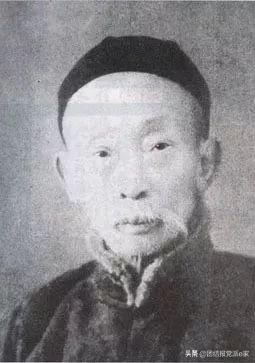
Master Cao was a pivotal force in the classical formulas school (经方派) and was a true master in using the underlying principles and formulas found in the Shang Han Lun and Jin Gui Yao Lue. Master Cao felt that the medical texts, which followed were too insignificant to study and discuss, and therefore he attached great importance to the thorough study of these texts to his students, and felt that Zhang Zhongjing’s theories and formulas were the perfect framework for successful medical practice. In addition to being skillfully versed in these medical canons, Cao Yingfu was also an accomplished poet, often interweaving the two when attempting to convey his thought process in clinic, often instructing his students to compose a poem and matching it with a relevant line from the classics. This kind of inquiry and thought process truly shows the breadth of his skill and how his mind rarely waivered from the classical Chinese medicine concept of the human body being a reflection of his environment, the microcosm of the macrocosm.
However, master Cao was not completely strict in his formula choices and would often use formulas like Bu Zhong Yi Qi Tang, Xiao Yao San, and Liu Wei Di Huang Wan, in addition to herbs such as niu bang zi, qian hu and various others. This shows that he was obviously well read and did not quickly write off more modern formulas. His use of these non Zhang Zhongjing formulas displayed his deep understanding in the formula constructions and where they were applicable. He advocated that students must understand and study the root of the medical philosophies and not just pick the flowers, and it’s from this same feeling that he encouraged his students to read the Yue Fu (乐府诗集) poetry of the Han and Wei dynasties and specifically the poet Wang Yuyang (王漁洋).

When the Japanese invaded the south, his hometown of Jiangyin, Jiangsu province fell into enemy hands and on December 7th, 1937, he died heroically resisting the invaders. While master Cao died a hero, the world lost a great Chinese medicine master. We are very fortunate to have several of his books available in order for subsequent generations to learn from not just in China, but also around the world. It is my hope in translating some of his cases that this knowledge can spread. We are also very fortunate to have scholar-physicians like my teacher Dr. Huang Huang uphold this love and dedication to master Cao’s work and to classical literature.

Case 1
Female. Since delivering a child her cycles come every forty days, which are accompanied by distending pain in the epigastrium following meals. When the cycle arrives, there is pain extending from the stomach to the lower abdomen. During the pain she experiences a strong desire to have a bowel movement. After the bowel movement the pain would typically stop. Pain would return the following afternoon and stop during the menstrual flow, and once again come and go the following day. Both pulses were wiry.
This is liver and gall-bladder exploiting deficiency of the spleen viscera. In this case Xiao Jian Zhong Tang with Chai hu and Huang Qin is appropriate.


Gui Zhi 3 qian
Sheng Bai Shao 5 qian
Zhi (Gan) Cao 2 qian
Sheng Jiang 5 pcs
Hong Zao 12 pieces
Yi Tang 2 liang
Chai Hu 3 qian
Jiu (Huang) Qin 1 qian
Tai Wu Yao 1.5 qian

After one package, her pain stopped and the menses ceased. Patient continued with two more packages, after which the condition resolved.
The master (Zhang Zhongjing) in his great classic said:


“In cold damage, (when) the yang pulse is choppy and the yin pulse is wiry, as a rule there should be urgent pain in the abdomen. First give Xiao Jian Zhong Tang; if it does not reduce, Xiao Chai Hu Tang governs.”
“伤寒,阳脉涩,阴脉弦,法当腹中急痛,先与小建中汤,不差者,小柴胡汤主之”.

Cao Yingfu (曹颖甫): Now here (in this case) I feel it goes without saying that there had not been a reduction and I immediately added Chai Hu and Huang Qin to treat her, why not? This woman’s situation was a menstrual disease and many belong to Chai Hu patterns, and so it was clearly obvious (to add it). The following day it was reported that the disease had resolved.

Case 2
Abdominal pain which liked pressure. During episodes of pain a distressing sensation of cold air was felt moving up and down (the body). Pulse was wiry-deficient. In addition there was an aversion to cold.
This is due to the liver exploiting the spleen and Xiao Jian Zhong Tang governs.
Gui Zhi 9g
Bai Shao 18g
Sheng Jiang 9g
Zhi Gan Cao 6g
Da Zao 6g
Yi Tang 30g

Liáo Shēng annotation: “This case is a pattern of abdominal pain (due to) central yang insufficiency with interior deficiency. The patient experienced abdominal pain, which liked pressure, the pulse was wiry-deficient and an aversion to cold was present. This signifies the overabundance of yin cold-qi, central yang insufficiency, and liver wood exploiting spleen (earth). Therefore Xiao Jian Zhong Tang was used to treat and resolve the condition.
The function of this formula is to supplement deficiency, quiet the center, moderate urgency and stop pain. The name of this formula is center fortifying (decoction). Fortify means to establish or set up, and because central qi is insufficient, it is very important to ‘establish’ or ‘set it up’. The formula contains sweat inducing (herbs) and not central effusing (herbs). It is referred to as a ‘minor’ (decoction) and only half (of the formula) resolves the exterior, so it does not completely secure the center. Xiao Jian Zhong Tang uses a heavy dose of Yi Tang, which is sweet, warm and serves as the sovereign to supplement the center. Bai Shao is the minister, which is sour and sweet to tonify yin. The assistant Gui Zhi is acrid-warm, which effuses and scatters. Combined with Bai Shao it regulates the nutritive and defense. In addition, Gan Cao, Da Zao and Sheng Jiang, which are sweet moderating and acrid warm, nourish the stomach and harmonize the center. Therefore (this formula) is able to warm and nourish central qi, calm and supplement yin and yang and regulate the nutritive and defense.”

*Xióng Liáo-Shēng (熊廖笙) style name Yǐ Xíng (以行) was born in 1905 in Ba County in Chongqing, Sichuan Province. Master Xióng was well versed in the classics, primarily the Nei Jing, Nan Jing, Shang Han Lun, and Jin Gui Yao Lue. The author of several books, Dr. Xióng possessed a deep and profound scholarship of the Shang Han Lun and was highly skilled in distilling the essence and precise details of various ancient doctors cases, which were found in his various annotations.

Don’t forget to join the Classical Chinese Medicine community by adding your email address to the bar on the right to be notified of any future publications, translations and writings!

Huáng Huáng’s Use of Guì Zhī Fú Líng Wán in Respiratory Conditions

Cinnamon Twig and Poria Pill (guì zhī fú líng wán)

Indications: Bronchial asthma, chronic obstructive pulmonary disease (COPD), pulmonary arterial hypertension, pleurisy, pleural effusion, interstitial pneumonia, pulmonary fibrosis, and recurrent pulmonary infections typically manifesting with a dark-red complexion, a stifling sensation and pain in the chest, purple lips and a dark tongue. This formula has a blood invigorating, stasis transforming effect, which can improve the blood supply of the heart and lungs.

Usage & Modifications:

1. Patients for whom this formula is suitable tend to have a red or purple-red complexion, abdominal fullness, resistance to pressure in the lower left abdomen with possible tenderness, headaches, dizziness, insomnia, irritability, restlessness, stirring palpitations, and a dark tongue body with possible purple spots.

2. For patients that experience diarrhea after taking the formula, have them take in after meals or decrease the dosage.

3. Use with caution in pregnancy.

4. Modifications:

  • If there is a stifling sensation and pain in the chest, a chronic cough, and a wan and sallow complexion, add Angelicae sinensis Radix (dāng guī) 15g, Chuanxiong Rhizoma (chuān xiōng) 15g, and Salviae miltiorrhizae Radix (dān shēn) 15g
  • If there is a stifling sensation in the chest, abdominal distention, and an oily complexion, add Citri reticulatae Pericarpium (chén pí) 20g, Aurantii Fructus (zhǐ ké) 20g, and Zingiberis Rhizoma recens (shēng jiāng) 20g
  • If there is a stifling sensation in the chest  and constipation, add Aurantii Fructus (zhǐ ké) 20g, Allii macrostemi Bulbus (xiè bái) 20g, and Trichosanthis Fructus (quán guā lóu) 30g.

Representative Case History:

Yu, 74-year-old male, 160cm/70kg.

Initial consultation on June 5, 2018

Chief complaint: Recurrent cough and wheezing for 9 years, with dyspnea, an inability to climb stairs quickly, and abdominal distention following meals.

History: In April 2018 during a hospital visit, he was diagnosed with an acute exacerbation of chronic obstructive pulmonary disease (COPD), arrhythmia, atrial fibrillation, cardiac insufficiency, heart valve disease, and a fatty liver.

Signs: average build, dark, red and oily complexion, obvious bags under the eyes, purple-dark lips and tongue, stasis marks under the tongue, abdominal fullness, and resistance to pressure in the lower costal arch (flanks).

Prescription: Cinnamomi Ramulus (guì zhī) 10g, Cinnamomi Cortex (ròu guì) 10g, Poria (fú líng) 20g, Paeoniae Radix rubra (chì sháo) 20g, Moutan Cortex (mǔ dān pí) 15g, Persicae Semen (táo rén) 15g, Angelicae sinensis Radix (dāng guī) 15g, Chuanxiong Rhizoma (chuān xiōng) 15g, Salviae miltiorrhizae Radix (dān shēn) 15g, Aurantii Fructus (zhǐ ké) 30g, Citri reticulatae Pericarpium (chén pí) 30g, Zingiberis Rhizoma (gān jiāng) 10g; 15 packets.

Second consultation on June 25, 2018: After taking the herbs, his breathing was smooth and easy, however cough and wheezing were still present, but he was still able to play mah-jong. The same formula was continued.

Third consultation on August 20, 2018: No labored breathing when walking and he was able to climb 3 floors. The stasis marks under his tongue had improved.

Huáng Huáng – A Bàn Xià Hòu Pò Tāng Case

Huang, 65-year-old male, 171cm/75kg. 

Initial consultation on January 29, 2019.

History: Superficial gastritis with ulceration for over 10 years. Patient reported that he often experienced abdominal pain after taking western medications as well as abdominal discomfort after eating fruit. He felt a sticky sensation in his umbilicus, and also experienced abdominal distention, belching, poor appetite, difficulty falling asleep, and had no issues with his bowel movements. He was worried that his digestive disease will develop into cancer, and therefore, his mood was quite poor. 

Signs: Robust build, double eyelids, frowning eyebrows, lively facial expressions, a red face, and dusky red lips. In addition, he procrastinated when he spoke. His abdomen was soft, there were purple stasis marks below his tongue, his throat was red, tongue coating slightly greasy, and his pulse was slippery. 

Prescription: jiangbanxia 15g, houpo 15g, fuling 15g, sugeng 15g, zhike 15g, zhizi 15g, lianqiao 30g, huangqin 10g; 9 packets; 3 days on, 2 days off. 

Second consultation on February 26, 2019: After taking the formula, his symptoms had improved. However, once stopping them, the symptoms returned, yet this time there was no abdominal pain, and only a feeling of discomfort, plus the location of the pain had now changed. He was also belching, had subcostal distention, and his sleep was reduced. 9 packets of the same formula with chenpi 20g was given; 3 days on, 2 days off. 

Selected Clinical Case Histories of Liú Dù-Zhōu – Gé Gēn Tāng


Li X, a 38-year-old male. He had suffered with stubborn migraines for 2 years, which had not resolved despite being treated for a long time. He was introduced to Doctor Liu by a good friend and brought in for a consultation. 

Chief complaint: right sided headaches, which commonly extended to the forehead and supraorbital ridge. This was accompanied by an absence of sweating, chills, a runny nose with clear mucus, irritability, a red complexion, dizziness, and poor sleep. During examination, the patients’ range of motion in his back was inhibited, and on inquiry, the patient reported that his neck and occiput usually felt tight, more severely so during his headaches. His tongue was pale with a white coat, and his pulse was floating and slightly rapid. 

This was differentiated as cold pathogens being lodged in the taiyang channels, resulting in symptoms of inhibited flow of channel qi. 

Treatment required the promotion of sweat to expel pathogens, and unblock taiyang qi, so Kudzu Decoction (gé gēn tāng) was given: 

Ephedrae Herba (má huáng) 4g
Puerariae Radix (gé gēn) 18g
Cinnamomi Ramulus (guì zhī) 12g
Paeoniae Radix alba (bái sháo) 12g
Glycyrrhizae Radix praeparata (zhì gān cǎo) 6g
Zingiberis Rhizoma recens (shēng jiāng) 12g
Jujubae Fructus (dà zǎo) 12 pieces

Ephedrae Herba (má huáng) and Puerariae Radix (gé gēn) were to be decocted first with the froth removed before adding the other ingredients. 

After taking the decoction, the patient was covered up so a slight sweat could be obtained. He was instructed to avoid cold drafts. 

After taking 3 packets, his back felt warm, which was followed by a mild sweat throughout the body, and a reduction in his headache and neck tension. 15 packets of the same formula was
prescribed again, which completely resolved his headaches and neck tension. 

Selected Clinical Case Histories of Liu Du-Zhou (Liú Dù-Zhōu lín zhèng yàn àn jīng xuǎn)

The Wandering Kidney – A Discussion on Shèn Qí Wán by Keisetsu Ōtsuka

 The Wandering Kidney
– Keisetsu Ōtsuka (大塚敬節)
A while back, a male presented at the clinic looking to improve his overall health.  He complained that he would be easily fatigued following exercise, and afterwards would experience lower back and abdominal pain. He had been diagnosed with various conditions such as gallstones, kidney stones, and chronic appendicitis. Most recently following thorough examination, he was diagnosed with a wandering or floating kidney[1]on the right side. During abdominal diagnosis his kidney was easily palpated below his ribs on the right side when sitting up, however, when laying down the kidney was difficult to palpate. His appetite was normal as were his bowel movements and urination.
Shèn Qì Wán was administered, in accordance with the Jīn Guì Yào Lüè line that states,
“For deficiency taxation manifesting with lumbar pain, lesser abdominal hypertonicity, and inhibited urination, Bā Wèi Shèn Qì Wán (Eight-Ingredient Kidney Qi Pill) is indicated”.
After one month his fatigue had markedly improved and he no longer felt the lower back and abdominal pain.
Not long after this case, I saw a woman with a floating kidney, for which I reluctantly administered Shèn Qì Wán. Although the previous patient had excellent results with the formula, after giving this patient Shèn Qì Wán, she suffered from vomiting and poor appetite. The formula was discontinued after two days. This patients’ entire abdomen was soft and weak, with water sounds in the abdomen on percussion. In addition, her pulse was weak, appetite poor, and she experienced abdominal, back and lumbar pain, which were affecting her work. If Shèn Qì Wán is used in gastroptosia[2] or in patterns associated with sluggish stomach function manifesting with poor appetite, diarrhea, or vomiting there will frequently be side effects and great difficulty in resolution of the patients’ condition. There is also a line related to the formula in the Jīn Guì Yào Lüè, which states, “Eating and drinking as normal”, which clearly specifies that Shèn Qì Wán is not indicated in cases involving obstruction of the gastrointestinal tract. Although the line is very clear, I still administered the formula, ignoring the pattern identification and therefore failed to control the disease. I changed the formula to Liáng Zhǐ Tāng, which was able to control the symptoms, and reduce the abdominal, back and lumbar pain. In addition, this patient also had obvious umbilical pulsations.
The famous Japanese doctor Wada Tōkaku (和田東郭– 1744-1803), said that umbilical pulsations are a typical Dì Huáng formula sign, but should be combined with lóng gǔ (Fossilia Ossis Mastodi), mǔ lì (Ostreae Concha), guì zhī (Cinnamomi Ramulus) and gān cǎo (Glycyrrhizae Radix) formulas, which also present with umbilical pulsations. Therefore one must be cautious in using Shèn Qì Wán based on umbilical pulsations alone.
Liáng Zhǐ Tāng is líng guì cǎo zǎo tāng (Poria, Cinnamon Twig, Licorice, and Jujube Decoction) with the addition of zhǐ shí (Aurantii Fructus immaturus), bàn xià (Pinelliae Rhizoma preparatum), and liáng jiāng (Alpiniae Officinarum Rhizoma). When I find umbilical pulsations with hardness in the abdomen, I will typically use this formula to attack and move the pain.[3] 

[1] Floating kidney is a condition that is also termed as hypermobile kidney or the wandering kidney. The medical name of such a condition is nephroptosis. In such a condition the kidney is seen to drop downwards when a person stands up or is transiting from a lying down to an upright position. It is also known as the kidney prolapse condition. The kidney moving downward suggests that it is not fixed fully by the tissues that surround it. Such a condition is not uncommon and has been noted over a century by physicians in many cases.
[2] Downward displacement of the stomach.

A case of Xiǎo Jiàn Zhōng Tāng (minor construct the middle decoction)


Fàn Zhōng-Lín

A 22-year-old female factory manager from Chóng Qìng city presented at the clinic.

In July 1959 the patient had developed a high fever and lost consciousness. She was immediately taken into a local hospitals emergency department for investigation. She was administered an anti-pyretic medication, however her fever would not reduce. She was also given various medications to manage and reduce her heat all to no avail. Her diagnosis was inconclusive. At this point she was discharged from the hospital after requesting Chinese medical treatment. After taking two packages of a heat reducing formula, she had gradually regained consciousness. However, in the evening the following day she once again lost consciousness. Again, she was sent to the hospital for treatment, but as she had once again come down with a critical condition as before, they were still unable to make a clear diagnosis. The old Chinese medical doctor[1] was once again consulted who said he was able to diagnose her. After taking Chinese medicinals, her condition gradually improved.

The old Chinese medical doctor believed her condition was due to cerebral stagnation. She was sent for examination and film of her head, which clearly showed blood stagnation in her cranium, and was thus immediately sent to surgery in order to escape any form of danger.

A month following the surgery she was experiencing twitching in her extremities and coldness in the lower half of her body. She was discharged from hospital and continued using herbal medicines for the next five or six years, with very little clear improvement. In 1965 she travelled here to Róng[2] for a consultation.

Her current symptoms were, twitching in her extremities on the right side, occasional deviation of her mouth and eyes, which occurred five or six times per month and would precede the twitching. Afterwards she would feel numbness on her right side. Over the last few years she was especially fearful of cold, and even during the intense heat of June she would wear a sweater, and her extremities still experienced coldness. Her menstrual cycle was irregular with a pale dark color. Her vision had been receding becoming dim and unclear, and her memory and reaction time were remarkably decreased and slow. She was fatigued and had a poor appetite. Her tongue was pale with a scant amount of grey coating. Pulse was deep and thin.

Symptoms and Disease Mechanisms

  • Deep thin pulse, pale tongue, fear of cold, cold extremities, fatigue, twitching in half the body and extremities: symptoms belongs to a Tài Yīn and Shào Yīn spleen and kidney yáng deficiency pattern.
  • Twitching of the extremities, deviation of the mouth and eyes: This pattern belongs to tetany disease[3].

After suffering from such a major illness, both qì and blood are damaged, and thus tetany may form. When qì and blood are both deficient, the sinews and vessels will jerk and become hypertonic. For example, Sù Wèn chapter 74 ‘The Great Treatise on the Utmost Truth’ says,

“All Cold, with contraction and tautness belongs to the kidneys”. 

The Channels and Sinews chapter (ch.13) of the Líng Shū says,

“[When] the sinews of the Foot Shào Yīn [are diseased], [they manifest with] epilepsy, tugging and tetany”.

Analysis

Tài Yīn, Shào Yīn; qì and blood deficiency.
Among these the qì and blood deficiency are primary.

Treatment Strategy

Here it is appropriate to first warm the center, strengthen the spleen, and harmonize qì and blood.
For this xiǎo jiàn zhōng tāng (minor construct the middle decoction) masters.

Formula:

guì zhī (Cinnamomi Ramulus) 12g
zhì gān cǎo (Glycyrrhizae Radix preparata) 6g
bái sháo (Paeoniae Radix alba) 15g
shēng jiāng (Zingiberis Rhizoma recens) 30g
hóng zǎo (Jujubae Fructus) 15g
yí tang (Maltosum) 60g (dissolved in decoction)

6 packages were given.

She took the six packages above, and followed up ten days later, at which point the twitching in the extremities only occurred once, and the numbness in the body was reduced. In addition, both her spirit and appetite were harmonized, and she was overall making a great recovery.

[1] A Lǎo Zhōng Yī (老中医 ) refers to an older, highly experienced Chinese medical physician, typically held in very high regard throughout the country.
[2] Róng is another name for Chéng Dū.
[3] Refer to chapter 2 in the Jīn Guì Yào Lüè.