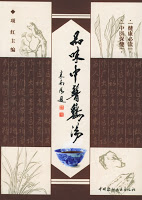
A taste of Chinese medical chicken soup, Xiang Hong (项红)

This is a translation of a case study from a great book titled ‘A Taste of Chinese Medical Chicken Soup’ written by Dr. Xiang Hong in Beijing. This is a case study book which presents several of her own cases as well as numerous by prominent modern Beijing physicians (老医). The case I will be translating is one by professor Fan Zheng-Lun (樊正伦), a great physician who I had the pleasure of observing while in Beijing.

8989278-1_o.jpg 

Pre-Menstrual headaches and heart vexation (treated by) calming the liver and clearing heat with the happy free and easy wanderer.

On July 15, 2000 it was professor Fan Zheng-Lun’s clinical day at the ‘Ping Xin Tang clinic’. A 47 year old female patient was presenting her case. Recently her menstrual cycles were arriving early and much heavier than ever with numerous large blood clots. She experienced headaches and distension in her head prior to her cycles along with heart vexation and a sore and achy low back. In addition she was seen in the Gynecology department where she was diagnosed with a uterine myoma and since menopause was approaching, surgery was unnecessary. She felt warm quite easily and found herself quite irritable prior to the cycle.
Professor Fan simultaneously felt her pulse and inspected her tongue. Only the tongues margins were red and there was a thin white coating. The tongue body was swollen with slight teeth marks on the margins. The left bar (guan) position of the pulse was wiry and the cubit (chi) weak. The right pulse had an overall slippery wiry manifestation.

Professor Fan believed this to be a case of Liver depression, Spleen vacuity with a Chong and Ren disharmony causing headaches. Therefore the treatment method would involve clearing the Liver, strengthening the Spleen and regulating the Ren and Chong vessels.
The formula administered was as follows:

(Mu) Dan Pi 9g
Chao Zhi Zi 6g
Chao Bai Zhu 9g
Dang Gui 9g
Fu Ling 9g
Cu Chai Hu 9g
Zhi Xiang Fu 9g
Gui Zhi 6g
Bai Zhi 6g
Zhi Gan Cao 6g
Man Jing Zi 9g
Chuan Xiong 6g
Tao Ren 9g
Bai Shao 12g
Chao Du Zhong 12g

7 Packages were given to be decocted in water.

The patient was explained that the basis of treatment was to regulate the cycle and therefore the formula should be taken one week prior to the start of her cycle.
A month later the patient said that after taking the weeks’ worth of herbs, her headaches and backache had clearly decreased, the menses was not as heavy and the clots were smaller. The patient was instructed to take these herbs again one week prior to her cycle in order to consolidate treatment. According to this method, taking these herbs for several months should have a positive effect on the uterine myoma as well.

This formula is a modified version of “Dan Zhi Xiao Yao San” (Moutan and Gardenia Free and Easy Wanderer powder) with “Gui Zhi Fu Ling Wan” (Cinnamon and Poria pills).
Dan Zhi Xiao Yao San is Xiao Yao San (Dang Gui, Bai Shao, Chai Hu, Huang Qin (1), Chao Bai Zhu, Zhi Gan Cao, Sheng Jiang, Bo He) with Dan Pi and Zhi Zi.
Xiao Yao San is from the ‘Imperial Grace Formulary of the Tai Ping Era’ (He Ji Ju Fang) and is a great Liver coursing, depression resolving, Spleen strengthening, blood nourishing formula. Adding Dan Pi and Zhi Zi increases its ability to clear Liver heat.
This patient had pre-menstrual vexation and headaches which are a manifestation of Liver channel depressive heat, therefore this formula was chosen.
Herbs are selected according to the pattern and re-analyzed if there is no reduction (of symptoms).

When seeing patients with uterine myomas the use of Gui Zhi Fu Ling Wan can be quite efficacious. Gui Zhi Fu Ling Wan is originally found in the 20th chapter of the \’Jin Gui Yao Lue\’ (Prescriptions from the Golden Cabinet) section on Diseases, Pulses, Patterns and Treatments of Pregnancy related (Obstetric) diseases. Gui Zhi Fu Ling Wan is a very famous and effective Gynecological formula.
Chinese medicine believes that concretions or abdominal masses are accumulations and gatherings in the abdomen becoming clots or accumulated blood creating a very typical heavy menstrual cycle with clots.
Within the formula, Gui Zhi warms and frees the vessels; Dan Pi and Tao Ren attack concretions and accumulations and break static blood. Using Fu Ling disinhibits dampness and Bai shao harmonizes the Ying (nutritive). Altogether these herbs achieve the function of breaking stasis and generating new (blood).

Generally headaches occurring prior to the menses are caused by Liver heat, while headaches occurring after the cycle are governed by blood vacuity. Clinical practice should be based on the system of treatment according to pattern identification.

(1) Huang Qin is not mentioned in the original formula. My initial assumption is that it is merely a typo, but was included in the translation in order to stay true to Dr. Xiang’s book.

Hu Xi-Shu (胡希恕) Case #3- Duodenal Ulcer (十二指肠溃疡)

Hu Xi-Shu, Shang Han Lun Tong Su Jiang Hua

 Bai, Male, 32 years old;

Initial diagnosis was on December 21, 1965: Patient presented with epigastric pain for over a year which has started to increase in severity over the last month. Pain is present prior to and after meals. Accompanying symptoms included belching, vomiting, epigastric focal distension, excessive worry and occasional abdominal fullness and distension. Tongue coating was white and his pulse was wiry and thin. Through a Barium meal investigation he was diagnosed with a duodenal ulcer and gastroptosis.
He was prescribed Inula and Hematite Decoction (Xuan Fu Dai Zhe Shi Tang) combined with Poria Decoction (Fu Ling Yin) and Fritillary bulb and cuttlebone powder (Wu Bei San):

Xuan Fu Hua 3 qian
Dang Shen 3 qian
Sheng Jiang 5 qian
Dai Zhe Shi 3 qian
Zhi Gan Cao 2 qian
Ban Xia 5 qian
Da Zao 4 pcs
Fu Ling 4 qian
Bai Zhu 3 qian
Chen Pi 3 qian
Zhi Ke 3 qian
Wu Zei Gu 3 qian
Chuan Bei 2 qian

Results: After taking three packages of the above formula his epigastric pain, belching, and vomiting decreased. After six packages his epigastric pain resolved and has had no obvious symptoms to this day.

Hu Xi Shu’s discussion and elucidation on cold damage 胡希恕, 越辩越明释伤寒

This is an excerpt from one of Dr. Hu’s books. It is an elucidation of clause 100 of the Shang Han Lun (On Cold Damage)

In cold damage (1), when the Yang pulse is choppy(2) and the Yin pulse is wiry(3), there should be acute abdominal pain (4) . First administer Xiao Jian Zhong Tang (5) . If there is no reduction (of symptoms), Xiao Chai Hu Tang governs (6).

Interpretation:
A pulse that is floating and choppy, is what is meant by the ‘Yang pulse is floating; at the deep level the pulse is wiry, which is written as ‘the Yin pulse is wiry’. A choppy pulse governs scanty blood and wiry governs cold exuberance. What we have here is cold damage with a floating choppy pulse and a deep wiry pulse, which signifies external blood vacuity and cold exuberance in the interior. According to these laws we should expect to see acute abdominal pain therefore Xiao Jian Zhong Tang is given.
After taking the decoction there is still no reduction of symptoms which means that the condition has yet to be resolved and because Shao Yang has the same pulse (wiry) this is considered a Tai-Yang Shao-Yang combination disease with interior cold. Xiao Jian Zhong Tang only partially treats this condition, therefore we administer Xiao Chai Hu Tang in order to resolve Shao Yang evils, and only then can we offer a cure.

Notes:
Acute abdominal pain originally belongs to both a Xiao Jian Zhong Tang pattern and to a Xiao Chai Hu Tang pattern. Ordinarily Shao yang harbors internal vacuity and central qi insufficiency and although there are Xiao Chai Hu Tang signs, we must first fortify the centre. First Xiao Jian (Zhong Tang), afterwards Chai Hu (Tang). In vacuity treating the interior first is a fixed concept, and rather than treating with the first rule of Xiao Jian Zhong Tang with no effect, it is treated with Xiao Chai Hu Tang. If in abdominal pain the pulse is wiry, this is only interior vacuity and Xiao Jian Zhong Tang can be administered without any relation to Shao Yang.

Xiao Jian Zhong Tang  小建中汤

Gui Zhi (remove skin) 3 liang
Shao Yao 6 liang
Sheng Jiang (cut) 3 liang
Da Zao (broken) 12 pieces
Gan Cao (honey fried) 2 liang
Jiao Yi 1 sheng

For the above six ingredients, use seven sheng of water. Boil until three remain, and remove the dregs. Add the malt sugar and put back on low heat until it melts. Take one sheng warm three times daily. People who vomit easily should not take this decoction due to its sweetness.

Formula interpretation:
The first five ingredients of this formula make up Gui Zhi Jia Shao Yao Tang (Tai-Yin, clause 284), which treats Tai-Yang disease abdominal fullness and periodic pain found after purgation. Adding Yi Tang which is warm and sweet makes it more supplementing. Shao Yao is bitter, sour and slightly cold and by adding the warmth of Yi Tang we have mild supplementation. This is Xiao Jian Zhong Tang.

Jiao Yi is sweet, warm, enriching, nourishing and strengthening. It relaxes tension, strengthens the Spleen and Stomach, boosts Qi and supplements vacuity cold. It governs acute abdominal pain and rumbling intestines (borborygmus). The nature and flavor of both Jiao Yi and Gan Cao are quite similar and are used for Yin, Yang, Exterior, Interior, Repletion and Vacuity, but are especially indicated in interior vacuity. They are unsuitable in abdominal pain due to excessive gastric acid.
Shao Yao is bitter, slightly cold and has the function of mild precipitation.
Jiao Yi and Bai Shao effectively treat abdominal pain, but differentiation must be made between cold, heat, vacuity and repletion. The abdominal pain associated with intestinal tuberculosis offers an opportunity to use this combination.

Notes:
Abdominal pain is found in both vacuity and repletion. Pain on palpation that is not severe even with stronger pressure belongs to Qi pain. Pain on pressure with hardness that refuses pressure is seen in accumulations and gatherings. Qi type pain should not be purged.

1. ‘Cold damage’ signifies Tai-Yang cold damage where the exterior has yet to be resolved. We do know that Xiao Jian Zhong Tang treats the abdominal pain and Xiao Chai hu Tang treats the disease if there is no reduction or lessening of symptoms. This clause is originally a Tai-Yang and Shao-Yang combination disease with interior vacuity cold.
2. ‘Yang pulse is choppy’ means the pulse is felt at a superficial level, plus liquids and blood are not filling and nourishing the exterior and the stomach is weak.
3. ‘Yin pulse is wiry’ means the pulse has a wiry quality at the deep level. A wiry pulse is thin and with strength
4. Acute pain and hyper-tonicity with pain. By the yang pulse being choppy and the yin pulse wiry, we are able to see that there is an insufficiency of liquids and blood and cold exuberance in the interior, so there should be hypertonic pain in the abdomen.
5. Xiao Jian Zhong Tang is a modified version of Gui Zhi Tang. Both these formulas can resolve the exterior, enrich and nourish the blood vessels and through its warm and sweet nature expel cold and stop pain. We can deliberate the meaning of ‘first administer’. In Tai-Yang Shao-Yang combination disease with the addition of vacuity cold in the interior, we should first save the interior and then resolve the exterior or half exterior, half interior aspect. This is the essence and spirit of clauses 93 and 94.
6. No reduction of symptoms, namely means that after taking Xiao Jian Zhong Tang the abdominal pain is not completely gone. Now because both Xiao Jian Zhong Tang and Xiao Chai Hu Tang symptoms exist, we first treat the interior and afterwards the exterior. Since Xiao Jian zhong Tang only treated half the condition we follow it with Xiao Chai Hu Tang to effect a complete resolution of symptoms

Hu Xi Shu (胡希恕) Case #2-Cough

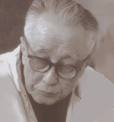
38 year old female first seen on Feb 12 1966. Patient had suffered with a dry cough and itchy throat for over a hu xi-shu.jpgmonth. She had taken a modified version of Zhi Sou San (Stop Cough Powder), and modified versions of Sang Xing Tang (Mulberry Leaf & Apricot Kernel Decoction) and Mai Men Dong Tang (Ophiopogonis Decoction). The cough not only failed to improve but actually got worse. Currently she presents with a dry cough, itchy throat, dry mouth with no desire to drink, belching, chest oppression, loose bowel movements occurring once or twice daily, a thick slimy tongue coating and a slippery thin pulse.
Prescription given was Ling Gan Wu Wei Jiang Xin Xia Tang (Poria, Licorice, Schisandra, Ginger, Asarum and Pinellia Decoction) with additions and subtractions:

Fu Ling 4qian
Xi Xin 2 qian
Wu Wei Zi 4 qian
Ban Xia 5 qian
Zhi Gan Cao 2 qian
Chen Pi 5 qian
Sheng Jiang 3 qian
Xing Ren 3 qian
Ku Jie Geng 3 qian
Zhi Pi Pa Ye 3 qian

Results: After taking one package of the above formula, the cough had decreased. After three packages the cough stopped.

The above patient suffered from a dry cough, itchy throat and dry mouth commonly seen in Lung heat, Liver fire or yin vacuity. In addition this patient also had no desire to drink, belching, chest oppression, sloppy stools, a thick slimy tongue coating and a slippery pulse. All these signify a phlegm-rheum pattern. The dry cough is from phlegm-rheum invading the lung and impaired diffusion and downbearing of the lung. The dry cough and itchy throat are a result of stagnation and obstruction to fluids which are unable to bear upwards. Therefore when treating this type of dry cough, using bitter cold, heat clearing herbs or sweet cold Yin enriching herbs will only worsen the stagnation and obstruction of fluids and cause phlegm-rheum to harass the upper (burner) and delay recovery. Because phlegm was treated by restraint and the formula was chosen on the basis of the pattern, the use of only three packages were needed for recovery.


Hu Xi-Shu (胡希恕)Case #1-Cough

Case #1 Hu Xi-Shu, Shang Han Lun Tong Su Jiang Hua (伤寒论通俗讲话)
Huang, Female, 38 years old

Initial diagnosis was on Feb 12, 1966: Patient presented with a cough combined with expectoration of white phlegm, itchy throat, chest fullness, a dry throat with no desire for fluids and bilateral rib side distension. She has already taken several packages of herbal formulas to no avail. Her tongue coating was thick and slimy, and her pulse slippery-thin.

This pattern belongs to phlegm-rheum harassing the upper (burner), and impaired depurative downbearing of the lungs. This was treated by warm transformation and downbearing counterflow with a modified version of Ban Xia Hou Po Tang.

Ban Xia 4 qian
Hou Po 3 qian
Fu Ling 4 qian
Su Zi 3 qian
Ju Pi 5 qian
Xing Ren 3 qian
Jie Geng 3 qian
Sheng Jiang 3 qian

Results: After taking only 2 packages of the above herbs, the cough had stopped.

Ban Xia Hou Po Tang is originally from the Jin Gui Yao Lue (Essentials from the golden cabinet) in the miscellaneous gynaecological diseases section. Originally used for “female patients with the sensation of fried meat in the back of the throat”
Dr. Hu believed this formula to be Xiao Ban Xia Jia Fu Ling Tang with the additions of Hou Po and Su Ye. It is used in phlegm-rheum qi bind manifesting with chest fullness, throat blockage and cough. It warms and transforms phlegm-rheum, downbears counterflow and regulates Qi. The patient above was manifesting with a phlegm-rheum cough, therefore the use of this formula offered a quick resolution.
The original formula contains (Zi) Su Ye, but Dr. Hu prefers to use (Zi) Su Zi. If there are obvious exterior signs present, then (Zi) Su Ye may be added, and you may also add either Gui Zhi Tang or Ma Huang Tang. If there are obvious heat signs then Sheng Shi Gao may be added. If there is an enduring cough due to cold rheum, without any obvious exterior signs, then combine with Ling Gan Wu Wei Jiang Xin Xia Tang (Poria, Licorice, Schisandra, Ginger, Asarum, and Pinellia Decoction).