Guì Zhī Jiù Nì Tāng (Cinnamon Counterflow-Stemming Decoction)

Case of Dr. Hú Xī-Shù (胡希恕)

A twenty-six year old air force translator came in for an initial consultation. Recently while observing the repair of some electric wiring, he (suddenly) became very frightened, which manifested with fright palpitations, flusteredness, insomnia, headaches, poor appetite, nausea, and the occasional sound of phlegm in the back of his throat, which caused him to become uncontrollably angry, restless, and vexed every time he would hear this sound, but over some time (his emotions) would gradually recede slightly. Nonetheless two people assisted him when he had come in for a consultation. 

(Aside from the symptoms above) he had a thick white tongue coat, and his pulse was wiry, slippery and the cùn (inch) position was floating. This pattern is due to the upward harassment of enduring cold rheum, and treatment should involve warming, transforming, and downbearing counterflow. He was given a modified version of (guì zhī) jiù nì tāng (Cinnamon Twig Counterflow-Stemming Decoction). 

guì zhī (Cinnamomi Ramulus) 10g

shēng jiāng (Zingiberis Rhizoma recens) 10g

zhì gān cǎo (Glycyrrhizae Radix preparata) 6g

dà zǎo (Jujubae Fructus) 4 pieces

bàn xià (Pinelliae Rhizoma preparatum) 12g

fú líng (Poria) 12g

shēng mǔ lì (Ostreae Concha) 15g

shēng lóng gǔ (Fossilia Ossis Mastodi) 15g

Results: After taking three packages of the above formula his flusteredness and phlegm sound in the back of his throat were reduced. After six packages, his appetite increased, and his sleep had improved. He continued on the formula and after ten packages all of his symptoms disappeared. 

Line 112 in the Shāng hán lùn (傷寒論 Discussion of Cold Damage) says:

“(When) in cold damage the pulse is floating, and a fire (method) is used to force (sweating), as a result yáng collapses and there will be fright mania, and fidgetiness whether lying or sitting; guì zhī qù sháo yào jiā shǔ qī mǔ lì long gǔ jiù nì tāng governs”.

Analysis: When there is cold damage with a floating pulse, one should consider treating it with má huáng tāng to promote sweating, however, if it is treated with a fire method, which could include moxibustion, fire needling, fire fuming, and other similar methods, to force sweating, it can result in major sweating, and this is an erroneous treatment. When there is major sweating, this will result in the collapse of liquids and humors. Not only will this fail to meet the objective of resolving the exterior, but major sweating, will result in upper vacuity, causing qì to overwhelm the vacuity and surge upwards. This will also stimulate the interior causing the ascent of rheum, which will cloud the clear orifices resulting in symptoms of fright mania, and fidgetiness whether lying or sitting. The suitable treatment here is with guì zhī qù sháo yào jiā shǔ qī mǔ lì long gǔ jiù nì tāng.
Rén Yīng Qiū- A Zhēn Wǔ Tāng (True Warrior Decoction) Case

Hú Xī-Shù-Guì Zhī Jiā Gé Gēn Tāng (Cinnamon Twig Decoction plus Kudzu)

C1889F76D1DD4A168D3241E3F09F193A.jpgHere’s a case of a wind strike pattern. Nothing too enlightening or complicated here, but sometimes we need to be reminded of the simple stuff!!

On December 10, 1965 a twenty one-year-old female presented at the clinic. Yesterday she had contracted a common cold manifesting with symptoms of headache, dizziness, sweating, aversion to cold, weak pain in her shoulders and back, and a tight obstructive pain in the left side of her neck on rotation towards the left. She had a thin white tongue coating, and her pulse was floating and slightly rapid.

A floating, slightly rapid pulse, thin-white tongue coat, aversion to cold, sweating, and headaches signify a Tài Yáng wind strike pattern. Shoulder and back pain, and neck pain on left rotation of the head signify a gé gēn tāng (Kudzu Decoction) pattern. The dizziness indicates that the exterior has not yet been resolved, with upward surging of qì.

Comprehensive analysis: This is a Tài Yáng wind strike pattern with simultaneous stretched stiff nape and back, seen in a guì zhī jiā gé gēn tāng (Cinnamon Twig Decoction plus Kudzu) formula presentation.

Formula:

guì zhī (Cinnamomi Ramulus) 10g

bái sháo (Paeoniae Radix alba) 10g

shēng jiāng (Zingiberis Rhizoma recens) 10g

dà zǎo (Jujubae Fructus) 4 pieces

zhì gān cǎo (Glycyrrhizae Radix preparata) 6g

gé gēn (Kudzu Radix) 12g

Results:  After taking 1 package of the formula, her symptoms decreased, and after 2 more, her symptoms had completely resolved.

Gé Gēn Jiā Bàn Xià Tāng (Kudzu Decoction with Pinellia)

On December 21, 1965 a twenty one-year old female presented at the clinic. The previous day she had contracted a common cold manifesting with symptoms of headache, dizziness, generalized body pain, lumbar pain, nausea with a desire to vomit, aversion to cold, and frequent abdominal pain with loose bowel movements. Her pulse was floating-rapid, and she had a thin white tongue coating.

The white tongue coat, floating-rapid pulse, aversion to cold, headache, generalized body pain, and lumbar pain signify Tài Yáng cold damage. The frequent abdominal pain with loose bowel movements indicates Tài Yīn (disease). The dizziness, and nausea with desire to vomit show that there is interior rheum invading upwards, which is a bàn xià (Pinelliae Rhizoma preparatum) presentation.

Comprehensive analysis: This is a Tài Yáng Tài Yīn combination disease, which fits with a gé gēn jiā bàn xià tāng (Kudzu Decoction with Pinellia) presentation.

Formula:

gé gēn (Kudzu Radix) 12g
má huáng (Ephedrae Herba) 10g
guì zhī (Cinnamomi Ramulus) 10g
shēng jiāng (Zingiberis Rhizoma recens) 10g
bái sháo (Paeoniae Radix alba) 10g
dà zǎo (Jujubae Fructus) 4 pieces
zhì gān cǎo (Glycyrrhizae Radix preparata) 6g
bàn xià (Pinelliae Rhizoma preparatum) 12g

Results: After taking 1 package of the formula, her symptoms decreased, and after 2 packages, her symptoms had completely resolved.

Huáng Qín Tāng [Line 172]

Chéng Wú-Jǐ 成无己

From ‘A commentary on the Annotated Shāng Hán Lùn’ (注解伤寒伦) by Chéng Wú-Jǐ

Line 172 

In a Tài Yáng and Shào Yáng combination disease with spontaneous diarrhea, give huáng qín tāng (Scutellaria Decoction); if there is retching, huáng qín jiā bàn xià shēng jiāng tāng (Scutellaria Decoction plus Pinellia and Fresh Ginger) rules it. 

Commentary: In a Tài Yáng and Yáng Míng combination disease, spontaneous diarrhea is coming from the exterior, and gé gēn tāng (Kudzu Decoction) is given to effuse sweat. In a Yáng Míng and Shào Yáng combination disease, spontaneous diarrhea is coming from the interior, and a chéng qì tāng (Order the Qi Decoction) formula is used to precipitate it. This is a Tài Yáng and Shào Yáng combination disease, and the spontaneous diarrhea is a result of the condition being half in the exterior and half in the interior. Here it would be inappropriate to promote sweat or precipitate, so huáng qín tāng (Scutellariae Decoction) is given to harmonize and resolve the pathogens laying half in the exterior and half in the interior. Retching indicates counterflow of stomach qì so bàn xià (Pinelliae Rhizoma preparatum) and shēng jiāng (Zingiberis Rhizoma recens) are added to dissipate counterflow qì.

Huáng Qín Tāng (Scutellariae Decoction)

huáng qín (Scutellariae Radix) 3 liǎng (9g) [acrid-cold]
zhì gān cǎo (Glycyrrhizae Radix preparata) 2 liǎng (6g) [sweet-neutral]
sháo yào (Paeoniae Radix) 2 liǎng (6g) [sour-neutral]*
dà zǎo (Jujubae Fructus) 12 pieces, broken [sweet-warm]

*In the Běn Cǎo Jīng, sháo yào (Paeoniae Radix) is classified as bitter, and is considered to be mildly cold in the Míng Yī Bié Lù.

Commentary: In vacuity and non-repletion, (the) bitter (flavor) is used to harden, and sour is used to contract. huáng qín (Scutellariae Radix) and sháo yào (Paeoniae Radix) are bitter and sour, and are used to harden and constrain the qì of the stomach and intestines. In weakness and insufficiency, (the) sweet (flavor) is used to supplement. gān cǎo (Glycyrrhizae Radix) and dà zǎo (Jujubae Fructus) are both sweet and can supplement and secure stomach and intestinal weakness.

Simmer the four ingredients above in 1 dǒu of water (2,000ml) until reduced to 3 shēng (600ml). Remove the dregs and take 1 shēng (200ml) heated, twice during the day and one at night. If there is retching, add ½ shēng (100ml) of bàn xià (Pinelliae Rhizoma preparatum) and 3 liǎng (9g) of shēng jiāng (Zingiberis Rhizoma recens)*.

*The Sòng dynasty version does not include this modification but has a separate line for huáng qín jiā bàn xià shēng jiāng tāng (Scutellaria Decoction plus Pinellia and Fresh Ginger).

Xiè Xīn Tāng (Heart Draining Decoction)-泄心汤

From the ‘Interpretation of the Jīn Gùi Yào Lüè’ by Sòng Jiàn-Píng (2009)

I am currently in the process of translating the second volume of the Jīn Guì Fāng Gē Kuò (金贵方歌括) by Chén Xiū-Yuán. I have been so immersed in it lately, that I feel I’ve been neglecting this site, and figured I should work on something to put up. Because of the intense amount of work and dedication this book requires, I figured it would make more sense to translate something I’ve been using as reference, helping myself and others elucidate the deeper meaning behind the formulas discussed in the text. The following is the small section on Xìe Xīn Tāng, for which I recently worked on. I’ve had a bit of a hard time with the line “heart qi insufficiency” (心气不足), as I’ve read several commentaries, including the Qiān Jīn Fāng, which state that this is a typo, and the actual line should read, 心气不定 (heart qi instability/unsettled). Neither one of these still make immediate sense to me, but I am getting closer to understanding what it means and it’s pathological/physiological implications. Since I am still processing and working with this line, I’ll share my thoughts on a later date. I’d love to get other perspectives in the comments section.

[Original Text]  
“(When) heart qì is insufficient, with blood ejection and spontaneous external bleeding, Xiè Xīn Tāng masters it”. (JGYL 17)

Xiè Xīn Tāng also treats sudden turmoil (cholera) disease

Dà Huáng 2 liǎng
Huáng Lián 1 liǎng
Huáng Qín 1 liǎng

Use 3 shēng of water for the three ingredients above, boil until reduced to one shēng, and take in one single dose.

[Comparisons] Heart qì vacuity: In the Qiān Jīn Fāng it is written as heart qì instability/unsettled) (心气不定)

[Presentation] A treatment for patterns of blood ejection and spontaneous external bleeding due to exuberant heat.

[Explanation] Both blood ejection and spontaneous external bleeding are categorized as exuberant heat patterns. The heart stores the shén, and governs the blood vessels. If heart fire is exuberant, it will cause frenetic movement of the blood, which results in blood ejection and spontaneous external bleeding. If the spirit is harassed there will be vexation and disquietude. Xiè Xīn Tāng is the treatment of choice, which clears heat and discharges fire. Within the formula, Huáng Lián and Huáng Qín clear heat, downbear fire, and discharge heat from the heart channel, so heart blood can quiet down on it’s own. Dà Huáng is bitter, cold, downbearing and discharging. It causes the descent of fire qi so blood can be calmed and stop moving frenetically. When these three medicinals are combined, they directly break heat, downbear fire, and stop bleeding.

[Commentary] Xiè Xīn Tāng and Bǎi Yè Tāng both treat blood ejection, however, Bǎi Yè Tāng mainly treats blood ejection due to central qì vacuity cold. Typical signs seen with this presentation are a somber white facial complexion, lassitude of spirit and fatigue, pale tongue body with a white coating, and a vacuous weak pulse. Xiè Xīn Tāng treats blood ejection due to exuberant heat, which is typically accompanied with heart vexation and disquietude, a red complexion, red tongue body, vexation thirst, constipation, a rapid pulse, etc. The two prescriptions above introduce us to two major methods and treatment principles for the treatment of blood ejection. One to warm yáng and restore qì, and one to discharge fire and clear heat in order to stop bleeding. In regards to Xìe Xīn Tāngs’ treatment of blood heat with frenetic movement, bleeding can manifest in several different ways including, vomiting of blood (hematemesis), external bleeding, blood in the urine (hematuria), blood in the stools (hemafecia), etc. which can all be treated quite effectively.

This is a commonly used formula for treating exuberant heat in the three burners, and is used clinically for the congestion of pathogenic-toxic fire and heat causing disorders in either the upper or lower burners, or the exterior or interior. Examples being, the upward harassment of toxic heat causing a red complexion and tongue, ulcerations of the mouth and tongue, tooth swelling and pain, vexation heat, and oppression in the chest, or toxic heat manifesting on the exterior with skin damage due to swollen and toxic sores.

[Case Example] A sixty-year-old female patient presented on April 20, 1994. She has a history of a duodenal ulcer for many years, and has recently been quite fatigued, with unbearable epigastric pain. This morning after eating breakfast, she immediately felt nauseous and had a desire to vomit. Soon after she vomited approximately 300ml of fresh blood, which contained stasis clots but no food from her digestive tract. She has continued to feel nauseous and has been vomiting blood quite frequently up until the time of her consultation. Her tongue was red, with a thin yellow coating, and she had a wiry-slippery-rapid pulse. The diagnosis was blood ejection. The pattern belonged to heat accumulation in the stomach causing frenetic movement of the blood. Treatment involved clearing the stomach, discharging heat, transforming stasis, and stopping bleeding.

Formula:

Dà Huáng 30g
Huáng Qín 9g
Huáng Lián 9g
Dài Zhě Shí 30g

The medicinals above were to be decocted (and drunk) quickly

After taking the formula, the vomiting of blood stopped, and the epigastric pain decreased. She was continued on two more packages of the formula to clear the remaining pathogens.

(Luó Wèi Dōng: Effective Treatments with Classical Formulas, vol. 4.)

A Case of Guì Zhī Fù Zǐ Tāng (Cinnamon Twig and Aconite Accessory Root Decoction)

Professor Chén Rùi-Chūn’s experience in the usage of Wǔ Líng Sǎn (Five-Ingredient Powder with Poria) (陈瑞春教授应用五苓散经验)

The following is a short excerpt of my most recent article/translation, which will be published in the Lantern’s September issue.   

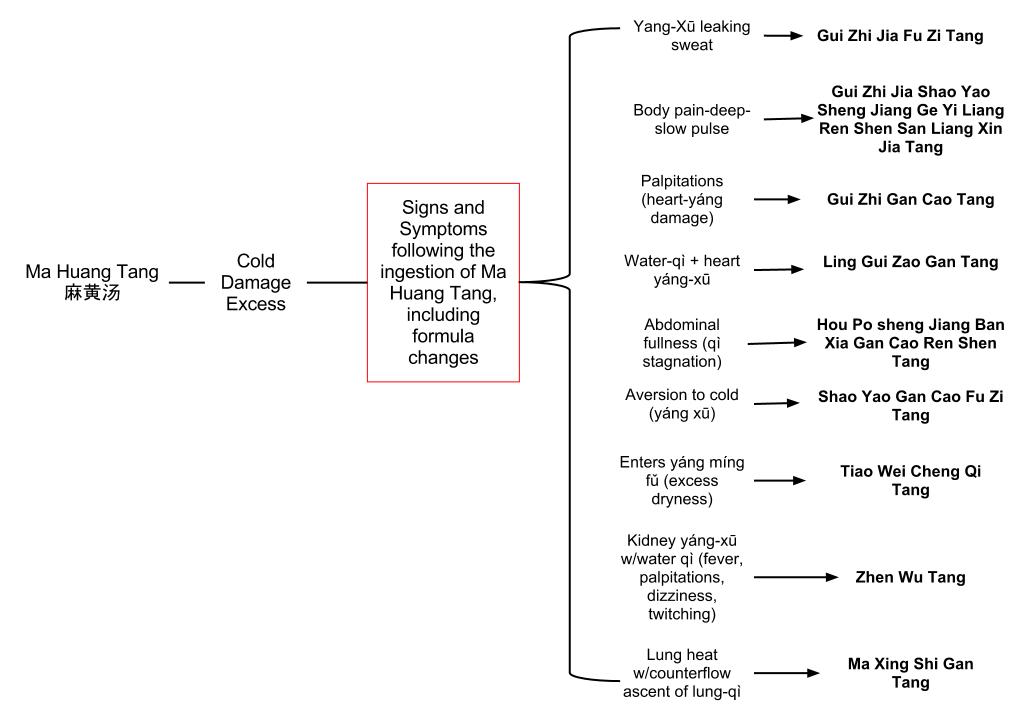
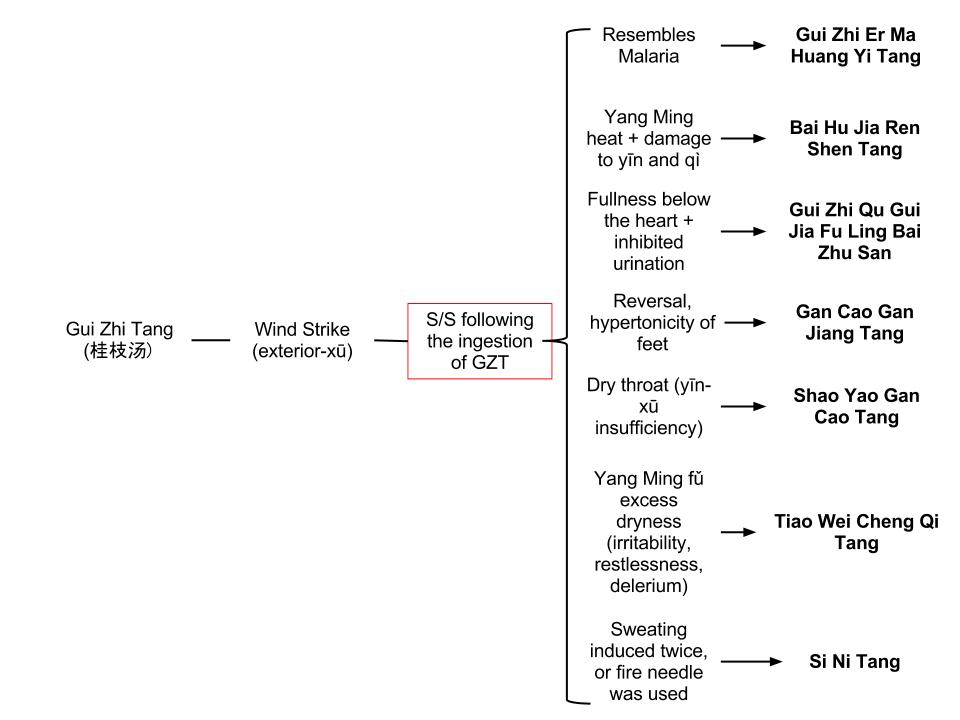
Shāng Hán Lùn Formula Charts

A few years ago I bought a little book on the Shāng hán lùn (傷寒論 Discussion of Cold Damage) which has some pretty cool summary charts at the end of each chapter.  The name is escaping me now, and since most of my books are currently in boxes, I’ll have to re-post it at a later date.
I’ve always found charts to be helpful in my learning process, so I thought I’d post a couple of them here.  So far I’ve only done a couple, so as time goes by (and permits), I’ll post more.  


A Case of Wǔ Líng Sǎn (Five Ingredient Powder with Poria)

– Fire Spirit Currents’ Fàn Zhōng-Lín (范中林)

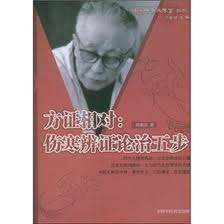
Translated from ‘Five Steps to Cold Damage Treatment According to Pattern Identification’

A six-month old child of a local Chéng Dū office worker was seen in August of 1960.

Chinese Medical Diagnosis 

On the day that the child had come in, he had been crying endlessly. His appetite had recently decreased; he had a sallow facial complexion, and had lost weight. His parent’s had no clue as to why this was occurring. One day they had suddenly noticed that the child’s scrotum was swollen, to the size of a chicken egg. Water sounds were heard when the lower abdomen was palpated. He was brought in immediately for a diagnosis.

List of Disease Mechanisms 

· Scrotal swelling, and water sounds on palpation of the lower abdomen, signify a water pattern

Comprehensive Analysis 

This is a case of water mounting (水疝), caused mainly by the congealing and stagnation of cold and dampness in the yīn organ (scrotum). The qì transforming function of the bladder is abnormal, causing qì to accumulate, which fails to disperse after a prolonged period. Water and fluids have essentially gathered and amassed causing scrotal swelling. This is congealing and amassment of cold-dampness, obstruction of the channels and vessels, qì stagnation in the lower body, and water-dampness macerating in the scrotum.

Treatment method

Treatment method should be to transform qì, move water, warm the kidneys, and disperse cold. Wǔ Líng Sǎn (Five Ingredient Powder with Poria) masters it.

Formula: 

zhū líng (Polyporus) 6g
fú líng (Poria) 6g
zé xiè (Alismatis Rhizoma) 6g
bái zhú (Atractylodis macrocephalae Rhizoma) 6g
guì zhī (Cinnamomi Ramulus) 6g
shǎng roù guì (Cinnamomi Cortex) 3g

After taking one package, the scrotal swelling had deceased, and the pain stopped.

[Commentary] 

The term ‘mounting disease’ (疝病) was first introduced in the Nèi Jīng (Inner Classic). Today, this condition is referred to in western medicine as hernia, however the meaning of these two is not identical.

Physicians of later generations have had numerous names for mounting qì, and have always believed it to be a condition that is heavily related to the Jué Yīn liver channel, hence the saying “All mounting homes to the liver channel”. Treatment mainly involves, warming the liver, and coursing wood. However, we must carry out a concrete analysis in relation to this specific case. For example, this particular case of mounting disease belongs to a Tài Yáng water amassment pattern, and therefore wǔ líng sǎn (Five Ingredient Powder with Poria) masters it. This kind of treatment need not only be applied to children or males, but can also be adapted to fit changes in females. For example, with young woman experiencing lower abdominal cold, numbness, and heaviness and prolapse in the genitals, with paroxysmal pain, this may be a suitable treatment option.

In this particular case Dr. Fàn proceeded to treat from the hand-foot Tài Yáng channel by using wǔ líng sǎn with the ‘two guì’s’ (roù guì, guì zhī) in order to disinhibit water from the centre, and diffuse yáng qì. After only two packages, the patient completely recovered.