Hu Xi-Shus’ approach in the treatment of coughs

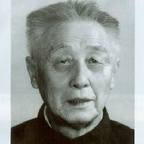
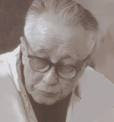
According to Dr. Hu Xi-Shu, the main cause of coughing is the invasion of phlegm-rheum, which should be treated by warm transformation, descending counterflow, and calming (the cough). hu xi-shu.jpg

When treating coughs in general, there are numerous formulas to choose from, some may even go so far as to say that there are thousands upon thousands, but Dr. Hu would most commonly use the formula Ban Xia Hou Po Tang (Pinellia and Magnolia decoction). When asked about the reasoning for this, he would answer that in the Jin Gui Yao Lue’s (Essential formulas from the golden cabinet) section on coughs it is said that there exists an intimate relationship between phlegm-rheum and coughs, and that many cases are in fact due to the upward invasion of phlegm-rheum, which causes qi counterflow with an inability to descend. In regards to the treatment of phlegm-rheum, it is said in the Jin Gui Yao Lue,

“In phlegm-rheum diseases, one must harmonize with warm medicinals”. 

This is the most important main treatment principle when treating phlegm-rheum conditions, and in addition is the main treatment principle when treating coughs. When adapting this principle (in the treatment of coughs), one must also use appropriate medicinals to guide the treatment downwards in order to descend (counterflow). Clinical practice offers us many opportunities to promptly offer a resolution of this symptom.

To read one of Dr. Hu’s cases utilizing this formula, click here.

Hu Xi-Shus’ unique approach and commonly used formulas for treating wheezing and panting

Patterns where phlegm –rheum is the primary cause of wheezing and panting

A commonly seen presentation in wheezing and panting is the contraction of an external pathogenic factor with simultaneous retention of phlegm-rheum.  In patients who are constitutionally predisposed to phlegm-damp retention, usually the initial attack by an external factor will stir the interior phlegm which will counterflow into the lung, invariably causing the wheezing and panting.  This pattern is mentioned in the Shang Han Lun, where it states:

“In cold damage where the exterior is unresolved, (and) there is water qi below the heart….”

In these cases treatment generally involves, effusion to resolve the exterior, with simultaneous warm transformation of fluids.  The various manifestations of this condition can be treated with the following prescriptions:

She Gan Ma Huang Tang: (Belamcanda and Ephedra Decoction)

射干麻黄汤

Main signs:  Aversion to cold, generalized body pain, copious phlegm, and the sound of phlegm in the back of the throat.  If this pattern is accompanied by signs such as a dry mouth, dry tongue, and heart vexation, Sheng Shi Gao may be added.

Xiao Qing Long Tang: (Minor Blue-Green Dragon Decoction)

小青龙汤

Main signs:  Aversion to cold, generalized body pain, an absence of sweating, coughing with a need to rest and lean up against something, yet unable to lie down.  (This is normally due to the presence of copious phlegm), severe coughing with frothy phlegm.  If this is accompanied by signs such as a dry throat, vexation and agitation, Sheng Shi Gao may be added.

Ge Gen He Xiao Xian Xiong Tang: (Minor Sinking into the Chest Decoction with Pueraria)

葛根和小陷胸汤

Main signs:  Hypertonic back and nape, chest fullness, oppression or pain, heat effusion, aversion to cold and panting.  If heart vexation is quite obvious, then Sheng Shi Gao may be added.

Ling Gan Wu Wei Jiang Xin Xia Xing Tang: (Poria, Licorice, Schisandra, Ginger, Asarum, Pinellia and Apricot Seed Decoction)

苓甘五味姜辛夏杏汤

Main signs:  Coughing, panting with chest fullness, spitting up of frothy phlegm and a normal taste in the mouth.

Ma Huang Fu Zi Xi Xin Tang: (Ephedra, Asarum and Prepared Aconite Decoction)

麻黄附子细辛汤

Main signs:  Aversion to cold, absence of sweating, perhaps an aversion to cold felt in the back, counterflow cold of the extremities, a fatigued spirit, and a deep-thin pulse.

Patterns where blood stasis is the primary cause of wheezing and panting.

Originally when blood stasis is laying dormant in the interior, any changes caused by external contraction, food damage or damage from the seven affects will induce and entice the movement of blood stasis which will eventually invade the liver and lungs and cause wheezing and panting.  If this stasis is not eliminated than the wheezing and panting will endure and recovery would be difficult to achieve.  Therefore many cases of wheezing and panting due to cold, or summer-heat that fail to resolve, usually contain elements of static blood.  The following are a couple formulas that can effectively treat these presentations.

Da Chai Hu Tang He Gui Zhi Fu Ling Wan (Major Bupleurum Decoction combined with Cinnamon Twig and Poria Pill)

大柴胡汤和桂枝茯苓丸

Main signs:  Chest and rib-side bitter fullness, difficulty breathing, hypertonic epigastrium, bitter taste in the mouth, dry throat, and dry bowel movements.

Da Chai Hu Tang He Tao He Cheng Qi Tang (Major Bupleurum Decoction combined with Peach Pit Decoction to Order the Qi)

大柴胡汤和桃核承气汤

Main signs:  Similar symptoms to the above, with the addition of abdominal distension and fullness, and difficult bowel movements.

Modifications to the above formulas: 

With signs of dry mouth, throat or tongue, vexation, agitation and/or vexation thirst, add Sheng Shi Gao

With signs of external contraction with symptoms of heat effusion, aversion to cold and an absence of sweating, combine with Ge Gen Tang.

With signs of sweating and significant wheezing, combine with Ma Xing Shi Gan Tang

Patterns where both phlegm-rheum and blood stasis are the primary cause

  If for example our patient presents with a Xiao Qing Long Tang presentation with elements and signs of Da Chai Hu Tang He Gui Zhi Fu Ling Wan, then these three formulas may be combined.

With difficult bowel movements it is easy to see signs of either Gui Zhi Fu Ling Wan or Tao He Cheng Qi Tang.  If in this case a She Gan Ma Huang Tang presentation exists, then the combination of these formulas would be applicable.

If signs of mouth or tongue dryness, or vexation and agitation are seen with the above formulas, then Sheng Shi Gao may be added.

Why Da Chai Hu Tang?


Dr Hu explained that many patients presenting with wheezing and/or panting manifest a Shao-Yang, Yang-Ming combination disease. Therefore, the cardinal Shang Han Lun formula Da Chai Hu Tang (Major Buplureum Decoction) may be used with quite astonishing results. Many of Dr. Hu’s students would often ask him why when treating wheezing he wouldn’t just use Ma Huang (Radix Ephedra)? He would simply state that unless the case presenting was a Ma Huang pattern, its use was not warranted. In the Shang Han Lun (On Cold damage) it states that “In wheezing with chest fullness, Ma Huang is appropriate, but in wheezing with abdominal fullness, Ma Huang should not be used”. 


Dr. Hu would explain that in order to diagnose a Shao-Yang Yang-Ming case of wheezing and panting, we need to look for symptoms such as; wheezing and panting with occasional chest fullness, rib-side pain, sweating, dry throat, dry bowel movements, etc.

Hu Xi Shu (胡希恕)Case #5- Foot pain


A 19 year old male presented on February 15, 1966 complaining of left foot swelling and pain for over 5 years. Over the last two years the pain has gotten quite severe. X-ray imaging confirmed osteogenesis of the heel.

Current symptoms: swelling and pain in the left foot, fear of cold, severe pain after walking, normal taste in the mouth, no desire to drink, a thin-white tongue coating and a deep-wiry pulse.

This is wind-dampness in the Shao-Yin and Tai-Yin, and is therefore a Gui Zhi Shao Yao Zhi Mu Tang (Cinnamon Twig,Peony and Anemarrhena Decoction) pattern.

Formula: 

Gui zhi 4 qian (Cinnamomi Cassiae, Ramulus)

Ma Huang 2 qian (Ephedrae, Herba)
Bai Shao 3 qian (Paoniae Lactiflorae, Radix)
Zhi Mu 4 qian (Anemarrhena Asphodeloidis, Rhizoma)
Sheng Jiang 4 qian (Zingiberis Officinalis Recens, Rhizoma)
Chuan Fu Zi 2 qian (Aconiti Carmichaeli Preparata, Radix Lateralis)
Fang Feng 4 qian (Ledebouriellae, Radix)
Cang Zhu 4 qian (Atractylodis, Rhizoma)
Zhi Gan Cao 2 qian (Glycyrrhizae Radix Preperata)

Results: After taking seven packages of the above formula, the foot pain had decreased. He still experienced pain after walking but would recover quickly after taking a rest. Chuan Fu Zi (Aconiti Carmichaeli Preparata, Radix Lateralis) was increased to 3 qian and after taking the above formula for another month the swelling in the foot had resolved and the pain was no longer present.

Hu Xi Shu’s Love affair with Da Chai Hu Tang 胡希恕真的爱大柴胡汤!!


Hu Xi-Shu’s commonly used formulas for impediment syndrome (痹证 Bi Zheng)

Dr. Hu was a master at utilizing classical formulas for the treatment of a wide array of syndromes. The following is a list of his most commonly used formulas and their specific patterns for the treatment of pain. hu xi-shu.jpg
I. Ge Gen Jia Zhu Tang (Kudzu Decoction plus Atractylodes Decoction)(葛根加术汤):

Neck and nape tightness and pain, heat effusion, aversion to cold, lumbar soreness, generalised heaviness, white tongue coating, wiry-slippery pulse.

Ge Gen 4 qian (Radix Puerariae)

Ma Huang 3 qian (Ephedrae, Herba)

Gui Zhi 2 qian (Cinnamomi Cassiae, Ramulus)

Sheng Jiang 3 qian (Zingiberis Officinalis Recens, Rhizoma)

Bai Shao 2 qian (Paoniae Lactiflorae, Radix)

Zhi Gan Cao 2 qian (Glycyrrhizae Radix Preperata)

Da Zao 4 pieces (Zizyphi Jujubae, Fructus)

Cang Zhu 5 qian (Atractylodis, Rhizoma)

This formula is used in both acute and chronic inflammatory joint problems, especially when manifesting with heat effusion, an absence of sweating and aversion to cold. The use of this formula is still warranted in cases of acute joint inflammation without the presence of neck and nape pain. This formula may be utilised in treating cases of lumbar muscular injury, hyperosteogenesis, ankylosing spondylitis and chronic arthritis.

II. Ma Xing Yi Gan Tang (Ephedra, Apricot Kernel, Coicis, and Licorice Decoction)

(麻杏薏甘汤):

Whole body joint pain, late afternoon heat effusion, body heaviness or swelling of the joints in the four extremities, harmony in the mouth* or sticky taste in the mouth, greasy-white tongue coating, deep-wiry-slippery pulse.

Ma Huang 3 qian (Ephedrae, Herba)

Xing Ren 2 qian (Pruni Armeniacae, Semen)

Yi Yi Ren 6 qian (Coicis Lachryma-jobi, Semen)

Zhi Gan Cao 2 qian (Glycyrrhizae Radix Preperata)

This formula pattern is commonly seen in cases of chronic and acute rheumatoid arthritis with a tendency towards damp heat. 

*Harmony of the mouth is described as a normal taste in the mouth without any dryness, stickiness or thirst, and is commonly observed in relatively healthy individuals or in mild conditions. 

III. Gui Zhi Shao Yao Zhi Mu Tang (Cinnamon Twig, Peony, and Anemarrhena Decoction) (桂枝芍药知母汤):

Whole body joint pain, joint swelling in the extremities or knees, stiffness and/or deformities in the extremities, fingers or toes, dizziness, shortness of breath, white tongue coating, wiry pulse.

Gui Zhi 4 qian (Cinnamomi Cassiae, Ramulus)

Ma Huang 2 qian (Ephedrae, Herba)

Bai Shao 3 qian (Paoniae Lactiflorae, Radix)

Sheng Jiang 5 qian (Zingiberis Officinalis Recens, Rhizoma)

Bai Zhu 5 qian (Atractylodis Macrocephalae, Rhizoma)

Zhi Mu 4 qian (Anemarrhena Asphodeloidis, Rhizoma)

Fang Feng 4 qian (Ledebouriellae, Radix)

Pao Fu Zi 2 qian (Aconiti Carmichaeli Preparata, Radix Lateralis)

Gan Cao 2 qian (Glycyrrhizae Uralensis, Radix)

This formula pattern is commonly seen in chronic rheumatic cases such as damp-heat type rheumatoid arthritis and is classified as a combination of the Shao-Yin and Tai-Yin disease stages. This formula is especially indicated in cases of swelling with joint deformities accompanied by upward rising qi and nausea. In cases where redness, swelling and heat are significant, Sheng Shi Gao (Gypsum) may be added to the above formula. 

IV. Gui Zhi Jia Ling Zhu Fu Tang (Cinnamon Twig plus Poria, Atractylodis, and Aconite Decoction) (桂枝加苓术附汤):

Lumbar, knee or shoulder joint pain, head, neck and nape pain, possibly accompanied by palpitations, epigastric pain, sweating, aversion to wind, cold extremities, harmony of the mouth, white tongue coating, wiry pulse. 

Gui Zhi 2 qian (Cinnamomi Cassiae, Ramulus)

Bai Shao 3 qian (Paoniae Lactiflorae, Radix)

Zhi Gan Cao 3 qian (Glycyrrhizae Radix Preperata)

Sheng Jiang 3 qian (Zingiberis Officinalis Recens, Rhizoma)

Da Zao 4 pieces (Zizyphi Jujubae, Fructus)

Cang Zhu 3 qian (Atractylodis, Rhizoma)

Fu Ling 3 qian (Poriae cocos, Sclerotium)

Pao Fu Zi 3 qian (Aconiti Carmichaeli Preparata, Radix Lateralis)

This was one of Dr. Hu’s most commonly used formulas. If joint pain was more evident on one side of the body, he would consider this obstruction and stasis of blood and would add a small dose of Da Huang (Radix Rhubarb) in order to quicken the blood and free the collaterals. 

V. Gui Zhi Jia Huang Qi Tang (Cinnamon Twig plus Astragali Decoction)

(桂枝加黄芪汤):

Enduring joint pain, obvious sweating and aversion to wind, cold extremities, with perhaps a warm body and numbness in the extremities. Thin-white tongue coating, moderate pulse. 

Gui Zhi 3 qian (Cinnamomi Cassiae, Ramulus)

Bai Shao 3 qian (Paoniae Lactiflorae, Radix)

Sheng Jiang 3 qian (Zingiberis Officinalis Recens, Rhizoma)

Da Zao 4 pieces (Zizyphi Jujubae, Fructus)

Zhi Gan Cao 2 qian (Glycyrrhizae Radix Preperata)

Huang Qi 3 qian (Astragali Membranacei, Radix)

This formula is used in cases of exterior vacuity combined with water-damp evils seen in cases of impediment pain, numbness and sores. 

VI. Chai Hu Gui Zhi Gan Jiang Tang combined with Dang Gui Shao Yao San (Bupleurum, Cinnamon Twig, and Ginger Decoction, plus Tangkuei and Peony Powder)

(柴胡桂枝干姜汤合当归芍药散):

Lumbar and/or pelvic pain, neck and back pain, weak knees, palpitations, fullness below the heart, spontaneous or night sweating, lower extremity oedema, white tongue coating, deep-thin-wiry pulse.

Chai Hu 4 qian (Bupleuri, Radix)

Gui Zhi 3 qian (Cinnamomi Cassiae, Ramulus)

Gan Jiang 2 qian (Zingiberis Officinalis, Rhizoma)

Huang Qin 3 qian (Scutellariae Baicalensis, Radix)

Hua Fen 4 qian (Trichosanthis Kirilowii, Radix)

Sheng Mu Li 5 qian (Ostreae, Concha)

Dang Gui 3 qian (Angelicae Sinensis, Radix)

Bai Shao 3 qian (Paoniae Lactiflorae, Radix)

Chuan Xiong 2 qian (Ligustici Chuanxiong, Radix)

Bai Zhu 3 qian (Atractylodis Macrocephalae, Rhizoma)

Ze Xie 5 qian (Alismatis Orientalis, Rhizoma)

Fu Ling 4 qian (Poria cocos, Sclerotium)

Zhi Gan Cao 2 qian (Glycyrrhizae Radix Preperata)

This formula is commonly used in the treatment of lumbar and cervical hyper-osteogenesis, osteoporosis, ankylosing spondylitis and wind-damp type rheumatic disorders. The location of this disease is found in both the Jue-Yin and Tai-Yin levels and is a pattern of blood vacuity with damp exuberance therefore treatment involves resolving the two Yin’s nourishing the blood and disinhibiting water. 

According to numerous recorded cases studies, Dr. Hu commonly employed this formula in the treatment of Systemic Lupus erythematosus (SLE).
Hu Xi-Shu (胡希恕) Case #4-Duodenal Ulcer

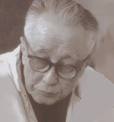
hu xi-shu.jpgMr. Wang, male, 46 years old.

Initial diagnosis on November 30, 1965: For over 10 years the patient has suffered with epigastric pain which has recently been getting worse. Treatment at a local Chinese-Western integrative clinic was unsuccessful. Chinese medicinals were used to warm the centre, rectify the Qi, quicken the blood and dispel stasis. Western medications were ineffective as well and surgery was recommended. Since the patient feared surgery, he came to the capital (BeiJing) for treatment.

Current symptoms: stabbing epigastric pain most notable when hungry, heat effusion in the back, late afternoon heat in the palms of the hands, occasional worry, palpitations, dizziness, cool body with a fear of cold, sweating and an aversion to wind. There was harmony of the mouth* with no desire to drink and slightly sloppy stools. Tongue coating was white, tongue tip was red and his pulse was thin and wiry. Barium examination revealed a 0.4cm2 postbulbar duodenal ulcer. 

Dr. Hu prescribed Xiao Jian Zhong Tang (Minor construct the centre decoction)

Gui Zhi 3 qian

Bai Shao 6 qian

Sheng Jiang 3 qian

Da Zao 4 pieces

Zhi Gan Cao 2 qian

Yi Tang ½ liang (mixed into prepared decoction)

Second consultation (12.3.1965): The pain and heat in the palms had slightly decreased but overall the epigastric stabbing pain, heat in the back and daily bowel movements were still present. The following medicinals were added to the above formula;

Chao Wu Ling Zhi 2 qian

Yuan Hu Fen 5 fen (mixed into decoction)

Third consultation (12.9.1965): The epigastric pain is no longer as obvious, but after eating the patient is experiencing focal distension below the heart. In addition, his four limbs are cold and he is unable to sleep peacefully at night. At this point the patient had to return to his hometown in Dong Bei. The formula was changed to Fu Ling Yin and sent home with him where he was to take it and until recovery. The formula ingredients were as follows:

Fu Ling 5 qian

Dang Shen 3 qian

Zhi Ke 3 qian

Cang zhu 3 qian

Sheng Jiang 3 qian

Chen Pi 1 liang

Ban Xia 4 qian

Commentary: In this case the patient presented with sweating, an aversion to wind, dizziness and heart palpitations which can signify pathogens in the exterior, specifically an exterior vacuity pattern. Therefore Xiao Jian Zhong Tang was administered. After taking three packages of the formula there was already a significant effect and after nine packages, the symptoms were basically resolved. Xiao Jian Zhong Tang is essentially Gui Zhi Jia Shao Yao Tang with the addition of Yi TangGui Zhi Jia Shao Yao Tang is originally a formula used to treat abdominal pain. With the addition of a large dose of sweet, warm, vacuity supplementing, spasm moderating Yi Tang we have the dual action of both treating abdominal pain and supplementing vacuity, hence the name ‘Construct the centre’.

*Harmony of the mouth is described as a normal taste in the mouth without any dryness, stickiness or thirst, and is commonly observed in relatively healthy individuals or in mild conditions.

5 Steps to ‘Shang Han’ treatment

I am currently reading a book titled ‘5 Steps to Shang Han treatment based on Pattern Identification”. It is a fascinating look at a very systematic approach to diagnosis and treatment using the formulary of Zhang Zhong Jing. The book is essentially centred around three very famous modern physicians, Hu Xi Shu (胡希恕), Liu Du Zhou (刘渡舟) and Fan Zhong Lin(范中林). The book includes numerous case studies by each one of them detailing their step-by-step process from diagnosis to treatment. The 5 step process is as follows;

I. TCM diagnosis (signs, symptoms, origin and constitution of patient)
II. List of disease mechanisms (6 channel differentiation, differentiation of principles, zang-fu, channels, etc…)
III. Comprehensive analysis (detailing process and location of disease)
IV. Formulas according to pattern
V. Medicinals according to pattern

I would like to offer a translation of one case from the book by Fan Zhong-Lin a prominent physician in the Fire God school of thought (火神派).

Mr.Yang, a 54 year old male from Cheng Du presented at the clinic.

Step 1: Chinese medical diagnosis
October, 1960. Over the last 2 years every day after breakfast, the patient felt very warm and feverish. His body temperature was always around 38 degrees celcius. He had relatively copious sweating that would go on for about 2 hours. Once the heat would decline, the sweating would stop and he would feel an aversion to cold. His daily symptoms included; dizziness, a bitter taste in the mouth, dry throat, chest and rib-side fullness as well as vexation and agitation felt in the chest. His tongue body was red and the coating was slightly yellow and greasy. Pulse was wiry-rapid. At his previous hospital examination the cause of his fevers were unknown and the medications administered had very little effect.

Step 2: List of disease mechanisms
The wiry pulse, alternating cold and heat, bitter taste in the mouth, dry throat, dizziness, chest and rib-side fullness and heart vexation are all obvious Shao-Yang channel signs and symptoms.

Step 3: Comprehensive Analysis

This is Shao-Yang channel disease heat effusion. Treatment methods should involve harmonizing and resolving the Shao-Yang.

Step 4: Formula according to pattern
Xiao Chai Hu Tang with additions and subtractions governs.
This condition has been going on for 2 years so as the Shang Han Lun says “When Chai Hu signs still exist, administer Xiao Chai Hu Tang”

Step 5: Medicinals according to pattern

Because the signs of heat effusion, sweating, thirst and a red tongue signify depressed heat, we remove Sheng Jiang (Rhizoma Zingiberis) and Da Zao (Fructus Jujubae) , and add Zhi Mu (Rhizoma Anemarrhenae) and Shi Gao (Gypsum Fibrosum) to clear heat.
In addition, because the chest and rib-side fullness were quite severe, this can signify that the pattern is interspersed with damp evils, therefore Mu Li (Concha Ostreae), Chen Pi (Pericarpium Citri reticulatae) and Fu Ling (Poria cocus) were added to percolate dampness, transform stasis and disperse bind.

Formula:

Chai Hu 24g
Huang Qin 10g
Fa Ban Xia 15g
Sha Shen 15g
Gan Cao 10g
Zhi Mu 15g
Shi Gao 30g
Mu Li 24g
Chen Pi 9g
Fu Ling 12g

After taking one package of the above formula, the heat declined and there was a reduction in most of his symptoms. After stopping the herbs he was instructed to rest and take care of himself for several days and afterwards he would recover. After much time the patient had come to visit Dr. Fan at his home and reported the condition had not recurred.

Can Major Buplureum Decoction treat panting & wheezing?

Occasionally when reading books written by clinical masters of our time regarding the usage of Jing Fang 经方 (classic formulas) we stumble upon what seems at first to be bizarre yet intriguing ways of using these formulas that in no way reflect any of the usages we were taught in school.  One in particular that comes to mind is Hu Xi-Shu’s usage of Major Buplureum Decoction (Da Chai Hu Tang) for wheezing and panting (what we may call modern day asthma).  In his ‘Popular Lectures on Cold Damage’ (伤寒论通俗讲话), Dr Hu explains that many patients presenting with wheezing and/or panting manifest a Shao-Yang, Yang-Ming combination disease.  Therefore, the cardinal Shang Han Lun formula Da Chai Hu Tang (Major Buplureum Decoction) may be used with quite astonishing results.   Many of Dr. Hu’s students would often ask him why when treating wheezing he wouldn’t just use Ma Huang (Radix Ephedra)?  He would simply state that unless the case presenting was a Ma Huang pattern, its use was not warranted.  In the Shang Han Lun (On Cold damage) it states that “In wheezing with chest fullness, Ma Huang is appropriate, but in wheezing with abdominal fullness, Ma Huang should not be used”.

Hu Xi-Shu (胡希恕) Case #3- Duodenal Ulcer (十二指肠溃疡)

Hu Xi-Shu, Shang Han Lun Tong Su Jiang Hua

 Bai, Male, 32 years old;

Initial diagnosis was on December 21, 1965: Patient presented with epigastric pain for over a year which has started to increase in severity over the last month. Pain is present prior to and after meals. Accompanying symptoms included belching, vomiting, epigastric focal distension, excessive worry and occasional abdominal fullness and distension. Tongue coating was white and his pulse was wiry and thin. Through a Barium meal investigation he was diagnosed with a duodenal ulcer and gastroptosis.
He was prescribed Inula and Hematite Decoction (Xuan Fu Dai Zhe Shi Tang) combined with Poria Decoction (Fu Ling Yin) and Fritillary bulb and cuttlebone powder (Wu Bei San):

Xuan Fu Hua 3 qian
Dang Shen 3 qian
Sheng Jiang 5 qian
Dai Zhe Shi 3 qian
Zhi Gan Cao 2 qian
Ban Xia 5 qian
Da Zao 4 pcs
Fu Ling 4 qian
Bai Zhu 3 qian
Chen Pi 3 qian
Zhi Ke 3 qian
Wu Zei Gu 3 qian
Chuan Bei 2 qian

Results: After taking three packages of the above formula his epigastric pain, belching, and vomiting decreased. After six packages his epigastric pain resolved and has had no obvious symptoms to this day.

Hu Xi Shu’s discussion and elucidation on cold damage 胡希恕, 越辩越明释伤寒

This is an excerpt from one of Dr. Hu’s books. It is an elucidation of clause 100 of the Shang Han Lun (On Cold Damage)

In cold damage (1), when the Yang pulse is choppy(2) and the Yin pulse is wiry(3), there should be acute abdominal pain (4) . First administer Xiao Jian Zhong Tang (5) . If there is no reduction (of symptoms), Xiao Chai Hu Tang governs (6).

Interpretation:
A pulse that is floating and choppy, is what is meant by the ‘Yang pulse is floating; at the deep level the pulse is wiry, which is written as ‘the Yin pulse is wiry’. A choppy pulse governs scanty blood and wiry governs cold exuberance. What we have here is cold damage with a floating choppy pulse and a deep wiry pulse, which signifies external blood vacuity and cold exuberance in the interior. According to these laws we should expect to see acute abdominal pain therefore Xiao Jian Zhong Tang is given.
After taking the decoction there is still no reduction of symptoms which means that the condition has yet to be resolved and because Shao Yang has the same pulse (wiry) this is considered a Tai-Yang Shao-Yang combination disease with interior cold. Xiao Jian Zhong Tang only partially treats this condition, therefore we administer Xiao Chai Hu Tang in order to resolve Shao Yang evils, and only then can we offer a cure.

Notes:
Acute abdominal pain originally belongs to both a Xiao Jian Zhong Tang pattern and to a Xiao Chai Hu Tang pattern. Ordinarily Shao yang harbors internal vacuity and central qi insufficiency and although there are Xiao Chai Hu Tang signs, we must first fortify the centre. First Xiao Jian (Zhong Tang), afterwards Chai Hu (Tang). In vacuity treating the interior first is a fixed concept, and rather than treating with the first rule of Xiao Jian Zhong Tang with no effect, it is treated with Xiao Chai Hu Tang. If in abdominal pain the pulse is wiry, this is only interior vacuity and Xiao Jian Zhong Tang can be administered without any relation to Shao Yang.

Xiao Jian Zhong Tang  小建中汤

Gui Zhi (remove skin) 3 liang
Shao Yao 6 liang
Sheng Jiang (cut) 3 liang
Da Zao (broken) 12 pieces
Gan Cao (honey fried) 2 liang
Jiao Yi 1 sheng

For the above six ingredients, use seven sheng of water. Boil until three remain, and remove the dregs. Add the malt sugar and put back on low heat until it melts. Take one sheng warm three times daily. People who vomit easily should not take this decoction due to its sweetness.

Formula interpretation:
The first five ingredients of this formula make up Gui Zhi Jia Shao Yao Tang (Tai-Yin, clause 284), which treats Tai-Yang disease abdominal fullness and periodic pain found after purgation. Adding Yi Tang which is warm and sweet makes it more supplementing. Shao Yao is bitter, sour and slightly cold and by adding the warmth of Yi Tang we have mild supplementation. This is Xiao Jian Zhong Tang.

Jiao Yi is sweet, warm, enriching, nourishing and strengthening. It relaxes tension, strengthens the Spleen and Stomach, boosts Qi and supplements vacuity cold. It governs acute abdominal pain and rumbling intestines (borborygmus). The nature and flavor of both Jiao Yi and Gan Cao are quite similar and are used for Yin, Yang, Exterior, Interior, Repletion and Vacuity, but are especially indicated in interior vacuity. They are unsuitable in abdominal pain due to excessive gastric acid.
Shao Yao is bitter, slightly cold and has the function of mild precipitation.
Jiao Yi and Bai Shao effectively treat abdominal pain, but differentiation must be made between cold, heat, vacuity and repletion. The abdominal pain associated with intestinal tuberculosis offers an opportunity to use this combination.

Notes:
Abdominal pain is found in both vacuity and repletion. Pain on palpation that is not severe even with stronger pressure belongs to Qi pain. Pain on pressure with hardness that refuses pressure is seen in accumulations and gatherings. Qi type pain should not be purged.

1. ‘Cold damage’ signifies Tai-Yang cold damage where the exterior has yet to be resolved. We do know that Xiao Jian Zhong Tang treats the abdominal pain and Xiao Chai hu Tang treats the disease if there is no reduction or lessening of symptoms. This clause is originally a Tai-Yang and Shao-Yang combination disease with interior vacuity cold.
2. ‘Yang pulse is choppy’ means the pulse is felt at a superficial level, plus liquids and blood are not filling and nourishing the exterior and the stomach is weak.
3. ‘Yin pulse is wiry’ means the pulse has a wiry quality at the deep level. A wiry pulse is thin and with strength
4. Acute pain and hyper-tonicity with pain. By the yang pulse being choppy and the yin pulse wiry, we are able to see that there is an insufficiency of liquids and blood and cold exuberance in the interior, so there should be hypertonic pain in the abdomen.
5. Xiao Jian Zhong Tang is a modified version of Gui Zhi Tang. Both these formulas can resolve the exterior, enrich and nourish the blood vessels and through its warm and sweet nature expel cold and stop pain. We can deliberate the meaning of ‘first administer’. In Tai-Yang Shao-Yang combination disease with the addition of vacuity cold in the interior, we should first save the interior and then resolve the exterior or half exterior, half interior aspect. This is the essence and spirit of clauses 93 and 94.
6. No reduction of symptoms, namely means that after taking Xiao Jian Zhong Tang the abdominal pain is not completely gone. Now because both Xiao Jian Zhong Tang and Xiao Chai Hu Tang symptoms exist, we first treat the interior and afterwards the exterior. Since Xiao Jian zhong Tang only treated half the condition we follow it with Xiao Chai Hu Tang to effect a complete resolution of symptoms