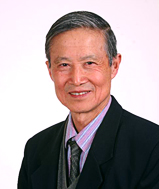
Dr. Hú Xī-Shù (胡希恕) -Chest Pain

On May 28th, 1965, a 67 year-old male presented at the clinic suffering from shortness of breath, chest pain, and hu xi shu 2.jpgchest oppression for over a month. On April 23rd he was diagnosed with a myocardial infarction, and was administered both nitroglycerine and aminophylline, which were ineffective. He also sought out Chinese medical treatments and was given various qi boosting, blood invigorating, phlegm transforming, and collateral freeing medicinals (such as rén shēn, huáng qí, mù guā, chì sháo, jiàng xiāng, táo rén, xiè bái, and yù jīn), which he had been taking for the last month but no obvious improvement was observed.  Currently he was experiencing a burning hot pain in the left side of his chest, shortness of breath, which was exacerbated with movement, he was occasionally cold and hot, had a stifling sensation below his heart, a bitter taste in the mouth, occasional head distention, insomnia, and dry stools. He had a yellow tongue coating, and a wiry, slippery pulse.  

Dr. Hú administered a modified version of dà chái hú tāng (Major Bupleurum Decoction) combined with guì zhī fú líng wán (Cinnamon and Poria Pill).

chái hú (Bupleuri Radix) 4 qián

bàn xià (Pinelliae Rhizoma preparatum) 3 qián

huáng qín (Scutellariae Radix) 3 qián

bái sháo (Paeoniae Radix alba) 3 qián

zhǐ shí (Aurantii Fructus immaturus) 3 qián

shēng jiāng (Zingiberis Rhizoma recens) 3 qián

dà zǎo (Jujubae Fructus) 4 pieces

guì zhī (Cinnamomi Ramulus) 3 qián

fú líng (Poria) 4 qián

táo rén (Juglandis Semen) 3 qián

dà huáng (Rhei Radix et Rhizoma) 2 qián

shí gāo (Gypsum fibrosum) 1 liǎng

zhì gān cǎo (Glycyrrhizae Radix preparata) 1 qián

Second consultation (June, 1st): After taking three packages of the formula most of his symptoms had improved, but he was still feeling suffocated in the evenings, had heartburn after meals, and his stools were still dry. His tongue coat was still yellow, and his pulse was wiry, slippery, and slightly rapid.  The same formula was administered but the dà huáng was increased to 3 qián.

Third consultation (December 23rd): After taking two packages of the formula, the suffocating feeling in the evenings disappeared, and while he still experienced some shortness of breath on exertion, it would gradually resolve after a little bit of rest. Afterwards he did not return for a follow up.  He was currently being treated for a weeklong cough with a modified version of bàn xià hòu pò tāng (Pinellia and Magnolia Bark Decoction).

Commentary:  In regards to the treatment of this case, the previous physicians had used blood invigorating, qi regulating medicinals, however they all failed to provide any relief for the patient, while Dr. Hú was able to offer a good effect by grasping the crucial aspect of the condition.  The previous physician paid little attention to whether the condition involved heat, cold, repletion, or vacuity, while Dr. Hú recognized this to be a repletion heat pattern stuck in the half exterior half interior portion of the body.  In addition, he recognized this as a dà chái hú tāng and guì zhī fú líng wán formula presentation, which is the reason why his treatment worked so well.

A Mismanaged Case Corrected By Zhāng Jī

Introduction:

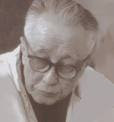
ZZJ.jpgThe following is a case presentation for a woman that was treated at my clinic in the spring of 2009.  It starts as what seems like a simple case but proves to be quite the challenge until I delved a little deeper into the classics, specifically the seminal and possibly the oldest medical text Treatise on Cold Damage (Shāng Hán Lùn), with further elucidations by the late great Běijīng physician Hú Xī-Shù (胡希恕,1898-1984).


Case:

A 29-year-old female presented at my clinic with abdominal pain she had been suffering with for four years.  Most of her pain was felt in the lower abdomen and occasionally in the peri-umbillical area.  Pain was occasionally alleviated with warm compresses and with mild abdominal massage.  When asked, she was not sure whether warm or cool drinks affected the pain but was sure to be more mindful after our first meeting. The pain was very unpredictable, appearing one day before meals, the next after without one distinct pattern.   She mentioned that she first remembers her pain starting a couple months after a difficult break up from her fiancé and several months of instability at her job.  This initial stress had first affected her sleep, which is basically now under control with the occasional use of sleep medication.  Her appetite fluctuated with her moods, as did her overall energy levels.  Bowel movements were not too affected but had a tendency to be soft.   Urination was unaffected.  Mild nausea was noted but she felt it was insignificant since she has always felt slightly nauseous since her break-up.   Her tongue was slightly pale with a thin coating and her pulse was slightly wiry on deep palpation, otherwise they were both unremarkable.  Aside from the above the symptoms, she was a healthy, active woman, who was at her wits end with this nagging pain.  Various western medications were tried all to no avail. 

I had diagnosed the pattern as a simple Liver-Spleen disharmony and assumed I could treat this with a basic Qì moving, Spleen boosting formula such as the Free and Easy Wanderer powder (Xiāo Yáo Sǎn) from the Imperial Grace Formulary of the Tai Ping Era (He Ji Ju Fang), with the addition of Fructus Amomi (Shā Rén) and Radix Aucklandiae (Mù Xiāng).  I prescribed one weeks worth of 5:1 concentrated powders.

The following week she returned to the clinic and reported that after taking the first dose of herbs there was some rumbling in her abdomen and within an hour the pain returned slightly worse than before she came to see me.  For the next couple of days after taking the herbs she felt tired and her abdominal pain was slightly more pronounced.  All other symptoms remained the same including her tongue and pulse presentations.  

In the past when presented with similar cases of digestive problems due to a Liver-Spleen disharmony when herbal formulas were prescribed correctly, at least some alleviation of symptoms would be noted after a few days.  Now in this particular case, with the slight exacerbation of her symptoms and the fact that she felt weaker, it was clear that I was missing something.  Scouring through the pages of the ‘Treatise on Cold Damage’ I came upon clause 100 where it states;

“In Cold damage, when the Yáng pulse is choppy and the Yīn pulse is wiry, there should be acute abdominal pain.  First administer Xiǎo jiàn zhōng tāng.  If there is no reduction (of symptoms), Xiǎo chái hú tāng governs”.

The use of Minor centre fortifying decoction (Xiǎo jiàn zhōng tāng) was definitely justifiable, as her abdominal pain liked the occasional use of warm compresses and abdominal massage.  These two symptoms will usually warrant a diagnosis of deficiency cold and this is what the above formula treats.  With my initial diagnosis, too much stock was put into her  stagnation and the other symptoms were overlooked.  In addition she had a deep wiry pulse, which is included in the above clause (‘Yīn pulse is wiry’).  In the original clause it states that patients experiencing nausea or vomiting should not take this formula and although she did experience some nausea, I felt it was fine and was merely a manifestation of the Qì depression more than anything else.  A weeks’ worth of Minor centre fortifying decoction granules were prescribed with no additions.

A week later she returned to report that there had been a significant reduction of pain and there were even a couple days where she would forget about her stomach and go about her day pain-free. Her energy was slightly improved but she still felt quite tired most days.  Another two weeks of the same formula were prescribed. 

Two weeks later she returned feeling great.  There was an even greater reduction in the pain (about 80%) and her energy levels were “not a hundred percent, but getting better”.  Another two weeks worth of formula with the addition of Radix Astragali (Huáng Qí) were prescribed in hopes that the condition would resolve. 

Another two weeks past and she returned feeling essentially the same as before.  Most of the abdominal pain was alleviated except for a few occasions and her energy levels were slowly improving.

xiǎo chái hú tāng was prescribed for ten days according to the rule of Clause 100, in the Treatise on Cold Damage where it states;

“If there is no reduction in symptoms, xiǎo chái hú tāng governs”.

Hú Xī-Shù offers his interpretation of this passage in his ‘Discussion and Elucidation on Cold Damage’ (越辩越明释伤寒)[1];

“No reduction of symptoms namely means that after taking xiǎo jiàn zhōng tāng the abdominal pain is not completely resolved.  Now because both xiǎo jiàn zhōng tāng and xiǎo chái hú tāng symptoms exist, we must first treat the interior and afterwards the exterior.  Since xiǎo jiàn zhōng tāng only treated half the condition, we must follow up with xiǎo chái hú tāng to affect a complete resolution of symptoms”

Ten days later my patient returned pain free. She had not had any abdominal discomfort in over eight days.  Her energy has improved and she reported an overall greater sense of wellbeing.  This was followed with another two weeks of Minor Buplureum decoction (xiǎo chái hú tāng) to consolidate her condition by resolving Qi stagnation and further supplementing her Spleen and she was discharged.  On follow up almost one year later, she has not had any major problems with her stomach and the only time she has any discomfort is following days of overindulgence in foods that are known triggers for her. 

Afterthoughts:

In retrospect I believe that my initial diagnosis of a Liver-Spleen disharmony was correct, it was my focus and choice of medicinals that failed to offer a quick resolution of symptoms. As we can see from clause 100 and from the perspective of Hú Xī-Shù, it is clear that the deficiency (of the central burner) must be addressed first and afterwards the stagnation.  As Xú Líng-Tāi says in his Categorization of Formulas from the Discussion of Cold Damage (伤寒论类方) regarding Minor Centre Fortifying Decoction[2];

“The Yáng Qì of the office of the centre (burner) is deficient, thereby allowing wood to overwhelm earth”

What this means to me is that Minor Centre Fortifying Decoction would in fact address a Liver-Spleen disharmony with emphasis on supplementation. Once we are able to bank up and entrench earth, wood would no longer be able to exploit, and as per the original clause, we follow up with a formula to harmonize Liver and Spleen, resolve Qi stagnation and supplement the Spleen such as Minor Buplureum decoction (Xiǎo chái hú tāng).

According to Kē Qín (a Qing dynasty Shang Han expert), Minor Centre Fortifying decoction is a great centre harmonizing pain-relieving formula[3] and proved to be just that in this case.

I believe this case to be a bit of an anomaly as it fit almost too perfect with Zhāng Zhòng Jǐng’s original line and even responded to his predictions.  I used to believe that practicing the classics in this day and age was far too difficult and that pre-modern conditions had nothing to do with the complex, modern maladies our patients present with today.  As I continue to study the classics and apply them in my day to day practice, I find that when we truly begin to look at our cases from a different lens we find these patterns that Zhāng Jī and the great physicians after his time spoke about and are offered numerous opportunities to utilize them and bring them to life. 

[1]胡希恕越辩越明释伤寒, 冯世纶, 中国中医药出版社, 2009.

 [2]伤寒论类方 , 徐灵胎公元1759.

[3]伤寒论翼柯琴

Yáng Vacuity Insomnia

Dr. Féng Xué-Gōng

Case taken from ‘Forum on Classical Formulas from Throughout the Country’ (全国经方论坛)

A seventy-one year old female was first seen on June 24, 2010 suffering with insomnia for over forty years, which has been quite severe over the last 3 years. When the condition had first started many years ago, she never paid much attention to it or received any kind of treatments. Over the last three years the insomnia has gotten quite bad.  She has great difficulty falling asleep, and although she typically goes to bed around nine o’clock every night, she doesn’t actually fall asleep until at least midnight or one o’clock.  Her sleep is very short, and she wakes very easily. If she takes a sleeping pill, she is able to sleep up to three or four hours. In addition, she experiences heart vexation, and has two to three dry bowel movements per day.  Her appetite is good and urination is normal.  Tongue is pale red with a white coat, and pulse is wiry.

In my experience, cases of insomnia accompanied by heart vexation are typically due to Shào Yáng depressed heat, and are treated as such. 

Formula:

A modified version of Chái Hú Jiā Lóng Gǔ Mǔ Lì Tāng (Bupleurum plus Dragon Bone and Oyster Shell Decoction)

chái hú (Bupleuri Radix) 12g

guì zhī (Cinnamomi Ramulus) 10g

huáng qín (Scutellariae Radix) 10g

dǎng shēn (Codonopsis Radix) 10g

bàn xià (Pinelliae Rhizoma preparatum) 12g

fú líng (Poria) 30g

dà huáng (Rhei Radix et Rhizoma) 10g

shēng lóng gǔ (Fossilia Ossis Mastodi) 30g

shēng mǔ lì (Ostreae Concha) 30g

hé huān pí (Albizziae Cortex) 30g

zhì gān cǎo (Glycyrrhizae Radix preparata) 6g

shēng jiāng (Zingiberis Rhizoma recens) 10g

dà zǎo (Jujubae Fructus) 10g

Seven packages were administered, and to be cooked as a water decoction, taking one pack per day. 

Follow up on July 1, 2010:  After taking the seven packages, none of her symptoms improved and she was still experiencing insomnia. Her tongue was pale red with a white coat, and the pulse was (still) wiry.

Since this woman was older, and had been suffering from insomnia for many years, I tried treating her from the perspective of a kidney yáng insufficiency with ministerial fire being unable to return to its residence.

Formula:

A modified version of Qián Yáng Fēng Suǐ Dān (Yáng Descending Marrow Sealing Elixir)

páo fù zǐ (Aconiti Radix lateralis tosta) 10g

shā rén (Amomi fructus) 15g

guī bǎn (Tortoise plastron) 10g

huáng bǎi (Phellodendri Cortex) 10g

ròu guì (Cinnamomi Cortex) 6g

shēng lóng gǔ (Fossilia Ossis Mastodi) 30g

shēng mǔ lì (Ostreae Concha) 30g

fú líng (Poria) 30g

zhì gān cǎo (Glycyrrhizae Radix preparata) 6g

Seven packages were administered, and to be cooked as a water decoction, taking one pack per day. 

Third consultation on July 8, 2010: Her insomnia was definitely improving, as she was now able to fall asleep easier, wasn’t waking up easily, and was also able to avoid taking any sleeping pills. Tongue was pale red with a white coat, and pulse was wiry.

The strategy of warming the yáng was effective so this is where the emphasis would remain.  To the previous formula (July 1st), ròu guì was increased to 10g, and 30g of cí shí was added. She was given fourteen more packages, to be cooked as a water decoction, taking one pack per day. 

Fourth consultation on July 22, 2010: The insomnia had now clearly improved, and she completely stopped taking any kind of sleeping pills. It now took her only ten minutes to fall asleep; she was not waking easily, and slept for five hour stretches at a time. Her bowel movements were now much easier occurring once per day. Her tongue was pale red, and her pulse was wiry. To her previous formula páo fù zǐ was increased to 15g and the other medicinals were left as is. She was given another fourteen packages. 

Commentary:  In clinical practice, insomnia is typically diagnosed and treated as either a yīn-blood insufficiency, heart spirit deprived of nourishment, internal brewing of fire, or hyperactivity of the heart spirit, and is rarely identified and treated as yáng vacuity. In actual fact, yáng vacuity insomnia is very common, and many cases are due to yáng vacuity insecurity with ministerial fire being unable to return to its residence and producing false heat, which can be erroneously regarded as true heat. This case clearly exemplifies this concept.

Qián Yáng Dān (Yáng Descending Elixir) is a fire spirit school formula created by Zhèng Qīn-Ān. It contains shā rén (Amomi fructus), páo fù zǐ (Aconiti Radix lateralis tosta), guī bǎn (Tortoise plastron), and gān cǎo (Glycyrrhizae Radix). Fēng Suǐ Dān (Marrow Sealing Elixir) is a formula from the Golden Mirror of Medicine (医宗金鉴), which contains huáng bǎi (Phellodendri Cortex), shā rén (Amomi fructus), and gān cǎo (Glycyrrhizae Radix). In clinical practice when treating floating and ascending vacuous yáng, master Zhèng would commonly combine these two formulas, achieving miraculous results. Later generations of physicians commonly utilized master Zhèngs methods, including Wú Péi-Héng (吴佩衡) from Yúnnán province, who renamed the combination of these two formulas Qián Yáng Fēng Suǐ Dān (Yáng Descending Marrow Sealing Elixir). Within the formula Zhèng Qīn-Ān believed that guī bǎn was able to generate the essence within water, not for the purpose of nourishing yīn, but for freeing yīn in order to assist yáng. Shā rén is generally thought of as a medicinal, that moves qì, transforms turbidity, and harmonizes the stomach.  However, in the Běn Cǎo it is said to be able to absorb qì and return it to the kidneys thereby treating and guiding qì, which is unable to return to its source.

This patients’ insomnia had lasted for many years, and was first treated as a pattern of Shào Yáng depressed heat but with no effect. After some contemplation, I figured due to the patients’ age, and the fact that this was an enduring disease, there (must have) initially (been) a yīn vacuity, which eventually affected the yáng.  Moreover, all enduring conditions (eventually) reach the kidneys. With kidney yáng insufficiency, (the kidneys) lose their ability to secure and contain, which then leaves the ministerial fire unable to return to its residence; floating yáng will then ascend disturbing the heart spirit resulting in insomnia. Therefore, the root of the insomnia here lies in yáng vacuity. After using Qián Yáng Fēng Suǐ Dān (Yáng Descending Marrow Sealing Elixir), vacuous fire is able to descend, ministerial fire will return to its residence, and the heart spirit will be tranquil, thereby eliminating insomnia. This case illustrates the importance of paying close attention to recognizing yáng vacuity insomnia and serves to increase and improve our overall clinical efficacy.

Dr. Hú Xī-Shù- A Case of a Gastrointestinal Common Cold

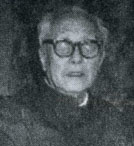
On July 6, 1967 a thirty-six-year old female presented at the clinic complaining of a cough and diarrhea, which has hu xi-shu.jpglasted for over twenty days after contracting a common cold. She has undergone IV injections of streptomycin, and taken various western medications all to no avail. 

Current signs and symptoms: cough with shortness of breath, an aversion to wind and cold, dry mouth with no desire to drink, no desire to eat, loose bowel movements occurring three to four times a day, a white tongue coating, and a thin-wiry and rapid pulse. 

She was administered gé gēn tāng (Kudzu Decoction) with shí gāo (Gypsum fibrosum)

gé gēn (Kudzu Radix) 3 qián

guì zhī (Cinnamomi Ramulus) 3 qián

bái sháo (Paeoniae Radix alba) 3 qián

zhì gān cǎo (Glycyrrhizae Radix preparata) 2 qián

dà zǎo (Jujubae Fructus) 4 pieces

má huáng (Ephedrae Herba) 2 qián

shēng jiāng (Zingiberis Rhizoma recens) 3 qián

shēng shí gāo (Gypsum fibrosum) 1 ½ liǎng

Results: After taking two packages of the above formula, all her symptoms were immediately resolved.

Commentary:  This is diarrhea due to a Tài Yáng Yáng Míng combination disease, for which Dr. Hú commonly used gé gēn tāng (Kudzu Decoction) with shí gāo (Gypsum fibrosum) to treat it. Can shí gāo be used in cases presenting with diarrhea?  This fact is usually faced with skepticism.

In clause 4 of the Shāng hán lùn (傷寒論 Discussion of Cold Damage) it says;

“On the first day of cold damage, Tài Yáng has contracted the disease, (and if) the pulse is tranquil, (this means) there has been no passage. (With) a strong desire to vomit, agitation, vexation, and a rapid and urgent pulse, (this) means passage (has occurred)”.

Here the patient had a cough, aversion to wind and cold, a dry mouth, and a rapid pulse, which suggests a passage from Tài Yáng to Yáng Míng. The major cause of diarrhea is Yáng Míng heat, therefore, gé gēn tāng (Kudzu Decoction) with shēng shí gāo (Gypsum fibrosum) is used to resolve the exterior and clear Yáng Míng heat. Once the exterior is resolved, the diarrhea will cease. In cases like this, one’s who are unfamiliar with classical formulas, will tend to use modified versions of huò xiāng zhèng qì tāng (Patchouli Qì-Regulating Decoction), however, clinically their results are very often never as quick as with this case, so therefore, cases such as these are provided to offer opportunity for further study and contemplation.

A Shào Yáng-Yáng Míng Common Cold- Dr. Féng Shì-Lún (冯世纶)

Common cold

External contraction heat effusion

52 year-old female presented on November 6, 2006 with a fever, which has lasted for seven days. Seven days prior, the patient contracted an external invasion, which manifested with a fever of 38.7°C, and because of her age, she was admitted to hospital for treatment. White blood cell count was 1.35×10⁹/L, neutrophil count was 0.83, and a chest x-ray revealed slight shadowing over the upper portion of the left lung. She was diagnosed with a lung infection.  She felt happy after entering the hospital, and while waiting for treatment to fight the infection was given an infusion of chái hú specifically for the fever. The fever would recede but would again rise, repeatedly remaining abnormal.  The physician administered qi boosting, yin nourishing medicinals all to no avail, and at that point Dr. Féng was asked to consult with the patient.

At the time of the consult the patients temperature was 38.9°C, she had a dry mouth with a bitter taste, dry throat, thirst with a desire to drink water, chest and sub-costal distention and fullness, vexation and agitation with a desire to sleep, right sub-costal pain, no cough but a phlegmy sound (in her chest), no aversion to cold, nor generalized body pain, sweating, which would not lower her temperature, dry stools occurring every three days, regular urination, reduced sleep, a red tongue body with a thin yellow slippery coat, and a wiry slippery pulse.

This woman’s age was already considered high, and moreover suffered from a fever with a lung infection, so western medications were used, but with no effect. Her physician felt that because of her age, the patho-mechanism involved must be due to qi and yin vacuity, and so used qi boosting, toxin resolving, and heat abating methods also with no effect.

Dr, Féng advocated in clinic, that the pattern identification should be based on the characteristics of the symptoms.

This patient suffered from a fever, dry throat, dry mouth with a bitter taste, subcostal distention and pain, which according to six channel pattern identification belongs to a shào yáng disease.

In addition, she also had thirst with a desire to drink, dry stools, a red tongue body with a thin yellow slippery coat, and a wiry-slippery pulse, which according to pattern identification belongs to the interior heat exuberance of a yáng míng disease.

There was no aversion to cold or generalized body pain so we can rule out a tài yáng disease.

In summing up the above signs and symptoms, the pattern is a shào yáng-yáng míng combination disease.

Dà Chái Hú Tāng with the addition of shí gāo can be used to harmonize and resolve the shào yáng, while simultaneously clearing yáng míng interior heat.

Formula: Dà Chái Hú Tāng Jiā Shēng Shí Gāo (Major Bupleurum Decoction plus Gypsum)

chái hú (Bupleuri Radix) 24g

huáng qín (Scutellariae Radix) 10g

dà huáng (Rhei Radix et Rhizoma) 6g

zhǐ shí (Aurantii Fructus immaturus) 10g

sháo yào (Paeoniae Radix alba) 10g

bàn xià (Pinelliae Rhizoma preparatum) 12g

shēng shí gāo (Gypsum fibrosum) 45g (cooked with the decoction)

shēng jiāng (Zingiberis Rhizoma recens) 15g

dà zǎo (Jujubae Fructus) 4 pieces

1 package cooked as a decoction

Results: After taking the one package, the patients fever went down from 39°C to 37.2°C. Her dry mouth with a bitter taste, thirst with a desire to drink, and sub-costal distention and fullness had resolved. Her bowel movements had also freed up. She continued taking another package of the formula, whereby her temperature had normalized and nothing else was troubling her. She underwent another chest x-ray, which now showed nothing abnormal in both lungs. She was observed for another two days in hospital after which she had completely recovered and was discharged.

Hú Xī-Shù-Guì Zhī Jiā Gé Gēn Tāng (Cinnamon Twig Decoction plus Kudzu)

C1889F76D1DD4A168D3241E3F09F193A.jpgHere’s a case of a wind strike pattern. Nothing too enlightening or complicated here, but sometimes we need to be reminded of the simple stuff!!

On December 10, 1965 a twenty one-year-old female presented at the clinic. Yesterday she had contracted a common cold manifesting with symptoms of headache, dizziness, sweating, aversion to cold, weak pain in her shoulders and back, and a tight obstructive pain in the left side of her neck on rotation towards the left. She had a thin white tongue coating, and her pulse was floating and slightly rapid.

A floating, slightly rapid pulse, thin-white tongue coat, aversion to cold, sweating, and headaches signify a Tài Yáng wind strike pattern. Shoulder and back pain, and neck pain on left rotation of the head signify a gé gēn tāng (Kudzu Decoction) pattern. The dizziness indicates that the exterior has not yet been resolved, with upward surging of qì.

Comprehensive analysis: This is a Tài Yáng wind strike pattern with simultaneous stretched stiff nape and back, seen in a guì zhī jiā gé gēn tāng (Cinnamon Twig Decoction plus Kudzu) formula presentation.

Formula:

guì zhī (Cinnamomi Ramulus) 10g

bái sháo (Paeoniae Radix alba) 10g

shēng jiāng (Zingiberis Rhizoma recens) 10g

dà zǎo (Jujubae Fructus) 4 pieces

zhì gān cǎo (Glycyrrhizae Radix preparata) 6g

gé gēn (Kudzu Radix) 12g

Results:  After taking 1 package of the formula, her symptoms decreased, and after 2 more, her symptoms had completely resolved.

Dr. Hú Xī-Shù’s approach in the treatment of coughs (Part 2)

Exterior cold and interior thin-fluids are common allies, therefore resolving the exterior and dispelling thin-fluids must be carried out simultaneously

A patient who had once come to see Dr. Hú with a chronic cough was given xiǎo qīng lóng tāng (Minor Bluegreen Dragon Decoction) with the addition of fú líng (Poria). A senior physician asked the doctor whether he felt this gentleman’s cough was due to external contraction or to internal damage? Dr. Hú simply answered “this patient’s cough is the result of external contraction combined with interior thin-fluids, and fits a xiǎo qīng lóng tāng (Minor Bluegreen Dragon Decoction) with fú líng (Poria) presentation”. This is a complete formula, which is able to address the root cause, and treat the cough’s pattern of external contraction and interior thin-fluids. Zhāng Jǐng-Yuè pointed out that coughs can be divided into two main patterns, one being external contraction, the other being internal damage. This is how we classify them according to theory, however in clinical reality, these two patterns frequently simultaneously coexist. Internal damage can easily provoke external contraction, and external contraction can also easily bring about internal damage. Therefore, in clinical practice, one does not necessarily need to determine whether the cause is external contraction or internal damage, as long as there are definite symptoms of each, and treatment is based on pattern identification, that would be sufficient. Classifying coughs into either external contraction or internal damage is of course easy to remember for new practitioners or ones with little clinical experience, however, once faced with these presentations in clinic, one would run in to difficulties finding the right formulas. For example, if a patient presents with cough, and we were to use this aforementioned strategy, determining whether or not one should diffuse and resolve (the exterior), or supplement, and boost would prove difficult and would completely neglect treatment of one or the other pattern, prolonging and failing to treat the disease. The following case clearly elucidates this problem. hu xi-shu.jpg
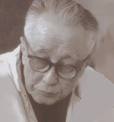
Case Study 

On January 7th, 1966, a 32-year-old female patient presented at the clinic complaining of a cough that starts every winter for the last three years. The current cough has already been going on for the last two months. A previous physician had prescribed sān ǎo tāng (Three-Unbinding Decoction), and a modified version of xìng sū sǎn (Apricot Kernel and Perilla Leaf Powder), which offered her no relief. Afterwards, she was given over twenty packages of modified zhǐ sòu sǎn (Stop Cough Formula), which had very little effect, and finally, she was prescribed a formula containing èr chén täng (Two-Aged [Herb] Decoction) combined with sān zǐ yǎng xīn tāng (three seed decoction to nourish ones’ parents), which again offered very little effect. 

Current signs and symptoms: cough, spitting up of copious amounts of white colored phlegm, an aversion to cold felt over her back, cold extremities, dry mouth with little desire to drink, chest fullness, epigastric fullness and focal distention, poor appetite, loose stools, a white-slippery tongue coat, dark tongue body, and a deep-wiry-thin pulse. 

Dr. Hú’s formula: 

má huáng (Ephedrae Herba) 3 qián

guì zhī (Cinnamomi Ramulus) 3 qián

bái sháo (Paeoniae Radix alba) 3 qián

xì xǐn (Asari Herba) 3 qián

gān jiāng (Zingiberis Rhizoma) 3 qián

zhì gān cǎo (Glycyrrhizae Radix preparata) 3 qián

wǔ wèi zǐ (Schisandrae Fructus) 4 qián

bàn xià (Pinelliae Rhizoma preparatum) 5 qián

fú líng (Poria) 4 qián 

Results: After taking three packages, her chest fullness, and spitting up of phlegm had decreased substantially. After another six packages, the cough had obviously improved. The formula was continued for another two weeks, after which the cough had completely disappeared, and her overall condition was eliminated. 

At the end of treatment, Dr. Hú once again emphasized the treatment principles for external cold with interior thin-fluids; “This treatment principle has repeatedly been stressed in the explanations of specific formula presentations such as, guì zhī qù guì jiā fú líng bái zhú tāng (Cinnamon Twig Decoction Minus Cinnamon with Added Poria and Atractylodes), and xiǎo qīng lóng tāng (Minor Bluegreen Dragon Decoction) where the root is as such”: “There are cold pathogens in the exterior, and thin-fluids in the interior. These fluids create stoppage in the interior, whereas the interior is somewhat obstructed. At the same time nothing is able to penetrate the exterior and if water is unable to be disinhibited, the exterior would be unable to resolve. If a strong sweat is promoted, or if the exterior is diffused strongly, the interior thin-fluids will be agitated and numerous signs will appear. If we simply disinhibit water, pathogens will invariably enter the interior”. In this particular case, an exterior resolving formula with medicinals to disinhibit water, and drive out thin-fluids was used, thereby, affecting both the exterior and interior. The formula used contains má huáng (Ephedrae Herba), guì zhī (Cinnamomi Ramulus), bái sháo (Paeoniae Radix alba), and gān cǎo (Glycyrrhizae Radix) to promote sweating, in order to expel exterior pathogens. bàn xià (Pinelliae Rhizoma preparatum), gān jiāng (Zingiberis Rhizoma), wǔ wèi zǐ (Schisandrae Fructus), and fú líng (Poria) drive out cold in order to eliminate interior thin-fluids. Therefore, once the exterior is resolved and interior thin-fluids removed, the cough will spontaneously cease. 

A dry cough does not necessarily mean an absence of phlegm. A formula to transform phlegm and lower qì can arrest these coughs

Patients with dry coughs are commonly seen in clinical practice, and Dr. Hú would commonly treat these patients with phlegm transforming, counterflow descending medicinals such as, Bàn Xià Hòu Pò Tāng (Pinellia and Magnolia Bark Decoction), or Líng Gān Wǔ Wèi Jiāng Xīn Xià Tāng (Poria, Licorice, Schisandra, Ginger, Asarum, and Pinellia Decoction), which can quickly arrest coughing. Because this can seem quite puzzling many of us have asked, “Since many cases of dry coughs are due to yīn deficiency or hyperactive fire, and treatment should involve enriching yīn or clearing heat and descending fire, wouldn’t this be considered an adverse treatment?” Dr. Hú would just say, “This is actually the correct treatment and not an adverse treatment”. Furthermore, he shared with us his vast experience and clinical applications of their treatment. He would say that there are many patients with dry coughs who continuously take formulas, and the coughs fail to resolve even after several months. One would view the case and identify the pattern as lung fire, or liver fire, or yīn deficiency, and treat with medicinals such as huáng qín (Scutellariae Radix), zhī zǐ (Gardeniae Fructus), shēng dì huáng (Rehmanniae Radix), zhī mǔ (Anemarrhenae Rhizoma), bèi mǔ (Fritillariae Bulbus), etc, and even after extended periods of time, there is minimal effect. What is the reason? Actually this principle is quite simple; the Chinese medicine concept of treatment based on pattern identification is used for the whole body, and not just according to one individual symptom. Phlegm and thin-fluids harassment is one of the main causes of coughing and wheezing, and the coughing up of phlegm is one basis for pattern identification, but is not the only symptom. The Chinese medical concept of phlegm and thin-fluids is quite extensive, and there are numerous cases where in an absence of phlegm, there is an absence of cough, just as there are numerous cases of cough in the absence of phlegm. We must do an overall differentiation of patterns. The following case helps illustrate this point. 

Case Study 

A 38-year-old female was first seen on Feb 12 1966. This patient had suffered with a dry cough and itchy throat for over a month. She had taken a modified version of zhǐ sòu sǎn (Stop Cough Formula), and modified versions of sāng xìng tāng (Mulberry Leaf and Apricot Kernel Decoction) and mài mén dōng tāng (Ophiopogonis Decoction). The cough not only failed to improve, but was actually getting worse. Currently she presents with a dry cough, itchy throat, dry mouth with no desire to drink, belching, chest oppression, loose bowel movements occurring once or twice daily, a thick slimy tongue coating and a slippery thin pulse. 

She was prescribed a modified version of Líng Gān Wǔ Wèi Jiāng Xīn Xià Tāng (Poria, Licorice, Schisandra, Ginger, Asarum, and Pinellia Decoction)

fú líng (Poria) 4 qián

xì xǐn (Asari Herba) 2 qián

wǔ wèi zǐ (Schisandrae Fructus) 4 qián

bàn xià (Pinelliae Rhizoma preparatum) 5 qián

zhì gān cǎo (Glycyrrhizae Radix preparata) 2 qián

chén pí (Citri reticulatae Pericarpium) 5 qián

shēng jiāng (Zingiberis Rhizoma recens) 3 qián

xìng rén (Armeniacae Semen amarum) 3 qián

jié gěng (Platycodi Radix) 3 qián

zhì pí pá yè (Eriobotryae Folium preparata) 3 qian

Results: After taking one package of the above formula, the cough had decreased. After three packages the cough stopped. 

The above patient suffered from a dry cough, itchy throat and dry mouth commonly seen in lung heat, liver fire or yīn deficiency patterns. In addition this patient also had no desire to drink, belching, chest oppression, sloppy stools, a thick slimy tongue coating and a slippery pulse. All these signify a phlegm-thin-fluids pattern. The dry cough is from phlegm-thin-fluids invading the lung and impaired diffusion and downbearing of the lung. The dry cough and itchy throat are a result of stagnation and obstruction to fluids, which are unable to bear upwards. Therefore when treating this type of dry cough, using bitter cold, heat clearing medicinals or sweet cold yīn enriching herbs will only worsen the stagnation and obstruction of fluids and cause phlegm and thin-fluids to harass the upper (burner) and delay recovery. Because phlegm was treated by restraint and the formula was chosen on the basis of the pattern, only three packages were needed for recovery. 

When diffusing the lungs and transforming phlegm is ineffective, harmonizing and resolving shào yáng can achieve surprisingly remarkable results

A common cause for coughs is the upward harassment of phlegm and thin-fluids, with the lungs losing their ability to diffuse and downbear. Therefore, a major method of treatment is to diffuse the lungs, and transform phlegm. However when treating according to this law, and our effectiveness is less than satisfactory, this is mainly because of failure to analyze the cause, poor pattern identification, or failing to use medicinals and formulas according to the pattern. There are some cases of coughs where pathogenic factors are neither in the exterior, nor the interior, but are half-exterior, half-interior. If we use methods such as diffusing the lungs, transforming phlegm, resolving the exterior and transforming thin-fluids when treating these kinds of coughs, then of course we won’t see positive results. Here, we must use the method of harmonizing and resolving the shào yáng, in order to obtain quick resolution of the condition. There is a very clear-cut account of this in the Shāng hán lùn (傷寒論 Discussion of Cold Damage) where it states in line 96: 

“When in cold damage or wind strike that has lasted for six or seven days, there is alternating chills and fever, chest and subcostal fullness, dejection with no desire to eat or drink, irritability, and frequent vomiting, or possibly irritability in the chest with no vomiting; or thirst, or abdominal pain, or sub-costal hard focal distention, or palpitations below the heart with difficult urination, or absence of thirst with mild generalized heat, or cough; xiǎo chái hú tāng (Minor Bupleurum Decoction) masters it”. 

Where it says ‘or cough’, it is mentioning it alongside the numerous signs of a xiǎo chái hú tāng (Minor Bupleurum Decoction) presentation. When we see cases of coughing, in combination with some of the other representative signs and symptoms of a xiǎo chái hú tāng (Minor Bupleurum Decoction) presentation, this formula may be used. Therefore, Dr. Hú commonly used this formula in the treatment of coughs. 

Case Study 

On March 12, 1965, a thirty-four-year old female patient presented at the clinic, complaining of a cough that has lasted for well over two years. It had previously started after contracting a common cold, and presents all year: worse in the winter, and mild in the summer. She explained that the cough would typically manifest in the late morning (10:00am), late afternoon (between 3:00pm and 4:00pm), and again in the early evening (8:00pm). She was seen at another hospital where she was given over thirty packages of a formula (containing various lung diffusing, phlegm transforming medicinals such as xìng rén (Armeniacae Semen amarum), jié gěng (Platycodi Radix), bàn xià (Pinelliae Rhizoma preparatum), guā lóu (Trichosanthis Fructus), pí pá yè (Eriobotryae Folium), qián hú (Peucedani Radix), etc.) all to no avail.  

Current symptoms: spitting up of white-frothy sputum, nausea, dry throat, absence of sweating, bilateral subcostal distension and fullness, a red tongue body, a thin white tongue coat, and a wiry-slippery pulse. In addition, she was diagnosed with tuberculosis in 1962. 

Dr. Hú prescribed a modified version of xiǎo chái hú tāng (Minor Bupleurum Decoction) 

chái hú (Bupleuri Radix) 3 qián

dǎng shēn (Codonopsis Radix) 3 qián

bàn xià (Pinelliae Rhizoma preparatum) 3 qián

huáng qín (Scutellariae Radix) 3 qián

dà zǎo (Jujubae Fructus) 4 pieces

zhì gān cǎo (Glycyrrhizae Radix preparata) 2 qián

shēng jiāng (Zingiberis Rhizoma recens) 3 qián

jié gěng (Platycodi Radix) 2 qián

bái sháo (Paeoniae Radix alba) 2 qián 

Results: After taking six packages of the formula, her cough had decreased. bái sháo (Paeoniae Radix alba) was removed from the formula, and 2 qián of zhǐ shí (Aurantii Fructus immaturus), and 4 qián each of shēng lóng gǔ (Fossilia Ossis Mastodi), and mǔ lì (Ostreae Concha) were added. After six more packages, the subcostal distension and fullness was gone. Afterwards, she was given over ten packages of a modified version of Bàn Xià Hòu Pò Tāng (Pinellia and Magnolia Bark Decoction), and her cough had completely resolved. 

The characteristics signs of this case were the cough, which occurred at specific times, the subcostal distension and fullness, nausea, and dry throat, which are all typical of a Shào Yáng presentation. We can say that with this case, the pathogenic factors were neither in the exterior, nor the interior, but lay in the half-exterior, and half-interior aspects of the body. It can also be said that in cases of enduring coughs, both the stomach qì and the defensive qì are deficient, which explains why lung diffusing, phlegm transforming medicinals would be ineffective, and unable to expel the pathogenic factors. Here we must use medicinals such as dǎng shēn (Codonopsis Radix), bàn xià (Pinelliae Rhizoma preparatum), shēng jiāng (Zingiberis Rhizoma recens), dà zǎo (Jujubae Fructus), and gān cǎo (Glycyrrhizae Radix) in order to supplement the center and strengthen the defense. Only then can the pathogens be expelled into the exterior, and once they are eliminated, the cough can resolve on its own. 

Commentary: The five cases above (see part 1 here) introduced us to five different formula presentations, and Dr. Hú’s main strategies and experience in treating coughs. Dr. Hú always utilized the method of differentiation according to formula presentations, and in the treatment of coughs, there are numerous such as, guì zhī jiā hòu pò xìng zǐ tāng (Cinnamon Twig Decoction Plus Magnolia Bark and Apricot Kernel), má xìng shí gān tāng (Ephedra, Apricot Kernel, Gypsum and Licorice Decoction), sāng jú yǐn (Mulberry Leaf and Chrysanthemum Decoction), má xìng yǐ gān tāng (Ephedra, Apricot Kernel, Coicis and Licorice Decoction), xiè xīn tāng (Drain the Epigastrium Decoction), mài mén dōng tāng (Ophiopogonis Decoction), líng gān wǔ wèi jiāng xīn xià xìng dá huáng tāng (Poria, Licorice, Schisandra, Ginger, Asarum, Pinellia, Apricot Kernel, and Rhubarb Decoction), etc. With that being said, once we encounter a specific formula presentation, we are able to employ specific formulas and medicinals to treat the condition, and must not be limited by the idea of one formula – one method.
A Case of Lumbar and Neck Pain-Professor Féng Shì-Lún (冯世纶)

Gé Gēn Jiā Bàn Xià Tāng (Kudzu Decoction with Pinellia)

On December 21, 1965 a twenty one-year old female presented at the clinic. The previous day she had contracted a common cold manifesting with symptoms of headache, dizziness, generalized body pain, lumbar pain, nausea with a desire to vomit, aversion to cold, and frequent abdominal pain with loose bowel movements. Her pulse was floating-rapid, and she had a thin white tongue coating.

The white tongue coat, floating-rapid pulse, aversion to cold, headache, generalized body pain, and lumbar pain signify Tài Yáng cold damage. The frequent abdominal pain with loose bowel movements indicates Tài Yīn (disease). The dizziness, and nausea with desire to vomit show that there is interior rheum invading upwards, which is a bàn xià (Pinelliae Rhizoma preparatum) presentation.

Comprehensive analysis: This is a Tài Yáng Tài Yīn combination disease, which fits with a gé gēn jiā bàn xià tāng (Kudzu Decoction with Pinellia) presentation.

Formula:

gé gēn (Kudzu Radix) 12g
má huáng (Ephedrae Herba) 10g
guì zhī (Cinnamomi Ramulus) 10g
shēng jiāng (Zingiberis Rhizoma recens) 10g
bái sháo (Paeoniae Radix alba) 10g
dà zǎo (Jujubae Fructus) 4 pieces
zhì gān cǎo (Glycyrrhizae Radix preparata) 6g
bàn xià (Pinelliae Rhizoma preparatum) 12g

Results: After taking 1 package of the formula, her symptoms decreased, and after 2 packages, her symptoms had completely resolved.

Huáng Qín Tāng [Line 172]

Chéng Wú-Jǐ 成无己

From ‘A commentary on the Annotated Shāng Hán Lùn’ (注解伤寒伦) by Chéng Wú-Jǐ

Line 172 

In a Tài Yáng and Shào Yáng combination disease with spontaneous diarrhea, give huáng qín tāng (Scutellaria Decoction); if there is retching, huáng qín jiā bàn xià shēng jiāng tāng (Scutellaria Decoction plus Pinellia and Fresh Ginger) rules it. 

Commentary: In a Tài Yáng and Yáng Míng combination disease, spontaneous diarrhea is coming from the exterior, and gé gēn tāng (Kudzu Decoction) is given to effuse sweat. In a Yáng Míng and Shào Yáng combination disease, spontaneous diarrhea is coming from the interior, and a chéng qì tāng (Order the Qi Decoction) formula is used to precipitate it. This is a Tài Yáng and Shào Yáng combination disease, and the spontaneous diarrhea is a result of the condition being half in the exterior and half in the interior. Here it would be inappropriate to promote sweat or precipitate, so huáng qín tāng (Scutellariae Decoction) is given to harmonize and resolve the pathogens laying half in the exterior and half in the interior. Retching indicates counterflow of stomach qì so bàn xià (Pinelliae Rhizoma preparatum) and shēng jiāng (Zingiberis Rhizoma recens) are added to dissipate counterflow qì.

Huáng Qín Tāng (Scutellariae Decoction)

huáng qín (Scutellariae Radix) 3 liǎng (9g) [acrid-cold]
zhì gān cǎo (Glycyrrhizae Radix preparata) 2 liǎng (6g) [sweet-neutral]
sháo yào (Paeoniae Radix) 2 liǎng (6g) [sour-neutral]*
dà zǎo (Jujubae Fructus) 12 pieces, broken [sweet-warm]

*In the Běn Cǎo Jīng, sháo yào (Paeoniae Radix) is classified as bitter, and is considered to be mildly cold in the Míng Yī Bié Lù.

Commentary: In vacuity and non-repletion, (the) bitter (flavor) is used to harden, and sour is used to contract. huáng qín (Scutellariae Radix) and sháo yào (Paeoniae Radix) are bitter and sour, and are used to harden and constrain the qì of the stomach and intestines. In weakness and insufficiency, (the) sweet (flavor) is used to supplement. gān cǎo (Glycyrrhizae Radix) and dà zǎo (Jujubae Fructus) are both sweet and can supplement and secure stomach and intestinal weakness.

Simmer the four ingredients above in 1 dǒu of water (2,000ml) until reduced to 3 shēng (600ml). Remove the dregs and take 1 shēng (200ml) heated, twice during the day and one at night. If there is retching, add ½ shēng (100ml) of bàn xià (Pinelliae Rhizoma preparatum) and 3 liǎng (9g) of shēng jiāng (Zingiberis Rhizoma recens)*.

*The Sòng dynasty version does not include this modification but has a separate line for huáng qín jiā bàn xià shēng jiāng tāng (Scutellaria Decoction plus Pinellia and Fresh Ginger).