The Poetry of Wáng Wéi 王维

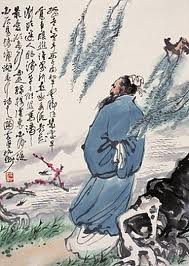
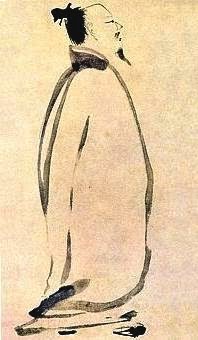
Wáng Wéi 王维 (693 or 694 or 701 – 761), courtesy name Mójí 摩诘, also known as Mójí Jūshì 摩诘居士, was originally from Hédōng Púzhōu 河东蒲州 (modern Yongji, Shanxi). He later moved to Jīngzhào Lántián 京兆蓝田 (modern Lantian, Shaanxi), and his ancestral home was Qíxiàn 祁县 in Shanxi. He was a poet and painter of the Tang dynasty.

He came from the Hedong branch of the Tàiyuán Wángshì 太原王氏, known specifically as the Hédōng Wángshì 河东王氏. At nineteen, he traveled to Jingzhao prefecture to sit for the examinations and won first place. At twenty-one, he passed the jìnshì 进士 examination. Over the years, he served as Yòu Shíyí 右拾遗 (Right Remonstrator), Jiǎnchá Yùshǐ 监察御史 (Censor), and Héxī Jiédùshǐ Pànguān 河西节度使判官 (Assistant to the Military Commissioner of Héxī).

During Emperor Xuánzōng’s Tiānbǎo era, he was appointed Lìbù Lángzhōng 吏部郎中 (Director in the Ministry of Personnel) and Gěishìzhōng 给事中 (Palace Aide). When Ān Lùshān 安禄山 captured Cháng’ān 长安, Wáng Wéi  was forced to accept an official position under the rebel regime. After Cháng’ān was retaken, he was demoted to Tàizǐ Zhōngyǔn 太子中允 (Assistant to the Heir Apparent), but later rose to Shàngshū Yòuchéng 尚书右丞 (Vice Minister of the Ministry of Works). He died in the second year of the Shàngyuán 上元 era (761), in the seventh month, at the age of sixty-one.
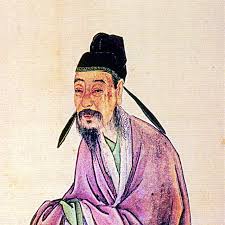
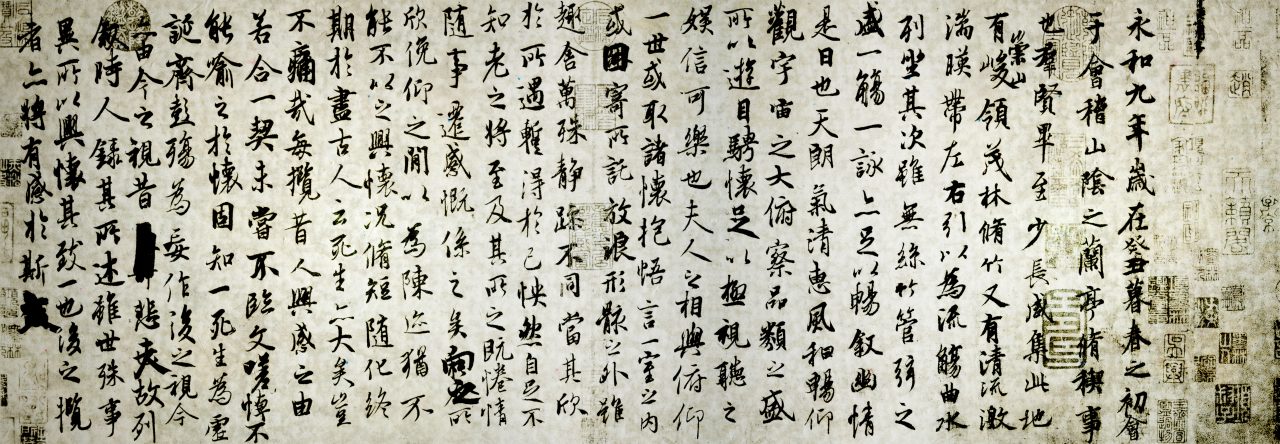
Wáng Wéi  not only practiced Chán 禅 Buddhism and studied Daoist teachings (Zhuāngxué 庄学, Xìndào 信道), but also excelled in poetry, calligraphy, painting, and music. His poetic fame was especially prominent during the Kāiyuán 开元 and Tiānbǎo 天宝 eras, and he was particularly skilled in five-character verse (wǔyán 五言).

Many of his poems describe landscapes and pastoral life; together with Mèng Hàorán 孟浩然, he was known as “Wáng–Mèng 王孟” and was honored with the title “Poet-Buddha” (Shīfó 诗佛). His painting, especially his landscape style, reached great heights, and later generations regarded him as the founder of the Southern School of landscape painting (Nánzōng shānshuǐhuà zhī zǔ 南宗山水画之祖).

Sū Shì 苏轼 said of him:
“Taste Mojie’s poems and there are paintings within them; view Mojie’s paintings and there is poetry within them.”

More than 400 of his poems survive today. Representative works include “Xiāngsī 相思” (Longing) and “Shānjū Qiūmíng 山居秋暝” (Autumn Evening in the Mountains). His extant writings include Wáng Yòuchéng Jí 《王右丞集》 and Huàxué Mìjué 《画学秘诀》.

1.《鸟鸣涧》
鸟鸣涧
人闲桂花落,
夜静青山空。
月出惊山鸟,
时鸣春涧中。


Birds Calling in the Ravine
With people at leisure, osmanthus blossoms fall;
In the still night, green mountains lie empty.
When the moon rises, it startles the mountain birds,
Who now and then cry out in the spring ravine.

Commentary
In the first two lines, the poem’s focus settles on the words “fall” and “empty.” “Fall” portrays the poet’s unhurried, leisurely state of mind—only then can one sense the tiny osmanthus blossoms drifting down without a sound. “Empty” depicts the vast, far-reaching atmosphere created by the stillness of night.
The next two lines shift from silence to sound: “startled” and “crying” further express the tranquility of the moonlit night and the emptiness of the valleys. The most interesting point is that through the birds’ cry, the desolate quiet of the first lines suddenly gives rise to a pulse of life, filling the poem with vitality amidst its serenity. This is precisely the elegant, leisurely attitude toward life that Wáng Wéi  pursued.

2.《杂诗》
君自故乡来,应知故乡事。
来日绮窗前,寒梅着花未?


Miscellaneous Poem
You come from my old hometown—
You must know the affairs of home.
Tell me, before the embroidered window,
Has the winter plum begun to bloom?

Commentary
This is a uniquely conceived poem of homesickness. The poet expresses intense longing for home through concern for the plum blossoms there. All four lines are the traveler’s questions—implying deep care for his homeland.
He could ask about many things, yet he chooses the plum outside the window. This seemingly small and casual question contains boundless longing and affection. The “winter plum” is no longer just a plant before the window, but a symbol of all that is worth remembering at home—an embodiment of homesickness that feels intimate, natural, and full of meaning.

3.《相思》
红豆生南国,春来发几枝。
愿君多采撷,此物最相思。


Longing
Red berries grow in the southern land—
In spring, how many new branches appear?
I hope you gather them in plenty,
For this is the seed of deepest longing.

Commentary
This poem was written for the famous singer Li Guinian. In only twenty characters, it expresses the poet’s heartfelt affection. After the An Lushan Rebellion, Li Guinian wandered in the south, and it is said he often sang this poem, deeply moving all who heard it.
The first two lines naturally and sincerely introduce the red berries. The last two lines convey feeling through metaphor—intimate and touching. Centered entirely on the symbol of the red berry, the poem expresses longing with simplicity and warmth, creating a lasting emotional resonance.

4.《九月九日忆山东兄弟》
独在异乡为异客,每逢佳节倍思亲。
遥知兄弟登高处,遍插茱萸少一人。


Thinking of My Brothers on the Double Ninth
Alone in a strange land as a lonely guest,
Every festive day my thoughts of home double.
From afar I know my brothers have climbed the heights;
Among the dogwood sprigs they wear, one person is missing—me.

Commentary
This is a festival poem expressing longing for family.
The first two lines describe the poet’s inner feelings during the festival. In the first line, one “alone” and two uses of “foreign/strange” portray a deep sense of isolation and unfamiliarity, making the second line’s “doubled homesickness” especially affecting. It resonates with anyone who has spent a holiday far from home, touching the heart and becoming a timeless line.
The last two lines use the custom of climbing heights and wearing dogwood on the Double Ninth Festival to imagine the poet’s brothers back home. This not only shows his longing for family but also emphasizes his own disappointment and loneliness—deepening the poem’s theme.

5.《渭城曲》 / 《送元二使安西》
渭城朝雨浥轻尘,客舍青青柳色新。
劝君更尽一杯酒,西出阳关无故人。


Song of Weicheng (also Seeing Yuan Er Off to Anxi)
Morning rain at Weicheng dampens the light dust;
At the travelers’ lodge, the willows look freshly green.
I urge you—drink one more cup of wine,
For once you pass west of Yang Gate, there will be no old friends.

Commentary
The poem depicts the emotional scene of parting with a close friend. The first two lines describe the beauty of the homeland after rain; the last two express the affection and reluctance at parting.
Artistically, the opening lines serve as a gentle prelude, while the final lines reveal the true theme. The poet skillfully conveys sorrow and tenderness with restraint, making the emotions sincere and warm. Thus this poem has been passed down through the ages and is loved by generations.
Hán Shān’s Legacy: Poetry, Philosophy, and Buddhist Influence

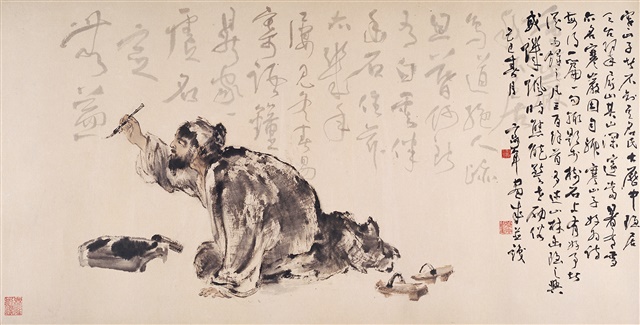
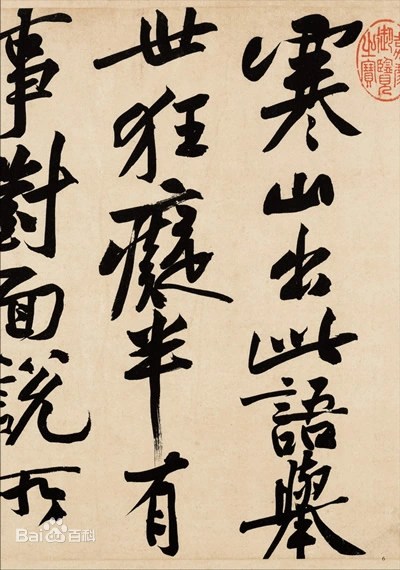
Hanshan 寒山 (dates of birth and death unknown), courtesy name and sobriquet also unknown, was a native of Chang’an (modern-day Xi’an, Shaanxi) and lived in seclusion in the Tiantai Mountains of eastern Zhejiang for over 70 years, passing away at the age of over 100. According to modern day poet Red Pine, Han Shan was born in the ancient town of Hantan at the western edge of the Yellow River floodplain, about 300 kilometres east of Chang’an, and his family only moved to Chang’an when he was little.1 Scholars generally place his life during the Tang Dynasty (618–907 CE), though specific details about his life are elusive due to his reclusive lifestyle and the mythical aura surrounding him.

A renowned poet-monk of the Tang Dynasty, Hanshan hailed from an aristocratic family but failed multiple attempts at the imperial examinations. Eventually, he renounced worldly pursuits, became a monk, and after the age of 30, withdrew to the Tiantai Mountains, living in seclusion and adopting the name “Hanshan” (Cold Mountain).

According to Yan Zhenfei’s Examination of Hanshan’s Life Story, supported by historical texts such as Northern History and Book of Sui, Hanshan was the son of Yang Wen, a descendant of the Sui royal family. Due to jealousy and ostracism within the imperial court, combined with the influence of Buddhist thought, he retreated to the Cold Cliffs of the Tiantai Mountains. He was known for his eccentric lifestyle, wearing a birch-bark hat, tattered clothing, and wooden clogs. He enjoyed playing with children, spoke freely and unpredictably, and was difficult for others to understand. He often visited the Guoqing Temple in Tiantai, where he befriended two monks, Fenggan and Shide. Hanshan would collect leftover temple food in bamboo tubes to sustain himself in his mountain home.

Hanshan frequently wrote poems and gathas (short Buddhist verses) on the rocks and trees of the wilderness. His poetry was straightforward, capturing the joys of mountain life and expressing Buddhist ideals of detachment, life’s wisdom, and compassion for the poor. He also criticized social norms and injustice. Han Shan’s poems focus on Buddhist and Daoist themes, with self-reflections and commentary on Tang society. These stylistic and thematic elements align with the intellectual and spiritual currents of the Tang era. His works were later compiled into the Collected Poems of Hanshan in three volumes, with 312 poems preserved in the Complete Tang Poems. In the Yuan Dynasty, his works were introduced to Korea and Japan and later translated into languages like Japanese, English, and French.

Legend has it that the Taoist that first collected Han Shan’s poetry, was a man named Xu Lingfu, who had moved to the Tiantai mountains in 815 to practice and live in seclusion as well and stayed for his remaining days. Based on several writings, we can ascertain that the two met sometime after 825 and before Xu’s death in 841.

This legendary poet, initially overlooked by society, gained increasing recognition and global dissemination in the 20th century. As one of his poems proudly declares:

Some laugh at my poetry,
 [yet] my poems unite with the classical odes.
 No need for Zheng’s commentary,
 Nor Mao’s annotations to shine.2

Han Shan is more often regarded as a spiritual figure than a historical one. He is depicted as a “laughing hermit” embodying Zen wisdom, with his poetry serving as a timeless bridge to his thought rather than a concrete record of his life.
The following are a few personal favourites that I feel capture the essence of Han Shan’s style and voice. All translations are my own.

我居山,勿人識。白雲中,常寂寂。

I reside in the mountains unaware of anyone, among the white clouds, always in solitude. 


寒山深,我稱心。
純白石,勿黃金。
泉聲響,撫伯琴。
有子期,辨此音。

Deep in cold mountain, I am content.
Pure white stones are not gold. 
The springs sound, and I gently pluck a qin.
If Ziqi3 were here, he’d recognize these sounds.


寒山子,長如是;
獨自居,不生死.

Master cold mountain, is always like this,
residing alone, free from birth or death.4

重岩我卜居,鸟道绝人迹。
庭际何所有,白云抱幽石。
住兹凡几年,屡见春冬易。
寄语钟鼎家,虚名定无益

In the layered cliffs, I chose my dwelling,
Where bird paths are cut from human presence.
What is at my courtyard edge?
White clouds embrace the shrouded stones.
I have lived here many years, observing the changes of the seasons.5
I send word to households with bells and tripods,6
Empty titles are of no benefit.

欲得安身处,寒山可长保。
微风吹幽松,近听声愈好。
下有斑白人,喃喃读黄老。
十年归不得,忘却来时道。

If you desire a place to calm your body, cold mountain can keep you protected.
A gentle breeze blows hidden pines, the closer you come, the more exceptional it sounds.
Below a grey haired man mutters [the words] he has read of Huang-Lao.7
For ten years he has not returned home, forgotten the path from which he came.

独卧重岩下, 蒸云昼不消。
室中虽暡靉, 心里绝喧嚣。
梦去游金阙, 魂归度石桥。
抛除闹我者, 历历树间瓢。

Alone I lie beneath the layered cliffs,
Steaming clouds, fail to disperse throughout the day.
Though the room is dim and misty,
My heart-mind is free from all clamor.
In dreams, I float within the imperial palace,
My ethereal soul returns, crossing the stone bridge.
I cast away things that disturb me,
Especially the gourd among the trees.

凡读我诗者, 心中须护净。
悭贪继日廉, 谄曲登时正。
驱遣除恶业, 归依受真性。
今日得佛身, 急急如律令。

All who read my poems,
Must protect and purify their heart-mind.
Let grudging and greed be purified daily,
And flattery and fawning be corrected at once.
Drive away and eliminate evil conduct,
Take refuge and receive your true nature.
Attain the Buddha’s body today—
Swiftly, swiftly, as the law commands.

家有寒山詩,
勝汝看經卷。
書放屏風上,
時時看一遍。

Having Hanshan’s poems at home
Surpasses your reading of scrolls.
Write them down upon a screen,
And read it through from time to time.

吾心似秋月,
碧潭清皎潔。
無物堪比倫,
教我如何說。

My mind is like the autumn moon,
A clear pond, pure and bright.
Nothing in the world compares—
How can I find the words to describe it?

  1. Red Pine, The Collected Songs of Cold Mountain (Port Townsend: Copper Canyon Press, 2000), 13.  ↩︎
  2. Han Shan is referring to the Shijing (Classic of Poetry) here and is insinuating that his poetry is easier to read, hence commentaries are unnecessary. Zheng and Mao were the standard commentaries on the Shijing↩︎
  3. This is a reference to Zhong Ziqi (钟子期), a renowned Guqin (ancient Chinese seven-string plucked instrument) musician from the State of Chu during the Spring and Autumn Warring periods. Zhong Ziqi was known for his acute listening skills and deep sensitivity to music, capturing the emotions and psychological depth behind melodies. The Ziqi-style Guqin is said to have been designed in his honor, characterized by a straight and deep neck with a half-moon shape. ↩︎
  4. A reference to Samsāra, the cycle of birth and death or re-birth and re-death.  ↩︎
  5. While the text literally says spring and winter, this can be translated simply as seasons.  ↩︎
  6. This is an ancient reference to wealthy families and households.  ↩︎
  7. Huang-Lao is an early school of Daoist thought and an important branch of Daoism that advocates active engagement with the world. It applies the philosophy of traditional reclusive Daoism to governance, aiming to achieve national prosperity and military strength. The school is named after its association with the Yellow Emperor (Huangdi) and the veneration of Laozi. Huang-Lao Daoism later became the foundation of Daoism as a religious tradition. Followers of Laozi claimed to represent the teachings of the Yellow Emperor and also revered Yi Yin and Jiang Taigong. They promoted the principles of tranquility and non-action (wu wei), avoiding interference with the people and allowing the populace to “self-transform,” thereby bringing peace and stability to the world. ↩︎

Spring Dawn by Mèng Hào Rán (春曉, 孟浩然)


孟浩然


春眠不覺曉,

處處聞啼鳥。

夜來風雨聲,

花落知多少。

Spring Dawn

Mèng Hào Rán

In spring sleep, dawn arrives unknowingly,

I hear crying birds everywhere.

From the sound of the wind and rain last night,

I wonder how many flowers fell?

Mèng Hào Rán  (689-740) was a famous Tang dynasty poet. In his later years preferring the life of a recluse, when Mèng was not visiting friends at their posts along the Cháng Jiāng river (Yangtze), including his close compadre Wáng Wéi (for which he wrote several poems), he  would be writing poetry while immersed in nature, primarily at his family seat in South mountain (南山) or in his hermitage on Lù Mén mountain (鹿門山) where he briefly lived in retreat. Mèng is often referred to as a ‘landscape poet’, for his beautiful reflections and writings on the landscapes around him, especially the ones around his hometown, modern day Hú Běi province.

Another five character quatrain poem, this and my previous poetry post (Wáng Wéi’s Deer Fence), are a couple of the most popular poems in modern day China, which can be recited by memory by many Chinese folk. Archie Barnes in his Chinese through Poetry describes this simple poem eloquently, “It describes the process of waking up in four successive stages: first, unconsciousness; second, the awakening of sensory perception; third, the awakening of memory; and fourth, the awakening of rational thought, giving full daytime consciousness.”


Lù Zhái (The Deer Fence) by Wáng Wéi (鹿柴, 王维)


鹿柴

王维[1]

空山不見人

但聞人語響

返景[2]深林

復照青苔上


Lù Zhái (The Deer Fence) [3]

Wáng Wéi

In (this) empty mountain[4], no one is seen,

But only the sounds of others are heard.

On return, (sun)light enters the deep forest,

And once again, it shines atop the green moss.


Notes:

This poem was written in the classic five-syllable quatrain form, which is the shortest of forms in Chinese poetry. How fitting that Wáng Wéi in his simple Buddhist, reflective tone would use this minimalistic style, requiring the reader to meditate on the characters, and visualize and conjure up their own ideas as to what the poet meant. Here, every character counts, and has the potential to hold a deeper meaning.


[1] Wang Wei (701-761) a Tang Dynasty poet was a devout Buddhist, having spent many years studying with his master Dao Guang. Wang’s poetry conveys beautiful imagery and his deep love of nature often using only a few characters, which were tinged with Buddhist themes throughout, showing the interconnections and relationships of all phenomenon in nature.

[2] Many commentators have said that ‘’ here is an alternate for ‘’ (reflection, shadow), however, I believe since 景 alludes to daylight and its resulting brightness this character makes more sense in the poem.  

[3] Lu Zhai is a place name, thought to be the location near Wáng Wéi’s cottage. This is in current Lán Tián county in Shǎn Xī province.

[4] Empty mountain (空山): The idea here is not simply of an ‘empty mountain’ or one devoid of any other humans or objects, as we know this is not the case, given that there is mention of a deep forest on this mountain. Although this may be what Wáng Wéi was alluding to, we can assume based on his Buddhist lens on the world, that the ‘empty ’ here was speaking to more of an ‘empty’ quality from the Buddhist perspective, the idea of a false or illusory nature of existence, and that all phenomenon have no reality.  As Lù Zhái was one of Wáng\’s retirement cottages, solitude may have been exactly what he was looking for and therefore the first definition also makes sense. This is the beauty of this style of poetry, as since we\’ll never know exactly what the poet meant, we can conjure up our own ideas and thoughts. 

Poetry of Bái Jū-Yì (白居易)


Reading Chinese poetry with a warm cup of wū lóng tea seems very fitting these days with the arrival of winter and its short, dark, and wet days. The following are two personal favorites of mine written by Bái Jū-Yì (772-846) of the tang dynasty known for his plain, direct, and easily comprehensible style of verse, as well as for his social and political criticism.

Thoughts, interpretations, and comments are always welcome and encouraged.

花非花
白居易

花非花
雾非雾
夜半来
天明去
来如春梦几多时
去似朝云无觅处

A Bloom is not a Bloom

Bái Jū-Yì

A bloom is not a bloom,
The mist not mist.
It comes at midnight,
And leaves again at dawn.
Arrives like a spring dream, but for how long?
Departs like morning clouds, without a trace.

读老子
白居易

言者不如知者默
此语吾闻于老君
若道老君是知者
缘何自著五千文

Reading Lǎo Zǐ

Bái Jū-Yì

Those who speak do not know, while the ones that do are silent.
These are the words I’ve heard from the old gentleman (Lǎo Zǐ).
If the old gentleman knew the way,
Then for what reason did he write five-thousand characters.

Thoughts on a Quiet Night

静夜思
李白
床前明月光,
疑是地上霜,
 举头望明月,
  低头思故乡。
Thoughts on a Quiet night
Li Bai
Before my bed the moon shines bright,
As frost upon the ground.
Raising my head I glare at the bright moon,
Lowering it I think of home.

Although this post is not Chinese medicine \’Per se\’, I have decided  to include my translation of a very short Poem by the very famous Tang dynasty poet Li Bai.
Li Bai is best known for the extravagant imagination and striking Taoist imagery in his poetry, as well as for his great love for liquor. He spent much of his life travelling, although in his case it was because his wealth allowed him to, rather than because his poverty forced him. He is said to have drowned in the Yangtze River, having fallen from his boat while drunkenly trying to embrace the reflection of the moon.