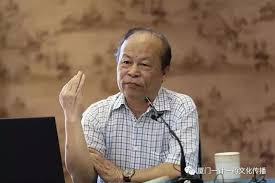
Professor Huang Shipei is a renowned traditional Chinese medicine (TCM) doctor in Guangzhou, a part-time associate professor at Guangzhou University of Chinese Medicine, a visiting professor at Nanjing University of Chinese Medicine, and an honorary director at the Thirteen Halls National Medical Museum. He is a contemporary expert in classical formulas (Jingfang) and a famous scholar in the field. Academically, he exclusively focuses on classical formulas, advocating the “correspondence between formula and symptoms” approach. His clinical practice is notable for using large doses, and he has authored several books, including “Huang Shipei’s Follow-up Records of Classical Formulas,” “Huang Shipei’s Follow-up Records of Classical Formulas (Continued),” “Dreaming of the Four Great Masters of Shanghan,” and “Huang Shipei’s Record of Teaching and Transmission of Classical Formulas.”
Senile dementia, long-term resident in a nursing home.
From July 13, 2010, she started experiencing vomiting immediately after eating, abdominal distension and fullness, as well as constipation. No chills, fever, abdominal pain, hematemesis, or melena were reported. Her family took her to a tertiary hospital in our city, where she was admitted. Blood tests showed WBC: 11.98*10^9/L and NE: 84.7%. Abdominal CT indicated partial intestinal obstruction. Due to her advanced age and inability to tolerate surgery, she was treated with fasting, antibiotics, fluid infusions, and given Taohe Chengqi Tang to open the stoppage as well as enemas.
Following the enema, she was able to pass a small amount of hard stool. However, after over ten days of treatment, her symptoms of vomiting after eating and abdominal distension did not improve, and her family requested a transfer to our hospital for further treatment. Upon admission, she had no vomiting but had abdominal fullness and distension without pain. Abdominal X-ray still indicated partial intestinal obstruction, so fasting and fluid infusions were continued.
The attending physician contacted Professor Huang Shipei via text message, asking whether the patient could continue taking a Chengqi Tang type of formula and the enemas. Professor Huang believed that this patient, who mainly suffers from bloating without abdominal pain, does not exhibit the symptoms typically treated by a Da Chengqi Tang pattern, such as glomus, fullness, dryness, and hardness. This elderly patient is physically weak and although experiences bloating, constipation, and vomiting, does not have obvious abdominal pain. The primary cause of the patient’s intestinal obstruction is likely intestinal paralysis, resulting in insufficient motility. The patient has undergone repeated purgative treatments at another hospital without recovery, which has further weakened her condition. Although there are symptoms of constipation that might suggest a purgative treatment, the patient does not exhibit the specific symptoms required for Da Chengqi Tang [such as] glomus, fullness, dryness, and hardness, nor the pattern described in line 106 of the Shanghan Lun [where it states] “Heat accumulation in the bladder, causing the person to be manic… with a tense and firm lower abdomen,” which would indicate a Taohe Chengqi Tang pattern of static blood in the lower burner. He suggested trying a combination of Houpo Shengjiang Banxia Gancao Renshen Tang and Xiao Chengqi Tang:
After taking the first dose, the next morning, she passed about 100ml of blackish-brown loose stool. After another enema, she passed about 200ml of blackish-brown loose stool again. She continued this treatment for five days, with daily bowel movements and reduced abdominal distension.
We originally planned to conduct an abdominal X-ray to assess the patient’s intestinal obstruction. However, due to the patient’s dementia and recent improvement in mental state, the patient became agitated and restless, making it difficult to cooperate for the imaging, so it was temporarily postponed. We attempted to give the patient a small amount of food, and there was no vomiting after eating. After the patient had a bowel movement, we switched to Xiao Chaihu Tang.
Chaihu 24g
Huangqin 15g
Banxia 24g
Dangshen 30g
Dazao 15g
Zhi Gancao 15g
Houpo (added later) 20g
Zhishi 20g
After 15 days of hospitalization, she could eat without vomiting and had daily bowel movements, leading to her discharge.
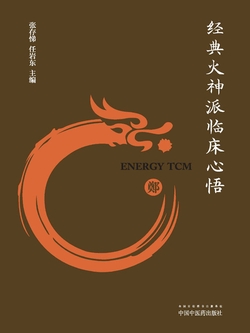
Taken from ‘Classical Clinical Insights from the Fire Spirit Current’ by Zhang Cun’ti [张存悌, 经典火神派临床心悟]
Yang qi is divided into upper, middle, and lower parts. The upper burner contains the Yang of the heart and lungs, the middle burner contains the Yang of the spleen and stomach, and the lower burner contains the Yang of the liver and kidneys. “The lower Yang is the root of the Yang of the upper and middle burners,” signifies that the Kidney Yang in the lower burner is the root of Yang qi in the upper and middle burners. In other words, among all types of Yang qi, Zheng Qin’an particularly emphasized the role of Kidney Yang. “A person’s life and destiny rely entirely on the single Yang [line] in the Kan hexagram,” indicating that Kidney Yang is the fundamental source of Yang qi in the human body and the root of life and destiny. This also forms the theoretical basis for his advocacy of using Fuzi and Sini-type prescriptions to warm and support Kidney Yang.
A friend named Mr. Huang suffered from abdominal pain in the ninth month of the Yiyou year. The pain lessened whenever he ate sweet foods. Doctors believed it to be dryness and used sweet and moistening medicines to no avail. Subsequently, they used purgative medicines, which worsened the pain. Upon examination, all six of his pulses were thin and small, he liked pressure on the abdomen, had a bland taste in his mouth, and felt fatigued. I diagnosed it as a cold condition. I prescribed Lizhong Tang with added Mu Xiang, which provided temporary relief but the pain recurred, especially at night. I said, “Night is Yin time, and Yin cold is prevalent, hence the pain worsens at night.” I then used Tongmai Sini Tang with added Baishao, and after more than ten doses, he fully recovered. (Case of Yi Jusun)
In this case of abdominal pain, the initial treatment focused on the Yang of the middle burner with “Lizhong Tang plus Mu Xiang,” which provided temporary relief. The key to the differentiating [factor of the] pattern was that “night is Yin, and Yin cold is prevalent at night, hence the pain worsens at night,” leading to the decision to specifically support Kidney Yang using Tongmai Sini Tang with added Baishao, resulting in the resolution [of the condition]. This approach is worth pondering.
Skin water is caused by spleen deficiency, which is unable to transport and transform water dampness. The blocked water dampness obstructs the middle burner, resulting in abdominal distension. If lung qi is deficient it is unable to free and regulate the triple burner, causing water dampness to accumulate. Consequently, there is swelling in the ankles and the lower limbs, with the characteristic of indentation when pressed, indicating a manifestation of dampness with a watery nature. The older generations say that the pulse of skin water is floating and shares similarities with wind-dampness, but it differs in the absence of symptoms such as aversion to wind and body pain.
Skin Water Treatment: In skin water, the pulse is floating, indicating that there is water in the surface, and in order to help it along its course, one should promote sweating. This can be achieved with the use of Yuèbì Jiā Zhú Tāng (越婵加术汤). In skin water disease, there is swelling in the limbs, and slight movements of the limbs, which indicates that water qi is in the skin, and one can use Fángjǐ Fúlíng Tāng (防已茯苓汤), [Fángjǐ 3 liang, Huángqí 3 liang, Guìzhī 3 liang, Fúlíng 6 liang, Gāncǎo 2 liang. Boil in six sheng of water, reduce to two sheng, and take warm in three doses].
According to Yóuyí, “[When there is] water qi in the skin, it seeps and spreads to the four limbs, and congests and obstructs the defense qi, leading to the mutual chasing of qi and water, [and thus] the limbs exhibit slight movements. Fángjǐ and Fúlíng are good for expelling water qi. Guì Zhī, enhances the effect of Fúlíng, and thus avoids effusing the surface but instead moves water. Moreover, the combination of Huángqí and Gāncǎo assists the qi in the surface to support the actions of Fángjǐ and Fúlíng.”
Regular water is due to the deficiency of spleen and kidney yang, which leads to the inability of qi transformation to evaporate pathogenic water dampness, to the extent where water settles internally and does not move, resulting in abdominal fullness and a deep-slow pulse. Copious water overflows into the surface resulting in generalized body swelling; Water qi rises upwards and distresses the lungs causing panting; If water intimidates the heart yang, it will result in generalized heaviness, shortness of breath, and an inability to sleep. [If] fire fails to warm the kidneys, water cold controls the lower [body] resulting in genital swelling as well as vexation, agitation, and disquietude; If pathogenic water invades the liver, the qi mechanism becomes obstructed, resulting in sub-costal and abdominal pain.
[If] the liver’s free coursing function is disrupted, the qi will occasionally surge upwards as well as occasionally descend. Fluids will follow the qi and ascend, resulting in the intermittent engendering of fluids. Fluids will [also] follow liver qi and descend, resulting in continuous and free urination. [When] the liver invades the spleen, [the spleen] will be unable to move and transform water damp, resulting in abdominal distention and enlargement. If pathogenic water invades the spleen, the spleen [function] of transformation will be abnormal, and it will be unable to upbear the clear and downbear the turbid. Water damp will accumulate in the centre, flow into the four limbs and lead to abdominal distention and enlargement, and the four limbs will suffer from heaviness and have difficulty moving.
The spleen, when encumbered by water, fails to generate bodily fluids, resulting in insufficient qi, which manifests with thirst and shortness of breath. [When] the spleen fails to distribute essence to the lungs, the lungs are unable to regulate the water ways in order to move and keep the sluices clear, which results in difficult urination. If pathogenic cold water is exuberant in the lower [body], kidney yang [becomes] depleted and is unable to warm and transform water qi. Water qi will increase, resulting in an enlarged abdomen, swelling of the umbilicus, lumbar pain, and an inability to urinate. [When] kidney yang fails to warm and yang qi is insufficient, this leads to the descent of damp with [conditions] such as ox’s nose, upper sweating and counterflow cold. [When] yang qi fails to [supply] luster to the upper, the face becomes thin.
The pathologies of pathogenic water in the five viscera differ due to their distinct physiological functions, resulting in varying patterns and symptoms. However, a commonality among diseases involving pathogenic water in the lungs, spleen, and kidneys is the deficiency and debilitation of yang qi in these organs. This deficiency hinders the proper movement of qi and transformation of fluids, which leads to the internal collection of water. Therefore, in the treatment of these conditions, prioritizing methods that free yang, transform qi, disperse yin, and disinhibit water are considered the optimal strategies.
Later generations of medical practitioners, categorized water into yin and yang. Yang water is considered hot and excess, and the primary focus in treatment is to expel pathogenic factors. For instance, if water and qi oppress the lungs causing wheezing or inhibit smooth flow leading to short and hesitant urination, treatments such as Sūtíng Wán (zi su zi and ting li zi) or Chénxiāng Hǔpò Wán (ku ting li zi, yu li ren, fang ji, chen xiang, chen pi, hu po, xing ren, su zi, chi fu ling, ze xie, and she xiang) are recommended. If there is generalized edema, inhibited urination and bowel movements, with a floating and slippery pulse, and the patient is strong, then Shūzáo Yǐnzǐ, a method that scatters the exterior and disinhibits the interior (containing jiao mu, chi xiao dou, bing lang, shang lu, mu tong, qiang huo, qin jiao, da fu pi, fu ling pi, ze xie) may be used. If the person’s constitution is slightly weak or they are elderly and frail, a combination of a surface scattering and internal disinhibition method may be used to resolve [the condition]. The ideal choice in such cases is Fúlíng Dǎoshuǐ Tāng (ze xie, fu ling, sang pi, mu xiang, mu gua, sha ren, chen pi, bai zhu, su ye, da fu pi, mai dong, bing lang).
Yin water is considered cold and deficient. If there are thin sloppy stools, a fear of cold, qi timidity, and a soft pulse with cold limbs, a warming and supplementing method is appropriate. For instance, Bǔzhōng Yìqì Tāng (ren shen, huang qi, zhi gan cao, bai zhu, chen pi, sheng ma, chai hu, dang gui, sheng jiang, da zao) can be used. Alternatively, Shípí Yǐn (bai zhu, fu ling, zhi [gan] cao, mu xiang, mu gua, fu zi, bing lang, cao guo, gan jiang) may be used. If the pulse is deep, complexion yellowish-black, [and there is] inhibited urination, palpitations, dizziness, and a cold back, Zhēnwǔ Tāng (fu zi, bai shao, sheng jiang, bai shao, fu ling) is recommended. If the chǐ pulse is deep and slow, or thin and small, with inhibited urination, accompanied by lower back pain and weak legs, Jīnguì Shènqì Wán is valued above else.
The Qing Dynasty physician, Wúqiān had [several] external treatment methods. Among them, his “Tiēqí Hǔpò Dān” was particularly ingenious, and its use was highly effective. To prepare, take 12 grams of Bādòu (with oil removed), 6 grams of Qīngfěn, and 3 grams of Liúhuáng. Grind evenly and form into cakes. First, a fresh piece of cotton is placed over the navel, the cake placed inside, and secured with silk. Over some time, malign water will naturally drain. After three to five drainages, remove the medicinal cake and replace it with a gruel dressing. Over time, the appearance will fade, and the treatment is administered once every other day. One cake can benefit three to five individuals.
Wúqiān believed that for swelling diseases, if they are attributed to deficiency and cold, the use of warm-supplementing medicinals alone may prove ineffective. He theorized that if there is no improvement with the sole use of supplementing medicinals, there must be excess pathogens within deficiency. While wanting to resort to offensive purgative [medicinals] is challenging, avoiding their use altogether is also not a feasible solution. He proposed a method of [using] supplementation for nine days followed by one purging day. This involves administering supplementing medicinals for nine days, and afterwards attacking the mechanism, by using draining medicinals for one day. The purgative medicinals should be administered gradually, starting with a small amount and increasing it as the disease progresses. It is essential to ensure that the medicine matches the [patients] original qi, expelling the pathogenic factor without damaging the right [qi]. Afterwards [one] may possibly supplement for seven days, attack for one; supplement for five days, attack for one; and supplement for three days, attack for one. Gradually seek it out, using the cure [as] the measure.
In the clinical setting, I deeply empathize with the challenges faced by Dr. Wú [Qiān] in treating this disease. Therefore, I have been diligent in seeking knowledge and when dealing with conditions of significant swelling, especially when supplementing medicinals prove ineffective and drastic attacking methods are not suitable, I have found great success in using a personal formula I’ve named “Báiyù Xiāozhàng Tāng [White Jade Distention Dispersing Decoction]”, which consists of fu ling 30g, yu mi xu 30g, bai mao gen 30g, chou hu lu 12g, dong gua pi 30g, da fu pi 10g, yi mu cao 15g, che qian zi 15g, tu yuan 10g, qian cao 10g, chuan lian zi 10g, yan hu suo 10g, zi wan 10g, zhi qiao 10g.
This formula frees qi, moves water, quickens the blood, and assists coursing. In the upper [body] it disinhibits lung qi in order to conduct management and regulation, and in the lower [body] it opens the water mansion and frees the triple burner. Although it possesses the ability to expel pathogenic factors, it does so without damaging the right [qi] and causing harm to the patient. It is particularly effective when used after supplementing medicinals have failed to reduce swelling, consistently yielding positive results.
Edema [water swelling] is a medical condition with numerous potential causes, such as ascites due to liver cirrhosis, edema due to nephritis, cardiac edema related to heart disease, malnutrition-induced edema, etc. It is beyond the scope of this article to comprehensively cover all possible causes of edema.
Stone-water is a condition resulting from the deficiency and debilitation of kidney yang, leading to the inability of warming and transforming water dampness. [Therefore] water qi is unable to be expelled from the body through the urine, causing binding in the lower abdomen, which manifests with abdominal distention, which is hard and rigid resembling a stone. The pathology is focused in the lower burner, and characterized by the internal binding of water qi, with a pulse that is deep and fails to rise. As the water binds in the lower region and has not reached the lungs, individuals with this condition do not exhibit wheezing. When water qi is in the kidneys and affects the liver, symptoms such as fullness, distension, and pain below the ribs may be observed.
In summary, among the four types of water [conditions], wind-water and skin-water are associated with the exterior, while regular-water and stone-water are associated with the interior. However, wind-water is associated with aversion to wind, while skin-water does not have this aversion. Regular-water may cause wheezing on its own, while stone-water does not. It is essential to differentiate between them in clinical practice.
For the treatment of stone-water, [one] may first use warming and supplementing medicinals for the spleen and kidneys, along with assistant medicinals to course the liver and free the network vessels. Examples include Zhēnwǔ Tāng with added gui zhi, chuan lian zi, yuan hu, shi nan teng, as well as aromatic herbs like xiao hui xiang.
From ‘Essential Points on Clinical Patterns in the Shanghan Lun’. [刘渡舟-伤寒论临证指要]
水气病脉证并治
Water Qi Disease, Pulses, Patterns, and Treatment.
[The following are lines found within the Jingui Yaolue Water Qi chapter]
《金匮•水气病脉证篇》:“少阴脉,紧而沉,紧则为痛,沉则为水,小便即难。
“[When] the shaoyin pulse is tight and deep, tight signifies that there is pain, while deep signifies that there is water, [with] difficult urination.” [JGYL 14.9]
脉得诸沉者,当责有水,身体肿重”。
“[When] all pulses are deep, this is the responsibility of water, and manifests with generalized swelling and heaviness.” [JGYL 14.10]
“跌阳脉当伏,今反紧,本自有寒疝瘕,腹中痛。医反下之,下之则胸满短气。
“The instep yang pulse should be hidden, but conversely now it is tight, this is because there is cold at the root with mounting conglomerations and abdominal pain. If a physician incorrectly purges, this will result in chest fullness and shortness of breath.” [JGYL 14.6]
跌阳脉当伏,今反数,本自有热,消谷,小便数,今反不利,此欲作水”。
“The instep yang pulse should be hidden, but conversely now it is rapid, this is because there is heat at the root, causing dispersion of grain and frequent urination. If the urination is inhibited, this means water is soon to rise.” [JGYL 14.7]
“寸口脉弦而紧,弦则卫气不行,即恶寒,水不沾流,走于肠间”。
“[When] the cun kou pulse is wiry and tight, wiry signifies that the defensive [qi] is not moving, which manifests with aversion to cold, and water that does not moisten and flow, [but is] running into the intestines.” [JGYL 14.9]
又“夫水病人,目下有卧蚕,面目鲜泽,脉伏其人消渴,病水腹大,小便不利,其脉沉绝者,有水,可下之。
“A patient with water disease has sleeping silkworms below the eyes, a bright sheen in the face and eyes, a deep pulse, and dispersion thirst. [If] water disease manifests with an enlarged abdomen, inhibited urination, and a deep and expiring pulse, [this indicates] water, which can be purged.” [JGYL 14.11]
又“水病脉出者死。”
“In water disease, [when] the pulse bursts out, [the patient] will die.” [JGYL 14.10]
The above quotes from the “Jingui” regarding the pulse diagnosis, color diagnosis, questioning, and the prognosis of edema have extraordinary significance in guiding clinical practice. Water qi can be classified into four types: wind-water, skin-water, true-water, and stone-water. As for five viscera water qi, they fall into the categories of true-water and stone-water. There are three effective therapeutic methods for excess and non-deficient major swelling, namely sweat effusing, urination disinhibiting, and offensive purging. This corresponds to the treatment principle mentioned in the “Neijing” as “opening the ghost gate and cleansing the mansion.”
Wind-water occurs due to the invasion of wind pathogens in the fleshy exterior, resulting in a floating pulse. If defensive qi is deficient and cannot secure the exterior, the pulse becomes floating and soft, accompanied by symptoms such as sweating and aversion to wind. The circulation of nutrient and defensive qi becomes obstructed, leading to water stagnation in the muscles, causing heaviness and reluctance to move.
[Treatment Method] Course wind, boost the defensive [qi], strengthen the spleen, and disinhibit dampness.
[Prescription] Fangji Huangqi Tang
Fangji (1-2 liang), Gancao (half liang, roasted), Baizhu (seven and a half qian), Huangqi (1 liang, husked)
Cut the above [ingredients] to the size of hemp seeds. Scoop up five qian-spoonfuls per dose [and add this with] four slices of shengjiang and one dazao to a cup and-a-half of water. Boil this down to eight tenths and remove the dregs. Take warm and wait a while before taking more. For panting, use an additional half liang of mahuang. For disharmony in the stomach, add three fen of shaoyao. For upward surging qi, add three fen of guizhi. For old cold in the lower body, add three fen of xixin. After taking [the formula, the patient should feel a sensation] like bugs crawling in the skin and icy coldness from the waist down. [Have the patient] sit on a bedcover and wrap another bedcover around them below the waist, to make them warm enough to cause a slight sweat. This will bring about recovery.
If wind-water manifests in generalized swelling with a floating pulse and aversion to wind, it indicates that wind pathogens have attacked the fleshy exterior. [Here] lung qi is hindered, leading to the loss of control [of water] with water overflowing into the skin, which results in generalized swelling. When wind pathogens settle in the exterior, there is aversion to wind, and [because] qi and blood move towards the surface to contend with the pathogen, the pulse becomes floating. Sweating is a manifestation of the free coursing nature of wind. [With] sweating, yang qi is discharged, therefore there is no major heat in the body. For the treatment of this condition, Yuebi Tang is used to diffuse the lungs, promote urination, and clear heat in order to scatter wind pathogens.
In 6 sheng of water, first boil the mahuang and remove the foam that rises to the top. Add the remaining ingredients and boil until three sheng remain. Separate and take warm in three doses. With aversion to wind, add one piece of blast fried fuzi.
Within the formula mahuang diffuses the lungs and disinhibits water. Shigao clears and resolves depressed heat, addressing the downbearing of lung qi.
Gancao supplements the spleen in order to support the right [qi]. Shengjiang and dazao harmonize the nutritive and defense in order to move Yin and Yang.
The two conditions above, though both involving “wind-water,” are differentiated based on deficiency and excess (similar to the differentiation between Guizhi Tang and Mahuang Tang). For deficiency, use Fangji Huangqi Tang to address the main symptoms of “body heaviness, sweating and aversion to wind.” For excess, use Yuèbì Tāng, focusing on the main symptoms of “floating pulse, aversion to wind, body swelling, and no thirst.”
When treating edema, it’s crucial to observe its location and treat accordingly. [When one] is able to “guide ones actions according to the circumstances”, [then] water pathogens can be addressed. Zhang Zhongjing said;
“In all cases of water, with swelling below the waist, one must disinhibit urination; for those with swelling above the waist, one must effuse sweat in order to resolve.”
All swelling above the waist is often caused by wind-cold-damp, which invade the fleshy exterior and block and depress lung qi, [which results in] the settling of water-damp. Therefore, suitable treatment is to diffuse and free lung qi, open and effuse the orifices, and cause the discharge of water on the surface though the sweat. For swelling below the waist, there is both deficiency and excess. Deficiency is due to insufficiency of yang qi, which is unable to transform qi and move water, which leads to the stoppage and residing of water pathogens in the lower body. Excess is the result of water-damp pathogens that have stopped and settled in the lower body with water swelling. Although the patients right qi is not deficient, the pulse is deep yet strong, and is accompanied by inhibited urination as well as abdominal distention and fullness signs.
For swelling above the waist, [one must] effuse sweat by using Yuebi Jiazhu Tang [Yuebi Tang with 4 liang of Baizhu]. For swelling below the waist, due to yang deficiency qi cold with inhibited urination, use Zhenwu Tang. When the pulse is deep and strong and the urination is inhibited, use Muli Zexie San [equal parts muli, zexie, guslougen, shuqi, tinglizi, shanglugen, and haizao pounded and sieved into a powder]. Work [the powder] in a mortar to blend with a white [rice] cool decoction. Take a square inch spoonful three times a day. [If] urination is uninhibited cease taking [the decoction].
There are two roads for the elimination of water: through the exterior by means of sweat effusion, and through the interior by means of percolation and disinhibiting. By guiding one’s actions according to circumstances, water qi can be expelled resulting in resolution [of the condition]. However, in clinic one may see [cases] with swelling above the waist and inward percolation to the interior; swelling below the waist and outward seepage into the exterior resulting in lung qi not diffusing, kidney qi not transforming and major qi not shifting.
In such cases, flexibility is needed for treatment, such as effusing sweat to eliminate the exterior pathogen, while at the same time using a percolating and disinhibiting [method] to ensure that water in the interior can be completely expelled. [For] swelling below the waist, we already want to percolate and disinhibit, and also apply the “lift the pot and remove the lid” [method] to open lung qi, which causes the upper orifices to be free and the lower orifices to be disinhibited, resulting in the complete expulsion of water pathogens.
Sweat effusion and disinhibiting urination are two magic weapons for treating water [diseases]. In addition, for those with deficiency patterns, there is the method of warming yang and transforming qi, strengthening the spleen and moving water, supporting the right and dispelling pathogens, and boosting qi to secure the exterior, among other techniques. One should be flexible in choosing and applying these methods, without adhering strictly to a single approach.
The following is a very small snippet of the common cold/influenza section from our translation of Professor Huáng Huáng’s latest book, which will be published and released in January 2024 by Eastland Press. I am so honoured to have been a part of the translation team for this beautiful book alongside Daniel Eng and Craig Mitchell. Hope you enjoy.
Indications: Used for deficient patients who have come down with the common cold. This formula is commonly used for common colds in patients who have had major illnesses, surgery, chemotherapy, excessive medications, are menstruating or are postpartum, have congenital weaknesses, are debilitated, elderly, or are frequently ill. It has been observed in clinical practice that many of these patients do not present with obvious fevers, but instead with fear of cold, weakness, a runny nose with clear mucus, and a pale and dark tongue; These patients commonly experience spontaneous sweating, an aversion to drafts, fever or a subjective sensation of being hot, a feeling of upward surging, palpitations, and a floating, weak and slack pulse.
Important Issues: After taking the formula, one should drink hot congee. The congee can be made of millet or rice, which should be cooked over a gentle heat until the grain has broken down completely. The second important issue is that drafts and cold should be avoided, and ideally one should cover up until a sweat has been obtained. The third is that the patient should be advised to consume light and bland food and drink in order to avoid any extra burden on the digestive system.
Usage And Modifications:
1. This is an ancient formula used for strengthening and fatigue recovery. It is applicable for diseases with signs and symptoms of palpitations, abdominal pain, spontaneous sweating, emaciation, a weak pulse, etc. It can also adjust and regulate a weak and deficient constitution. It is unsuitable for overweight patients or those with edema.
2. Modifications:
• For fatigue, profuse sweating, and cold and painful joints, add Aconiti Radix lateralis praeparata (zhì fù zǐ) 10g.
• For profuse sweating and a sallow complexion, add Astragali Radix (huáng qí) 15g.
With emaciation and a poor appetite, add Codonopsis Radix (dǎng shēn) 15g
With stiffness and pain in the nape and back, dizziness and headache, add Puerariae Radix (gé gēn) 30g.
Representative Case History:
Fifty-four-year-old female, 156cm/64kg.
Initial consultation on September 27, 2014.
History: Sinusitis for over 20 years, with a weekly tendency to catch a cold. With these colds she would experience headaches, frequent sneezing, an aversion to drafts, and sweating from the head. She would also be hungry easily, crave sweet foods, and have a difficult time falling asleep.
Signs: dark, red complexion; dark and dull lips; dark, red tongue; a thick tongue coating; and a moderate pulse, at 72 beats per minute.
Prescription: Cinnamomi Ramulus (guì zhī) 10g, Cinnamomi Cortex (ròu guì) 5g, Paeoniae Radix alba (bái sháo) 15g, Zingiberis Rhizoma (gān jiāng) 5g, Jujubae Fructus (dà zǎo) 30g, Glycyrrhizae Radix (gān cǎo) 10g, Astragali Radix (huáng qí) 30g; 10 packets; 5 days on and 2 days off.
Second consultation on October 7, 2014: After taking the formula, she did not sneeze, and had not contracted a common cold in 7 days. Her appetite and sleep were improved, yet she still woke easily. She continued with another 15 packets of the same formula, one packet taken every other day.
I’d like to share two cases from my personal clinic, involving patients I saw this week for follow-up after they started their Chinese herbal formulas. The first patient had never tried Chinese herbs before, so this was a new experience for her. The second patient, of Chinese descent, had grown up taking herbs her grandmother would prepare for her, so she was quite used to the ‘deliciousness’ of the herbs. The purpose of these two cases is to illustrate the remarkable effectiveness of Chinese herbal medicine, especially in situations where their allopathic physicians had few treatment options to offer.
In a follow up post, I will discuss my reasoning for the formula selections as well as the underlying mechanisms involved.
Case 1
Initial consultation on August 25, 2023.
A 43-year-old female presented with a longstanding issue of pain in her hands that had been bothering her for over 15 years, and it had recently worsened. This pain was significantly affecting her ability to work, as she is a sculptor and a professor. She had been managing the pain with Ibuprofen, but this approach had become less effective in recent times.
The pain was localized exclusively to her hands and would cause them to swell up easily, appearing “puffy” without any noticeable discoloration. This pain also had a negative impact on her range of motion and grip strength, which was affecting her ability to engage in activities such as swimming. Rest provided some relief from the pain. Additionally, she was experiencing edema in her feet and hands and had frequent and inhibited urination. She also reported occasional dry mouth and thirst, and her hands, feet, and nose would become cold while the rest of her body remained warm.
Despite these discomforts, she maintained a good appetite without experiencing bloating. She mentioned being a light sleeper and often woke up due to the pain. The patient also had varicose veins and spider veins, dry heels, and occasional headaches. She had a tendency to sweat easily.
Notably, there were no complaints of dizziness or palpitations, and while she experienced occasional nausea, it was not a frequent occurrence. Her bowel movements were regular. The consultation was conducted via video, so no pulse reading was performed.
Formula: Fangji Huangqi Tang + Wuling San + Guizhi Fuling Wan
Follow-up on September 29, 2023. The patient reported significant improvement. After just one week on the prescribed formula, the pain in her hands had subsided dramatically, and she has not experienced any soreness or flares since then. She has not needed any pain medication and was able to swim and work without any issues. The swelling in her hands and feet had also reduced, with a more substantial improvement in her hands. Urination was less inhibited and easier, and all other symptoms were under control.
The same formula was continued for the time being, with a follow-up scheduled for November.
Case 2
Initial consultation on August 25, 2023.
A 37-year-old female presented with a chronic issue of dry eyes that had been troubling her for several years. Notably, the condition had been progressively worsening over the past few months. Her eyes would frequently become red, feel gritty, and occasionally produce excess tears, although this excessive tearing did not alleviate the dryness. She found wearing contact lenses uncomfortable. She had undergone a procedure before COVID to address potential blockages, but it had provided limited relief, and she had not pursued any further procedures since then. She also experienced frontal headaches, which were related to eye strain. She had a tendency to feel cold easily, suffered from hot flashes preceding her menstrual period, and had regular bouts of constipation, with a bowel movement occurring every other day. Additionally, she complained of dryness in her mouth and throat. She had previously received treatment for dizziness, which was no longer a concern. There were no issues with nausea, night sweats, palpitations, sleep quality, or appetite, and she did not experience reflux. Pulses were deep-thin and wiry bilaterally.
Formula: Wen Jing Tang (standard doses), with the addition of Gegen (25g) and Juhua (20g). Raw herb powder – 8g daily.
Follow-up on September 29, 2023: the patient reported experiencing several good days over the past month when her eyes felt great. While there were still some bad days, these were often associated with increased screen time and the quality of her sleep the night before. The redness in her eyes had significantly reduced, and they were no longer gritty. She also noticed that she could lubricate her eyes more easily with a few blinks, whereas previously, it took several minutes. Although there was improvement in her bowel movements, they were not yet perfect. She had also observed a warm sensation throughout her body after drinking the formula, and her general sensitivity to cold had improved. The patient had recently experienced a canker sore outbreak, and had neglected to mention during the previous visit that this was a relatively common experience during times of stress. A week prior to the follow-up appointment, she had undergone an eye assessment, which diagnosed her with moderate-severe dry eye syndrome. Treatment options involving invasive procedures were offered, but given the positive effects of the herbs thus far, she opted to monitor her progress over the next few months before deciding on any further procedures. The same formula was continued, with Wuzhuyu reduced to 6g and the addition of Huanglian (6g) and Zhishi (18g).
Today, I am eager to share some insights and offer a comprehensive overview of a formula that often goes overlooked but possesses remarkable effectiveness. Through the presentation of its original lines, patient characteristics, suitable conditions, and a case study, my aim is to illuminate the precise contexts, timing, and rationales behind the application of this formula.
治心胸中有停痰宿水,自吐出水後,心胸間虛,氣滿不能食,消痰氣,令能食。 A treatment for collected phlegm and abiding water in the heart and chest with a vacuity of the heart and chest, fullness of qi, and an inability to eat following the spontaneous vomiting of water. [This formula] disperses phlegm-qi, and enables one to eat.
Jingui Yaolue 12
Composition:
Fu Ling 3 liang Ren Shen 3 liang Bai Zhu 3 liang Zhi Shi 2 liang Ju Pi 2.5 liang Sheng Jiang 4 liang
Formula Presentation:
Stifling sensation in the chest
Abdominal distention
Vomiting of watery mucus
The sound of splashing water in the stomach
Poor appetite.
Patient Characteristics:
Emaciation: gaunt appearance, a pale and sallow complexion that lacks luster, dusky pale lips and tongue or a slight degree of superficial facial edema.
Digestive upset: lack of appetite, a loss of hunger sensation or abdominal fullness and discomfort after eating, frequent belching, a bitter taste in the mouth, vomiting of fluids, acid reflux, and heartburn. The tongue coating will be thick and could also be white and/or greasy.
Stoppage of fluids in the stomach: a soft abdominal wall that lacks resistance or one that although tight has a sense of nothing underneath; this is most often observed along with splash sounds in the stomach and accumulations of qi in the upper abdomen.
Suitable Conditions
Digestive diseases including gastric diseases such as gastric prolapse, gastric atony, chronic gastritis, peptic ulcers, gastric injury from NSAIDs, and anorexia; intestinal diseases such as pediatric diarrhea, irritable bowel syndrome, habitual constipation; chronic pancreatitis, and post-operative abdominal pain.
Other disorders including cardiac insufficiency, breast lobular hyperplasia, fibroadenomas of the breast, uterine prolapse, hypotension, motion sickness, eczema, and chilblains.
Commentary by Huang Huang
Great formula for gastric motility and is able to speed up gastric emptying and eliminate fluids retained in the stomach. In this way it restores the appetite. Patients are usually thin and weak with flat abdomens, abdominal walls that lack elasticity, and prominent splash sounds in the stomach. If these weak patients are mistakenly given enriching and tonifying substances, it can result in ascending fire with them feeling upset, irritable, and restless.
Patients typically experience abdominal distention right after eating and complain of a strong sense of pressure in the chest and abdomen that is slightly relieved by belching. They will vomit up fluids or froth and do not feel hungry. This discomfort in the stomach often leads them to be depressed and anxious and have insomnia, palpitations, lightheadedness, and headache. This can be accompanied by a bitter taste in the mouth and a sense of something being stuck in the throat.
While these patients have a rather thick tongue coating, the tongue body itself is not necessarily swollen and may in fact be thin and small. Usually it tends to be dusky.
Dr. Huang usually increases the dosages of zhǐ shí and chén pí up to 30g each.
Case Study
Li, 39-year-old female, 160cm/48kg.
Initial consultation on January 6, 2017.
History: Two years ago, after giving birth, the patient suffered from depression that manifested as a stifling sensation in the chest, fluttering in the chest, irritability and uneasiness, and a poor appetite. Recently she had experienced epigastric distention and pain that was more pronounced after eating, with occasional acid reflux. Her stools were typically loose, and she was frequently dizzy, had a hard time falling asleep and occasionally had difficulty getting to sleep throughout the night. In addition, she had vitreous opacity and dry eye disease.
Signs: Thin build, sallow complexion with dark spots, splash sounds in the stomach, periumbilical pulsations, red inner eyelids (checked by drawing down the lower lid), a thick-greasy tongue coating, and a weak pulse, which was forceless hardon heavy pressure. Her blood pressure tended to be low.
Second consultation on February 14, 2017: After taking the formula, her abdominal distention was reduced and her sleep improved. Her tongue coating was still thin, and her facial spots were less dark. The same formula was given, to be taken every other day.
From ‘The Complete Interpretation of Case Studies from Chinese Medicines’ Fire Spirit School’
中医火神派医案全解
Case: Eto, 58 years old, Japanese patient, presented with prostatic hyperplasia, which manifested with frequent, urgent and difficult urination for six years. Symptoms had been increasing over the last two to three years. Symptoms were worse in the afternoon with an inability to hold his urine in and frequent urination. In addition, he suffered from nocturia up to fifteen-sixteen times a night, scanty urine and and a weak flow. Every time he would urinate, he would have to wait three to five minutes and this was accompanied by lower abdominal swelling and distention.
Doctor Lu always treats based on the tongue, coating and pulse. [This patients] tongue body was pale and swollen with teeth marks along the edges, tongue coating was white, slippery and slimy, and pulse was deep and moderate with a lack of strength on deeper palpation. Doctor Lu felt that this was due to kidney yang weakness and debilitation as well as the settling and obstruction of water-dampness. Treatment method involved warming yang and disinhibiting water with Zhen Wu Tang [真武汤].
Zhi Fu Pian 75g (pre-cooked for two hours)
Sheng Bai Zhu 15g
Fu Ling 25g
Yin Yang Huo 20g
Sheng Jiang 60g
After one package, his urine volume increased, frequency decreased, and flow was smooth. After three packages, his urination was very smooth, nocturia reduced to two times, but he still felt that the strength of his urination was not good.
At the second consult, 25g of Gui Zhi was added, which had increased the strength of urinary flow.
At the third consult, 15g of Sha Ren was added in order to absorb the qi of the five viscera into the kidneys. All together thirty packages were taken, at which point the condition had completely improved, urination was normal, nocturia occurred once a night, and urination felt more vigorous.
Lu Chonghan believes that prostatic hyperplasia, occurs in middle aged and elderly patients, because middle aged and elderly patients’ yang qi has declined and qi transformation is deficient. Because qi transformation is deficient, this results in stoppage and obstruction of water-damp, which follows the Shaoyang triple warmer, descends, and settles in the anterior yin, eventually resulting in prostatic hyperplasia and swelling, leading to difficult urination. When serious this can cause blockage and stoppage which can result in dribbling urinary block. From the perspective of the root and branch, kidney yang vacuity and debilitation and deficient qi transformation are the root, while the pressure in the urinary tract, obstruction and lack of flow are the branch. Therefore, by grasping the root, we must warm yang, transform qi, disinhibit water and drain turbidity. Zhen Wu Tang is Zhongjing’s formula for Shaoyin yang vacuity, with water-damp collecting internally. When used for middle-aged and elderly patients with prostatic hyperplasia, the results are typically quite ideal.
In clinical practice, Zhen Wu Tang is commonly used with variations, here using Yin Yang Huo as a substitute for Bai Shao. Acrid and majorly hot Fuzi is used to strengthen kidney yang, and is able to support and overcome kidney water, which causes the exuberance of the qi of true yang, so that qi transformation moves and turbid yin can be dispelled. Shengjiang can warm the stomach and dissipate water, as well as open and diffuse lung qi, which opens the upper water-gate, achieving the objective of opening the source of water (the lungs are the upper source of water). Baizhu can move the spleen and eliminate dampness. When the spleens’ function of moving dampness is improved, water can be properly controlled. Fuling is used to blandly percolate and disinhibit water, which regulates the middle burner. This leads to the outward expelling of turbid dampness. Yin Yang Huo guides yang into yin, frees and disinhibits the blood vessels and resolves hypertonicity in the sinews, thereby achieving the objective of freeing the waterways. When these medicinals are combined, the functions of the five viscera are all regulated and rectified, the yang of qi transformation is strengthened, and the qi transformation mechanism is initiated.
How do we determine if the disease is caused by a yang vacuity? We can [diagnose it] based on the tongue, [tongue] coating, and pulse. If the tongue body is swollen and pale, with teeth marks, and the coating slippery, slimy, and white, or if the coating is white underneath and dry and yellow at the surface. From the perspective of the pulse, when the pulse is deep-slow, deep-moderate, or deep-weak, these all belong to Shaoyin yang vacuity and it can be determined that there is water-damp obstruction, which is yin cold obstruction. This is an extremely reliable pattern indicator. If turbid yin is not transformed and resolved, this easily causes settling and obstruction, which can manifest in the tongue. As a result, the tongue will commonly have teeth marks. If the tongue coating is white and slippery, this is a manifestation of a yang vacuity and loss of the warming and transformation function of true yang. When the tongue coating is white and slimy, this is a manifestation of yang vacuity cold damp obstruction in the lower burner. When the coating is white underneath and dry and yellow at the surface, this indicates that enduring damp depression is beginning to transform into heat. Although there is transformation into heat, the patient’s root pattern is still one of yang vacuity insufficiency, and in clinical practice, one must be aware of this. A deep pulse is due to yang vacuity. If all these tongue, [tongue] coating, and pulse signs exist, we can determine that the underlying patho-mechanism is one of yang vacuity damp obstruction.
Sweet and acrid flavour, with a fragrant qi and warm nature. Enters the foot Jueyin liver and foot Taiyang bladder channels. [By] entering the liver domain it moves the blood layer and the channels and network vessels, as well as outthrusts depressed nutritive [qi]. [It is] excellent at resolving wind pathogens, and most excellent at regulating wood qi. It ascends clear yang, which has fallen and deserted, as well as downbears turbid yin, which has resulted in turbid counterflow. Guìzhī soothes tension and hypertonicity in the sinews and disinhibits congestion and obstruction in the joints. By entering the liver and gallbladder it dissipates and restrains, which results in the resolution of pain. It frees the channels and network vessels thereby opening impediment, excels at eliminating damp-cold, is able to alleviate running piglet, and calms fright palpitations.
The above short little ditty on this beautiful herb, is an example of some of the rich textual works we’ll be covering in my upcoming class on the Guìzhī formula family. For anyone interested in being notified about these classes and any upcoming ones, please feel free to add yourself to my newsletter list by clicking here!
《神农本草经》: 味⽢,平。主消渴,⾝⼤热,呕吐,诸痹,起阴⽓,解诸毒。 [Shén Nóng Běn Cǎo Jīng]: Sweet flavour, and neutral Qi. Governs dispersion thirst, major body heat, vomiting, and various kinds of impediment. It raises the Yīn Qì and resolves all toxins.
《名医别录》:⽆毒。主治伤寒中风头痛,解肌发表出汗,开腠理,疗⾦疮,⽌痛,肋风痛。 [Míng Yī Bié Lù (Táo Hǒngjǐng – 456-536)]: “[It] has no toxicity. It governs the treatment of cold damage and wind strike headache; [it] releases the muscles, effuses the surface and promotes sweating; [it] opens the interstices, heals metal sores, stops pain and [treats] subcostal wind pain.”
东垣云:葛根⽢平温,世⼈初病太阳证,便服葛根升⿇汤,⾮也. Lǐ Dōngyuán (1180-1251) said: “Gé Gēn is sweet, neutral and warm; common people, at the onset of a taiyang disease pattern, give Gegen Shengma Tang, this is incorrect.”
好古⽈:⽓平味⽢,升也,阳也。阳明经⾏经的药也。 (Wáng) Hǎogǔ (1200-1264) said: “It’s qi is neutral and flavour sweet, [for it] ascends, and is yang. Gé Gēn is a medicinal which moves the Yangming channel.”
Zhāng Zhìcōng (1616-1674): “sweet and acrid, white when powdered, therefore enters Yangming; the skin is black and flower red, and so unites with Taiyang. Therefore, Gé Gēn is able to diffuse and outthrust the qi of yangming center earth, and unite the taiyang channel on the exterior.”
《本草备要》:轻宣解肌,升阳散⽕。 [Essentials of the Materia Medica (Wáng Āng 1664)]: “[Gé Gēn] Lightly effuses and resolves the muscles, ascends yang, and scatters fire.”
(唐宗海 : “根深能引⽔⽓上达苗叶,故兼能升津液也.” Táng Zōnghǎi (1846-1897): “[The] Deep roots [of Gé Gēn] are able to carry water qi upwards into the sprouts and leaves, [and is] therefore able to ascend fluids.”
According to Professor Huáng Huáng, patients that respond well to Gé Gēn formulas have the following characteristics.
Big, strong patients with thick, strong muscles
Slightly overweight
Heavy, cumbersome bodies
Coarse, thick skin
Hairy
Lazy appearance
Sallow, dark complexion
These patients have the following propensities:
Stiff neck and back due to tight muscles (tension in traps, levator scapula, sub-occipitals, etc.)
Headaches (Taiyang – Yangming)
Heavy Head (cloudy, foggy, etc.)
Dizziness
Loose Stools
Heavy and Cumbersome body
To learn more about Ge Gen and its various formulas, click here to check out my Gé Gēn class



 Eran Even, Ph.D., Dr. TCM.