Original Work by Keisetsu Ōtsuka, with translation [from Japanese to Chinese] and commentary by Wang Ningyuan: Kampo and Abdominal Diagnosis
Primary Gangrene of the Left Big Toe
The patient is a 52-year-old male with a good complexion and obesity.
Two years prior, he began experiencing pain in the left big toe, which was diagnosed as primary gangrene.
At the same time, there was swelling and hardness near the left lower abdomen close to the iliac fossa, accompanied by tenderness. After being examined by a renowned surgeon, exploratory laparotomy was performed but no abnormal lesions were found.
Initial Consultation: November 7, 1925
- Pulse: Left side was deep and choppy; right side was deep and small.
- Blood Pressure: 112/70 mmHg.
- Symptoms: The left dorsal artery of the foot was undetectable. The left big toe appeared purplish, with blackened toenails. The degree of pain fluctuated and worsened after exertion, significantly impacting sleep due to the pain.
Abdominal Diagnosis
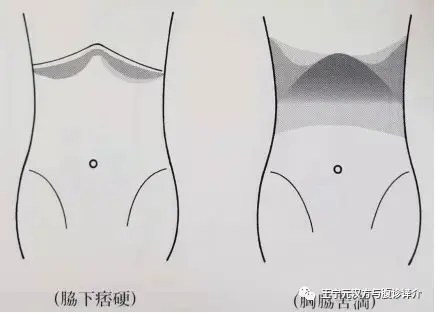
On the right side, there was fullness and discomfort in the chest and hypochondrium. In the lower left abdomen, at the site of the previous surgery, there was resistance and tenderness.
The patient had bowel movements once a day, but they were not smooth.
I considered the resistance and tenderness in the left lower abdomen to be an abdominal sign of blood stasis. The resistance and tenderness, which were previously suspected by the surgeon to indicate a tumor, may also have been due to blood stasis.
Based on the signs of right-sided chest and hypochondriac fullness and the abdominal sign of blood stasis, I prescribed a combination of Da Chai Hu Tang and Tao He Cheng Qi Tang.
Course of Treatment
- One week later: No significant changes.
- Ten days later: The affected foot felt lighter, and the pain lessened.
- After about two months: The color of the toenails improved, and the patient reported almost no pain. However, the dorsal artery of the foot remained undetectable.
- After about ten months: The affected toe started showing a reddish color, the toenails turned pink, and although weak, the pulse of the dorsal artery became palpable.
Later, the patient developed swelling in the right knee joint and was treated with Yue Bi Jia Zhu Tang for about three weeks, which resolved the condition.
It has now been eight years, and the gangrene has not recurred.
— From Thirty Years of Kampo Clinical Practice, authored by Keisetsu Ōtsuka, translated by Wang Ningyuan
 Eran Even, Ph.D., Dr. TCM.