Hu Xi-Shu (胡希恕) Case #4-Duodenal Ulcer

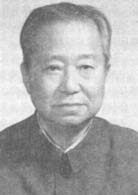
hu xi-shu.jpgMr. Wang, male, 46 years old.

Initial diagnosis on November 30, 1965: For over 10 years the patient has suffered with epigastric pain which has recently been getting worse. Treatment at a local Chinese-Western integrative clinic was unsuccessful. Chinese medicinals were used to warm the centre, rectify the Qi, quicken the blood and dispel stasis. Western medications were ineffective as well and surgery was recommended. Since the patient feared surgery, he came to the capital (BeiJing) for treatment.

Current symptoms: stabbing epigastric pain most notable when hungry, heat effusion in the back, late afternoon heat in the palms of the hands, occasional worry, palpitations, dizziness, cool body with a fear of cold, sweating and an aversion to wind. There was harmony of the mouth* with no desire to drink and slightly sloppy stools. Tongue coating was white, tongue tip was red and his pulse was thin and wiry. Barium examination revealed a 0.4cm2 postbulbar duodenal ulcer. 

Dr. Hu prescribed Xiao Jian Zhong Tang (Minor construct the centre decoction)

Gui Zhi 3 qian

Bai Shao 6 qian

Sheng Jiang 3 qian

Da Zao 4 pieces

Zhi Gan Cao 2 qian

Yi Tang ½ liang (mixed into prepared decoction)

Second consultation (12.3.1965): The pain and heat in the palms had slightly decreased but overall the epigastric stabbing pain, heat in the back and daily bowel movements were still present. The following medicinals were added to the above formula;

Chao Wu Ling Zhi 2 qian

Yuan Hu Fen 5 fen (mixed into decoction)

Third consultation (12.9.1965): The epigastric pain is no longer as obvious, but after eating the patient is experiencing focal distension below the heart. In addition, his four limbs are cold and he is unable to sleep peacefully at night. At this point the patient had to return to his hometown in Dong Bei. The formula was changed to Fu Ling Yin and sent home with him where he was to take it and until recovery. The formula ingredients were as follows:

Fu Ling 5 qian

Dang Shen 3 qian

Zhi Ke 3 qian

Cang zhu 3 qian

Sheng Jiang 3 qian

Chen Pi 1 liang

Ban Xia 4 qian

Commentary: In this case the patient presented with sweating, an aversion to wind, dizziness and heart palpitations which can signify pathogens in the exterior, specifically an exterior vacuity pattern. Therefore Xiao Jian Zhong Tang was administered. After taking three packages of the formula there was already a significant effect and after nine packages, the symptoms were basically resolved. Xiao Jian Zhong Tang is essentially Gui Zhi Jia Shao Yao Tang with the addition of Yi TangGui Zhi Jia Shao Yao Tang is originally a formula used to treat abdominal pain. With the addition of a large dose of sweet, warm, vacuity supplementing, spasm moderating Yi Tang we have the dual action of both treating abdominal pain and supplementing vacuity, hence the name ‘Construct the centre’.

*Harmony of the mouth is described as a normal taste in the mouth without any dryness, stickiness or thirst, and is commonly observed in relatively healthy individuals or in mild conditions.

Zhu Ren-Kang- Collection of clinical experience in dermatology (朱仁康-临床经验集-皮肤外科)

Eczema-Case #2

Tian, male, 24 years old presented on March 13, 1967.

Chief complaint: Patient has suffered with a pruritic erythematous papular eruption covering his whole body for the last month. 

Disease history: Last month the patient initially noticed small red papular eruptions over his limbs and torso that when scratched exuded fluid. Currently the eruptions are generalized over the entire body being more severe over the upper arms and thighs. Several decoctions have been taken as well as injections of sodium hyposulfide all to no avail. 

Inspection: Scattered over the entire body were small millet-grain like red papules with exudate, more obvious on the limbs. The papules were quite diffused and symmetrical. 

Pulse was moderate and the tongue was normal with a clean coating. 

Chinese medical diagnosis: Millet sore (粟疮)

Western medical diagnosis: Generalized eczema

Pattern: Interior spleen vacuity with enduring accumulation transforming to heat, transmutation and steaming of damp-heat coupled with external wind. 

Treatment principle: Disinhibit dampness and clear heat.

Formula: 4 packages of Long Dan Xie Gan Tang with additions and subtractions were prescribed.

Second Visit (March 17): Patient reported that the condition was basically the same as before with no improvement. The itchiness was still present and his sleep was disturbed. Tongue body was now red with a thin white coat, and his pulse was wiry and thin. 

The treatment principle was changed to cool the blood, clear heat, disperse wind and alleviate itching.

Formula:

Sheng Di 30g

Dan Shen 9g

Chi Shao 9g

Jing Jie 9g

Ren Dong Teng 12g

Ku Shen 9g

Di Fu Zi 9g

Bai Xian Pi 9g

Er Miao Wan 9g

Liu Yi San 9g

4 Packages were administered.

Third visit (March 21): After taking the above formula, the itchiness had decreased considerably and the skin was gradually clearing up. The above formula was repeated with the additions of;

Qian Cao 9g

Chan Yi 6g

Cang Er Zi 9g

5 packages were administered.

Fourth visit (March 26): After taking the above formula, a major portion of his skin had returned to normal and no new lesions were observed. The itchiness was still present in the evenings. 

9g of Chi Ling was added to the previous formula and after taking 5 packages the patients’ condition was resolved.

Clinical usage of Bupleurum and Cinnamon Twig Decoction (柴胡桂枝汤)

%E5%88%98%E6%B8%A1%E8%88%9F.jpgShoulder and back pain (Shoulder inflammation)
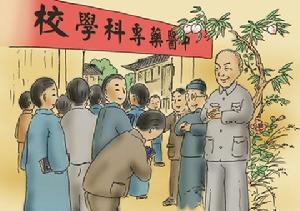

Case study of Liu Du Zhou: Mr. Yu, Male, 43 years old presented on November 29, 1993 with left side shoulder and back pain and swelling. He was unable to lift his left arm or turn over on his side. Western medications were taken including strong pain killers which would only alleviate the pain for a short time where soon after the pain would return. At a previous hospital he was diagnosed with inflammation of the shoulder. This patient was suffering with exceptional pain. On inquiry the patient complained of chest and rib-side fullness, a bitter taste in the mouth, an occasional need to sigh, no desire to eat, occasional sweating and tightness in the back. His bowel movements and urination were normal. His tongue was pale with a thin coat and his pulse was wiry. His pattern was diagnosed as qi depression and stagnation causing a lack of free flow in the Tai-Yang and Shao-Yang channels. A lack of free flow causes pain. 不通则痛

This must be treated by expelling evils in the Tai-Yang, harmonizing Shao-Yang and regulating the nutritive and protective Qi. The formula administered was Chai Hu Gui Zhi Tang with Pian Jiang Huang

Chai Hu 16g

Huang Qin 10g

Ban Xia 10g

Sheng Jiang 10g

Dang Shen 8g

Zhi Gan Cao 8g

Gui Zhi 12g

Bai Shao 12g

Da Zao 12g

Pian Jiang Huang 12g

After taking 3 packages of the above formula the back pain had decreased, he was able to lift his arm on his own, flexibility was increased and his chest and rib-side felt better. After a further 3 packages he was able to completely recover. 

(Effective cases from the clinical experience of Liu Du Zhou)

Commentary: Professor Liu Du Zhou says that in order to treat shoulder and back pain we must address the Tai-YangShao-Yang and Du channels. The shoulder is traversed by the Shao-Yang channel, and the back by the Tai-Yang and Du channels. Enduring diseases enter the collaterals and bind the blood. For this we may add Pian Jiang Huang, Tao Ren, Hong Hua, Chuan Xiong, etc, to invigorate the blood, free the collaterals and alleviate pain. If pain extends to the lower back, the head and body are heavy and cumbersome, the tongue coating is slimy and if copious vaginal discharge is observed in females, then one may administer Qiang Huo Sheng Shi Tang to attain a positive effect.

The above case and commentary are taken from ‘Selected Cold Damage cases from the Clinical Experience of Famous Physicians’ pg 359.

Case Study of Wu Pei Heng (吴佩衡医案)

吴佩衡医案

The following is a case study by the late Wu Pei Heng (吴佩衡) (1886-1971) from Si Chuan province who was extremely proficient in using classical formulas and practiced in the style of the fire god school (火神派).  My initial fascination with Dr Wu’s cases are his use of extremely large doses of Fu Zi.  There are a number of cases in his book where he uses up to 300g a day, even with a few of his younger patients. Due to Dr. Wu’s prolific use of Fu Zi he attained the nickname ‘Wu Fu Zi’ (吴附子). 


Late miscarriage blood loss

 Mrs Fang, 35 years old, originally from Luo Ping county currently living in the city of Kun Ming in Yunnan province.

On May 12, 1923 she presented at the clinic after suffering a miscarriage in her fifth month of pregnancy.  Initially she felt painful sagging in her abdomen and low back which continued until she miscarried.  She had excessive menstrual bleeding (flooding) with clots, twisting abdominal pain, flusteredness, dizziness and shortness of breath.  Her pulse was scallion like, vacuous, weak and both inch positions were short.  Her lips were pale red, tongue coating was slippery white and the tongue body was bluish and dark.  According to her husband on that particular evening she had fainted twice.   Late miscarriages are usually due to major vacuity of kidney qi, qi vacuity sinking and unable to absorb blood, and yang qi descending with blood and escaping.   The qi is born within the kidneys and gathers in the lungs and here we have a lack of merger between the kidneys and lungs, therefore there is shortness of breath with desertion.  The plan is to administer Si Ni Dang Gui Bu Xue Tang with (Da) Zao and Ai (Ye).  Within the formula, Si Ni Tang supports Yang allowing it to rise.  The assistants (Huang) Qi and Dang Gui supplement the centre, boost qi and re-generate the excessively damaged blood.  Gan Jiang, Ai (Ye) and (Da) Zao blackened, can warm the blood, separate the cold and return blood back to the channels. 


Formula:

Hei Fu Pian 160g

Pao Hei Jiang 50g

Zhi Gan Cao 24g

Bei Kou Qi 60g

Dang Gui 26g

Qi Ai 6g (fried until blackened)

Da Zao 5 pieces (roasted until blackened)


After taking 13 days worth of formula, her menstrual flooding stopped, the shortness of breath was calmed and most of her symptoms were alleviated by days 6 or 7 and even her spirit was slightly improved.  In keeping with the original formula, another 14 days were given to complete the course, after which she successfully recovered.


A case of Shao-Yin Infertility

Fan Zhong Lin- Liu Jing Bian Zheng Yi An (六经辩证医案)

Huang. 34 year old female cadre residing in Si Chuan province.

[Disease history]: Couple have been trying to conceive unsuccessfully for the last 7 years beginning in the winter of 1959. Both male and female medical investigations were normal. Her initial symptoms were dizziness and poor energy. In the early mornings she would have facial edema and in the afternoon the swelling would be in her legs. Her menstruation was irregular.
In 1965 when she had come in for a consultation the state of her condition had already become quite serious. Her initial consultation was on June 20 1965.

[Initial consultation]: Amenorrhea for a half a year with copious leucorrhea. There was mild edema throughout her entire body and her lower limbs felt rather heavy. There was whole body pain, a fear of cold, excessive dreaming, poor appetite and her blood pressure was occasionally high. Her urination was inhibited and her bowels would be initially dry and then sloppy. Tongue body was pale, flabby and tender with teeth marks on the edges, coating was slippery overall and thicker at the centre. Pulse was deep.
This is an irregular menstruation and Infertility pattern due to evils entering the Shao-Yin with fire debilitation, water effulgence and Kidney Yang vacuity. A modified version of Zhen Wu Tang was appropriate to warm Yang, transform Qi and move water.

Prescription:

Zhi Fu Pian 120g (extended cooking time)
Fu Ling 30g
Sheng Jiang 30g
Gui Zhi 15g
Pao Jiang 30g
Zhi Gan Cao 15g
4 Packages.

[Second consultation]: After taking the above formula her whole body edema was markedly reduced and her appetite was improved. Another four packages of the above formula were prescribed.

[Third consultation]: Patients exhaustion, aversion to cold and other symptoms were greatly improved except for the amenorrhea. A modified version of the above formula combined with Dang Gui Bu Xue Tang was prescribed.

Prescription:

Zhi Fu Pian 60g (extended cooking)
Fu Ling 20g
Bai Zhu 15g
Sheng Jiang 30g
Gui Zhi 10g
Huang Qi 30g
Dang Gui 10g
Zhi Gan Cao 10g
Pao Jiang 30g

[Fourth consultation]: Eight packages of the above formula were taken after which her menstruation arrived. The colour was pale, the amount scanty and contained clots. Her lower abdomen felt cool with a dull pain. She was still manifesting congealing and stagnation of cold in the uterus. A modified version of Wen Jing Tang was administered.

Prescription:

Wu Zhu Yu 6g
Dang Gui 10g
Chuan Xiong 6g
Bai Shao 10g
Xue Yu Tan 20g
Pao Jiang 20g
Zhi Gan Cao 10g
2 Packages were given.

[Fifth consultation]: The abdominal pain had ceased indicating that the stasis of blood had decreased. All other symptoms were obviously reduced as well. Out of fear that the cold would return, she was advised to abstain from sexual intercourse for a half a year. The patient was given a prescription to take back home with her to continue to regulate and improve her health.

Prescription:

Zhi Fu Pian 60g (extended cooking)
Rou Gui 10g (powdered and steeped in cooked decoction)
Pao Jiang 30g
Xue Yu Tan 20g
Tu Si Zi 20g
Rou Cong Rong 10g
Huang Qi 30g
Dang Gui 10g
Nan Sha Shen 15g
Zhi Gan Cao 15g
Gou Qi Zi 20g
Ba Ji Tian 12g

July 26, 1979 follow up:
During the entire course of treatment over a hundred packages of herbs were taken. Following the advice of Dr. Fan she was able to become pregnant in 1967 and currently has two children.

5 Steps to ‘Shang Han’ treatment

I am currently reading a book titled ‘5 Steps to Shang Han treatment based on Pattern Identification”. It is a fascinating look at a very systematic approach to diagnosis and treatment using the formulary of Zhang Zhong Jing. The book is essentially centred around three very famous modern physicians, Hu Xi Shu (胡希恕), Liu Du Zhou (刘渡舟) and Fan Zhong Lin(范中林). The book includes numerous case studies by each one of them detailing their step-by-step process from diagnosis to treatment. The 5 step process is as follows;

I. TCM diagnosis (signs, symptoms, origin and constitution of patient)
II. List of disease mechanisms (6 channel differentiation, differentiation of principles, zang-fu, channels, etc…)
III. Comprehensive analysis (detailing process and location of disease)
IV. Formulas according to pattern
V. Medicinals according to pattern

I would like to offer a translation of one case from the book by Fan Zhong-Lin a prominent physician in the Fire God school of thought (火神派).

Mr.Yang, a 54 year old male from Cheng Du presented at the clinic.

Step 1: Chinese medical diagnosis
October, 1960. Over the last 2 years every day after breakfast, the patient felt very warm and feverish. His body temperature was always around 38 degrees celcius. He had relatively copious sweating that would go on for about 2 hours. Once the heat would decline, the sweating would stop and he would feel an aversion to cold. His daily symptoms included; dizziness, a bitter taste in the mouth, dry throat, chest and rib-side fullness as well as vexation and agitation felt in the chest. His tongue body was red and the coating was slightly yellow and greasy. Pulse was wiry-rapid. At his previous hospital examination the cause of his fevers were unknown and the medications administered had very little effect.

Step 2: List of disease mechanisms
The wiry pulse, alternating cold and heat, bitter taste in the mouth, dry throat, dizziness, chest and rib-side fullness and heart vexation are all obvious Shao-Yang channel signs and symptoms.

Step 3: Comprehensive Analysis

This is Shao-Yang channel disease heat effusion. Treatment methods should involve harmonizing and resolving the Shao-Yang.

Step 4: Formula according to pattern
Xiao Chai Hu Tang with additions and subtractions governs.
This condition has been going on for 2 years so as the Shang Han Lun says “When Chai Hu signs still exist, administer Xiao Chai Hu Tang”

Step 5: Medicinals according to pattern

Because the signs of heat effusion, sweating, thirst and a red tongue signify depressed heat, we remove Sheng Jiang (Rhizoma Zingiberis) and Da Zao (Fructus Jujubae) , and add Zhi Mu (Rhizoma Anemarrhenae) and Shi Gao (Gypsum Fibrosum) to clear heat.
In addition, because the chest and rib-side fullness were quite severe, this can signify that the pattern is interspersed with damp evils, therefore Mu Li (Concha Ostreae), Chen Pi (Pericarpium Citri reticulatae) and Fu Ling (Poria cocus) were added to percolate dampness, transform stasis and disperse bind.

Formula:

Chai Hu 24g
Huang Qin 10g
Fa Ban Xia 15g
Sha Shen 15g
Gan Cao 10g
Zhi Mu 15g
Shi Gao 30g
Mu Li 24g
Chen Pi 9g
Fu Ling 12g

After taking one package of the above formula, the heat declined and there was a reduction in most of his symptoms. After stopping the herbs he was instructed to rest and take care of himself for several days and afterwards he would recover. After much time the patient had come to visit Dr. Fan at his home and reported the condition had not recurred.

Thoughts on a Quiet Night

静夜思
李白
床前明月光,
疑是地上霜,
 举头望明月,
  低头思故乡。
Thoughts on a Quiet night
Li Bai
Before my bed the moon shines bright,
As frost upon the ground.
Raising my head I glare at the bright moon,
Lowering it I think of home.

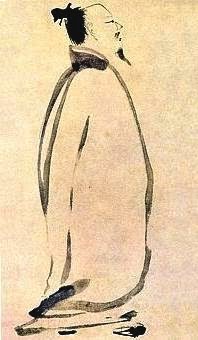
Although this post is not Chinese medicine \’Per se\’, I have decided  to include my translation of a very short Poem by the very famous Tang dynasty poet Li Bai.
Li Bai is best known for the extravagant imagination and striking Taoist imagery in his poetry, as well as for his great love for liquor. He spent much of his life travelling, although in his case it was because his wealth allowed him to, rather than because his poverty forced him. He is said to have drowned in the Yangtze River, having fallen from his boat while drunkenly trying to embrace the reflection of the moon.

Can Major Buplureum Decoction treat panting & wheezing?

Occasionally when reading books written by clinical masters of our time regarding the usage of Jing Fang 经方 (classic formulas) we stumble upon what seems at first to be bizarre yet intriguing ways of using these formulas that in no way reflect any of the usages we were taught in school.  One in particular that comes to mind is Hu Xi-Shu’s usage of Major Buplureum Decoction (Da Chai Hu Tang) for wheezing and panting (what we may call modern day asthma).  In his ‘Popular Lectures on Cold Damage’ (伤寒论通俗讲话), Dr Hu explains that many patients presenting with wheezing and/or panting manifest a Shao-Yang, Yang-Ming combination disease.  Therefore, the cardinal Shang Han Lun formula Da Chai Hu Tang (Major Buplureum Decoction) may be used with quite astonishing results.   Many of Dr. Hu’s students would often ask him why when treating wheezing he wouldn’t just use Ma Huang (Radix Ephedra)?  He would simply state that unless the case presenting was a Ma Huang pattern, its use was not warranted.  In the Shang Han Lun (On Cold damage) it states that “In wheezing with chest fullness, Ma Huang is appropriate, but in wheezing with abdominal fullness, Ma Huang should not be used”.

A taste of Chinese medical chicken soup, Xiang Hong (项红)

This is a translation of a case study from a great book titled ‘A Taste of Chinese Medical Chicken Soup’ written by Dr. Xiang Hong in Beijing. This is a case study book which presents several of her own cases as well as numerous by prominent modern Beijing physicians (老医). The case I will be translating is one by professor Fan Zheng-Lun (樊正伦), a great physician who I had the pleasure of observing while in Beijing.

8989278-1_o.jpg 

Pre-Menstrual headaches and heart vexation (treated by) calming the liver and clearing heat with the happy free and easy wanderer.

On July 15, 2000 it was professor Fan Zheng-Lun’s clinical day at the ‘Ping Xin Tang clinic’. A 47 year old female patient was presenting her case. Recently her menstrual cycles were arriving early and much heavier than ever with numerous large blood clots. She experienced headaches and distension in her head prior to her cycles along with heart vexation and a sore and achy low back. In addition she was seen in the Gynecology department where she was diagnosed with a uterine myoma and since menopause was approaching, surgery was unnecessary. She felt warm quite easily and found herself quite irritable prior to the cycle.
Professor Fan simultaneously felt her pulse and inspected her tongue. Only the tongues margins were red and there was a thin white coating. The tongue body was swollen with slight teeth marks on the margins. The left bar (guan) position of the pulse was wiry and the cubit (chi) weak. The right pulse had an overall slippery wiry manifestation.

Professor Fan believed this to be a case of Liver depression, Spleen vacuity with a Chong and Ren disharmony causing headaches. Therefore the treatment method would involve clearing the Liver, strengthening the Spleen and regulating the Ren and Chong vessels.
The formula administered was as follows:

(Mu) Dan Pi 9g
Chao Zhi Zi 6g
Chao Bai Zhu 9g
Dang Gui 9g
Fu Ling 9g
Cu Chai Hu 9g
Zhi Xiang Fu 9g
Gui Zhi 6g
Bai Zhi 6g
Zhi Gan Cao 6g
Man Jing Zi 9g
Chuan Xiong 6g
Tao Ren 9g
Bai Shao 12g
Chao Du Zhong 12g

7 Packages were given to be decocted in water.

The patient was explained that the basis of treatment was to regulate the cycle and therefore the formula should be taken one week prior to the start of her cycle.
A month later the patient said that after taking the weeks’ worth of herbs, her headaches and backache had clearly decreased, the menses was not as heavy and the clots were smaller. The patient was instructed to take these herbs again one week prior to her cycle in order to consolidate treatment. According to this method, taking these herbs for several months should have a positive effect on the uterine myoma as well.

This formula is a modified version of “Dan Zhi Xiao Yao San” (Moutan and Gardenia Free and Easy Wanderer powder) with “Gui Zhi Fu Ling Wan” (Cinnamon and Poria pills).
Dan Zhi Xiao Yao San is Xiao Yao San (Dang Gui, Bai Shao, Chai Hu, Huang Qin (1), Chao Bai Zhu, Zhi Gan Cao, Sheng Jiang, Bo He) with Dan Pi and Zhi Zi.
Xiao Yao San is from the ‘Imperial Grace Formulary of the Tai Ping Era’ (He Ji Ju Fang) and is a great Liver coursing, depression resolving, Spleen strengthening, blood nourishing formula. Adding Dan Pi and Zhi Zi increases its ability to clear Liver heat.
This patient had pre-menstrual vexation and headaches which are a manifestation of Liver channel depressive heat, therefore this formula was chosen.
Herbs are selected according to the pattern and re-analyzed if there is no reduction (of symptoms).

When seeing patients with uterine myomas the use of Gui Zhi Fu Ling Wan can be quite efficacious. Gui Zhi Fu Ling Wan is originally found in the 20th chapter of the \’Jin Gui Yao Lue\’ (Prescriptions from the Golden Cabinet) section on Diseases, Pulses, Patterns and Treatments of Pregnancy related (Obstetric) diseases. Gui Zhi Fu Ling Wan is a very famous and effective Gynecological formula.
Chinese medicine believes that concretions or abdominal masses are accumulations and gatherings in the abdomen becoming clots or accumulated blood creating a very typical heavy menstrual cycle with clots.
Within the formula, Gui Zhi warms and frees the vessels; Dan Pi and Tao Ren attack concretions and accumulations and break static blood. Using Fu Ling disinhibits dampness and Bai shao harmonizes the Ying (nutritive). Altogether these herbs achieve the function of breaking stasis and generating new (blood).

Generally headaches occurring prior to the menses are caused by Liver heat, while headaches occurring after the cycle are governed by blood vacuity. Clinical practice should be based on the system of treatment according to pattern identification.

(1) Huang Qin is not mentioned in the original formula. My initial assumption is that it is merely a typo, but was included in the translation in order to stay true to Dr. Xiang’s book.

Hu Xi-Shu (胡希恕) Case #3- Duodenal Ulcer (十二指肠溃疡)

Hu Xi-Shu, Shang Han Lun Tong Su Jiang Hua

 Bai, Male, 32 years old;

Initial diagnosis was on December 21, 1965: Patient presented with epigastric pain for over a year which has started to increase in severity over the last month. Pain is present prior to and after meals. Accompanying symptoms included belching, vomiting, epigastric focal distension, excessive worry and occasional abdominal fullness and distension. Tongue coating was white and his pulse was wiry and thin. Through a Barium meal investigation he was diagnosed with a duodenal ulcer and gastroptosis.
He was prescribed Inula and Hematite Decoction (Xuan Fu Dai Zhe Shi Tang) combined with Poria Decoction (Fu Ling Yin) and Fritillary bulb and cuttlebone powder (Wu Bei San):

Xuan Fu Hua 3 qian
Dang Shen 3 qian
Sheng Jiang 5 qian
Dai Zhe Shi 3 qian
Zhi Gan Cao 2 qian
Ban Xia 5 qian
Da Zao 4 pcs
Fu Ling 4 qian
Bai Zhu 3 qian
Chen Pi 3 qian
Zhi Ke 3 qian
Wu Zei Gu 3 qian
Chuan Bei 2 qian

Results: After taking three packages of the above formula his epigastric pain, belching, and vomiting decreased. After six packages his epigastric pain resolved and has had no obvious symptoms to this day.