Cáo Yǐngfǔ on the Use of Xiǎo Jiàn Zhōng Tāng 

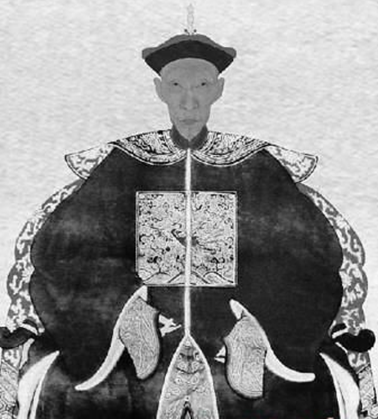
Master Cao was a pivotal force in the classical formulas school (经方派) and was a true master in using the underlying principles and formulas found in the Shang Han Lun and Jin Gui Yao Lue. Master Cao felt that the medical texts, which followed were too insignificant to study and discuss, and therefore he attached great importance to the thorough study of these texts to his students, and felt that Zhang Zhongjing’s theories and formulas were the perfect framework for successful medical practice. In addition to being skillfully versed in these medical canons, Cao Yingfu was also an accomplished poet, often interweaving the two when attempting to convey his thought process in clinic, often instructing his students to compose a poem and matching it with a relevant line from the classics. This kind of inquiry and thought process truly shows the breadth of his skill and how his mind rarely waivered from the classical Chinese medicine concept of the human body being a reflection of his environment, the microcosm of the macrocosm.
However, master Cao was not completely strict in his formula choices and would often use formulas like Bu Zhong Yi Qi Tang, Xiao Yao San, and Liu Wei Di Huang Wan, in addition to herbs such as niu bang zi, qian hu and various others. This shows that he was obviously well read and did not quickly write off more modern formulas. His use of these non Zhang Zhongjing formulas displayed his deep understanding in the formula constructions and where they were applicable. He advocated that students must understand and study the root of the medical philosophies and not just pick the flowers, and it’s from this same feeling that he encouraged his students to read the Yue Fu (乐府诗集) poetry of the Han and Wei dynasties and specifically the poet Wang Yuyang (王漁洋).
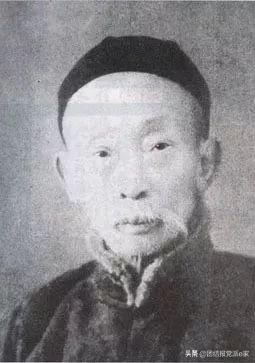
When the Japanese invaded the south, his hometown of Jiangyin, Jiangsu province fell into enemy hands and on December 7th, 1937, he died heroically resisting the invaders. While master Cao died a hero, the world lost a great Chinese medicine master. We are very fortunate to have several of his books available in order for subsequent generations to learn from not just in China, but also around the world. It is my hope in translating some of his cases that this knowledge can spread. We are also very fortunate to have scholar-physicians like my teacher Dr. Huang Huang uphold this love and dedication to master Cao’s work and to classical literature.

Case 1
Female. Since delivering a child her cycles come every forty days, which are accompanied by distending pain in the epigastrium following meals. When the cycle arrives, there is pain extending from the stomach to the lower abdomen. During the pain she experiences a strong desire to have a bowel movement. After the bowel movement the pain would typically stop. Pain would return the following afternoon and stop during the menstrual flow, and once again come and go the following day. Both pulses were wiry.
This is liver and gall-bladder exploiting deficiency of the spleen viscera. In this case Xiao Jian Zhong Tang with Chai hu and Huang Qin is appropriate.


Gui Zhi 3 qian
Sheng Bai Shao 5 qian
Zhi (Gan) Cao 2 qian
Sheng Jiang 5 pcs
Hong Zao 12 pieces
Yi Tang 2 liang
Chai Hu 3 qian
Jiu (Huang) Qin 1 qian
Tai Wu Yao 1.5 qian

After one package, her pain stopped and the menses ceased. Patient continued with two more packages, after which the condition resolved.
The master (Zhang Zhongjing) in his great classic said:


“In cold damage, (when) the yang pulse is choppy and the yin pulse is wiry, as a rule there should be urgent pain in the abdomen. First give Xiao Jian Zhong Tang; if it does not reduce, Xiao Chai Hu Tang governs.”
“伤寒,阳脉涩,阴脉弦,法当腹中急痛,先与小建中汤,不差者,小柴胡汤主之”.

Cao Yingfu (曹颖甫): Now here (in this case) I feel it goes without saying that there had not been a reduction and I immediately added Chai Hu and Huang Qin to treat her, why not? This woman’s situation was a menstrual disease and many belong to Chai Hu patterns, and so it was clearly obvious (to add it). The following day it was reported that the disease had resolved.

Case 2
Abdominal pain which liked pressure. During episodes of pain a distressing sensation of cold air was felt moving up and down (the body). Pulse was wiry-deficient. In addition there was an aversion to cold.
This is due to the liver exploiting the spleen and Xiao Jian Zhong Tang governs.
Gui Zhi 9g
Bai Shao 18g
Sheng Jiang 9g
Zhi Gan Cao 6g
Da Zao 6g
Yi Tang 30g

Liáo Shēng annotation: “This case is a pattern of abdominal pain (due to) central yang insufficiency with interior deficiency. The patient experienced abdominal pain, which liked pressure, the pulse was wiry-deficient and an aversion to cold was present. This signifies the overabundance of yin cold-qi, central yang insufficiency, and liver wood exploiting spleen (earth). Therefore Xiao Jian Zhong Tang was used to treat and resolve the condition.
The function of this formula is to supplement deficiency, quiet the center, moderate urgency and stop pain. The name of this formula is center fortifying (decoction). Fortify means to establish or set up, and because central qi is insufficient, it is very important to ‘establish’ or ‘set it up’. The formula contains sweat inducing (herbs) and not central effusing (herbs). It is referred to as a ‘minor’ (decoction) and only half (of the formula) resolves the exterior, so it does not completely secure the center. Xiao Jian Zhong Tang uses a heavy dose of Yi Tang, which is sweet, warm and serves as the sovereign to supplement the center. Bai Shao is the minister, which is sour and sweet to tonify yin. The assistant Gui Zhi is acrid-warm, which effuses and scatters. Combined with Bai Shao it regulates the nutritive and defense. In addition, Gan Cao, Da Zao and Sheng Jiang, which are sweet moderating and acrid warm, nourish the stomach and harmonize the center. Therefore (this formula) is able to warm and nourish central qi, calm and supplement yin and yang and regulate the nutritive and defense.”

*Xióng Liáo-Shēng (熊廖笙) style name Yǐ Xíng (以行) was born in 1905 in Ba County in Chongqing, Sichuan Province. Master Xióng was well versed in the classics, primarily the Nei Jing, Nan Jing, Shang Han Lun, and Jin Gui Yao Lue. The author of several books, Dr. Xióng possessed a deep and profound scholarship of the Shang Han Lun and was highly skilled in distilling the essence and precise details of various ancient doctors cases, which were found in his various annotations.

Don’t forget to join the Classical Chinese Medicine community by adding your email address to the bar on the right to be notified of any future publications, translations and writings!
Huáng Yuányù discusses Bǎi Hé

With today being the arrival of ‘Major Cold ‘(大寒 – the 24th solar term in the Chinese calendar lasting until Feb 3), what better day than today, to sit down with a cup of warm Wulong or Hongcha to translate passages from some of my favourite books.
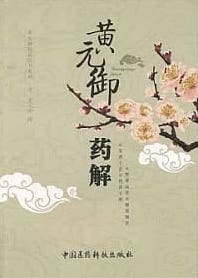
The following is a direct translation from the Bǎi Hé section of Huáng Yuányù’s (1705-1758) excellent ‘Interpretation of Medicinals’ (黃元御藥解).

Huáng Yuányù discusses Bǎi Hé

– Translated from Huáng’s Interpretation of Medicinals (黃元御藥解)

百合 味甘、微苦,微寒,入手太陰肺經。涼金瀉熱,清肺除煩。

Bǎi Hé – Sweet flavour, slightly bitter and slightly cold. Enters the hand Taiyin lung channel. Cools metal, drains heat, clears the lungs and eliminates vexation.

金匱百合知母湯,百合七枚,知母二兩。治百合病,發汗後者。傷寒之後,邪氣傳變,百脈皆病,是為百合。其證眠食俱廢,吐利皆作,寒熱難分,坐臥不安,口苦便赤,心煩意亂,不能指其為何經何臟之病也。然百脈之氣,受之於肺,肺者,百脈之宗也,是宜清肺。其在發汗之後者,津枯而金燔。百合清肺而生津,知母涼金而瀉熱也。

The Jīn Guì’s Bǎi Hé Zhī Mǔ Tāng

Bǎi Hé 7 pieces
Zhī Mǔ 2 liǎng [listed as 3 liǎng in the Jīn Guì Yào Lüè]

Treats Bǎi Hé disease following the induction of sweat. Following cold damage, pathogenic qi shifts, and the hundred vessels are diseased. This is Bǎi Hé [disease]. Its symptoms present with disturbance to sleep and appetite, the occurrence of diarrhea and vomiting, difficulty differentiating between cold and heat, disquietude whether sitting or laying down, a bitter taste in the mouth, red urination, heart vexation, and a confused state of mind, with an inability to point to any specific channel or visceral disease. Now, the qi of the hundred vessels is received in the lungs, as the lungs are the ancestor of the hundred vessels. Thus, it is appropriate for the lungs to be clear. Following the promotion of sweat, the fluids [may be] desiccated and metal burned. Bǎi Hé clears the lungs and generates fluids. Zhī Mǔ cools metal and drains heat.

滑石代赭湯,百合七枚,滑石三兩,碎,代赭石如雞子大。治百合病,下之後者。下敗中脘之陽,土濕胃逆,肺熱鬱蒸。百合清肺而瀉熱,滑石、代赭,滲濕而降逆也。

Huá Shí Dài Zhě Tāng

Bǎi Hé 7 pieces
Huá Shí 3 liǎng (broken)
Dài Zhě Shí (a pellet sized piece)

Treats Bǎi Hé disease following purgation. Purgation damages the yang of the central stomach duct, [resulting in] earth-damp counterflow [of the] stomach and depressed steaming lung heat. Bǎi Hé clears the lungs and drains heat; Huá Shí and Dài Zhě percolate dampness and downbear counterflow.

百合雞子湯,百合七枚,煎湯,入雞子黃一枚,攪勻,煎。治百合病,吐之後者。吐傷肺胃之津,金土俱燥。百合清肺熱而生津,雞子黃補脾精而潤燥也。

Bǎi Hé Jī Zǐ Tāng

Bǎi Hé 7 pieces
Boil the decoction and add one egg yolk, blend until smooth, and boil. Treats Bǎi Hé disease following vomiting. Vomiting damages the fluids of the lungs and stomach, resulting in the dryness of both metal and earth. Bǎi Hé clears the lungs and generates fluids. Jī Zǐ Huáng [egg yolk] supplements spleen essence and moistens dryness.

百合地黃湯,百合七枚,生地黃汁一斤。入百合湯,煎服。大便當如漆。治百合病,不經發汗吐下,病形如初者。不經發汗吐下,而瘀熱淫蒸,敗濁未泄。百合清肺而瀉熱c生地黃汁涼瀉腸胃而下垢濁也。

Bǎi Hé Dì Huáng Tāng

Bǎi Hé 7 pieces
Shēng Dì Huáng juice 1 jīn [listed as 1 shēng in the Jīn Guì Yào Lüè]
Add to Bǎi Hé decoction, boil and take. The stools should be like lacquer. Treats Bǎi Hé disease when neither sweating, vomiting or purgation have been used, and the disease appears as in the beginning. [Here] sweating, vomiting or purging have not been used and there is excess steaming of stasis heat [as well as] turbidity [which] has not been drained. Bǎi Hé clears the lungs and drains heat, while the juice of Shēng Dì cools and drains the stomach-intestines, and purges foul turbidity.

百合洗方,百合一斤。水一斗,漬一宿,洗身。洗後食煮餅,勿以鹽。治百合病,一月不解,變成渴者。火炎金燥,則肺熱不解,變而為渴。肺主皮毛,百合洗皮毛,以清肺熱也。

Bǎi Hé Xǐ Fāng [Lily bulb wash]

Bǎi Hé 1 jīn [listed as 1 shēng in the Jīn Guì Yào Lüè]
Use 1 dǒu of water and soak overnight. Use [the liquid] to bathe the body. After bathing, eat boiled cake, and avoid salt. Treats Bǎi Hé disease, which has not resolved within a month, and has resulted in thirst. [Here] fire flares and dries metal, resulting in lung heat which fails to resolve, leading to thirst. The lungs govern the skin and hair, and the Bǎi Hé is used to wash the skin and hair, thereby clearing lung heat.

百合滑石散,百合一兩,滑石二兩。為散,飲服方寸匕,日三服。微利,止服,熱則除。治百合病,變發熱者。濕動胃逆,肺郁生熱。百合清金而瀉熱,滑石利水而除濕也。

Bǎi Hé Huá Shí Sǎn

Bǎi Hé 1 liǎng
Huá Shí 2 liǎng [listed as 3 liǎng in the Jīn Guì Yào Lüè]
Powder [the ingredients], and take a square-inch spoonful in liquid, three times per day. When there is slight diarrhea, stop taking, as [this indicates that] heat has been eliminated. Treats Bǎi Hé disease, which has transmitted into heat effusion. [When] dampness is stirred, the stomach runs counterflow, resulting in lung depression that generates heat. Bǎi Hé clears metal and drains heat; Huá Shí disinhibits water and eliminates dampness.

百合涼金潤燥,瀉熱消郁,清肅氣分之上品。其諸主治,收涕淚,止悲傷,開喉痹,通肺癰,清肺熱,療吐血,利小便,滑大腸,調耳聾耳痛,理脅癰乳癰、發背諸瘡。
水漬一宿,白沫出,去其水,更以泉水煎湯用。

Bǎi Hé is a superior medicinal, which cools metal, moistens dryness, drains heat, disperses depression, and depurates the qi layer. It’s various treatments include stopping tearing, stopping sadness, opening throat impediment, disinhibiting welling-abscess of the lung, clearing lung heat, treating vomiting of blood, disinhibiting urination, lubricating the large intestine, controlling deafness and ear pain, rectifying subcostal and breast welling-abscesses, and effusing the back of various sores. Steep Bǎi Hé in water overnight. [When] white foam appears, discard the water, and then decoct with spring water and use.

Don’t forget to join the Classical Chinese Medicine community by adding your email address to the bar on the right to be notified of any future publications, translations and writings!

Huáng Huáng’s Use of Guì Zhī Fú Líng Wán in Respiratory Conditions

Cinnamon Twig and Poria Pill (guì zhī fú líng wán)

Indications: Bronchial asthma, chronic obstructive pulmonary disease (COPD), pulmonary arterial hypertension, pleurisy, pleural effusion, interstitial pneumonia, pulmonary fibrosis, and recurrent pulmonary infections typically manifesting with a dark-red complexion, a stifling sensation and pain in the chest, purple lips and a dark tongue. This formula has a blood invigorating, stasis transforming effect, which can improve the blood supply of the heart and lungs.

Usage & Modifications:

1. Patients for whom this formula is suitable tend to have a red or purple-red complexion, abdominal fullness, resistance to pressure in the lower left abdomen with possible tenderness, headaches, dizziness, insomnia, irritability, restlessness, stirring palpitations, and a dark tongue body with possible purple spots.

2. For patients that experience diarrhea after taking the formula, have them take in after meals or decrease the dosage.

3. Use with caution in pregnancy.

4. Modifications:

  • If there is a stifling sensation and pain in the chest, a chronic cough, and a wan and sallow complexion, add Angelicae sinensis Radix (dāng guī) 15g, Chuanxiong Rhizoma (chuān xiōng) 15g, and Salviae miltiorrhizae Radix (dān shēn) 15g
  • If there is a stifling sensation in the chest, abdominal distention, and an oily complexion, add Citri reticulatae Pericarpium (chén pí) 20g, Aurantii Fructus (zhǐ ké) 20g, and Zingiberis Rhizoma recens (shēng jiāng) 20g
  • If there is a stifling sensation in the chest  and constipation, add Aurantii Fructus (zhǐ ké) 20g, Allii macrostemi Bulbus (xiè bái) 20g, and Trichosanthis Fructus (quán guā lóu) 30g.

Representative Case History:

Yu, 74-year-old male, 160cm/70kg.

Initial consultation on June 5, 2018

Chief complaint: Recurrent cough and wheezing for 9 years, with dyspnea, an inability to climb stairs quickly, and abdominal distention following meals.

History: In April 2018 during a hospital visit, he was diagnosed with an acute exacerbation of chronic obstructive pulmonary disease (COPD), arrhythmia, atrial fibrillation, cardiac insufficiency, heart valve disease, and a fatty liver.

Signs: average build, dark, red and oily complexion, obvious bags under the eyes, purple-dark lips and tongue, stasis marks under the tongue, abdominal fullness, and resistance to pressure in the lower costal arch (flanks).

Prescription: Cinnamomi Ramulus (guì zhī) 10g, Cinnamomi Cortex (ròu guì) 10g, Poria (fú líng) 20g, Paeoniae Radix rubra (chì sháo) 20g, Moutan Cortex (mǔ dān pí) 15g, Persicae Semen (táo rén) 15g, Angelicae sinensis Radix (dāng guī) 15g, Chuanxiong Rhizoma (chuān xiōng) 15g, Salviae miltiorrhizae Radix (dān shēn) 15g, Aurantii Fructus (zhǐ ké) 30g, Citri reticulatae Pericarpium (chén pí) 30g, Zingiberis Rhizoma (gān jiāng) 10g; 15 packets.

Second consultation on June 25, 2018: After taking the herbs, his breathing was smooth and easy, however cough and wheezing were still present, but he was still able to play mah-jong. The same formula was continued.

Third consultation on August 20, 2018: No labored breathing when walking and he was able to climb 3 floors. The stasis marks under his tongue had improved.

Huáng Yuán-Yù (黄元御) on the importance of center earth in physiological regulation

The following is a collection of notes gathered for research on a course I am developing on center earth physiology and pathology. This is a large subject, and therefore the following information is far from complete, but is merely presented here to provide a glimpse into this important concept of proper physiological movement and dynamics. 

In the majority of Huáng’s books, great importance is laid on proper physiological movement throughout the body. Huáng’s interpretations of formulas and disease mechanisms are usually described through the lens of the proper or faulty movement and breakdown of this dynamic. The basic tenet of this medicine is based on proper movement and interaction of yin and yang, and when describing physiology or pathology, the terms Shùn (顺) translated as ‘normal’, ‘favourable’ or ‘to follow the course of’, and Nì (逆), typically translated as ‘counterflow’ are used. In very simple terms, when the body is running in ‘Shùn’, all physical processes are in harmony, running along their proper course, resulting in a state of health. When ‘Nì’ occurs and the natural movement or order of things are running against their proper course, physiological processes start to break down, resulting in dis-ease. 

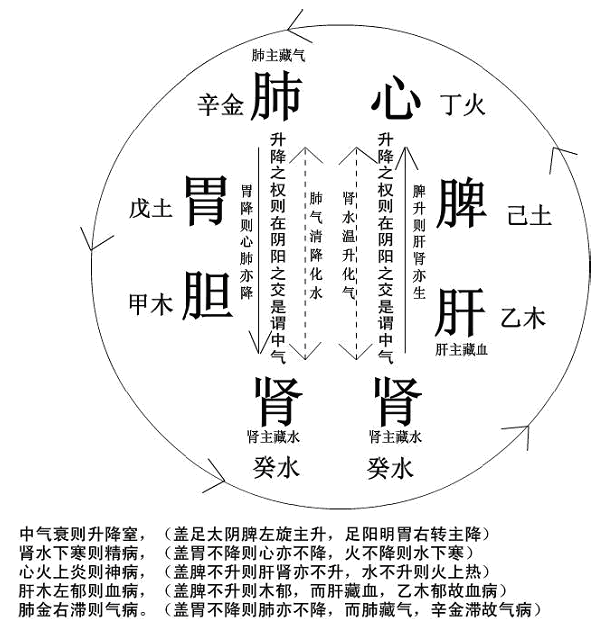
As can be seen from the image below, proper healthy movement in the entire human organism is dependant on this specific circular dynamic. Elucidation on this concept is not mentioned in many literary works, with the exception of Qing Dynasty scholar/physician Péng Zǐ-Yì’s (彭子益), Circular Movements in Ancient Chinese Medicine (圆运动的古中医学), a text primarily focused on these circular movements. 

Physiological Implications

The following commentary is essentially a translation of Huáng’s original chart, with a few extra tidbits added from some of his other works. 

“When ascending and descending are balanced, and yin and yang interact, this is referred to as center qi.”

Center Qi debilitation results in an obstruction to ascent and descent. 

Foot Taiyin Spleen governs ascent on the left – Foot Yangming Stomach governs descent on the right. 

When Kidney water is too cold, this results in diseases of the Essence. 

When the stomach fails to descend, the heart is unable to descend as well leading to excessive cold of kidney water due to lack of fire. 

Heart fire flaring results in diseases of the Shen. 

When the spleen fails to ascend, both the liver and kidneys are unable to ascend. When water fails to ascend, fire flares. 

** Proper movement of center qi ensures a good balance between water and fire. 

When liver wood is depressed, this results in blood diseases. 

When the spleen fails to ascend, wood is depressed. Because the liver stores blood, when wood is depressed, this results in blood disease. 

When the lungs are obstructed on the right, this results in qi diseases. 

When the stomach fails to descend, the lungs are also unable to descend. Because the lungs store the qi, obstructed metal leads to qi disease. 

Spleen dampness is the result of center qi non-transformation resulting in a failure to ascend or descend. This leads to the improper movement of both the clear yang and turbid yin. Another possibility is a yang deficiency in the body which leads to the earth being unable to descend. As a result dampness forms.

[Upper] – Lung-Metal and Heart-Fire —> descend through stomach-earth —> When stomach earth fails to descend, this leads to counterflow ascent of both metal and fire. 

[Lower] – Liver-Wood and Kidney-Water —> ascend through spleen-earth —> When the earth is weak or center earth yang is deficient this leads to earth dampness with a failure to ascend, and thus both wood and water sink. 

Musings on Bēn Tún Tāng

A formula I’ve been quite intrigued with for many years, and use quite often in clinic, is Bēn Tún Tāng from the Jīn Guì Yào Lüè. The following is a short translation from one of my favourite Qīng dynasty scholar/physicians Huáng Yuán-Yù, followed by some brief clinical musings written by myself. 

Huáng Yuán-Yù on Bēn Tún Tāng

Translated from the Cháng Shā Yào Jiě (长沙药解)

The Golden Cabinet’s Bēn Tún Tāng

Gān Cǎo  2 liǎng

Bàn Xià 4 liǎng

Shēng Jiāng 4 liǎng

Shēng Gé (Gēn) 5 liǎng

Huáng Qín 2 liǎng

Xiōng Qióng 2 liǎng

Dāng Guī 2 liǎng

Sháo Yào 2 liǎng

Gān Lǐ Gēn Bái Pí 1 jīn 

This formula treats Bēn Tún qi, with surging into the chest, abdominal pain, and alternating heat and cold. When yang collapses, and the spleen is vanquished, (this causes) sinking and obstruction in Liver-wood, wood qi depressed effusion, and surging from the umbilicus, abdomen, chest and diaphragm, (resulting in) pain and concurrent heat and cold. Because Liver-wood surges upwards, both the stomach and gall-bladder run counterflow, and the Shaoyang is depressed and distressed, this results in a struggle between the interior and the yin, and this ongoing battle manifests with alternating cold and heat. The qi of Jué Yīn is wind-wood. When wind stirs it consumes the blood, and when warmth is depressed, it results in heat. Gān Cǎo supplements the earth and moderates the center; Shēng Jiāng and Bàn Xià descend stomach and gall-bladder counterflow; Huáng Qín and Shēng Gé (Gēn) clear depressed heat in the stomach and gall-bladder; Xiōng Qióng and Sháo Yào course wood and moisten wood dryness; Gān Lǐ Gēn Bái Pí clears the liver and descends surging qi. 

Gān Lǐ Gēn Bái Pí is sweet, cold, collecting and astringent. It is excellent at descending the surging qi of Jué Yīn, which can therefore treat bēn tùn. It is mainly indicated for alleviating thirst, eliminating vexing counterflow, arresting dysentery, and stopping vaginal discharge. 

Notes:

In my experience, Bēn Tùn (running piglet) can be both objective and subjective. Subjective in that the patient will feel some sort of rush that starts in the lower body, and rises either to the chest, throat, or face. It’s pretty hard to get a patient to tell you that they feel a surging sensation from their lower abdomen to their chest. Some do, but it’s not something I hear very often. Anxiety can manifest this way for some people, while some will tell you that they get facial redness, slightly dizzy or a bit of a rush when they are nervous. Another possibility for some is that this sensation, or ‘rush’ can cause patients to become anxious. I would interpret these manifestations as a form of running piglet. 

However, running piglet is also objective, manifesting in several ways such as; sudden sweating, facial redness, epigastric pain, chest tightness, shortness of breath, dizziness, headaches/migraines, premenstrual acne, etc.

This is due to a wood-earth pathology, where wood is abundant, which damages the earth, hence we see the abdominal pain. Since we have a Shào Yáng element here, there is alternating heat and cold (往来寒热), which can be interpreted the way Huáng Huáng (黄煌) does in that this alternating heat and cold can refer to anything that alternates, or occurs cyclically. This is a major feature of the Shào Yáng, and so having someone that breaks out into sweats, gets cyclical acne, cyclical migraines, anxiety attacks, etc., that is due to a wood-earth pathology, Bēn Tùn Tāng is a great choice. 

In addition, we have an element of a Jué Yīn pathology as well just to complicate things. Here, blood was affected which left a slight blood deficiency and when there is not enough blood and wood-qi tries to move, this can get stuck and lead to heat (which is the flaring of ministerial fire). 

Sāng Bái Pí is the most common substitute for the Gān Lǐ Gēn Bái Pí. Some doctors like Hu Xi-Shu used Chái Hú as they saw this pattern as a Shào Yáng-Tài Yīn concurrent pattern, and added Chái Hú to clear Shào Yáng heat from the chest. I personally use Sāng Bái Pí, as I feel that due to the flaring of ministerial fire, there is a bit of heat in the lungs and adding Sāng Bái Pí ensures that it gets cleared but also that metal descends. With the Spleen-earth affected, ascent and descent in the entire body is affected and we always need to make sure that the proper physiological wheel keeps turning. 

Huáng Yuán-Yù on Wú Zhū Yú Tāng

Wú Zhū Yú (吳茱萸): Acrid and bitter flavor, warm nature; enters the foot Yángmíng stomach, foot Tàiyīn spleen, and foot Juéyīn liver channels. Warms the centre, drains dampness, opens depression, breaks congealment, descends turbid yin to stop vomiting, and ascends clear yang to stop diarrhea. 

Cold Damage’s Wú Zhū Yú Tāng

Wú Zhū Yú (吳茱萸) 1 shēng

Rén Shēn (人蔘) 3 liǎng

Shēng Jiāng (生薑) 6 liǎng

Dà Zǎo (大棗) 12 pieces

Treats Yángmíng cold damage with a desire to vomit after eating. Normally, stomach qi descends, [which results] in the absence of vomiting on the intake [of food]. [When] stomach qi adversely ascends, this results in vomiting and reduced [food] intake. Rén Shēn and Dà Zǎo bank the earth and supplement the center; Wú Zhū Yú and Shēng Jiāng warm the stomach and descend counterflow. [This] treats Juéyīn disease with dry retching, vomiting of foamy drool, and headaches. 

Due to deficiency of the earth, wood becomes stagnant, centre qi is harmed, the stomach ascends as opposed to descending, and turbid qi is upthrusted, resulting in headaches and dry retching. 

When damp qi is congealed and stagnant, this results in vomiting of foamy drool. Rén Shēn and Dà Zǎo bank the earth and supplement the center; Wú Zhū Yú and Shēng Jiāng descend counterflow and course wood. [This] treats Shàoyīn disease with vomiting, diarrhea, reversal cold of the extremities, vexation, agitation and a desire to die. 

When cold water rebels against the earth, the spleen sinks and the stomach [runs] counterflow, which leads to both vomiting and diarrhea. [When] center qi is depleted, the four limbs lack warmth, resulting in reversal cold of the extremities. [When] yang departs from its root, it disperses and strays without returning, resulting in vexation, agitation and a desire to die. Rén Shēn and Dà Zǎo bank the earth and supplement the center; Wú Zhū Yú and Shēng Jiāng descend counterflow and ascend that which is sinking. 

In the Jīn Guì [this formula] treats vomiting and chest fullness. [When] the center is deficient and the stomach runs counterflow, turbid qi becomes congested in the chōng vessel, resulting in vomiting and chest fullness. Rén Shēn and Dà Zǎo bank the earth and supplement the center; Wú Zhū Yú and Shēng Jiāng descend counterflow and drain fullness. 

Huáng Huáng – A Bàn Xià Hòu Pò Tāng Case

Huang, 65-year-old male, 171cm/75kg. 

Initial consultation on January 29, 2019.

History: Superficial gastritis with ulceration for over 10 years. Patient reported that he often experienced abdominal pain after taking western medications as well as abdominal discomfort after eating fruit. He felt a sticky sensation in his umbilicus, and also experienced abdominal distention, belching, poor appetite, difficulty falling asleep, and had no issues with his bowel movements. He was worried that his digestive disease will develop into cancer, and therefore, his mood was quite poor. 

Signs: Robust build, double eyelids, frowning eyebrows, lively facial expressions, a red face, and dusky red lips. In addition, he procrastinated when he spoke. His abdomen was soft, there were purple stasis marks below his tongue, his throat was red, tongue coating slightly greasy, and his pulse was slippery. 

Prescription: jiangbanxia 15g, houpo 15g, fuling 15g, sugeng 15g, zhike 15g, zhizi 15g, lianqiao 30g, huangqin 10g; 9 packets; 3 days on, 2 days off. 

Second consultation on February 26, 2019: After taking the formula, his symptoms had improved. However, once stopping them, the symptoms returned, yet this time there was no abdominal pain, and only a feeling of discomfort, plus the location of the pain had now changed. He was also belching, had subcostal distention, and his sleep was reduced. 9 packets of the same formula with chenpi 20g was given; 3 days on, 2 days off. 

Selected Clinical Case Histories of Liú Dù-Zhōu – Gé Gēn Tāng


Li X, a 38-year-old male. He had suffered with stubborn migraines for 2 years, which had not resolved despite being treated for a long time. He was introduced to Doctor Liu by a good friend and brought in for a consultation. 

Chief complaint: right sided headaches, which commonly extended to the forehead and supraorbital ridge. This was accompanied by an absence of sweating, chills, a runny nose with clear mucus, irritability, a red complexion, dizziness, and poor sleep. During examination, the patients’ range of motion in his back was inhibited, and on inquiry, the patient reported that his neck and occiput usually felt tight, more severely so during his headaches. His tongue was pale with a white coat, and his pulse was floating and slightly rapid. 

This was differentiated as cold pathogens being lodged in the taiyang channels, resulting in symptoms of inhibited flow of channel qi. 

Treatment required the promotion of sweat to expel pathogens, and unblock taiyang qi, so Kudzu Decoction (gé gēn tāng) was given: 

Ephedrae Herba (má huáng) 4g
Puerariae Radix (gé gēn) 18g
Cinnamomi Ramulus (guì zhī) 12g
Paeoniae Radix alba (bái sháo) 12g
Glycyrrhizae Radix praeparata (zhì gān cǎo) 6g
Zingiberis Rhizoma recens (shēng jiāng) 12g
Jujubae Fructus (dà zǎo) 12 pieces

Ephedrae Herba (má huáng) and Puerariae Radix (gé gēn) were to be decocted first with the froth removed before adding the other ingredients. 

After taking the decoction, the patient was covered up so a slight sweat could be obtained. He was instructed to avoid cold drafts. 

After taking 3 packets, his back felt warm, which was followed by a mild sweat throughout the body, and a reduction in his headache and neck tension. 15 packets of the same formula was
prescribed again, which completely resolved his headaches and neck tension. 

Selected Clinical Case Histories of Liu Du-Zhou (Liú Dù-Zhōu lín zhèng yàn àn jīng xuǎn)

Spring Dawn by Mèng Hào Rán (春曉, 孟浩然)


孟浩然


春眠不覺曉,

處處聞啼鳥。

夜來風雨聲,

花落知多少。

Spring Dawn

Mèng Hào Rán

In spring sleep, dawn arrives unknowingly,

I hear crying birds everywhere.

From the sound of the wind and rain last night,

I wonder how many flowers fell?

Mèng Hào Rán  (689-740) was a famous Tang dynasty poet. In his later years preferring the life of a recluse, when Mèng was not visiting friends at their posts along the Cháng Jiāng river (Yangtze), including his close compadre Wáng Wéi (for which he wrote several poems), he  would be writing poetry while immersed in nature, primarily at his family seat in South mountain (南山) or in his hermitage on Lù Mén mountain (鹿門山) where he briefly lived in retreat. Mèng is often referred to as a ‘landscape poet’, for his beautiful reflections and writings on the landscapes around him, especially the ones around his hometown, modern day Hú Běi province.

Another five character quatrain poem, this and my previous poetry post (Wáng Wéi’s Deer Fence), are a couple of the most popular poems in modern day China, which can be recited by memory by many Chinese folk. Archie Barnes in his Chinese through Poetry describes this simple poem eloquently, “It describes the process of waking up in four successive stages: first, unconsciousness; second, the awakening of sensory perception; third, the awakening of memory; and fourth, the awakening of rational thought, giving full daytime consciousness.”


Lù Zhái (The Deer Fence) by Wáng Wéi (鹿柴, 王维)


鹿柴

王维[1]

空山不見人

但聞人語響

返景[2]深林

復照青苔上


Lù Zhái (The Deer Fence) [3]

Wáng Wéi

In (this) empty mountain[4], no one is seen,

But only the sounds of others are heard.

On return, (sun)light enters the deep forest,

And once again, it shines atop the green moss.


Notes:

This poem was written in the classic five-syllable quatrain form, which is the shortest of forms in Chinese poetry. How fitting that Wáng Wéi in his simple Buddhist, reflective tone would use this minimalistic style, requiring the reader to meditate on the characters, and visualize and conjure up their own ideas as to what the poet meant. Here, every character counts, and has the potential to hold a deeper meaning.


[1] Wang Wei (701-761) a Tang Dynasty poet was a devout Buddhist, having spent many years studying with his master Dao Guang. Wang’s poetry conveys beautiful imagery and his deep love of nature often using only a few characters, which were tinged with Buddhist themes throughout, showing the interconnections and relationships of all phenomenon in nature.

[2] Many commentators have said that ‘’ here is an alternate for ‘’ (reflection, shadow), however, I believe since 景 alludes to daylight and its resulting brightness this character makes more sense in the poem.  

[3] Lu Zhai is a place name, thought to be the location near Wáng Wéi’s cottage. This is in current Lán Tián county in Shǎn Xī province.

[4] Empty mountain (空山): The idea here is not simply of an ‘empty mountain’ or one devoid of any other humans or objects, as we know this is not the case, given that there is mention of a deep forest on this mountain. Although this may be what Wáng Wéi was alluding to, we can assume based on his Buddhist lens on the world, that the ‘empty ’ here was speaking to more of an ‘empty’ quality from the Buddhist perspective, the idea of a false or illusory nature of existence, and that all phenomenon have no reality.  As Lù Zhái was one of Wáng\’s retirement cottages, solitude may have been exactly what he was looking for and therefore the first definition also makes sense. This is the beauty of this style of poetry, as since we\’ll never know exactly what the poet meant, we can conjure up our own ideas and thoughts.