A Qín Bò-Wèi case study

From: Handpicked Cases of Famous Cold Damage Physicians, by Chén Míng (陈明, 伤寒名医验案精选) 

Treatment of a mismanaged case 

A forty-year-old male presented at the clinic with non-receding copious sweating and coldness following a fever from the common cold. On inquiry he mentioned that he did not suffer from headaches, coughing, or painful extremities, and only felt weak and fatigued. In addition, for the last ten years his bowel movements were disturbed. His pulse was deep, thin and lacked strength, and his tongue had a thin-white slippery coat. A physician he had previously seen after hearing that the patient had contracted the common cold, manifesting with body coldness, prescribed Shēn Sū Yǐn (Ginseng and Perilla Decoction).
I personally feel that this formula should be used for treating deficient patients that contract an external pathogen and have simultaneous retention of phlegm and thin-fluids. Currently this patient did not have any signs or symptoms of an external attack, and merely had copious sweating and coldness following a common cold fever. This belonged to a deficiency of defensive qì, and administering Shēn Sū Yǐn (Ginseng and Perilla Decoction), which is a warm-scattering formula, would fail to stop the sweating and intensify the aversion to cold.
I changed the formula to guì zhī jiā fù zî tāng (Cinnamon Twig Decoction plus Aconite), and due to the long term draining creating an insufficiency of central qì, I added huáng qí (Astragali Radix). In addition, páo jiāng (Zingiberis Rhizoma preparata) was used instead of shēng jiāng (Zingiberis Rhizoma recens). After two packages, his condition had resolved. 

Commentary: If we look at this case from the disease history to the pattern, we see signs of deficiency. The previous physician failed to ask about the history, did not go over the disease mechanism, and failed to correctly examine the pulse. He administered the warm-scattering Shēn Sū Yǐn (Ginseng and Perilla Decoction), which inevitably caused copious sweating, and intensified the coldness. Dr. Qín took a very detailed account of the tongue and pulse signs, and was clear about the pattern identification. He made a diagnosis of a defensive qì deficiency, with central qì insufficiency, and administered guì zhī jiā fù zî tāng (Cinnamon Twig Decoction plus Aconite) with páo jiāng (Zingiberis Rhizoma preparata) instead of shēng jiāng (Zingiberis Rhizoma recens) and the addition of huáng qí (Astragali Radix).
By understanding the root of the disease, all it took were two packages for it to completely resolve.

Jiāo Shù-Dé (焦树德) -A Case of Insomnia

“In longstanding insomnia with irritability, use a decoction to nourish the yīn, calm the liver, and lift the spirit”.

“Lift the Spirit Decoction” (挹神汤) is an experiential formula developed by the late-great Dr. Jiāo Shù-Dé (焦树德), for which he used for many years to treat neurasthenia, menopause, and various other conditions with great success.
The following is a case of chronic insomnia treated by Dr. Jiāo at Běijīng’s Píng Xīn Táng clinic (北京平心堂中医门诊部) in the summer of 2000.

In July of 2000, a fifty-five year old female patient presented at the clinic with chronic insomnia that has started to get worse over the last month. She has great difficulty initially falling asleep, and once she does, she has numerous dreams that wake her up quickly, and then falling back asleep is a challenge. The most sleep she ever gets is roughly between three and four hours a night. The situation is causing her to get quite irritated and angry. Her accompanying symptoms included; irritability in the heart, heat in the palms and soles, aching and weakness in the lower back, dry stools, unstable blood pressure, dizziness, tinnitus, and occasional night sweats. She has not had a menstrual cycle in over six years.

Dr. Jiāo diagnosed this as insomnia due to yīn deficiency with flaring of the liver.

Treatment principle: boost the kidneys, nourish the liver, subdue yáng and calm the spirit.

Formula:

shēng dì huáng (Rehmanniae Radix) 18g
bái sháo (Paeoniae Radix alba) 15g
huáng qín (Scutellariae Radix) 10g
fú líng (Poria) 15g
xiāng fù (Cyperi Rhizoma) 10g
yè jiāo téng (Polygoni multiflori Caulis) 15g
yuân zhì (Polygalae Radix) 12g
hé huān huā (Albiziae Flos) 6g
lóng gǔ (Fossilia Ossis Mastodi) 15g
mǔ lì (Ostreae Concha) 15g
suān zǎo rén (Ziziphi spinosae Semen) 20g (broken)
bái jí lí (Tribuli Fructus) 9g
shí jué míng (Haliotidis Concha) 30g

Seven packages were administered.

On a follow up consultation one week later, she reported that she was now able to sleep five or six hours a night, the dizziness and tinnitus had improved, and her stools were no longer dry. It was clear that this was a great formula for her.

Formula analysis:

shí jué míng (Haliotidis Concha), lóng gǔ (Fossilia Ossis Mastodi) and mǔ lì (Ostreae Concha) are used to calm the liver and subdue yáng.

shēng dì huáng (Rehmanniae Radix), and bái sháo (Paeoniae Radix alba) nourish yīn, boost the kidneys, enrich water to contain wood, soften the liver, and calm the spirit.

huáng qín (Scutellariae Radix) is able to drain liver and gallbladder fire, boost yīn, and reduce yáng.

fú líng (Poria) strengthens the spleen and transforms dampness.

yuân zhì (Polygalae Radix) and suān zǎo rén (Ziziphi spinosae Semen) are used to promote the interaction between the heart and kidneys, tranquilize the heart and calm the spirit.

hé huān huā (Albiziae Flos) and yè jiāo téng (Polygoni multiflori Caulis) resolve depression, and calm the spirit.

bái jí lí (Tribuli Fructus) scatters liver depression, and expels liver wind.

xiāng fù (Cyperi Rhizoma) is used for its ability to move blood in the qí level and strengthen the formulas overall function of movement.

This formulas ability of treating insomnia due to yīn deficiency with flaring of the liver is quite profound.

Dr. Jiāo believed, that with conditions such as neurasthenia, and menopause that although there is a definite relationship with the liver, kidneys, spleen and stomach, he would emphasize that the most intimate connection was with the liver. Because liver qí ascends and moves the easiest, one needs to mainly focus on this organ in treatment, and at the same time, harmonize the heart, kidneys, spleen and stomach.
Overall, this is an excellent formula for treating insomnia, and especially when associated with menopause.

Hú Xī-Shù (胡希恕) -A Case of Systemic lupus erythematosus (SLE)

A 32-year-old female patient presented at the clinic on October 12, 1967. For the last year the patient has been experiencing feverishness along with red macules on her face and back. The origin of the feverishness and macules was unknown. At both the Běijīng Harmony hospital and the Běijīng University hospital she was diagnosed with Systemic lupus erythematosus. She was treated with hormone therapy, which offered no positive effects, and was then introduced to Dr. Hú for treatment. index.jpg

Current symptoms: Irregular occurrences of feverishness, with red and swollen macules on the face and back occurring as patches or covering larger areas, with shedding scales resembling ox hide tinea. In addition she commonly experienced neck, nape, back and lumbar pain, dry throat, irritability, and also sweat easily from her head. Her tongue had a thin-white coating, and her pulse was thin, wiry, and rapid.

This is a pattern of pathogenic depression in the Jué Yīn, blood deficiency and exuberance of water. Treatment should involve warming the lower, clearing the upper, nourishing the blood, and disinhibiting water. chái hú guì zhī gān jiāng tāng (Bupleurum, Cinnamon Twig, and Ginger Decoction) with dāng guī sháo yào sǎn (Tangkuei and Peony Powder) is the appropriate formula.

chái hú (Bupleuri Radix) 5 qián

huáng qín (Scutellariae Radix) 3 qián

tiān huā fěn (Trichosanthis Radix) 4 qián

mǔ lì (Ostreae Concha) 5 qián

lóng gǔ (Fossilia Ossis Mastodi) 5 qián

guì zhī (Cinnamomi Ramulus) 3 qián

bái sháo (Paeoniae Radix alba) 3 qián

dāng guī (Angelicae sinensis Radix) 3 qián

chuān xiōng (Chuanxiong Rhizoma) 3 qián

cāng zhú (Atractylodis Rhizoma) 3 qián

fú líng (Poria) 3 qián

gān jiāng (Zingiberis Rhizoma) 2 qián

zé xiè (Alismatis Rhizoma) 5 qián

zhì gān cǎo (Glycyrrhizae Radix preparata) 2 qián

shí gāo (Gypsum fibrosum) 1 ½ liǎng

Results: After taking six packages of the above formula, she had started to notice some positive effects, and after thirty packages, she came in for a follow up consultation. By that point, the red macules on her face and back had basically disappeared, and all her blood tests were normal. Her body temperature had decreased and she no longer felt the irregular feverishness. In addition, her pain was no longer present. When she returned to the Běijīng University hospital for a follow up, her doctor was amazed and was completely satisfied with the treatment she had received. The doctor recapitulated her medical records and advised her that she no longer needed to take her herbs. However, approximately half a month after stopping the herbs, red macules reappeared on her face. Although the symptoms weren’t as bad as before, she returned to Dr. Hú for treatment. The above formula was prescribed again with the shí gāo (Gypsum fibrosum) removed.

Commentary: Systemic lupus erythematosus (SLE) is a difficult condition to treat with western medicine, and the same can be said about Chinese medicine. Using six-channel pattern identification in conjunction with classical formula theory, we are able to achieve good results with this condition, and Dr. Hú’s many years of clinical experience is definitely worth referencing.

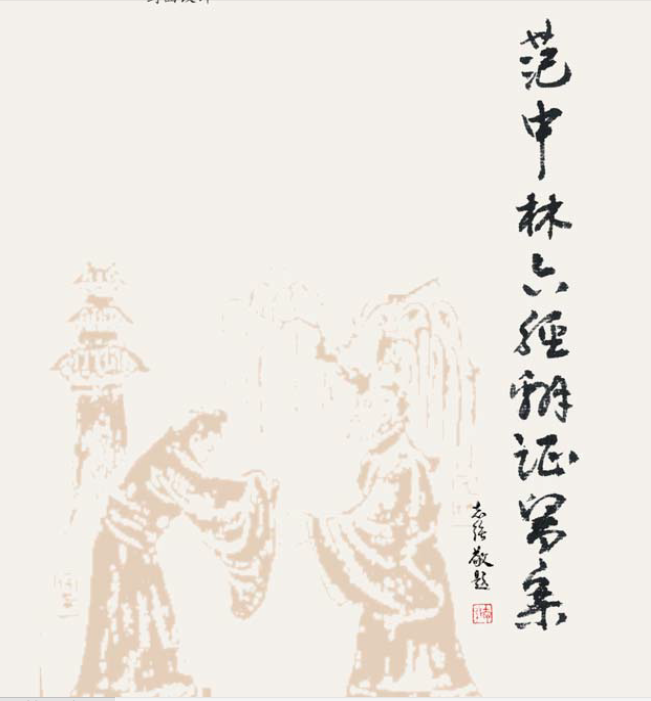
A Shào Yáng Fever-Fàn Zhōng-Lín (范中林)

Screen Shot 2012-02-11 at 4.15.37 PM.pngIn October of 1960, a 54-year-old male Chéng Dū resident presented at the clinic.
Over the last two years, this patient had been experiencing daily fevers immediately after eating breakfast, with temperatures around 38° C. These fevers would be accompanied by relatively copious sweating, which would continue for over two hours, and would subside as soon as the fever receded. Afterwards, a strong fear of cold was felt. This was an everyday occurrence.

In addition, he experienced, dizziness, a bitter taste in the mouth, a dry throat, fullness in the chest and ribs, and irritability. His tongue was red, with a sticky, white and slightly yellow tongue coat. His pulse was wiry and rapid.

He was seen at a local hospital, where he was diagnosed with fevers of unknown origin. No positive effects were seen from any of the treatments offered.

This is a Shào Yáng fever, and treatment should involve harmonizing and resolving the Shào Yáng. A modified version of xiǎo chái hú tāng (Minor Bupleurum Decoction) is appropriate.

Formula: 

chái hú (Bupleuri Radix) 24g
huáng qín (Scutellariae Radix) 10g
bàn xià (Pinelliae Rhizoma preparatum) 15g
shā shēn (Glehniae/Adenophorae Radix) 15g
gān cǎo (Glycyrrhizae Radix) 10g
zhī mǔ (Anemarrhenae Rhizoma) 15g
shí gāo (Gypsum fibrosum) 30g
mǔ lì (Ostreae Concha) 24g
chén pí (Citri reticulatae Pericarpium) 9g
fú líng (Poria) 12g

One package was administered.

After taking the one package, his fever had reduced, and most of his symptoms improved. He was advised that there was no need to continue the herbs, and that if he took care of himself, the condition would resolve. After a long period of time, the patient reported to Dr. Fàn, that the condition had never returned.

[Commentary] The signs and symptoms of bitter taste in the mouth, dry throat, dizziness, alternating cold and heat, bitter fullness in the chest and ribs, irritability, and a wiry pulse, are all very clear signs of a Shào Yáng channel pattern. This condition had lasted for over two years, so was treated according to the original lines of the Shāng hán lùn (傷寒論 Discussion of Cold Damage) where it states;

“When chái hú signs are still present, first administer xiǎo chái hú tāng (Minor Bupleurum Decoction)”. 

The presence of fevers with sweating, thirst, and a red tongue, signify the presence of depressed heat, and therefore, shēng jiāng (Zingiberis Rhizoma recens), and dà zǎo (Jujubae Fructus) were removed, and zhī mǔ (Anemarrhenae Rhizoma), and shí gāo (Gypsum fibrosum) were added in order to clear (heat). In addition, because the fullness in the chest and ribs was quite severe, damp pathogens were clearly also present, so mǔ lì (Ostreae Concha), chén pí (Citri reticulatae Pericarpium), and fú líng (Poria) were added to percolate dampness, transform stagnation, and disperse bind.

A case of Shào Yīn headache- Wú Pèi-Héng (吴佩衡)

A Menopausal case

When I think back of my undergraduate studies in Traditional Chinese medicine just under ten years ago, I remember a time where the possibilities of treatments were endless. I felt that when thrown into the real world of practice I would be invincible. We were taught hundreds of formulas for hundreds of conditions, and were led to believe that we would achieve excellent outcomes if we were only to memorize these specific formulas and apply them to these conditions. Once in practice we quickly learn that this is in fact not reality! One that specifically comes to mind is the treatment of menopausal conditions (更年期综合症).

In many English language textbooks (and even standard mainland texts), menopause is most commonly associated with a yīn deficiency pattern, and is treated with formulas such as Liù Wèi Dì Huáng Wán, Dāng Guī Liù Huáng Wán, etc.  However, once in clinical practice when encountering these kinds of patients, these formulas tend to exert only minimal effects. Now I’m not saying that these kinds of yīn deficiency patients do not exist, they do, albeit in much smaller numbers than we may have been taught.

In my experience practicing in the cold and wet pacific north west, the majority of menopausal woman I treat rarely suffer from a yīn deficiency pattern, but in fact manifest with various patterns, with a strong majority showing signs of yáng deficiency. Yáng deficiency? When I discuss cases with colleagues and talk about treating hot flashes, night sweats, and other menopausal complaints with high doses of herbs like Fù Zǐ or Ròu Guì, they think I’m nuts. However, the proof is in the pudding. The way I see it is that as a culture we are eating poorly, are under an enormous amount of stress, take far too many pharmaceutical drugs, get inadequate amounts of sleep, lack exercise, are far too over stimulated, and consume various vitamins, supplements, and undertake random fasts and cleanses. These are all practices that inevitably deplete our yáng reserves. The essential mechanism that I recognize in many of the woman I see, is a deficiency of yáng that is unrooted in the lower body and floats upwards causing symptoms such as insomnia, hot flashes, night sweats, etc. I feel that it is these ‘heat like’ symptoms that confuse many practitioners, who prescribe various heat clearing, yīn nourishing medicinals all to no avail. 

When a patient presents with these seemingly signs of heat, how are we to distinguish between a yīn or yáng deficiency? In his well-written article in the Lantern entitled ‘Playing with Fire’, Gunter Neeb quotes Xú Dà-Chūn from his ‘On the Origins and Development of Medicine’, outlining a very basic diagnostic approach to patients with excessive sweating which can be applied to the excess sweating seen in menopausal conditions: 

“Sweating due to loss of yin manifests with aversion to heat, warm hands and feet and skin that is warm to the touch and with warm sweat. The patient is thirsty for cool drinks. His breath is agitated, his pulse overflowing (hong). Sweating due to loss of yang is exactly the opposite: the patient fears cold, the extremities and skin are cool with a cold sweat. He favours bland or slightly sweet foods and is not very thirsty, but has desire for warm drinks. His breath is feeble and the pulse is rapid, superficial and empty”. 

This diagnostic guideline above is essentially the same that I have been using when faced with cases of night sweating and have found the results to be extremely gratifying both for me, and my clients. When dealing with hot flashes, I simply inquire how the patient feels following the flush. If they feel very cold afterwards, and also have a lack of thirst, no major dry symptoms, and possible lumbar pain, I will diagnose the pattern as a yáng deficiency. 

I would like to illustrate this further with a case from my own practice. 

On June 22, 2011 a 48-year-old female presented at the clinic complaining of general menopausal symptoms. These included; irritability, low libido, night sweats, weight gain, occasional hot flashes, poor sleep, light-headedness, a history of low back pain, slight thirst, a strong aversion to cold, and some pretty intense stress recently. Her tongue was essentially unremarkable, and her pulse was deep, and slightly weak. Her bowel movements and urination were normal, and she experienced no digestive issues. Her last menstrual period was in November 2010. 

When asked how she felt after either the sweating or hot flashes, she mentioned that she felt very cold, and needed to really bundle up to stay warm. In addition, she had given birth to two boys three and a half years prior, after several rounds of intensive in vitro fertilization treatments. 

I saw her pattern as a yáng deficiency, with the yáng being un-rooted in the lower burner, and floating upwards. She was also manifesting very mild yīn deficiency symptoms. 

She was administered a formula in granule form, at two teaspoon (6g), twice daily. 

Fù Zǐ 20g

Ròu Guī 10g

Bái Sháo 10g

Hé Huān Pí 10g

Fú Xiǎo Mài 12g

Nǔ Zhēn Zǐ 12g

Hàn Lián Cǎo 12g

Mǔ Lì 12g

Lóng Gǔ 12g

Zhì Gān Cǎo 10g

Fú Shén 10g 

Results: On follow up one week later, she reported that all her symptoms had improved, and she was feeling “wonderful”. She was given another two weeks of the same formula. On follow up five months later, she informed me that since taking the formula, all her symptoms disappeared, and have yet to return.

Poetry of Bái Jū-Yì (白居易)


Reading Chinese poetry with a warm cup of wū lóng tea seems very fitting these days with the arrival of winter and its short, dark, and wet days. The following are two personal favorites of mine written by Bái Jū-Yì (772-846) of the tang dynasty known for his plain, direct, and easily comprehensible style of verse, as well as for his social and political criticism.

Thoughts, interpretations, and comments are always welcome and encouraged.

花非花
白居易

花非花
雾非雾
夜半来
天明去
来如春梦几多时
去似朝云无觅处

A Bloom is not a Bloom

Bái Jū-Yì

A bloom is not a bloom,
The mist not mist.
It comes at midnight,
And leaves again at dawn.
Arrives like a spring dream, but for how long?
Departs like morning clouds, without a trace.

读老子
白居易

言者不如知者默
此语吾闻于老君
若道老君是知者
缘何自著五千文

Reading Lǎo Zǐ

Bái Jū-Yì

Those who speak do not know, while the ones that do are silent.
These are the words I’ve heard from the old gentleman (Lǎo Zǐ).
If the old gentleman knew the way,
Then for what reason did he write five-thousand characters.

Hú Xī-Shù (胡希恕)- A Case of Prostatitis


On June 11, 1966, a 30-year-old male worker from the capitol airport presented at the clinic.

The patient has suffered with prostate inflammation for over half a year, for which he has taken numerous western medications, and results have been less than ideal.

Current signs and symptoms: lumbar pain, occasional lower abdominal pain, which was sometimes accompanied by sagging, distension and pain in the testicles, occasional painful urination, sticky, milky white colored discharge exuding from the urethra, frequent and scanty urination with a reddish-yellow color, a dry mouth with a desire to drink, a white tongue coating with a slimy root, and a wiry-slippery pulse.

This is a pattern of damp stasis and obstruction, for which treatment should involve disinhibiting dampness, and transforming stasis. Zhū Líng Tāng (Polyporus Decoction) with Shēng Yǐ Rén and Dà Huáng was prescribed.

Zhū Líng 3 qián
Zé Xiè 4 qián
Huá Shí 5 qián
Shēng Yǐ Rén 1 liǎng
Shēng Ē Jiāo 3 qián
Dà Huáng 1 qián

Results: After taking only two packages of the formula, his symptoms were greatly reduced. Because the lumbar pain was still present, Chái Hú Guì Zhī Gān Jiāng Tāng (Bupleurum, Cinnamon Bark, and Dried Ginger Decoction) was added to the above formula.

After a half a month on the formula, all his symptoms were basically gone.

Hú Xī-Shù (胡希恕)- A case of Angina Pectoris

Huáng Lián assists sleep- A case by Huáng Huáng (黄煌)

One early morning last week as I had just turned on my cell phone, I received information about a patient from northern Jiāng Sū province that had suffered with insomnia. He had been here nine months previously for a formula and had taken seven packages. He recently returned, and after taking one package had completely recovered. This was quite remarkable!!


Now that he had finished his formula, he was asking how this was dealt with. 

He was a forty year old male that was suffering with severe insomnia which started last year in December. He found it difficult to sleep for the entire night, and had repeatedly taken western medications all to no avail. 

The formula he was given consisted of the following; 

Huáng Lián 5g, Ròu Guì 10g, Zhì Fù Zǐ 10g, Gān Jiāng 10g, Shēng Gān Cǎo 5g. 

This is Jiāo Tài Wán combined with Sì Nì Tāng. Now why would, these formulas be considered for this case? Let’s take a look at this patient. The man had a strong, robust physique; his skin was a dark color, he had no trouble eating, and his stools lacked shape. Now although he felt cold on the inside, he suffered from agitation and insomnia. This is what the ancients called ‘non-interaction of the heart and kidneys’, which is the ‘tried and true’ Jiāo Tài Wán formula pattern. Sì Nì Tāng harmonizes the body, and Huáng Lián and Ròu Guì treat the disease. 

Huáng Lián is beneficial for insomnia. The Huáng Lián in Huáng Lián Ē Jiāo Tāng is used to treat “vexation in the heart, with an inability to sleep”. Huáng Lián Tāng uses equal parts Huáng Lián and Ròu Guì along with (Rén) Shēn, (Bàn) Xià, (Shēng) Jiāng, (Dà) Zǎo, and (Gān) Cǎo to treat “heat in the chest, evil qi in the stomach, abdominal pain, and a desire to vomit”. The heat in the chest is commonly expressed as heart vexation with an inability to sleep. Jiāo Tài Wán only contains two medicinals, Huáng Lián and Ròu Guì and is originally from the Míng dynasties ‘Comprehensive Medicine According to Master Han’ (韩氏医通, Hán Shì Yī Tōng). The author Hán Fēi-Xiá said;


“brew numerous times, add honey, take on an empty stomach, and this will instantly bring forth the interaction between the heart and kidneys”.


Yú Tīng-Hóng (余听鸿) had written about a patient from Zhè Jiāng County that had suffered with an inability to sleep the entire night for many years. He had taken over two hundred spirit calming, blood nourishing formulas which offered him no relief. The famous Mèng Hé physician Mǎ Shěng-Sān (马省三) prescribed; 

Huáng Lián 8 fēn, Shān Zhī 3 qián, Zhū Dǎn Zhī 1 qián (mix fried), decocted. That night he slept soundly. 

In the past, I have given patients equal parts powdered Huáng Lián and Ròu Guì infused in boiling water, and taken prior to going to sleep. This has indeed helped with sleep difficulties. 

However, Huáng Lián is bitter and cold, and many people are unable to take it. Huáng Lián’s strength by itself is quite weak, and it is incapable of treating all stubborn cases of insomnia. Nevertheless, we always want to select the corresponding formula according to the body constitution. For example, with a red, oily facial complexion, heat vexation, headaches, and constipation, we can use Sān Huáng Xiè Xīn Tāng. With pale skin, red lips, red tongue, and heart vexation, me may use Huáng Lián Ē Jiāo Tāng. In a thin patient with dark lips, abdominal pain and insomnia, Huáng Lián Tāng may be used. With dry retching, epigastric focal distension, and mouth ulcers, we use Bàn Xià Xiè Xīn Tāng. With strong pain in the back and nape, diarrhea, chest oppression, vexation, palpitations, and insomnia, use Gé Gēn Qín Lián Tāng. 

Originally, because Huáng Lián and Ròu Guì were combined with Sì Nì Tāng, we know that it is applicable in cases of a cold body with a hot disease. This is commonly seen in strong, robust men with a yellowish-dark skin color, and insomnia. After taking these medicinals, not only will insomnia improve, but enduring cases of abdominal pain and diarrhea, can be ameliorated.