Chronic Hepatitis (A Case by Dōmei Yakazu)

杨大华. 汉方治验选读

慢性肝炎(矢数道明治验) 

48岁妇女,5年前发病。由于有胸不适,右肩酸痛,右颈部肿,右手麻木,微热持续不退,在大学附属医院诊察,诊为急性结核性淋巴结炎,进行了链霉素和对氨基水杨酸钠治疗。 但又引起剧烈的胃障碍,出现严重黄疸,甚为惊恐,又住入其他医院诊为急性肝炎,2个月后出院。

Case taken from “Selected Readings on the Efficacy of Kampo Formulas”, by Yang Dahua

Chronic Hepatitis (A Case by Dōmei Yakazu)

A 48-year-old woman developed symptoms five years ago. She experienced chest discomfort, right shoulder pain, swelling in the right side of her neck, numbness in her right hand, and persistent mild fever. After being examined at a university-affiliated hospital, she was diagnosed with acute tuberculous lymphadenitis and treated with streptomycin and para-aminosalicylic acid. However, this led to severe stomach problems and the onset of serious jaundice. Alarmed, she was admitted to another hospital and diagnosed with acute hepatitis. After two months, she was discharged.

此后5年来,右肩酸痛,右手麻木,浮肿一向不治,过劳淋巴结立即肿大。又胸中苦于胀满,裤带一勒紧即感恶心。 体格、营养状态一般,面色尚可,脉弱,血压正常。心下紧张如板状,有剧烈压痛,右季肋下痛尤为明显。肩酸痛严重时有短气。

Over the following five years, her right shoulder pain, hand numbness, and swelling remained untreated. Her lymph nodes would swell with overwork, and she suffered from a persistent feeling of distention and fullness in her chest, with nausea when tightening her belt. Her physical condition and nutrition were average, her complexion was decent, and her pulse was weak but her blood pressure normal. She had tightness below her chest like a hard plate with intense tenderness on palpation, as well as quite noticeable pain below her right ribs. When the shoulder pain was severe, she would experience shortness of breath.

以上所见正与“心下急,郁郁微烦,胸胁苦满,心下痞硬,呕吐,腹满痛”之大柴胡汤条文几乎一致。由于右肩酸痛与右手麻木、右季肋紧张压痛相互关联,故胸胁苦满有时轻快,有时不轻快。尽管脉较弱,仍与大柴胡汤加葛根5g。 服用本方10日,5年来之肩酸痛、右手麻木、胸闷不舒,几乎痊愈。1个月后,乘汽车、电车晕车亦消失,心下痞硬和苦满等症状好转。服用3个月,宿疾一扫而光,停药。(《临床应用汉方处方解说》) 

The symptoms observed closely align with the [Original] line of Dà Chái Hú Tāng [from the Shang Han Lun]: “Distress below the heart, a feeling of depression and slight vexation, fullness in the chest and rib-sides, hard glomus below the heart, vomiting, and abdominal fullness and pain.” Because of the connection between the right shoulder pain, hand numbness, and the tightness with tenderness below the right ribs, the fullness in the chest and rib-sides would fluctuate, sometimes improving and other times remaining unchanged. Although her pulse was relatively weak, Dà Chái Hú Tāng was prescribed with the addition of 5g of gé gēn (Pueraria root).

After taking this prescription for 10 days, the shoulder pain, hand numbness, and chest discomfort she had suffered with for five years was almost completely resolved. A month later, her motion sickness while traveling in cars and trains also resolved, and her hard glomus below the heart and fullness improved. After three months, her long-standing issues were completely resolved, so she discontinued the herbs. (Explanation of the Clinical Applications of Kampo Formulas by Dōmei Yakazu).

剧烈的胃障碍,出现严重黄疸”要考虑对氨基水杨酸钠的不良反应。诊为急性肝炎不恰当,应该是药物性肝损更为合适。停药及治疗后恢复正常,此后5年来的一切不适与肝损无关。“心下紧张如板状,有剧烈压痛,右季肋下痛尤为明显”,这些腹证也不是肝脏疾病的表现。

The severe stomach disturbance and jaundice should be considered an adverse reaction to para-aminosalicylic acid. Diagnosing it as acute hepatitis was inappropriate, [whereas] drug-induced liver damage would have been more accurate. After stopping the medication and undergoing treatment, her condition returned to normal, and her discomfort over the next five years had nothing to do with liver damage. The phrase “tightness below the chest like a hard plate, with intense pain on palpation, as well as quite noticeable pain below her right ribs” does not indicate symptoms of liver disease.

患者的大柴胡汤证非常典型,因此抛开肢体症状独取腹证。加葛根可能是兼顾“右肩酸痛,右手麻木”的肢体症状。如果不加葛根,是否也一样有效?既然认准是大柴胡汤证,就没有必要加葛根。且大柴胡汤加味药多为芒硝、厚朴,加葛根则为少见。

The patient’s case was a typical presentation of Dà Chái Hú Tāng, so it was appropriate to prioritize the abdominal symptoms without giving much attention to the limb symptoms. The addition of gé gēn was likely to address the limb symptoms of right shoulder pain and hand numbness. However, would the formula have been equally effective without adding gé gēn? Since the formula aligned with the Dà Chái Hú Tāng pattern, adding gé gēn might not have been necessary. It is also not common to add gé gēn to Dà Chái Hú Tāng, whereas herbs such as máng xiāo or hòu pò are more common. 

脉弱,依然用大柴胡汤,体现了重腹证、轻脉象的理念。大柴胡汤证体现在慢性病中,脉象的反应有可能不像急性病那样强烈,也就是说,当脉象与腹证不一致时,需要舍脉从腹证。《重要汉方处方解说口诀集》(邱年永翻译)说“大柴胡汤证之脉为沉实或沉迟而有力是正证,但不必拘泥此种脉象”。并举例痈疽、下利、温病等出现大柴胡汤证时脉象等变化。也就是说,大柴胡汤证等腹证相对稳定,但脉象可以因疾病的不同而有个体差异。

The decision to use Dà Chái Hú Tāng despite the weak pulse reflects a preference for focusing on the abdominal signs as opposed to the pulse. In chronic conditions, the pulse may not react as strongly as in acute illnesses. In other words, when the pulse and abdominal signs do not align, it is necessary to prioritize the abdominal signs. The Essential Guide to Key Kampo Formulas: A Collection of Mnemonics (translated by Qiu Nianyong) states, “The pulse for the Dà Chái Hú Tāng pattern is usually deep and excess, or deep, slow and strong, yet [one] need not rigidly adhere to this pulse manifestation.” [The text] also gives examples of variances in the pulse when Dà Chái Hú Tāng is indicated in cases of abscesses, diarrhea, warm diseases, etc. This suggests that the abdominal signs associated with Dà Chái Hú Tāng are relatively stable, while the pulse can vary according to the disease.

患者的大柴胡汤腹证是否为结核性淋巴结炎所致?不得而知。肢体症状均在右侧,右季肋下痛是否与此相关?也许在汉方医生眼中,肢体的症状与腹证都属于同一种病理变化,是一棵树上的叶与花。使用大柴胡汤之后这些表现都得以解除,则大柴胡汤相当于将树连根拔起,花叶俱萎。从本案来看,肢体的症状先消失,腹证则消除缓慢,类似于花与叶的差别。花与叶对营养的需求不同,凋落自然有迟有早。腹证与肢体症状在形成上也并非一致,其成因应该更加复杂。

Was the patient’s abdominal pattern caused by tuberculous lymphadenitis? It is unclear. Her limb symptoms were all on the right side—was the pain below the right ribs related? Perhaps from the perspective of a Kampo physician, the limb and abdominal symptoms could be manifestations of the same pathological change, like leaves and flowers on the same tree. Once Dà Chái Hú Tāng was administered, all these symptoms resolved, suggesting that the formula uprooted the tree, causing both the flowers and leaves to wither. In this case, the limb symptoms disappeared first, while the abdominal symptoms resolved more slowly, akin to the different timing of the leaves and flowers falling. The development of abdominal signs and limb symptoms is not necessarily the same, and their underlying causes are likely more complex.

~~~~~~~~~~~~~~~~~~~~~~~~~~~~~~~~~~~~~~~~~~~~~~~~~~~~~

Dōmei Yakazu (1905-2002), was a Japanese physician born in Tokyo. Dōmei graduated from the Tokyo Medical College in 1930 and later studied Chinese medicine. In 1954, he conducted pharmacological research at Tokyo Medical University, obtaining his doctorate in 1959.

For over 50 years, Dōmei Yakazu, together with Keisetsu Ōtsuka, dedicated himself to the revival of Kampo (traditional Japanese medicine) in Japan, making significant contributions to the promotion and development of Eastern medicine. His notable works include; Explanation of Key Kampo Formulas from Later Generations, Explanation of the Clinical Applications of Kampo Formulas, Practical Kampo Diagnosis and Treatment, The Great Encyclopedia of Kampo Medicine, The Medical Encyclopedia of Kampo Diagnosis and Treatment, A Brief History of Kampo over the Past Century of the Meiji Era, and A Hundred Stories of Kampo Therapy.
Liu Duzhou on Water Patterns [水证论] – Part 2

From ‘Essential Points on Clinical Patterns in the Shanghan Lun’. [刘渡舟-伤寒论临证指要]

水气病脉证并治

Water Qi Disease, Pulses, Patterns, and Treatment. 

[The following are lines found within the Jingui Yaolue Water Qi chapter] 

《金匮•水气病脉证篇》:“少阴脉,紧而沉,紧则为痛,沉则为水,小便即难。

“[When] the shaoyin pulse is tight and deep, tight signifies that there is pain, while deep signifies that there is water, [with] difficult urination.” [JGYL 14.9] 

脉得诸沉者,当责有水,身体肿重”。

“[When] all pulses are deep, this is the responsibility of water, and manifests with generalized swelling and heaviness.”  [JGYL 14.10] 

“跌阳脉当伏,今反紧,本自有寒疝瘕,腹中痛。医反下之,下之则胸满短气。

“The instep yang pulse should be hidden, but conversely now it is tight, this is because there is cold at the root with mounting conglomerations and abdominal pain. If a physician incorrectly purges, this will result in chest fullness and shortness of breath.” [JGYL 14.6] 

跌阳脉当伏,今反数,本自有热,消谷,小便数,今反不利,此欲作水”。

“The instep yang pulse should be hidden, but conversely now it is rapid, this is because there is heat at the root, causing dispersion of grain and frequent urination. If the urination is inhibited, this means water is soon to rise.”  [JGYL 14.7] 

“寸口脉弦而紧,弦则卫气不行,即恶寒,水不沾流,走于肠间”。

“[When] the cun kou pulse is wiry and tight, wiry signifies that the defensive [qi] is not moving, which manifests with aversion to cold, and water that does not moisten and flow, [but is] running into the intestines.”  [JGYL 14.9] 

又“夫水病人,目下有卧蚕,面目鲜泽,脉伏其人消渴,病水腹大,小便不利,其脉沉绝者,有水,可下之。

“A patient with water disease has sleeping silkworms below the eyes, a bright sheen in the face and eyes, a deep pulse, and dispersion thirst. [If] water disease manifests with an enlarged abdomen, inhibited urination, and a deep and expiring pulse, [this indicates] water, which can be purged.” [JGYL 14.11] 

又“水病脉出者死。” 

“In water disease, [when] the pulse bursts out, [the patient] will die.”  [JGYL 14.10] 

以上援引《金匮》对水肿病的脉诊、色诊、问诊以及预后不良之诊,对指导临床意义非凡。 水气病可分为四种类型:风水、皮水、正水、石水。至于五胜之水气,可列人正水,石水之范畴。 大肿精那实而正不虚的有三种洽疗友法,即发汗,利小便与攻下之法。这就是《内经》说的“开鬼门,洁净府”的治疗原则。

The above quotes from the “Jingui” regarding the pulse diagnosis, color diagnosis, questioning, and the prognosis of edema have extraordinary significance in guiding clinical practice. Water qi can be classified into four types: wind-water, skin-water, true-water, and stone-water. As for five viscera water qi, they fall into the categories of true-water and stone-water. There are three effective therapeutic methods for excess and non-deficient major swelling, namely sweat effusing, urination disinhibiting, and offensive purging. This corresponds to the treatment principle mentioned in the “Neijing” as “opening the ghost gate and cleansing the mansion.”

一、风水

风水由于风邪侵袭肌表,故脉来而浮;若卫气虚不能固表,则脉浮软而见汗出恶风之证;荣卫之行涩,水道不利,而水湿滞于分肉,则身重而懒于活动。

【治法】疏风益卫,健脾利湿

【方药】防己黄芪汤

防已一两,甘草半两(炙),白术七钱半,黄芪一两(去芦)

上倒麻豆大、每抄五钱匕、生姜四片、大枣一枚、水盏半、煎八分,去渣温服,良久再服。喘者加麻黄半两,胃中不和者加芍药三分,气上冲者加桂枝三分;下有陈寒者加细辛三分。服后当如虫行皮中,从腰下如冰,后坐被上,又以一被绕腰下,温令微汗,瘥。

I. Wind-Water

Wind-water occurs due to the invasion of wind pathogens in the fleshy exterior, resulting in a floating pulse. If defensive qi is deficient and cannot secure the exterior, the pulse becomes floating and soft, accompanied by symptoms such as sweating and aversion to wind. The circulation of nutrient and defensive qi becomes obstructed, leading to water stagnation in the muscles, causing heaviness and reluctance to move.

[Treatment Method] Course wind, boost the defensive [qi], strengthen the spleen, and disinhibit dampness.

[Prescription] Fangji Huangqi Tang

Fangji (1-2 liang), Gancao (half liang, roasted), Baizhu (seven and a half qian), Huangqi (1 liang, husked)

Cut the above [ingredients] to the size of hemp seeds. Scoop up five qian-spoonfuls per dose [and add this with] four slices of shengjiang and one dazao to a cup and-a-half of water. Boil this down to eight tenths and remove the dregs. Take warm and wait a while before taking more. For panting, use an additional half liang of mahuang. For disharmony in the stomach, add three fen of shaoyao. For upward surging qi, add three fen of guizhi. For old cold in the lower body, add three fen of xixin. After taking [the formula, the patient should feel a sensation] like bugs crawling in the skin and icy coldness from the waist down. [Have the patient] sit on a bedcover and wrap another bedcover around them below the waist, to make them warm enough to cause a slight sweat. This will bring about recovery.

如果风水而一身悉肿,脉浮,恶风,反映了风邪袭于肌表,肺气之治节不利,决渎失司,水溢皮肤,故一身悉肿。风邪客表则恶风,气血向外抗邪故脉浮;风性疏泄可见汗出;汗出则阳气得泄,故身无大热。此证治以越婢汤,宣肺以利小便,清热以散风邪。

If wind-water manifests in generalized swelling with a floating pulse and aversion to wind, it indicates that wind pathogens have attacked the fleshy exterior. [Here] lung qi is hindered, leading to the loss of control [of water] with water overflowing into the skin, which results in generalized swelling. When wind pathogens settle in the exterior, there is aversion to wind, and [because] qi and blood move towards the surface to contend with the pathogen, the pulse becomes floating. Sweating is a manifestation of the free coursing nature of wind. [With] sweating, yang qi is discharged, therefore there is no major heat in the body. For the treatment of this condition, Yuebi Tang is used to diffuse the lungs, promote urination, and clear heat in order to scatter wind pathogens.

越婢汤方

麻黄六两,石膏半斤,生姜三两,甘草二两,大枣十五. 校以水六升,先煮麻黄去上沫,内诸药,煮取三升、分温三服。恶风者加附子一枚,炮。

方中麻黄宣肺以利水,石膏清解郁热以肃肺气之下降;

甘草补脾以扶正;姜、枣调和荣卫以行阴阳。

Yuè Bì Tāng

Mahuang 6 liang, Shigao 1/2 jin, Shengjiang 3 liang, Gancao 2 liang, Dazao 15 pieces. 

In 6 sheng of water, first boil the mahuang and remove the foam that rises to the top. Add the remaining ingredients and boil until three sheng remain. Separate and take warm in three doses. With aversion to wind, add one piece of blast fried fuzi. 

Within the formula mahuang diffuses the lungs and disinhibits water. Shigao clears and resolves depressed heat, addressing the downbearing of lung qi.

Gancao supplements the spleen in order to support the right [qi]. Shengjiang and dazao harmonize the nutritive and defense in order to move Yin and Yang.

以上两证,虽同为“风水”而有虚实之分(亦如桂枝汤和麻黄汤虚实之分)。审其虚者,则用防己黄芪汤,一定抓住“身重汗出恶风”的主证;审其实者,则用越婢汤,一定抓住“脉浮、恶风、身肿不渴”的主证。

The two conditions above, though both involving “wind-water,” are differentiated based on deficiency and excess (similar to the differentiation between Guizhi Tang and Mahuang Tang). For deficiency, use Fangji Huangqi Tang to address the main symptoms of “body heaviness, sweating and aversion to wind.” For excess, use Yuèbì Tāng, focusing on the main symptoms of “floating pulse, aversion to wind, body swelling, and no thirst.”

对水肿发作时需要察其部位而治之。才能达到“因势利导”使水邪乃服。仲景曰:“诸有水者,腰以下肿,当利小便;腰以上肿,当发汗乃愈。”凡腰以上肿,多因风寒湿邪,侵于肌表,闭郁肺气,水湿停留而成。故治宜宣通肺气,开发毛窍,使在外之水从汗液排出;腰以下肿,有虚有实;虚者为阳气不足,不能化气行水而使水邪停居于下;实者为水湿之邪停留于下而为水肿,但其人正气不虚、脉沉而有力,兼见小便不利,以及腹部胀满证。

When treating edema, it’s crucial to observe its location and treat accordingly. [When one] is able to “guide ones actions according to the circumstances”, [then] water pathogens can be addressed. Zhang Zhongjing said; 

“In all cases of water, with swelling below the waist, one must disinhibit urination; for those with swelling above the waist, one must effuse sweat in order to resolve.” 

All swelling above the waist is often caused by wind-cold-damp, which invade the fleshy exterior and block and depress lung qi, [which results in] the settling of water-damp. Therefore, suitable treatment is to diffuse and free lung qi, open and effuse the orifices, and cause the discharge of water on the surface though the sweat. For swelling below the waist, there is both deficiency and excess. Deficiency is due to insufficiency of yang qi, which is unable to transform qi and move water, which leads to the stoppage and residing of water pathogens in the lower body. Excess is the result of water-damp pathogens that have stopped and settled in the lower body with water swelling. Although the patients right qi is not deficient, the pulse is deep yet strong, and is accompanied by inhibited urination as well as abdominal distention and fullness signs.

腰以上肿,发汗当用越婢加术汤(即越婢汤加白术四两);腰以下肿,而阳虚气寒,小便不利当用真武汤;脉沉有力而小便不利者,当用牡蛎泽泻散(牡蛎、泽泻、瓜蒌根、蜀漆、葶苈子、商陆根、海藻各等分,同捣,下筛散),更于白中治之,白饮和服方寸匕,日三服。小便利,止后服。

For swelling above the waist, [one must] effuse sweat by using Yuebi Jiazhu Tang [Yuebi Tang with 4 liang of Baizhu]. For swelling below the waist, due to yang deficiency qi cold with inhibited urination, use Zhenwu Tang. When the pulse is deep and strong and the urination is inhibited, use Muli Zexie San [equal parts muli, zexie, guslougen, shuqi, tinglizi, shanglugen, and haizao pounded and sieved into a powder].  Work [the powder] in a mortar to blend with a white [rice] cool decoction. Take a square inch spoonful three times a day. [If] urination is uninhibited cease taking [the decoction].

水之去路有二:在表者发汗,在里者渗利,因势利导,使水气得去而愈。但临床所见,也有腰以上肿,而内渗于里;腰以下肿,而外溢于表,以致肺气不宣,肾气不化,大气不转。如此则可变通其治:如以发汗去其表邪,又要兼用滲利,务使在里之水可以尽去;腰以下肿,既要渗利,又应“提壶揭盖”开其肺气,使上窍通而下窍利,则水邪方能尽去。发汗与利小便治水两大法宝,此外对于正虚者又有温阳化气,健脾运水、扶正祛邪、益气固表等法。应变通选用而不拘于一格。

There are two roads for the elimination of water: through the exterior by means of sweat effusion, and through the interior by means of percolation and disinhibiting. By guiding one’s actions according to circumstances, water qi can be expelled resulting in resolution [of the condition]. However, in clinic one may see [cases] with swelling above the waist and inward percolation to the interior; swelling below the waist and outward seepage into the exterior resulting in lung qi not diffusing, kidney qi not transforming and major qi not shifting. 

In such cases, flexibility is needed for treatment, such as effusing sweat to eliminate the exterior pathogen, while at the same time using a percolating and disinhibiting [method] to ensure that water in the interior can be completely expelled.  [For] swelling below the waist, we already want to percolate and disinhibit, and also apply the “lift the pot and remove the lid” [method] to open lung qi, which causes the upper orifices to be free and the lower orifices to be disinhibited, resulting in the complete expulsion of water pathogens. 

Sweat effusion and disinhibiting urination are two magic weapons for treating water [diseases]. In addition, for those with deficiency patterns, there is the method of warming yang and transforming qi, strengthening the spleen and moving water, supporting the right and dispelling pathogens, and boosting qi to secure the exterior, among other techniques. One should be flexible in choosing and applying these methods, without adhering strictly to a single approach.

Transformative Tales: Harnessing the Power of Chinese Medicine – Two Remarkable Case Studies

I’d like to share two cases from my personal clinic, involving patients I saw this week for follow-up after they started their Chinese herbal formulas. The first patient had never tried Chinese herbs before, so this was a new experience for her. The second patient, of Chinese descent, had grown up taking herbs her grandmother would prepare for her, so she was quite used to the ‘deliciousness’ of the herbs. The purpose of these two cases is to illustrate the remarkable effectiveness of Chinese herbal medicine, especially in situations where their allopathic physicians had few treatment options to offer.

In a follow up post, I will discuss my reasoning for the formula selections as well as the underlying mechanisms involved.

Case 1

Initial consultation on August 25, 2023.

A 43-year-old female presented with a longstanding issue of pain in her hands that had been bothering her for over 15 years, and it had recently worsened. This pain was significantly affecting her ability to work, as she is a sculptor and a professor. She had been managing the pain with Ibuprofen, but this approach had become less effective in recent times.

The pain was localized exclusively to her hands and would cause them to swell up easily, appearing “puffy” without any noticeable discoloration. This pain also had a negative impact on her range of motion and grip strength, which was affecting her ability to engage in activities such as swimming. Rest provided some relief from the pain. Additionally, she was experiencing edema in her feet and hands and had frequent and inhibited urination. She also reported occasional dry mouth and thirst, and her hands, feet, and nose would become cold while the rest of her body remained warm.

Despite these discomforts, she maintained a good appetite without experiencing bloating. She mentioned being a light sleeper and often woke up due to the pain. The patient also had varicose veins and spider veins, dry heels, and occasional headaches. She had a tendency to sweat easily.

Notably, there were no complaints of dizziness or palpitations, and while she experienced occasional nausea, it was not a frequent occurrence. Her bowel movements were regular. The consultation was conducted via video, so no pulse reading was performed.

Formula: Fangji Huangqi Tang + Wuling San + Guizhi Fuling Wan

Fangji 18g
Huangqi 25g
Cangzhu 20g
Gancao 15g
Ganjiang 18g
Fuling 20g
Zhuling 18g
Zexie 25g
Guizhi 20g
Chishao 20g
Mudanpi 20g
Taoren 18g

Raw herb powder – 9g daily.

Follow-up on September 29, 2023. The patient reported significant improvement. After just one week on the prescribed formula, the pain in her hands had subsided dramatically, and she has not experienced any soreness or flares since then. She has not needed any pain medication and was able to swim and work without any issues. The swelling in her hands and feet had also reduced, with a more substantial improvement in her hands. Urination was less inhibited and easier, and all other symptoms were under control.

The same formula was continued for the time being, with a follow-up scheduled for November.

Case 2

Initial consultation on August 25, 2023.

A 37-year-old female presented with a chronic issue of dry eyes that had been troubling her for several years. Notably, the condition had been progressively worsening over the past few months. Her eyes would frequently become red, feel gritty, and occasionally produce excess tears, although this excessive tearing did not alleviate the dryness. She found wearing contact lenses uncomfortable. She had undergone a procedure before COVID to address potential blockages, but it had provided limited relief, and she had not pursued any further procedures since then. She also experienced frontal headaches, which were related to eye strain. She had a tendency to feel cold easily, suffered from hot flashes preceding her menstrual period, and had regular bouts of constipation, with a bowel movement occurring every other day. Additionally, she complained of dryness in her mouth and throat. She had previously received treatment for dizziness, which was no longer a concern. There were no issues with nausea, night sweats, palpitations, sleep quality, or appetite, and she did not experience reflux. Pulses were deep-thin and wiry bilaterally.

Formula: Wen Jing Tang (standard doses), with the addition of Gegen (25g) and Juhua (20g). Raw herb powder – 8g daily.

Follow-up on September 29, 2023: the patient reported experiencing several good days over the past month when her eyes felt great. While there were still some bad days, these were often associated with increased screen time and the quality of her sleep the night before. The redness in her eyes had significantly reduced, and they were no longer gritty. She also noticed that she could lubricate her eyes more easily with a few blinks, whereas previously, it took several minutes. Although there was improvement in her bowel movements, they were not yet perfect. She had also observed a warm sensation throughout her body after drinking the formula, and her general sensitivity to cold had improved. The patient had recently experienced a canker sore outbreak, and had neglected to mention during the previous visit that this was a relatively common experience during times of stress. A week prior to the follow-up appointment, she had undergone an eye assessment, which diagnosed her with moderate-severe dry eye syndrome. Treatment options involving invasive procedures were offered, but given the positive effects of the herbs thus far, she opted to monitor her progress over the next few months before deciding on any further procedures. The same formula was continued, with Wuzhuyu reduced to 6g and the addition of Huanglian (6g) and Zhishi (18g). 

Gé Gēn Tāng Case – Liú Dùzhōu

Selected Clinical Case Histories of Liu Duzhou《刘渡舟临证验案精选》

Li X, a 38-year-old male.

He had suffered with persistent migraines for 2 years that remained unresolved despite long periods of treatment. He was introduced to Doctor Liu by a good friend and brought in for a consultation.

Chief complaint: right sided headaches, which commonly extended to the forehead and supraorbital ridge. This was accompanied by an absence of sweating, chills, a runny nose with clear mucus, irritability, a red complexion, dizziness, and poor sleep. The range of motion in his back was limited and he reported tightness in his neck and occipital area that became more severe during his headaches. His tongue was pale with a white coat, and his pulse was floating and slightly rapid.

This was differentiated as being cold pathogen lodged in the taiyang channels, resulting in symptoms of inhibited flow of channel qi.

Treatment required the promotion of sweat to expel pathogens, and unblock taiyang qi, so Kudzu Decoction (gé gēn tāng) was given:

Ephedrae Herba (má huáng) 4g
Puerariae Radix (gé gēn) 18g
Cinnamomi Ramulus (guì zhī) 12g
Paeoniae Radix alba (bái sháo) 12g
Glycyrrhizae Radix praeparata (zhì gān cǎo) 6g
Zingiberis Rhizoma recens (shēng jiāng) 12g
Jujubae Fructus (dà zǎo) 12 pieces.

Ephedrae Herba (má huáng) and Puerariae Radix (gé gēn) were to be decocted first with the froth removed before adding the other ingredients. After taking the decoction, the patient was covered up so a slight sweat could be obtained. He was to avoid drafts and cold.

After taking 3 packets, his back felt warm, which was followed by a mild sweat throughout the body, and a reduction in his headache and neck tension. 15 packets of the same formula were prescribed again, which completely resolved his headaches and neck tension.

Cáo Yǐngfǔ on the Use of Xiǎo Jiàn Zhōng Tāng 

Master Cao was a pivotal force in the classical formulas school (经方派) and was a true master in using the underlying principles and formulas found in the Shang Han Lun and Jin Gui Yao Lue. Master Cao felt that the medical texts, which followed were too insignificant to study and discuss, and therefore he attached great importance to the thorough study of these texts to his students, and felt that Zhang Zhongjing’s theories and formulas were the perfect framework for successful medical practice. In addition to being skillfully versed in these medical canons, Cao Yingfu was also an accomplished poet, often interweaving the two when attempting to convey his thought process in clinic, often instructing his students to compose a poem and matching it with a relevant line from the classics. This kind of inquiry and thought process truly shows the breadth of his skill and how his mind rarely waivered from the classical Chinese medicine concept of the human body being a reflection of his environment, the microcosm of the macrocosm.
However, master Cao was not completely strict in his formula choices and would often use formulas like Bu Zhong Yi Qi Tang, Xiao Yao San, and Liu Wei Di Huang Wan, in addition to herbs such as niu bang zi, qian hu and various others. This shows that he was obviously well read and did not quickly write off more modern formulas. His use of these non Zhang Zhongjing formulas displayed his deep understanding in the formula constructions and where they were applicable. He advocated that students must understand and study the root of the medical philosophies and not just pick the flowers, and it’s from this same feeling that he encouraged his students to read the Yue Fu (乐府诗集) poetry of the Han and Wei dynasties and specifically the poet Wang Yuyang (王漁洋).

When the Japanese invaded the south, his hometown of Jiangyin, Jiangsu province fell into enemy hands and on December 7th, 1937, he died heroically resisting the invaders. While master Cao died a hero, the world lost a great Chinese medicine master. We are very fortunate to have several of his books available in order for subsequent generations to learn from not just in China, but also around the world. It is my hope in translating some of his cases that this knowledge can spread. We are also very fortunate to have scholar-physicians like my teacher Dr. Huang Huang uphold this love and dedication to master Cao’s work and to classical literature.

Case 1
Female. Since delivering a child her cycles come every forty days, which are accompanied by distending pain in the epigastrium following meals. When the cycle arrives, there is pain extending from the stomach to the lower abdomen. During the pain she experiences a strong desire to have a bowel movement. After the bowel movement the pain would typically stop. Pain would return the following afternoon and stop during the menstrual flow, and once again come and go the following day. Both pulses were wiry.
This is liver and gall-bladder exploiting deficiency of the spleen viscera. In this case Xiao Jian Zhong Tang with Chai hu and Huang Qin is appropriate.


Gui Zhi 3 qian
Sheng Bai Shao 5 qian
Zhi (Gan) Cao 2 qian
Sheng Jiang 5 pcs
Hong Zao 12 pieces
Yi Tang 2 liang
Chai Hu 3 qian
Jiu (Huang) Qin 1 qian
Tai Wu Yao 1.5 qian

After one package, her pain stopped and the menses ceased. Patient continued with two more packages, after which the condition resolved.
The master (Zhang Zhongjing) in his great classic said:


“In cold damage, (when) the yang pulse is choppy and the yin pulse is wiry, as a rule there should be urgent pain in the abdomen. First give Xiao Jian Zhong Tang; if it does not reduce, Xiao Chai Hu Tang governs.”
“伤寒,阳脉涩,阴脉弦,法当腹中急痛,先与小建中汤,不差者,小柴胡汤主之”.

Cao Yingfu (曹颖甫): Now here (in this case) I feel it goes without saying that there had not been a reduction and I immediately added Chai Hu and Huang Qin to treat her, why not? This woman’s situation was a menstrual disease and many belong to Chai Hu patterns, and so it was clearly obvious (to add it). The following day it was reported that the disease had resolved.

Case 2
Abdominal pain which liked pressure. During episodes of pain a distressing sensation of cold air was felt moving up and down (the body). Pulse was wiry-deficient. In addition there was an aversion to cold.
This is due to the liver exploiting the spleen and Xiao Jian Zhong Tang governs.
Gui Zhi 9g
Bai Shao 18g
Sheng Jiang 9g
Zhi Gan Cao 6g
Da Zao 6g
Yi Tang 30g

Liáo Shēng annotation: “This case is a pattern of abdominal pain (due to) central yang insufficiency with interior deficiency. The patient experienced abdominal pain, which liked pressure, the pulse was wiry-deficient and an aversion to cold was present. This signifies the overabundance of yin cold-qi, central yang insufficiency, and liver wood exploiting spleen (earth). Therefore Xiao Jian Zhong Tang was used to treat and resolve the condition.
The function of this formula is to supplement deficiency, quiet the center, moderate urgency and stop pain. The name of this formula is center fortifying (decoction). Fortify means to establish or set up, and because central qi is insufficient, it is very important to ‘establish’ or ‘set it up’. The formula contains sweat inducing (herbs) and not central effusing (herbs). It is referred to as a ‘minor’ (decoction) and only half (of the formula) resolves the exterior, so it does not completely secure the center. Xiao Jian Zhong Tang uses a heavy dose of Yi Tang, which is sweet, warm and serves as the sovereign to supplement the center. Bai Shao is the minister, which is sour and sweet to tonify yin. The assistant Gui Zhi is acrid-warm, which effuses and scatters. Combined with Bai Shao it regulates the nutritive and defense. In addition, Gan Cao, Da Zao and Sheng Jiang, which are sweet moderating and acrid warm, nourish the stomach and harmonize the center. Therefore (this formula) is able to warm and nourish central qi, calm and supplement yin and yang and regulate the nutritive and defense.”

*Xióng Liáo-Shēng (熊廖笙) style name Yǐ Xíng (以行) was born in 1905 in Ba County in Chongqing, Sichuan Province. Master Xióng was well versed in the classics, primarily the Nei Jing, Nan Jing, Shang Han Lun, and Jin Gui Yao Lue. The author of several books, Dr. Xióng possessed a deep and profound scholarship of the Shang Han Lun and was highly skilled in distilling the essence and precise details of various ancient doctors cases, which were found in his various annotations.

Don’t forget to join the Classical Chinese Medicine community by adding your email address to the bar on the right to be notified of any future publications, translations and writings!

Huáng Yuányù discusses Bǎi Hé

With today being the arrival of ‘Major Cold ‘(大寒 – the 24th solar term in the Chinese calendar lasting until Feb 3), what better day than today, to sit down with a cup of warm Wulong or Hongcha to translate passages from some of my favourite books.
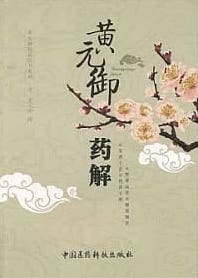
The following is a direct translation from the Bǎi Hé section of Huáng Yuányù’s (1705-1758) excellent ‘Interpretation of Medicinals’ (黃元御藥解).

Huáng Yuányù discusses Bǎi Hé

– Translated from Huáng’s Interpretation of Medicinals (黃元御藥解)

百合 味甘、微苦,微寒,入手太陰肺經。涼金瀉熱,清肺除煩。

Bǎi Hé – Sweet flavour, slightly bitter and slightly cold. Enters the hand Taiyin lung channel. Cools metal, drains heat, clears the lungs and eliminates vexation.

金匱百合知母湯,百合七枚,知母二兩。治百合病,發汗後者。傷寒之後,邪氣傳變,百脈皆病,是為百合。其證眠食俱廢,吐利皆作,寒熱難分,坐臥不安,口苦便赤,心煩意亂,不能指其為何經何臟之病也。然百脈之氣,受之於肺,肺者,百脈之宗也,是宜清肺。其在發汗之後者,津枯而金燔。百合清肺而生津,知母涼金而瀉熱也。

The Jīn Guì’s Bǎi Hé Zhī Mǔ Tāng

Bǎi Hé 7 pieces
Zhī Mǔ 2 liǎng [listed as 3 liǎng in the Jīn Guì Yào Lüè]

Treats Bǎi Hé disease following the induction of sweat. Following cold damage, pathogenic qi shifts, and the hundred vessels are diseased. This is Bǎi Hé [disease]. Its symptoms present with disturbance to sleep and appetite, the occurrence of diarrhea and vomiting, difficulty differentiating between cold and heat, disquietude whether sitting or laying down, a bitter taste in the mouth, red urination, heart vexation, and a confused state of mind, with an inability to point to any specific channel or visceral disease. Now, the qi of the hundred vessels is received in the lungs, as the lungs are the ancestor of the hundred vessels. Thus, it is appropriate for the lungs to be clear. Following the promotion of sweat, the fluids [may be] desiccated and metal burned. Bǎi Hé clears the lungs and generates fluids. Zhī Mǔ cools metal and drains heat.

滑石代赭湯,百合七枚,滑石三兩,碎,代赭石如雞子大。治百合病,下之後者。下敗中脘之陽,土濕胃逆,肺熱鬱蒸。百合清肺而瀉熱,滑石、代赭,滲濕而降逆也。

Huá Shí Dài Zhě Tāng

Bǎi Hé 7 pieces
Huá Shí 3 liǎng (broken)
Dài Zhě Shí (a pellet sized piece)

Treats Bǎi Hé disease following purgation. Purgation damages the yang of the central stomach duct, [resulting in] earth-damp counterflow [of the] stomach and depressed steaming lung heat. Bǎi Hé clears the lungs and drains heat; Huá Shí and Dài Zhě percolate dampness and downbear counterflow.

百合雞子湯,百合七枚,煎湯,入雞子黃一枚,攪勻,煎。治百合病,吐之後者。吐傷肺胃之津,金土俱燥。百合清肺熱而生津,雞子黃補脾精而潤燥也。

Bǎi Hé Jī Zǐ Tāng

Bǎi Hé 7 pieces
Boil the decoction and add one egg yolk, blend until smooth, and boil. Treats Bǎi Hé disease following vomiting. Vomiting damages the fluids of the lungs and stomach, resulting in the dryness of both metal and earth. Bǎi Hé clears the lungs and generates fluids. Jī Zǐ Huáng [egg yolk] supplements spleen essence and moistens dryness.

百合地黃湯,百合七枚,生地黃汁一斤。入百合湯,煎服。大便當如漆。治百合病,不經發汗吐下,病形如初者。不經發汗吐下,而瘀熱淫蒸,敗濁未泄。百合清肺而瀉熱c生地黃汁涼瀉腸胃而下垢濁也。

Bǎi Hé Dì Huáng Tāng

Bǎi Hé 7 pieces
Shēng Dì Huáng juice 1 jīn [listed as 1 shēng in the Jīn Guì Yào Lüè]
Add to Bǎi Hé decoction, boil and take. The stools should be like lacquer. Treats Bǎi Hé disease when neither sweating, vomiting or purgation have been used, and the disease appears as in the beginning. [Here] sweating, vomiting or purging have not been used and there is excess steaming of stasis heat [as well as] turbidity [which] has not been drained. Bǎi Hé clears the lungs and drains heat, while the juice of Shēng Dì cools and drains the stomach-intestines, and purges foul turbidity.

百合洗方,百合一斤。水一斗,漬一宿,洗身。洗後食煮餅,勿以鹽。治百合病,一月不解,變成渴者。火炎金燥,則肺熱不解,變而為渴。肺主皮毛,百合洗皮毛,以清肺熱也。

Bǎi Hé Xǐ Fāng [Lily bulb wash]

Bǎi Hé 1 jīn [listed as 1 shēng in the Jīn Guì Yào Lüè]
Use 1 dǒu of water and soak overnight. Use [the liquid] to bathe the body. After bathing, eat boiled cake, and avoid salt. Treats Bǎi Hé disease, which has not resolved within a month, and has resulted in thirst. [Here] fire flares and dries metal, resulting in lung heat which fails to resolve, leading to thirst. The lungs govern the skin and hair, and the Bǎi Hé is used to wash the skin and hair, thereby clearing lung heat.

百合滑石散,百合一兩,滑石二兩。為散,飲服方寸匕,日三服。微利,止服,熱則除。治百合病,變發熱者。濕動胃逆,肺郁生熱。百合清金而瀉熱,滑石利水而除濕也。

Bǎi Hé Huá Shí Sǎn

Bǎi Hé 1 liǎng
Huá Shí 2 liǎng [listed as 3 liǎng in the Jīn Guì Yào Lüè]
Powder [the ingredients], and take a square-inch spoonful in liquid, three times per day. When there is slight diarrhea, stop taking, as [this indicates that] heat has been eliminated. Treats Bǎi Hé disease, which has transmitted into heat effusion. [When] dampness is stirred, the stomach runs counterflow, resulting in lung depression that generates heat. Bǎi Hé clears metal and drains heat; Huá Shí disinhibits water and eliminates dampness.

百合涼金潤燥,瀉熱消郁,清肅氣分之上品。其諸主治,收涕淚,止悲傷,開喉痹,通肺癰,清肺熱,療吐血,利小便,滑大腸,調耳聾耳痛,理脅癰乳癰、發背諸瘡。
水漬一宿,白沫出,去其水,更以泉水煎湯用。

Bǎi Hé is a superior medicinal, which cools metal, moistens dryness, drains heat, disperses depression, and depurates the qi layer. It’s various treatments include stopping tearing, stopping sadness, opening throat impediment, disinhibiting welling-abscess of the lung, clearing lung heat, treating vomiting of blood, disinhibiting urination, lubricating the large intestine, controlling deafness and ear pain, rectifying subcostal and breast welling-abscesses, and effusing the back of various sores. Steep Bǎi Hé in water overnight. [When] white foam appears, discard the water, and then decoct with spring water and use.

Don’t forget to join the Classical Chinese Medicine community by adding your email address to the bar on the right to be notified of any future publications, translations and writings!

Huáng Huáng’s Use of Guì Zhī Fú Líng Wán in Respiratory Conditions

Cinnamon Twig and Poria Pill (guì zhī fú líng wán)

Indications: Bronchial asthma, chronic obstructive pulmonary disease (COPD), pulmonary arterial hypertension, pleurisy, pleural effusion, interstitial pneumonia, pulmonary fibrosis, and recurrent pulmonary infections typically manifesting with a dark-red complexion, a stifling sensation and pain in the chest, purple lips and a dark tongue. This formula has a blood invigorating, stasis transforming effect, which can improve the blood supply of the heart and lungs.

Usage & Modifications:

1. Patients for whom this formula is suitable tend to have a red or purple-red complexion, abdominal fullness, resistance to pressure in the lower left abdomen with possible tenderness, headaches, dizziness, insomnia, irritability, restlessness, stirring palpitations, and a dark tongue body with possible purple spots.

2. For patients that experience diarrhea after taking the formula, have them take in after meals or decrease the dosage.

3. Use with caution in pregnancy.

4. Modifications:

  • If there is a stifling sensation and pain in the chest, a chronic cough, and a wan and sallow complexion, add Angelicae sinensis Radix (dāng guī) 15g, Chuanxiong Rhizoma (chuān xiōng) 15g, and Salviae miltiorrhizae Radix (dān shēn) 15g
  • If there is a stifling sensation in the chest, abdominal distention, and an oily complexion, add Citri reticulatae Pericarpium (chén pí) 20g, Aurantii Fructus (zhǐ ké) 20g, and Zingiberis Rhizoma recens (shēng jiāng) 20g
  • If there is a stifling sensation in the chest  and constipation, add Aurantii Fructus (zhǐ ké) 20g, Allii macrostemi Bulbus (xiè bái) 20g, and Trichosanthis Fructus (quán guā lóu) 30g.

Representative Case History:

Yu, 74-year-old male, 160cm/70kg.

Initial consultation on June 5, 2018

Chief complaint: Recurrent cough and wheezing for 9 years, with dyspnea, an inability to climb stairs quickly, and abdominal distention following meals.

History: In April 2018 during a hospital visit, he was diagnosed with an acute exacerbation of chronic obstructive pulmonary disease (COPD), arrhythmia, atrial fibrillation, cardiac insufficiency, heart valve disease, and a fatty liver.

Signs: average build, dark, red and oily complexion, obvious bags under the eyes, purple-dark lips and tongue, stasis marks under the tongue, abdominal fullness, and resistance to pressure in the lower costal arch (flanks).

Prescription: Cinnamomi Ramulus (guì zhī) 10g, Cinnamomi Cortex (ròu guì) 10g, Poria (fú líng) 20g, Paeoniae Radix rubra (chì sháo) 20g, Moutan Cortex (mǔ dān pí) 15g, Persicae Semen (táo rén) 15g, Angelicae sinensis Radix (dāng guī) 15g, Chuanxiong Rhizoma (chuān xiōng) 15g, Salviae miltiorrhizae Radix (dān shēn) 15g, Aurantii Fructus (zhǐ ké) 30g, Citri reticulatae Pericarpium (chén pí) 30g, Zingiberis Rhizoma (gān jiāng) 10g; 15 packets.

Second consultation on June 25, 2018: After taking the herbs, his breathing was smooth and easy, however cough and wheezing were still present, but he was still able to play mah-jong. The same formula was continued.

Third consultation on August 20, 2018: No labored breathing when walking and he was able to climb 3 floors. The stasis marks under his tongue had improved.

Musings on Bēn Tún Tāng

A formula I’ve been quite intrigued with for many years, and use quite often in clinic, is Bēn Tún Tāng from the Jīn Guì Yào Lüè. The following is a short translation from one of my favourite Qīng dynasty scholar/physicians Huáng Yuán-Yù, followed by some brief clinical musings written by myself. 

Huáng Yuán-Yù on Bēn Tún Tāng

Translated from the Cháng Shā Yào Jiě (长沙药解)

The Golden Cabinet’s Bēn Tún Tāng

Gān Cǎo  2 liǎng

Bàn Xià 4 liǎng

Shēng Jiāng 4 liǎng

Shēng Gé (Gēn) 5 liǎng

Huáng Qín 2 liǎng

Xiōng Qióng 2 liǎng

Dāng Guī 2 liǎng

Sháo Yào 2 liǎng

Gān Lǐ Gēn Bái Pí 1 jīn 

This formula treats Bēn Tún qi, with surging into the chest, abdominal pain, and alternating heat and cold. When yang collapses, and the spleen is vanquished, (this causes) sinking and obstruction in Liver-wood, wood qi depressed effusion, and surging from the umbilicus, abdomen, chest and diaphragm, (resulting in) pain and concurrent heat and cold. Because Liver-wood surges upwards, both the stomach and gall-bladder run counterflow, and the Shaoyang is depressed and distressed, this results in a struggle between the interior and the yin, and this ongoing battle manifests with alternating cold and heat. The qi of Jué Yīn is wind-wood. When wind stirs it consumes the blood, and when warmth is depressed, it results in heat. Gān Cǎo supplements the earth and moderates the center; Shēng Jiāng and Bàn Xià descend stomach and gall-bladder counterflow; Huáng Qín and Shēng Gé (Gēn) clear depressed heat in the stomach and gall-bladder; Xiōng Qióng and Sháo Yào course wood and moisten wood dryness; Gān Lǐ Gēn Bái Pí clears the liver and descends surging qi. 

Gān Lǐ Gēn Bái Pí is sweet, cold, collecting and astringent. It is excellent at descending the surging qi of Jué Yīn, which can therefore treat bēn tùn. It is mainly indicated for alleviating thirst, eliminating vexing counterflow, arresting dysentery, and stopping vaginal discharge. 

Notes:

In my experience, Bēn Tùn (running piglet) can be both objective and subjective. Subjective in that the patient will feel some sort of rush that starts in the lower body, and rises either to the chest, throat, or face. It’s pretty hard to get a patient to tell you that they feel a surging sensation from their lower abdomen to their chest. Some do, but it’s not something I hear very often. Anxiety can manifest this way for some people, while some will tell you that they get facial redness, slightly dizzy or a bit of a rush when they are nervous. Another possibility for some is that this sensation, or ‘rush’ can cause patients to become anxious. I would interpret these manifestations as a form of running piglet. 

However, running piglet is also objective, manifesting in several ways such as; sudden sweating, facial redness, epigastric pain, chest tightness, shortness of breath, dizziness, headaches/migraines, premenstrual acne, etc.

This is due to a wood-earth pathology, where wood is abundant, which damages the earth, hence we see the abdominal pain. Since we have a Shào Yáng element here, there is alternating heat and cold (往来寒热), which can be interpreted the way Huáng Huáng (黄煌) does in that this alternating heat and cold can refer to anything that alternates, or occurs cyclically. This is a major feature of the Shào Yáng, and so having someone that breaks out into sweats, gets cyclical acne, cyclical migraines, anxiety attacks, etc., that is due to a wood-earth pathology, Bēn Tùn Tāng is a great choice. 

In addition, we have an element of a Jué Yīn pathology as well just to complicate things. Here, blood was affected which left a slight blood deficiency and when there is not enough blood and wood-qi tries to move, this can get stuck and lead to heat (which is the flaring of ministerial fire). 

Sāng Bái Pí is the most common substitute for the Gān Lǐ Gēn Bái Pí. Some doctors like Hu Xi-Shu used Chái Hú as they saw this pattern as a Shào Yáng-Tài Yīn concurrent pattern, and added Chái Hú to clear Shào Yáng heat from the chest. I personally use Sāng Bái Pí, as I feel that due to the flaring of ministerial fire, there is a bit of heat in the lungs and adding Sāng Bái Pí ensures that it gets cleared but also that metal descends. With the Spleen-earth affected, ascent and descent in the entire body is affected and we always need to make sure that the proper physiological wheel keeps turning. 

Huáng Yuán-Yù on Wú Zhū Yú Tāng

Wú Zhū Yú (吳茱萸): Acrid and bitter flavor, warm nature; enters the foot Yángmíng stomach, foot Tàiyīn spleen, and foot Juéyīn liver channels. Warms the centre, drains dampness, opens depression, breaks congealment, descends turbid yin to stop vomiting, and ascends clear yang to stop diarrhea. 

Cold Damage’s Wú Zhū Yú Tāng

Wú Zhū Yú (吳茱萸) 1 shēng

Rén Shēn (人蔘) 3 liǎng

Shēng Jiāng (生薑) 6 liǎng

Dà Zǎo (大棗) 12 pieces

Treats Yángmíng cold damage with a desire to vomit after eating. Normally, stomach qi descends, [which results] in the absence of vomiting on the intake [of food]. [When] stomach qi adversely ascends, this results in vomiting and reduced [food] intake. Rén Shēn and Dà Zǎo bank the earth and supplement the center; Wú Zhū Yú and Shēng Jiāng warm the stomach and descend counterflow. [This] treats Juéyīn disease with dry retching, vomiting of foamy drool, and headaches. 

Due to deficiency of the earth, wood becomes stagnant, centre qi is harmed, the stomach ascends as opposed to descending, and turbid qi is upthrusted, resulting in headaches and dry retching. 

When damp qi is congealed and stagnant, this results in vomiting of foamy drool. Rén Shēn and Dà Zǎo bank the earth and supplement the center; Wú Zhū Yú and Shēng Jiāng descend counterflow and course wood. [This] treats Shàoyīn disease with vomiting, diarrhea, reversal cold of the extremities, vexation, agitation and a desire to die. 

When cold water rebels against the earth, the spleen sinks and the stomach [runs] counterflow, which leads to both vomiting and diarrhea. [When] center qi is depleted, the four limbs lack warmth, resulting in reversal cold of the extremities. [When] yang departs from its root, it disperses and strays without returning, resulting in vexation, agitation and a desire to die. Rén Shēn and Dà Zǎo bank the earth and supplement the center; Wú Zhū Yú and Shēng Jiāng descend counterflow and ascend that which is sinking. 

In the Jīn Guì [this formula] treats vomiting and chest fullness. [When] the center is deficient and the stomach runs counterflow, turbid qi becomes congested in the chōng vessel, resulting in vomiting and chest fullness. Rén Shēn and Dà Zǎo bank the earth and supplement the center; Wú Zhū Yú and Shēng Jiāng descend counterflow and drain fullness. 

Huáng Huáng – A Bàn Xià Hòu Pò Tāng Case

Huang, 65-year-old male, 171cm/75kg. 

Initial consultation on January 29, 2019.

History: Superficial gastritis with ulceration for over 10 years. Patient reported that he often experienced abdominal pain after taking western medications as well as abdominal discomfort after eating fruit. He felt a sticky sensation in his umbilicus, and also experienced abdominal distention, belching, poor appetite, difficulty falling asleep, and had no issues with his bowel movements. He was worried that his digestive disease will develop into cancer, and therefore, his mood was quite poor. 

Signs: Robust build, double eyelids, frowning eyebrows, lively facial expressions, a red face, and dusky red lips. In addition, he procrastinated when he spoke. His abdomen was soft, there were purple stasis marks below his tongue, his throat was red, tongue coating slightly greasy, and his pulse was slippery. 

Prescription: jiangbanxia 15g, houpo 15g, fuling 15g, sugeng 15g, zhike 15g, zhizi 15g, lianqiao 30g, huangqin 10g; 9 packets; 3 days on, 2 days off. 

Second consultation on February 26, 2019: After taking the formula, his symptoms had improved. However, once stopping them, the symptoms returned, yet this time there was no abdominal pain, and only a feeling of discomfort, plus the location of the pain had now changed. He was also belching, had subcostal distention, and his sleep was reduced. 9 packets of the same formula with chenpi 20g was given; 3 days on, 2 days off.