Bái Tóng Tāng (Scallion [Yáng] Freeing Decoction)

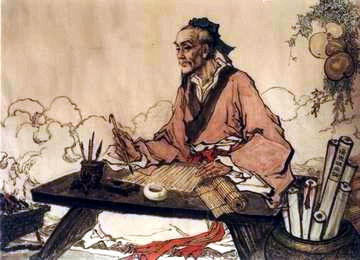
[Formula Composition] zhangzhongjing.jpg
cōng bái (Allii fistulosi Bulbus) 4 stems
gān jiāng (Zingiberis Rhizoma) 1 liǎng
fù zǐ (Aconiti Radix lateralis preparata) 1 piece (raw, skin removed, break into 8 pieces) 

[Usage] For the three ingredients above, use three shēng of water, and boil until one shēng remains. Remove the dregs, divide into two doses, and take warm twice daily. 

[Interpretation of Formula Presentation] This formula’s function is to break yīn, return yáng, and diffuse and free the upper and lower burners. It is essentially sì nì tāng (Frigid Extremities Decoction) with the moderating gān cǎo (Glycyrrhizae Radix) removed, and the yīn breaking, yáng freeing cōng bái (Allii fistulosi Bulbus) added. This formulas presentation is one of yīn exuberance and yáng deficiency. The repelling of yáng is the main pathomechanism involved in this presentation. It is quite easy to recount the usage of this formula from the Shāng hán lùn (傷寒論 Discussion of Cold Damage), as it is simply a Shào Yīn pattern with diarrhea, and a faint pulse. In addition to these signs, in clinical practice we may also see; reversal-flow in the extremities, fear of cold, a cold back, throat pain, a pale throat, diarrhea with undigested food particles, a slippery-white tongue coating, and a faint, deep, and hidden pulse. 

If yáng repels upwards, we may see a reddish facial complexion as if makeup were applied, which is why this presentation is sometimes called ‘upcast yang pattern’. Both bái tóng tāng (Scallion [Yáng] Freeing Decoction), and tōng mài sì nì tāng (Vessel Freeing Frigid Extremities Decoction) are used in patterns of yáng deficiency and weakness, yīn exuberance, and repelling yáng. The Bái Tóng Tāng (Scallion [Yáng] Freeing Decoction) presentation is characterized by exuberant interior yīn cold, with repelling of yáng into the upper burner, and can therefore be referred to as a ‘yīn exuberant, upcast yáng pattern’. tōng mài sì nì tāng (Vessel Freeing Frigid Extremities Decoction) on the other hand is characterized by exuberant interior cold, and repelling of yáng into the exterior, and can therefore be referred to as a ‘yīn exuberant, yáng repelling pattern’. Essentially, both these formulas are quite different, and must be differentiated. 

[Primary Patterns]
 “In Shào Yīn disease with diarrhea, Bái Tóng Tāng (Scallion [Yáng] Freeing Decoction) masters it”(Shāng hán lùn (傷寒論 Discussion of Cold Damage) line 314) 

“In Shào Yīn disease, with diarrhea and a faint pulse, give Bái Tóng Tāng (Scallion [Yáng] Freeing Decoction)………..” (Shāng hán lùn (傷寒論 Discussion of Cold Damage) line 315) 

Two Cases using Bái Tóng Tāng (Scallion [Yáng] Freeing Decoction) 

(1) A Pattern of Reverse-Flow Upcast Yáng in Pregnancy 

Lǐ Xiǎo-Pǔ
Journal of the Yúnnán College of Traditional Chinese Medicine, (1979; 2: 40) 

The following is a case of a thirty-six year old female patient treated in hospital after losing consciousness. After getting out of bed that morning, she had felt completely normal, but had suddenly experienced dizziness and flowery vision. After falling over in her kitchen, she went to bed to quietly lie down, and it was at this point that she had lost consciousness. 

Consultation: The following signs and symptoms were noted; a hidden, imperceptible pulse, reversal cold in the extremities, white facial complexion, with slightly red cheekbones, and occasional nausea with a desire to vomit. 

The dizziness and reversal were due to the dual deficiency of liver and kidney yáng. The exuberance of yīn qì in the lower burner caused deficient yáng to float upwards, bringing forth the signs of upcast yáng. At this point she had just entered her ninth month of pregnancy. In this particular case, a modified version of Bái Tóng Tāng (Scallion [Yáng] Freeing Decoction) was indicated. 

Formula: 

fù zǐ (Aconiti Radix lateralis preparata) 15g
gān jiāng (Zingiberis Rhizoma) 9g
chǎo zhū yú (Evodiae Fructus preparata) 6g
gōng dīng xiāng (Caryophylli Flos) 2.4g
guì zhī (Cinnamomi Ramulus) 9g
cōng bái (Allii fistulosi Bulbus) 3 stems
zhì gān cǎo (Glycyrrhizae Radix preparata) 6g 

After taking the above decoction, sounds of water seeping through her chest and abdomen were noted, and afterwards copious amounts of water were discharged trough a bowel movement. When returning to visit her later in the afternoon, she was already feeling normal and had completely recovered. She was still experiencing diarrhea, so a modified version of lǐ zhōng tāng (Regulate the Middle Decoction) was administered. 

(2) Yáng deficiency headache 

Liú Yǔ
Journal of the Shāndōng University of Traditional Chinese Medicine (1977; 1: 30) 

A twelve-year old male student was brought to the clinic for a consultation. Every morning after getting up, he experienced continuous headaches, which were accompanied by spontaneous sweating, exhaustion, a fear of cold with a desire to be warm, a pale tongue body with a white coat, and a deep-thin and strengthless pulse. If no treatments were administered the headaches would usually subside by the afternoon. Previous Chinese medicine doctors treated his headaches as qì deficiency type headaches, which offered no relief, and was now seriously starting to affect his studies. 

The author treated this as yáng deficiency type headaches and used Bái Tóng Tāng (Scallion [Yáng] Freeing Decoction) with the addition of zhì gān cǎo (Glycyrrhizae Radix preparata), and after 2 packages, the headaches disappeared. 

Formula: 

shú fù zǐ (Aconiti Radix lateralis preparata) 6g
gān jiāng (Zingiberis Rhizoma) 4.5g
zhì gān cǎo (Glycyrrhizae Radix preparata) 4.5g
cōng bái (Allii fistulosi Bulbus) 2 stems 

Translated from the ‘Zhāng Zhòng-Jǐng Formula studies’ book (张仲景方剂学), compiled by Lǔ Zhì-Jié, and published by the China Medical Science Press (2005)
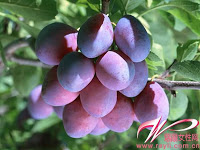
A Case of Wü Méi Wán (Mume Pill)

A case of the Fire spirit currents’ Fàn Zhōng-Lín%E4%B9%8C%E6%A2%85.jpg

Translated from ‘Five Steps to Cold Damage Treatment According to Pattern Identification’

A 39 year old male farmer from the Jīn Niú district of Chéng Dū city presented at the clinic: 

Step 1: Chinese medical diagnosis 

In August of 1977 in the last third of the month, while working in the fields, the patient suddenly felt discomfort throughout his entire body. He experienced cold extremities, dizziness, cold sweats, abdominal pain and borborygmus. Shortly after, he experienced continuous diarrhea, which frequently contained pus and bloody discharge. On September 2nd he came in for a consultation. 

Every day, the patient would have over ten bouts of diarrhea. The stools were quite loose, sticky and jelly like, which had a yellowish-red color. This was accompanied by abdominal pain, with urgency followed by heaviness. In addition, he experienced dry retching, heart vexation, thirst, and cold extremities. His tongue was dark pale with a slightly red tip, with a yellow, slippery and thick coating. 

Step 2: List of Disease Mechanisms 

Dry retching, heart vexation, nausea, slightly red tongue tip, are all associated with upper heat. 

Reversal cold in the body and extremities, cold pain in the lower abdomen, clear-thin diarrhea, which are all described as ‘white’, ‘cold’, and ‘freezing’, are obvious signs associated with lower cold. 

This is one hundred percent an obvious case of upper heat and lower cold. Jué yīn is the qi of wind and wood that when vigorous will cause wind pathogens to flee to the upper (body). 

[Plain Questions-Treatise on Tài yīn and Yáng míng] says: 

“When one is invaded by a robber wind or depletion evil, yáng receives it. When food and drink are consumed without restraint, when rising and resting occur out of time, yīn receives it. When yáng receives it, then it enters the six bowels. 

When yīn receives it, then it enters the five viscera. When it enters the five viscera, then distension and blockage result. In the lower [body] it causes outflow of [undigested] food, and when enduring causes intestinal afflux (dysentery)”.

From this passage we can see that intestinal afflux is commonly due to the exploitation of yīn and yáng, with signs of intermingling cold and heat. 

In summary, the disease mechanism involved is the lack of mutual connection between the qi of yīn and yáng. The upper belongs to yáng, and pure yáng is heat; the lower belongs to yīn, and pure yīn is cold. Therefore, “When Jué yīn prevails” intestinal afflux will occur. 

Step 3: Comprehensive Analysis 

This is a pattern of cold and heat mixing causing intestinal afflux, with the disease in the Jué yīn level. 

Step 4: Formula According to Pattern 

The appropriate method of treatment is to eliminate evils and support the right using both cold and warm medicinals. Wü méi wán (Mume Pill) governs. 

Step 5: Medicinals According to Pattern 

Prescription:

wü méi (Mume Fructus) 30g

xì xïn (Asari Herba) 6g

gän jiäng (Zingiberis Rhizoma) 30g

huáng lián (Coptidis Rhizoma) 12g

däng guï (Angelicae sinensis Radix) 10g

zhì fù piàn (Aconiti Radix lateralis preparata) 60g (extended cooking)

shǔ jiāo (Zanthoxyli Pericarpium) 6g

guì zhï (Cinnamomi Ramulus) 10g

dâng shën (Codonopsis Radix) 12g

huáng bâi (Phellodendri Cortex) 10g 

2 packages were prescribed, and the patient was asked to refrain from eating oily, raw, cold and strong smelling foods (onions, garlic, leeks, etc.). 

After taking two packages of the formula, his intestinal afflux had resolved. On follow up consultation with the patient in June, 1979, he reported that in the year since his recovery, there had been no relapse of the condition. 

[Realizations] 

Wü méi wán (Mume Pill) is said to “govern enduring diarrhea”, yet in this case enduring diarrhea was not present.

Then why was this formula chosen?

Generally speaking in patterns of Jué yīn diarrhea there simply must be reversal. Enduring diarrhea is usually seen in patterns where there is a mixture of cold and heat, for which it is appropriate to use a combination of cooling and warming methods by mixing both cool and warm formulas. 

This was not a case of enduring diarrhea, but was originally seen as a Jué yīn condition with both cold and heat signs present. Wü méi wán (Mume Pill) is a formula which cools, warms and supplements simultaneously. Acrid, sour, sweet and bitter flavours are all present in the formula. The formula was correct for this presentation and therefore by adapting to the original formula, we were able to obtain positive results.

In actual fact, Wü méi wán (Mume Pill) has been used by countless physicians of past and present to treat various disorders, especially diarrhea, and its use is continuously expanding. 

Take the ‘Important Formulas Worth a Thousand Gold Pieces’ (千金方Qiān Jīn Fāng) for example, where it discusses Zhang Zhong-Jing’s concept of using wū méi (Mume Fructus) and huáng lián (Coptidis Rhizoma) in heat type diarrhea, combined with fù zǐ (Aconiti Radix), gān jiāng (Zingiberis Rhizoma), etc. in cases of deficient cold natured enduring diarrhea. 

The ‘Comprehensive Recording of Divine Assistance’ (圣济总录 Shèng Jì Zŏng Lù), mentions Wü méi wán (Mume Pill) for the treatment of unceasing post-partum cold and heat type diarrhea. 

In the ‘Standards for Diagnosis and Treatment’ (证治准绳 Zhèng Zhì Zhŭn Shéng), this formula is used for treating coughing issuing from the stomach and the vomiting of long worms. 

The Japanese physician Zhì Jiān-Huàn says that generations of physicians have had great difficulties in treating stomach reflux, and that this is an extraordinary formula for treating this pattern. (quoted from the Initial Draft of Lectures on Cold damage). 

According to Rèn Yìng-Qiū, Wü méi wán (Mume Pill) functions to strengthen the stomach and intestines, reduce inflammation and kill worms, and when used to treat chronic diarrhea, can achieve positive results. (Interpretation of the Shāng Hán Lùn). 

In the past, there have also been reports of using this formula in treating cases of chronic colitis of fifteen years.

From the above, we can see that the scope of using Wü méi wán (Mume Pill) is by no means limited to just treating roundworm reversal and enduring diarrhea, and in actual fact it’s use is continuously expanding. 

Two cases using Li Zhong Tang (Rectify the Centre Decoction)

Case #1

Vacuity cold diarrhea

Case of Yuan Wen-Fei; (Jiang Xi Chinese Medicine); 1964; 3:149

A 39 year old male presented on February 11, 1949 complaining of diarrhea that has lasted for over a year, with borborygmus, and quite watery-sloppy stools. He usually has around eight or nine bowel movements in the first half of the day, his appetite is poor and there are undigested food particles present in the stools. Over ten Chinese medical physicians have been consulted in the past, and very minimal effects have occurred. On consult with this patient I found his facial complexion to be very pale and lustreless. He was emotionally fatigued, his abdomen was slightly distended, but favoured pressure, his tongue had a layer of thick yellow and slimy coating, and his pulse was thin and slow.

This is a case of spleen vacuity diarrhea, and the treatment method is to supplement the centre, and boost earth. The formula used was Zhong Jing’s Li Zhong Tang.

Ren Shen 9g
Chao Bai Zhu 9g
Hei Gan Jiang 7.5g
Zhi Gan Cao 6g

He was given six packages and asked to return for a follow up consultation. He reported that his condition had improved drastically for the better, and was therefore administered another six packages of the same formula after which he made a complete recovery.

Case #2

Wheezing and Panting (Left heart failure, cardiogenic asthma)

Case of Lu Zhi-Jie (Journal of Chinese Medicine); 1998; supplementary issue: 104

On May 4, 1998 a 60 year old male presented with cardio-pulmonary disease of over 10 years duration. In the first year of the condition he would often experience difficulty breathing in the evening, which would most commonly occur roughly around midnight waking him from a deep sleep. He suffered with an oppressive sensation in his chest, and once his breathing became forced he would suddenly wake up with a fright, compelling him to sit up in bed. This was accompanied with coughing fits, a rale at the back of the throat, and spitting up of frothy phlegm. These attacks would last anywhere from ten minutes to one hour, and once they would resolve on their own, he was able to return to sleep. During the day he also experienced wheezing on exertion. His pulse was wiry and weak, and the tongue was purple and slightly dark, with a thin yellow, slimy coating. According to this man’s symptoms of weakness, coughing fits and breathing difficulties at night, he was diagnosed by western physicians with left heart failure and cardiogenic asthma.
On disease analysis, we see that this man is in his sixtieth year and his condition has persisted for an extended period, therefore we can deduce from this that there must be a vacuity and weakness of right qi, however, his symptoms seem to develop in the evening, so in addition there is a blockage in lung qi. In such a scenario we must address both the root and branch of the condition and treat both simultaneously. We treat the root with Ren Shen Tang in order to supplement the centre and assist yang to ensure that the lungs and heart are able to generate sufficient and ample original qi. The branch is addressed with Ting Li Da Zao Xie Fei Tang.

Formula:

Ren Shen 30g
Bai Zhu 30g
Gan Jiang 30g
Gan Cao 30g
Ting Li Zi 24g
Da Zao 12 pieces

The first evening after taking one package, he experienced no breathing difficulties, and after fourteen packages, his condition seemed to be stabilized. He was able to sleep peacefully in the evenings. The daytime wheezing on exertion had also obviously improved, and as long as he moved around slowly, experienced no symptoms. He continued to take the formula every other day in order to consolidate the treatment.

Two Cases on the use of Si Ni San

A Collection of the Clinical Experience of He Ren%E4%BD%95%E4%BB%BB.jpg

何任临床经验辑要

Case #1

On April 8 1983, a 48 year old female presented with irregular menstruation.  She was a very sceptical woman and was easily angered.  Her sleep was poor with copious dreaming, she experienced rib side pain, abdominal distension, her bowel movements alternated between hard and loose, her tongue had a thin white coat and her pulse was wiry.  In this case it is appropriate to harmonize and scatter the depression, course the liver, and regulate qi.  The following formula was prescribed;

Zhi Shi 9g

Chai Hu 9g

Sheng Gan Cao 9g

Dang Gui 9g

Bai Shao 15g

Huai Xiao Mai 30g

Zhi Xiang Fu 9g

Da Zao 7 pieces

5 packages were administered.

Follow up consultation on April 15 1983:  After taking the above formula, her sleep had improved and she felt calmer.  The abdominal distension had decreased, her bowel movements were regular, but the rib side pain was still occasionally present.  Tongue coating was still thin and the pulse was wiry.  A modified version of the original formula was prescribed.

Zhi Shi 9g

Chai Hu 9g

Sheng Gan Cao 9g

Yu Jin 9g

Bai Shao 15g

Zhi Xiang Fu 9g

Huai Xiao Mai 30g

Da Zao 7 pieces

5 packages were administered.

Commentary:  The patient in this case originally suffered from neurosis occurring alongside menopause.  Therefore we have a pattern of qi and blood disharmony with liver depression, causing rib side pain and abdominal distension.  This pattern is effectively treated with a combination of Si Ni San and Gan Mai Da Zao Tang.  On follow up after finishing the formula, the patient reported a full resolution of symptoms.

Case #2

A 41 year old male presented on August 17, 1981 with a depressed spirit, irritability and anger.  In addition he had epigastric pain, an increase in bowel movements, with occasional diarrhea, cold fingers and toes, slight sweating, fatigue, a wiry-rapid pulse, and a thin yellow tongue coat.  In this case it is appropriate to course the liver, regulate qi and resolve depression.  The following formula was prescribed;

Chai Hu 9g

Bai Shao 9g

Sheng Gan Cao 9g

Zhi Shi 9g

Chun Yang Zheng Qi Wan 3g* (separated into two doses and taken with decoction)

*Pure Yang to Rectify the Qi pills is a patent formula containing Chen Pi, Cang Zhu, Rou Gui, Ding Xiang, Huo Xiang, Bai Zhu, Fu Ling, Zhi Ban Xia, and Qing Mu Xiang.

Four packages were administered.

Commentary:  The patient in this case suffered from a depressed spirit.  He tended to think excessively and was easily angered.  This patient was initially diagnosed during the summer, and was manifesting a Si Ni San presentation.  Taking the season into consideration and the conditions of his diet with the mild reversal symptoms, we are unable to say that this is a pure case of binding depression of liver qi.  Due to these factors, Chun Yang Zheng Qi Wan was added to clear the stomach and intestines and eliminate seasonal pathogenic factors.  After taking two packages of the formula his (epigastric) pain and diarrhea had completely resolved, and he felt much calmer.

The clinical scope of Si Ni San is quite vast.  In all cases of qi stagnation, qi depression, and qi reversal the pattern and presentation of Si Ni San is often present with several opportunities for use.  The formula is applicable in cases of cholelithiasis, cholecystitis, intercostal neuralgia, weak digestive system functioning, stomatitis, panting, palpitations, colitis, neurological disorders, menopause, and several other conditions.  Generally when the pattern is correctly identified and the herbs and/or formula are matched to the presentation, our results can be 100% effective.

Stomach Pain and Irregular menstruation rectified with Si Ni Huang Lian (Tang)

A case of Professor Fan Zheng-Lun (樊正伦)

Recently a 37 year old female presented at the clinic.  She was thin and pallid and was covering her abdomen with both hands.  She complained of stomach pain for several months occurring before or after meals.  Her abdomen feared cold and enjoyed warmth, she often felt nauseous with the occasional desire to vomit.  Her bowel movements seemed to be unaffected.  Her stomach pain occurred prior to her menstrual cycle which had also become quite long, dark and unsmooth.  In addition the soles of her feet often felt warm.  Her mother, who was sitting next to her commented that her daughter really enjoyed spicy foods and ate too much of them, which was probably causing some of her pain.  Her mother recently restricted her consumption of these foods.

Her tongue was purplish-dark with stasis macules on both edges.  Her right pulse was wiry-thin, and the left pulse was deep-weak.  At this point, Professor Fan kindly asked her, “Do you find that you easily get angry”?  The patient nodded her head and said “yes, I don’t have a very good temper”.

Professor Fan said that this is a case of Liver Qi depression with a disharmony of the Spleen and Stomach, which can be treated with ‘Huang Lian Tang’ and ‘Si Ni San’ with additions and subtractions.

Formula:

Gui Zhi 9g

Bai Shao 9g

Fa Ban Xia 9g

Gan Jiang 9g

Zhi Gan Cao 15g

Chai Hu 9g

Zhi Shi 9g

Zhi Xiang Fu 9g

Dang Gui 9g

Dang Shen 12g

Da Zao 4 pieces

Sheng Sha Pu Huang 6g

Huang Lian 6g

7 Packages were administered.

A week later the patient returned for a follow up consultation and said her spirits were up and turning for the better.  She was so happy to report that after taking the herbs, her stomach felt very comfortable.  She was still having one bowel movement a day.  Her cycle came and only lasted 4-5 days, was not very heavy and contained small clots.  She has had no abdominal pain, her soles no longer felt warm, and occasionally there was a gurgling sound in her abdomen.

Her tongue edges were purplish-dark and her pulse was wiry.

Professor Fan felt that the formula was addressing her condition and prescribed another seven packages of the original formula to consolidate the treatment.

In clause 173 of the ‘Shang Han Lun’ it says;

“When in Cold damage, there is heat in the chest, evil qi in the stomach, abdominal pain, and a desire to vomit, Huang Lian Tang (Coptis Decoction) governs”

In actuality, Huang Lian Tang is Ban Xia Xie Xin Tang with the removal of Huang Qin and the addition of Gui Zhi.  It treats stomach heat and spleen cold, while Ban Xia Xie Xin Tang treats damp heat in the spleen and stomach.

Within the formula, bitter Huang Lian is used to descend heat in the upper body, as per the adage “To treat upper body heat, drain with bitterness”.  Acrid warm Gui Zhi, Gan Jiang, and Fa Ban Xia are used to raise spleen yang.  “With cold in the lower body, scatter with acridness”.  Ren Shen, Gan Cao, and Da Zao are used for their sweet flavour to boost the stomach, remembering the adage “The spleen desires warmth, so with tension use sweet foods to moderate”.

Huang Lian Tang is a very useful formula for treating spleen and stomach conditions resulting from spleen cold and stomach heat.  When combined with Si Ni San It is able to course the liver, regulate qi and protect liver wood from exploiting spleen earth.  In clinical practice we are often able to achieve positive clinical outcomes through this combination.

In this patients’ case, aside from the above mentioned formulas, Professor Fan added Zhi Xiang Fu in order to strengthen the formulas function of coursing the liver.  Dang Gui and Sheng Sha Pu Huang were added to nourish and move the blood, and transform stasis.

This case was adapted and condensed from ‘A Taste of Chinese Medical Chicken Soup’ by Xiong Hong

Hu Xi Shu’s Love affair with Da Chai Hu Tang 胡希恕真的爱大柴胡汤!!


Clinical usage of Bupleurum and Cinnamon Twig Decoction (柴胡桂枝汤)

%E5%88%98%E6%B8%A1%E8%88%9F.jpgShoulder and back pain (Shoulder inflammation)

Case study of Liu Du Zhou: Mr. Yu, Male, 43 years old presented on November 29, 1993 with left side shoulder and back pain and swelling. He was unable to lift his left arm or turn over on his side. Western medications were taken including strong pain killers which would only alleviate the pain for a short time where soon after the pain would return. At a previous hospital he was diagnosed with inflammation of the shoulder. This patient was suffering with exceptional pain. On inquiry the patient complained of chest and rib-side fullness, a bitter taste in the mouth, an occasional need to sigh, no desire to eat, occasional sweating and tightness in the back. His bowel movements and urination were normal. His tongue was pale with a thin coat and his pulse was wiry. His pattern was diagnosed as qi depression and stagnation causing a lack of free flow in the Tai-Yang and Shao-Yang channels. A lack of free flow causes pain. 不通则痛

This must be treated by expelling evils in the Tai-Yang, harmonizing Shao-Yang and regulating the nutritive and protective Qi. The formula administered was Chai Hu Gui Zhi Tang with Pian Jiang Huang

Chai Hu 16g

Huang Qin 10g

Ban Xia 10g

Sheng Jiang 10g

Dang Shen 8g

Zhi Gan Cao 8g

Gui Zhi 12g

Bai Shao 12g

Da Zao 12g

Pian Jiang Huang 12g

After taking 3 packages of the above formula the back pain had decreased, he was able to lift his arm on his own, flexibility was increased and his chest and rib-side felt better. After a further 3 packages he was able to completely recover. 

(Effective cases from the clinical experience of Liu Du Zhou)

Commentary: Professor Liu Du Zhou says that in order to treat shoulder and back pain we must address the Tai-YangShao-Yang and Du channels. The shoulder is traversed by the Shao-Yang channel, and the back by the Tai-Yang and Du channels. Enduring diseases enter the collaterals and bind the blood. For this we may add Pian Jiang Huang, Tao Ren, Hong Hua, Chuan Xiong, etc, to invigorate the blood, free the collaterals and alleviate pain. If pain extends to the lower back, the head and body are heavy and cumbersome, the tongue coating is slimy and if copious vaginal discharge is observed in females, then one may administer Qiang Huo Sheng Shi Tang to attain a positive effect.

The above case and commentary are taken from ‘Selected Cold Damage cases from the Clinical Experience of Famous Physicians’ pg 359.

Can Major Buplureum Decoction treat panting & wheezing?

Occasionally when reading books written by clinical masters of our time regarding the usage of Jing Fang 经方 (classic formulas) we stumble upon what seems at first to be bizarre yet intriguing ways of using these formulas that in no way reflect any of the usages we were taught in school.  One in particular that comes to mind is Hu Xi-Shu’s usage of Major Buplureum Decoction (Da Chai Hu Tang) for wheezing and panting (what we may call modern day asthma).  In his ‘Popular Lectures on Cold Damage’ (伤寒论通俗讲话), Dr Hu explains that many patients presenting with wheezing and/or panting manifest a Shao-Yang, Yang-Ming combination disease.  Therefore, the cardinal Shang Han Lun formula Da Chai Hu Tang (Major Buplureum Decoction) may be used with quite astonishing results.   Many of Dr. Hu’s students would often ask him why when treating wheezing he wouldn’t just use Ma Huang (Radix Ephedra)?  He would simply state that unless the case presenting was a Ma Huang pattern, its use was not warranted.  In the Shang Han Lun (On Cold damage) it states that “In wheezing with chest fullness, Ma Huang is appropriate, but in wheezing with abdominal fullness, Ma Huang should not be used”.