Dr. Hú Xī-Shù’s approach in the treatment of coughs

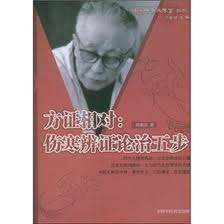
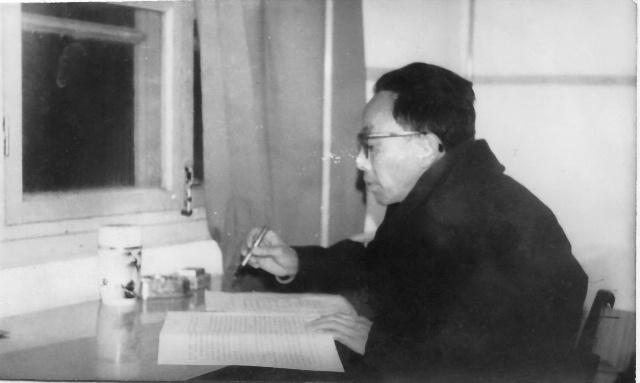
For the last few years I have been engaged in quite extensive research and study in the unique methods and index.jpgtreatment style of Dr. Hú Xī-Shù.  Although I have never personally studied with him (I was only eight years old when he died), I have always felt a very deep connection to his approaches.  To be a student of the Jīng Fāng current one must become intimate with the classic writings of Zhòng-Jǐng (仲景),  Fāng Yǒu-Zhí (方有执), Xú Líng-Tāi (徐灵胎), and the modern writings of Hú Xī-Shù (胡希恕), Liú Dù-Zhōu (刘渡舟), Fàn Zhōng-Lín (范中林), and Huáng Huáng (黄煌), to name just a few. There are obviously countless physicians of the past and present that have contributed to this fascinating and clinically relevant specialty however; these are the physicians that have exerted the greatest influence on my practice. 

There are currently very few books available on the Jīng Fāng current available in the English language, and it is for this exact reason that my colleague Michael Max and I are in the process of translating a very important clinical text exemplifying the strategies and methods utilized by some of these doctors mentioned above.  It is my hope that this text will assist in raising the level of study in North America, and contribute to the ever-evolving state of Chinese medicine in the west.

The following is the first part of a translation with commentary on the treatment of coughs, taken from Dr. Hú’s ‘Popular Lectures on Cold Damage’ (伤寒论通俗讲话).  It includes his various theories on treatment and includes representative case studies to illustrate these methods.  Part two will follow in the next issue. 

Coughing is mainly caused by the invasion of phlegm and thin-fluids.  Treatment should involve warm transformation, descending counterflow and calming

There are numerous formulas that are able to effectively treat coughs, some may even say that there are ‘thousands upon thousands’ (成千上万).  However, when treating coughs, Dr. Hú would most commonly use the formula Bàn Xià Hòu Pò Tāng (Pinellia and Magnolia Bark Decoction), taken from the Jīn Guì Yào Lüè (Essentials from the Golden Cabinet), where it clearly illustrates an intimate relationship between coughing and phlegm and thin-fluids. Numerous cases of coughing are due to the upward invasion of phlegm and thin-fluids, causing qì to run counterflow and not descend.  The treatment of phlegm and thin-fluids is clearly elucidated in the Jīn Guì Yào Lüè where it states:

“In diseases of phlegm, and thin-fluids, one should harmonize with warm medicinals”.

This is a very important treatment principle in addressing phlegm, thin-fluids, and coughs.  Adhering to these principles when selecting suitable formulas, will increase our clinical effectiveness.

Case Study

Huang, Female, 38 years old                                                                                                              

Initial diagnosis was on Feb 12, 1966:  Patient presented with a cough combined with expectoration of white phlegm, an itchy throat, chest fullness, a dry throat with no desire for fluids and bilateral rib side distension.  She has already taken several packages of herbal formulas to no avail.  Her tongue coating was thick and slimy, and her pulse was slippery-thin.

This pattern belongs to phlegm and thin-fluids harassing the upper (burner), and impaired depurative downbearing of the lungs.  This was treated by warm transformation and downbearing counterflow with Bàn Xià Hòu Pò Tāng with additions and subtractions.

Bàn Xià 4 qián,                      

Hòu Pò 3 qián,                       

Fú Líng 4 qián,                       

Sū Zǐ 3 qián,      

Jú Pí 5 qián,

Xìng Rén 3 qián,          

Jié Gěng 3 qián                       

Shēng Jiāng 3 qián

Results:  After taking only 2 packages of the above herbs, the cough had stopped.   

Bàn Xià Hòu Pò Tāng is originally from the Jīn Guì Yào Lüè in the miscellaneous gynaecological diseases section.  Originally used for “female patients with the sensation of fried meat in the back of the throat”

Dr. Hú believed this formula to be Xiǎo Bàn Xià Jiā Fú Líng Tāng with the additions of Hòu Pò and Sū Yè.  It is used in phlegm-thin fluids qì bind manifesting with chest fullness, throat blockage and cough.  It warms and transforms phlegm and thin-fluids, downbears counterflow, and regulates qì.    The patient above was manifesting with a cough due to phlegm and thin-fluids, therefore the use of this formula offered a quick resolution.

The original formula contains (Zǐ) Sū Yè, but Dr. Hú prefered to use (Zǐ) Sū Zǐ.  If there are obvious exterior signs present, then (Zǐ) Sū Yè may be added, and you may also add either Guì Zhī Tāng or Má Huáng Tāng.  If heat signs are present then Shēng Shí Gāo may be added.  If there is an enduring cough due to cold thin-fluids, without any obvious exterior signs, then combine with Líng Gān Wǔ Wèi Jiāng Xīn Xià Tāng (Poria, Licorice, Schisandra, Ginger, Asarum, and Pinellia Decoction).

Enduring depressed phlegm and thin-fluids frequently transform into heat, and therefore true cold, and false heat signs need to be clearly distinguished

In clinical practice, numerous patients with coughs are frequently seen.  Quite often they have taken several decoctions yet their symptoms fail to improve, even to the point where some of these patients symptoms intensify.  One of the main reasons for this is the inability to clearly differentiate between cold and heat.  The following case study illustrates this problem.

Case Study

A 63-year-old male presented at the clinic on January 4, 1966 complaining of a cough accompanied by spitting up of yellowish-white sputum that has been going on for the last four months.  This initially started last year in October with symptoms of a productive cough and throat pain, for which he had taken various medicinals that offered no relief and in fact caused some wheezing.  The main formula he was initially prescribed was a modified version of Sāng Xìng Tāng (Mulberry Leaf and Apricot Kernel Decoction). He had also mentioned that in this time he has consumed over one kilo of Chūan Bèi Mǔ (Fritillariae cirrhosae Bulbus). 

Current signs and symptoms:  Cough with copious amounts of yellowish-white sputum, irritability, chest fullness, aversion to cold in the back, dry mouth with a desire to drink, yet after every time he drank water, his abdomen would be uncomfortable.  He had a yellow slimy tongue coat, red tongue tip, and a wiry, slippery, thin pulse. 

Dr. Hú prescribed Xiǎo Qīng Lóng Jiā Shí Gāo Tāng (Minor Blue-Green Decoction plus Gypsum)

Má Huáng3 qián

Guì Zhī 3 qián

Xì Xīn 2 qián

Gān Jiāng 2 qián

Bái Sháo 3 qián

Zhì Gān Cǎo 3 qián

Wǔ Wèi Zǐ 3 qián

Bàn Xià 5 qián

Shēng Shí Gāo 1.5 liǎng

After writing this formula a question was posed to Dr. Hú asking why so many warm natured herbs were used, if heat signs were so obvious?  Dr. Hú replied: 

“This patient has already taken numerous formulas containing heat clearing medicinals, and his symptoms have only gotten worse.  The medicinals were not prescribed according to the presentation.  We can see from his current symptoms that he has an aversion to cold in his back, and abdominal discomfort after drinking water.  This is a pattern of thin-fluids collecting in the interior, and specifically cold thin-fluids.  Now if we were to administer bitter cold medicinals in order to clear heat and transform phlegm, not only would we fail to remove the phlegm, but we would further damage this patients’ yáng qì and the phlegm would in fact get worse.  When there is a substantial amount of phlegm and thin-fluids, that collect and stagnate for long periods of time, they will inevitably transform into heat, which invades the heart and chest causing irritability and chest fullness.  Therefore, by not removing the phlegm and thin-fluids, we would be unable to eliminate the heat, and the cough would fail to subside.  This is a pattern of exterior cold, with thin-fluids collecting internally, accompanied by upper (burner) heat.  Xiǎo Qīng Lóng Jiā Shí Gāo Tāng matches the presentation.  Xiǎo Qīng Lóng Tāng is used to resolve the exterior and eliminate phlegm in order to treat the root.  Shēng Shí Gāo is used to clear upper burner heat to expel the branch. Whether or not we can achieve a positive outcome will be determined after the formula is taken”.

Results:  after taking three packages of the formula, his irritability and chest fullness were reduced, as was the yellow phlegm and dry mouth.  His tongue coating was slightly slimy, so Xì Xīn, and Gān Jiāng were increased to 3 qián, and Shēng Shí Gāo was decreased to 1 liǎng.  This was continued for six more packages in which time his aversion to cold in the back was gone, the spitting up of phlegm was reduced, and no yellow sputum was seen.  Shēng Shí Gāo was removed from the formula and he was given twelve more packages, after which his condition completely resolved. 

Xiè Xīn Tāng (Heart Draining Decoction)-泄心汤

From the ‘Interpretation of the Jīn Gùi Yào Lüè’ by Sòng Jiàn-Píng (2009)

I am currently in the process of translating the second volume of the Jīn Guì Fāng Gē Kuò (金贵方歌括) by Chén Xiū-Yuán. I have been so immersed in it lately, that I feel I’ve been neglecting this site, and figured I should work on something to put up. Because of the intense amount of work and dedication this book requires, I figured it would make more sense to translate something I’ve been using as reference, helping myself and others elucidate the deeper meaning behind the formulas discussed in the text. The following is the small section on Xìe Xīn Tāng, for which I recently worked on. I’ve had a bit of a hard time with the line “heart qi insufficiency” (心气不足), as I’ve read several commentaries, including the Qiān Jīn Fāng, which state that this is a typo, and the actual line should read, 心气不定 (heart qi instability/unsettled). Neither one of these still make immediate sense to me, but I am getting closer to understanding what it means and it’s pathological/physiological implications. Since I am still processing and working with this line, I’ll share my thoughts on a later date. I’d love to get other perspectives in the comments section.

[Original Text]  
“(When) heart qì is insufficient, with blood ejection and spontaneous external bleeding, Xiè Xīn Tāng masters it”. (JGYL 17)

Xiè Xīn Tāng also treats sudden turmoil (cholera) disease

Dà Huáng 2 liǎng
Huáng Lián 1 liǎng
Huáng Qín 1 liǎng

Use 3 shēng of water for the three ingredients above, boil until reduced to one shēng, and take in one single dose.

[Comparisons] Heart qì vacuity: In the Qiān Jīn Fāng it is written as heart qì instability/unsettled) (心气不定)

[Presentation] A treatment for patterns of blood ejection and spontaneous external bleeding due to exuberant heat.

[Explanation] Both blood ejection and spontaneous external bleeding are categorized as exuberant heat patterns. The heart stores the shén, and governs the blood vessels. If heart fire is exuberant, it will cause frenetic movement of the blood, which results in blood ejection and spontaneous external bleeding. If the spirit is harassed there will be vexation and disquietude. Xiè Xīn Tāng is the treatment of choice, which clears heat and discharges fire. Within the formula, Huáng Lián and Huáng Qín clear heat, downbear fire, and discharge heat from the heart channel, so heart blood can quiet down on it’s own. Dà Huáng is bitter, cold, downbearing and discharging. It causes the descent of fire qi so blood can be calmed and stop moving frenetically. When these three medicinals are combined, they directly break heat, downbear fire, and stop bleeding.

[Commentary] Xiè Xīn Tāng and Bǎi Yè Tāng both treat blood ejection, however, Bǎi Yè Tāng mainly treats blood ejection due to central qì vacuity cold. Typical signs seen with this presentation are a somber white facial complexion, lassitude of spirit and fatigue, pale tongue body with a white coating, and a vacuous weak pulse. Xiè Xīn Tāng treats blood ejection due to exuberant heat, which is typically accompanied with heart vexation and disquietude, a red complexion, red tongue body, vexation thirst, constipation, a rapid pulse, etc. The two prescriptions above introduce us to two major methods and treatment principles for the treatment of blood ejection. One to warm yáng and restore qì, and one to discharge fire and clear heat in order to stop bleeding. In regards to Xìe Xīn Tāngs’ treatment of blood heat with frenetic movement, bleeding can manifest in several different ways including, vomiting of blood (hematemesis), external bleeding, blood in the urine (hematuria), blood in the stools (hemafecia), etc. which can all be treated quite effectively.

This is a commonly used formula for treating exuberant heat in the three burners, and is used clinically for the congestion of pathogenic-toxic fire and heat causing disorders in either the upper or lower burners, or the exterior or interior. Examples being, the upward harassment of toxic heat causing a red complexion and tongue, ulcerations of the mouth and tongue, tooth swelling and pain, vexation heat, and oppression in the chest, or toxic heat manifesting on the exterior with skin damage due to swollen and toxic sores.

[Case Example] A sixty-year-old female patient presented on April 20, 1994. She has a history of a duodenal ulcer for many years, and has recently been quite fatigued, with unbearable epigastric pain. This morning after eating breakfast, she immediately felt nauseous and had a desire to vomit. Soon after she vomited approximately 300ml of fresh blood, which contained stasis clots but no food from her digestive tract. She has continued to feel nauseous and has been vomiting blood quite frequently up until the time of her consultation. Her tongue was red, with a thin yellow coating, and she had a wiry-slippery-rapid pulse. The diagnosis was blood ejection. The pattern belonged to heat accumulation in the stomach causing frenetic movement of the blood. Treatment involved clearing the stomach, discharging heat, transforming stasis, and stopping bleeding.

Formula:

Dà Huáng 30g
Huáng Qín 9g
Huáng Lián 9g
Dài Zhě Shí 30g

The medicinals above were to be decocted (and drunk) quickly

After taking the formula, the vomiting of blood stopped, and the epigastric pain decreased. She was continued on two more packages of the formula to clear the remaining pathogens.

(Luó Wèi Dōng: Effective Treatments with Classical Formulas, vol. 4.)

A Case of Guì Zhī Fù Zǐ Tāng (Cinnamon Twig and Aconite Accessory Root Decoction)

Professor Chén Rùi-Chūn’s experience in the usage of Wǔ Líng Sǎn (Five-Ingredient Powder with Poria) (陈瑞春教授应用五苓散经验)

The following is a short excerpt of my most recent article/translation, which will be published in the Lantern’s September issue.   

A Case of Wǔ Líng Sǎn (Five Ingredient Powder with Poria)

– Fire Spirit Currents’ Fàn Zhōng-Lín (范中林)

Translated from ‘Five Steps to Cold Damage Treatment According to Pattern Identification’

A six-month old child of a local Chéng Dū office worker was seen in August of 1960.

Chinese Medical Diagnosis 

On the day that the child had come in, he had been crying endlessly. His appetite had recently decreased; he had a sallow facial complexion, and had lost weight. His parent’s had no clue as to why this was occurring. One day they had suddenly noticed that the child’s scrotum was swollen, to the size of a chicken egg. Water sounds were heard when the lower abdomen was palpated. He was brought in immediately for a diagnosis.

List of Disease Mechanisms 

· Scrotal swelling, and water sounds on palpation of the lower abdomen, signify a water pattern

Comprehensive Analysis 

This is a case of water mounting (水疝), caused mainly by the congealing and stagnation of cold and dampness in the yīn organ (scrotum). The qì transforming function of the bladder is abnormal, causing qì to accumulate, which fails to disperse after a prolonged period. Water and fluids have essentially gathered and amassed causing scrotal swelling. This is congealing and amassment of cold-dampness, obstruction of the channels and vessels, qì stagnation in the lower body, and water-dampness macerating in the scrotum.

Treatment method

Treatment method should be to transform qì, move water, warm the kidneys, and disperse cold. Wǔ Líng Sǎn (Five Ingredient Powder with Poria) masters it.

Formula: 

zhū líng (Polyporus) 6g
fú líng (Poria) 6g
zé xiè (Alismatis Rhizoma) 6g
bái zhú (Atractylodis macrocephalae Rhizoma) 6g
guì zhī (Cinnamomi Ramulus) 6g
shǎng roù guì (Cinnamomi Cortex) 3g

After taking one package, the scrotal swelling had deceased, and the pain stopped.

[Commentary] 

The term ‘mounting disease’ (疝病) was first introduced in the Nèi Jīng (Inner Classic). Today, this condition is referred to in western medicine as hernia, however the meaning of these two is not identical.

Physicians of later generations have had numerous names for mounting qì, and have always believed it to be a condition that is heavily related to the Jué Yīn liver channel, hence the saying “All mounting homes to the liver channel”. Treatment mainly involves, warming the liver, and coursing wood. However, we must carry out a concrete analysis in relation to this specific case. For example, this particular case of mounting disease belongs to a Tài Yáng water amassment pattern, and therefore wǔ líng sǎn (Five Ingredient Powder with Poria) masters it. This kind of treatment need not only be applied to children or males, but can also be adapted to fit changes in females. For example, with young woman experiencing lower abdominal cold, numbness, and heaviness and prolapse in the genitals, with paroxysmal pain, this may be a suitable treatment option.

In this particular case Dr. Fàn proceeded to treat from the hand-foot Tài Yáng channel by using wǔ líng sǎn with the ‘two guì’s’ (roù guì, guì zhī) in order to disinhibit water from the centre, and diffuse yáng qì. After only two packages, the patient completely recovered.

Bái Tóng Tāng (Scallion [Yáng] Freeing Decoction)

[Formula Composition] zhangzhongjing.jpg

cōng bái (Allii fistulosi Bulbus) 4 stems
gān jiāng (Zingiberis Rhizoma) 1 liǎng
fù zǐ (Aconiti Radix lateralis preparata) 1 piece (raw, skin removed, break into 8 pieces) 

[Usage] For the three ingredients above, use three shēng of water, and boil until one shēng remains. Remove the dregs, divide into two doses, and take warm twice daily. 

[Interpretation of Formula Presentation] This formula’s function is to break yīn, return yáng, and diffuse and free the upper and lower burners. It is essentially sì nì tāng (Frigid Extremities Decoction) with the moderating gān cǎo (Glycyrrhizae Radix) removed, and the yīn breaking, yáng freeing cōng bái (Allii fistulosi Bulbus) added. This formulas presentation is one of yīn exuberance and yáng deficiency. The repelling of yáng is the main pathomechanism involved in this presentation. It is quite easy to recount the usage of this formula from the Shāng hán lùn (傷寒論 Discussion of Cold Damage), as it is simply a Shào Yīn pattern with diarrhea, and a faint pulse. In addition to these signs, in clinical practice we may also see; reversal-flow in the extremities, fear of cold, a cold back, throat pain, a pale throat, diarrhea with undigested food particles, a slippery-white tongue coating, and a faint, deep, and hidden pulse. 

If yáng repels upwards, we may see a reddish facial complexion as if makeup were applied, which is why this presentation is sometimes called ‘upcast yang pattern’. Both bái tóng tāng (Scallion [Yáng] Freeing Decoction), and tōng mài sì nì tāng (Vessel Freeing Frigid Extremities Decoction) are used in patterns of yáng deficiency and weakness, yīn exuberance, and repelling yáng. The Bái Tóng Tāng (Scallion [Yáng] Freeing Decoction) presentation is characterized by exuberant interior yīn cold, with repelling of yáng into the upper burner, and can therefore be referred to as a ‘yīn exuberant, upcast yáng pattern’. tōng mài sì nì tāng (Vessel Freeing Frigid Extremities Decoction) on the other hand is characterized by exuberant interior cold, and repelling of yáng into the exterior, and can therefore be referred to as a ‘yīn exuberant, yáng repelling pattern’. Essentially, both these formulas are quite different, and must be differentiated. 

[Primary Patterns]
 “In Shào Yīn disease with diarrhea, Bái Tóng Tāng (Scallion [Yáng] Freeing Decoction) masters it”(Shāng hán lùn (傷寒論 Discussion of Cold Damage) line 314) 

“In Shào Yīn disease, with diarrhea and a faint pulse, give Bái Tóng Tāng (Scallion [Yáng] Freeing Decoction)………..” (Shāng hán lùn (傷寒論 Discussion of Cold Damage) line 315) 

Two Cases using Bái Tóng Tāng (Scallion [Yáng] Freeing Decoction) 

(1) A Pattern of Reverse-Flow Upcast Yáng in Pregnancy 

Lǐ Xiǎo-Pǔ
Journal of the Yúnnán College of Traditional Chinese Medicine, (1979; 2: 40) 

The following is a case of a thirty-six year old female patient treated in hospital after losing consciousness. After getting out of bed that morning, she had felt completely normal, but had suddenly experienced dizziness and flowery vision. After falling over in her kitchen, she went to bed to quietly lie down, and it was at this point that she had lost consciousness. 

Consultation: The following signs and symptoms were noted; a hidden, imperceptible pulse, reversal cold in the extremities, white facial complexion, with slightly red cheekbones, and occasional nausea with a desire to vomit. 

The dizziness and reversal were due to the dual deficiency of liver and kidney yáng. The exuberance of yīn qì in the lower burner caused deficient yáng to float upwards, bringing forth the signs of upcast yáng. At this point she had just entered her ninth month of pregnancy. In this particular case, a modified version of Bái Tóng Tāng (Scallion [Yáng] Freeing Decoction) was indicated. 

Formula: 

fù zǐ (Aconiti Radix lateralis preparata) 15g
gān jiāng (Zingiberis Rhizoma) 9g
chǎo zhū yú (Evodiae Fructus preparata) 6g
gōng dīng xiāng (Caryophylli Flos) 2.4g
guì zhī (Cinnamomi Ramulus) 9g
cōng bái (Allii fistulosi Bulbus) 3 stems
zhì gān cǎo (Glycyrrhizae Radix preparata) 6g 

After taking the above decoction, sounds of water seeping through her chest and abdomen were noted, and afterwards copious amounts of water were discharged trough a bowel movement. When returning to visit her later in the afternoon, she was already feeling normal and had completely recovered. She was still experiencing diarrhea, so a modified version of lǐ zhōng tāng (Regulate the Middle Decoction) was administered. 

(2) Yáng deficiency headache 

Liú Yǔ
Journal of the Shāndōng University of Traditional Chinese Medicine (1977; 1: 30) 

A twelve-year old male student was brought to the clinic for a consultation. Every morning after getting up, he experienced continuous headaches, which were accompanied by spontaneous sweating, exhaustion, a fear of cold with a desire to be warm, a pale tongue body with a white coat, and a deep-thin and strengthless pulse. If no treatments were administered the headaches would usually subside by the afternoon. Previous Chinese medicine doctors treated his headaches as qì deficiency type headaches, which offered no relief, and was now seriously starting to affect his studies. 

The author treated this as yáng deficiency type headaches and used Bái Tóng Tāng (Scallion [Yáng] Freeing Decoction) with the addition of zhì gān cǎo (Glycyrrhizae Radix preparata), and after 2 packages, the headaches disappeared. 

Formula: 

shú fù zǐ (Aconiti Radix lateralis preparata) 6g
gān jiāng (Zingiberis Rhizoma) 4.5g
zhì gān cǎo (Glycyrrhizae Radix preparata) 4.5g
cōng bái (Allii fistulosi Bulbus) 2 stems 

Translated from the ‘Zhāng Zhòng-Jǐng Formula studies’ book (张仲景方剂学), compiled by Lǔ Zhì-Jié, and published by the China Medical Science Press (2005)

Hú Xī-Shù (胡希恕) -A Case of Systemic lupus erythematosus (SLE)

A 32-year-old female patient presented at the clinic on October 12, 1967. For the last year the patient has been experiencing feverishness along with red macules on her face and back. The origin of the feverishness and macules was unknown. At both the Běijīng Harmony hospital and the Běijīng University hospital she was diagnosed with Systemic lupus erythematosus. She was treated with hormone therapy, which offered no positive effects, and was then introduced to Dr. Hú for treatment. index.jpg

Current symptoms: Irregular occurrences of feverishness, with red and swollen macules on the face and back occurring as patches or covering larger areas, with shedding scales resembling ox hide tinea. In addition she commonly experienced neck, nape, back and lumbar pain, dry throat, irritability, and also sweat easily from her head. Her tongue had a thin-white coating, and her pulse was thin, wiry, and rapid.

This is a pattern of pathogenic depression in the Jué Yīn, blood deficiency and exuberance of water. Treatment should involve warming the lower, clearing the upper, nourishing the blood, and disinhibiting water. chái hú guì zhī gān jiāng tāng (Bupleurum, Cinnamon Twig, and Ginger Decoction) with dāng guī sháo yào sǎn (Tangkuei and Peony Powder) is the appropriate formula.

chái hú (Bupleuri Radix) 5 qián

huáng qín (Scutellariae Radix) 3 qián

tiān huā fěn (Trichosanthis Radix) 4 qián

mǔ lì (Ostreae Concha) 5 qián

lóng gǔ (Fossilia Ossis Mastodi) 5 qián

guì zhī (Cinnamomi Ramulus) 3 qián

bái sháo (Paeoniae Radix alba) 3 qián

dāng guī (Angelicae sinensis Radix) 3 qián

chuān xiōng (Chuanxiong Rhizoma) 3 qián

cāng zhú (Atractylodis Rhizoma) 3 qián

fú líng (Poria) 3 qián

gān jiāng (Zingiberis Rhizoma) 2 qián

zé xiè (Alismatis Rhizoma) 5 qián

zhì gān cǎo (Glycyrrhizae Radix preparata) 2 qián

shí gāo (Gypsum fibrosum) 1 ½ liǎng

Results: After taking six packages of the above formula, she had started to notice some positive effects, and after thirty packages, she came in for a follow up consultation. By that point, the red macules on her face and back had basically disappeared, and all her blood tests were normal. Her body temperature had decreased and she no longer felt the irregular feverishness. In addition, her pain was no longer present. When she returned to the Běijīng University hospital for a follow up, her doctor was amazed and was completely satisfied with the treatment she had received. The doctor recapitulated her medical records and advised her that she no longer needed to take her herbs. However, approximately half a month after stopping the herbs, red macules reappeared on her face. Although the symptoms weren’t as bad as before, she returned to Dr. Hú for treatment. The above formula was prescribed again with the shí gāo (Gypsum fibrosum) removed.

Commentary: Systemic lupus erythematosus (SLE) is a difficult condition to treat with western medicine, and the same can be said about Chinese medicine. Using six-channel pattern identification in conjunction with classical formula theory, we are able to achieve good results with this condition, and Dr. Hú’s many years of clinical experience is definitely worth referencing.

A Shào Yáng Fever-Fàn Zhōng-Lín (范中林)

Screen Shot 2012-02-11 at 4.15.37 PM.pngIn October of 1960, a 54-year-old male Chéng Dū resident presented at the clinic.
Over the last two years, this patient had been experiencing daily fevers immediately after eating breakfast, with temperatures around 38° C. These fevers would be accompanied by relatively copious sweating, which would continue for over two hours, and would subside as soon as the fever receded. Afterwards, a strong fear of cold was felt. This was an everyday occurrence.

In addition, he experienced, dizziness, a bitter taste in the mouth, a dry throat, fullness in the chest and ribs, and irritability. His tongue was red, with a sticky, white and slightly yellow tongue coat. His pulse was wiry and rapid.

He was seen at a local hospital, where he was diagnosed with fevers of unknown origin. No positive effects were seen from any of the treatments offered.

This is a Shào Yáng fever, and treatment should involve harmonizing and resolving the Shào Yáng. A modified version of xiǎo chái hú tāng (Minor Bupleurum Decoction) is appropriate.

Formula: 

chái hú (Bupleuri Radix) 24g
huáng qín (Scutellariae Radix) 10g
bàn xià (Pinelliae Rhizoma preparatum) 15g
shā shēn (Glehniae/Adenophorae Radix) 15g
gān cǎo (Glycyrrhizae Radix) 10g
zhī mǔ (Anemarrhenae Rhizoma) 15g
shí gāo (Gypsum fibrosum) 30g
mǔ lì (Ostreae Concha) 24g
chén pí (Citri reticulatae Pericarpium) 9g
fú líng (Poria) 12g

One package was administered.

After taking the one package, his fever had reduced, and most of his symptoms improved. He was advised that there was no need to continue the herbs, and that if he took care of himself, the condition would resolve. After a long period of time, the patient reported to Dr. Fàn, that the condition had never returned.

[Commentary] The signs and symptoms of bitter taste in the mouth, dry throat, dizziness, alternating cold and heat, bitter fullness in the chest and ribs, irritability, and a wiry pulse, are all very clear signs of a Shào Yáng channel pattern. This condition had lasted for over two years, so was treated according to the original lines of the Shāng hán lùn (傷寒論 Discussion of Cold Damage) where it states;

“When chái hú signs are still present, first administer xiǎo chái hú tāng (Minor Bupleurum Decoction)”. 

The presence of fevers with sweating, thirst, and a red tongue, signify the presence of depressed heat, and therefore, shēng jiāng (Zingiberis Rhizoma recens), and dà zǎo (Jujubae Fructus) were removed, and zhī mǔ (Anemarrhenae Rhizoma), and shí gāo (Gypsum fibrosum) were added in order to clear (heat). In addition, because the fullness in the chest and ribs was quite severe, damp pathogens were clearly also present, so mǔ lì (Ostreae Concha), chén pí (Citri reticulatae Pericarpium), and fú líng (Poria) were added to percolate dampness, transform stagnation, and disperse bind.

A case of Shào Yīn headache- Wú Pèi-Héng (吴佩衡)

Hú Xī-Shù (胡希恕)- A Case of Prostatitis


On June 11, 1966, a 30-year-old male worker from the capitol airport presented at the clinic.

The patient has suffered with prostate inflammation for over half a year, for which he has taken numerous western medications, and results have been less than ideal.

Current signs and symptoms: lumbar pain, occasional lower abdominal pain, which was sometimes accompanied by sagging, distension and pain in the testicles, occasional painful urination, sticky, milky white colored discharge exuding from the urethra, frequent and scanty urination with a reddish-yellow color, a dry mouth with a desire to drink, a white tongue coating with a slimy root, and a wiry-slippery pulse.

This is a pattern of damp stasis and obstruction, for which treatment should involve disinhibiting dampness, and transforming stasis. Zhū Líng Tāng (Polyporus Decoction) with Shēng Yǐ Rén and Dà Huáng was prescribed.

Zhū Líng 3 qián
Zé Xiè 4 qián
Huá Shí 5 qián
Shēng Yǐ Rén 1 liǎng
Shēng Ē Jiāo 3 qián
Dà Huáng 1 qián

Results: After taking only two packages of the formula, his symptoms were greatly reduced. Because the lumbar pain was still present, Chái Hú Guì Zhī Gān Jiāng Tāng (Bupleurum, Cinnamon Bark, and Dried Ginger Decoction) was added to the above formula.

After a half a month on the formula, all his symptoms were basically gone.