Original Work by Keisetsu Ōtsuka, with translation [from Japanese to Chinese] and commentary by Wang Ningyuan: Kampo and Abdominal Diagnosis
Primary Gangrene of the Left Big Toe
The patient is a 52-year-old male with a good complexion and obesity.
Two years prior, he began experiencing pain in the left big toe, which was diagnosed as primary gangrene. At the same time, there was swelling and hardness near the left lower abdomen close to the iliac fossa, accompanied by tenderness. After being examined by a renowned surgeon, exploratory laparotomy was performed but no abnormal lesions were found.
Initial Consultation: November 7, 1925
Pulse: Left side was deep and choppy; right side was deep and small.
Blood Pressure: 112/70 mmHg.
Symptoms: The left dorsal artery of the foot was undetectable. The left big toe appeared purplish, with blackened toenails. The degree of pain fluctuated and worsened after exertion, significantly impacting sleep due to the pain.
Abdominal Diagnosis
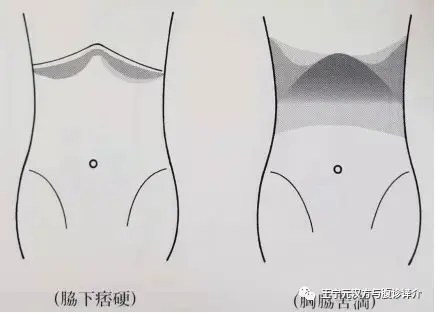
On the right side, there was fullness and discomfort in the chest and hypochondrium. In the lower left abdomen, at the site of the previous surgery, there was resistance and tenderness.
The patient had bowel movements once a day, but they were not smooth.
I considered the resistance and tenderness in the left lower abdomen to be an abdominal sign of blood stasis. The resistance and tenderness, which were previously suspected by the surgeon to indicate a tumor, may also have been due to blood stasis.
Based on the signs of right-sided chest and hypochondriac fullness and the abdominal sign of blood stasis, I prescribed a combination of Da Chai Hu Tang and Tao He Cheng Qi Tang.
Course of Treatment
One week later: No significant changes.
Ten days later: The affected foot felt lighter, and the pain lessened.
After about two months: The color of the toenails improved, and the patient reported almost no pain. However, the dorsal artery of the foot remained undetectable.
After about ten months: The affected toe started showing a reddish color, the toenails turned pink, and although weak, the pulse of the dorsal artery became palpable.
Later, the patient developed swelling in the right knee joint and was treated with Yue Bi Jia Zhu Tang for about three weeks, which resolved the condition.
It has now been eight years, and the gangrene has not recurred.
— From Thirty Years of Kampo Clinical Practice, authored by Keisetsu Ōtsuka, translated by Wang Ningyuan
Case taken from “Selected Readings on the Efficacy of Kampo Formulas”, by Yang Dahua
Chronic Hepatitis (A Case by Dōmei Yakazu)
A 48-year-old woman developed symptoms five years ago. She experienced chest discomfort, right shoulder pain, swelling in the right side of her neck, numbness in her right hand, and persistent mild fever. After being examined at a university-affiliated hospital, she was diagnosed with acute tuberculous lymphadenitis and treated with streptomycin and para-aminosalicylic acid. However, this led to severe stomach problems and the onset of serious jaundice. Alarmed, she was admitted to another hospital and diagnosed with acute hepatitis. After two months, she was discharged.
Over the following five years, her right shoulder pain, hand numbness, and swelling remained untreated. Her lymph nodes would swell with overwork, and she suffered from a persistent feeling of distention and fullness in her chest, with nausea when tightening her belt. Her physical condition and nutrition were average, her complexion was decent, and her pulse was weak but her blood pressure normal. She had tightness below her chest like a hard plate with intense tenderness on palpation, as well as quite noticeable pain below her right ribs. When the shoulder pain was severe, she would experience shortness of breath.
The symptoms observed closely align with the [Original] line of Dà Chái Hú Tāng [from the Shang Han Lun]: “Distress below the heart, a feeling of depression and slight vexation, fullness in the chest and rib-sides, hard glomus below the heart, vomiting, and abdominal fullness and pain.” Because of the connection between the right shoulder pain, hand numbness, and the tightness with tenderness below the right ribs, the fullness in the chest and rib-sides would fluctuate, sometimes improving and other times remaining unchanged. Although her pulse was relatively weak, Dà Chái Hú Tāng was prescribed with the addition of 5g of gé gēn (Pueraria root).
After taking this prescription for 10 days, the shoulder pain, hand numbness, and chest discomfort she had suffered with for five years was almost completely resolved. A month later, her motion sickness while traveling in cars and trains also resolved, and her hard glomus below the heart and fullness improved. After three months, her long-standing issues were completely resolved, so she discontinued the herbs. (Explanation of the Clinical Applications of Kampo Formulas by Dōmei Yakazu).
The severe stomach disturbance and jaundice should be considered an adverse reaction to para-aminosalicylic acid. Diagnosing it as acute hepatitis was inappropriate, [whereas] drug-induced liver damage would have been more accurate. After stopping the medication and undergoing treatment, her condition returned to normal, and her discomfort over the next five years had nothing to do with liver damage. The phrase “tightness below the chest like a hard plate, with intense pain on palpation, as well as quite noticeable pain below her right ribs” does not indicate symptoms of liver disease.
The patient’s case was a typical presentation of Dà Chái Hú Tāng, so it was appropriate to prioritize the abdominal symptoms without giving much attention to the limb symptoms. The addition of gé gēn was likely to address the limb symptoms of right shoulder pain and hand numbness. However, would the formula have been equally effective without adding gé gēn? Since the formula aligned with the Dà Chái Hú Tāng pattern, adding gé gēn might not have been necessary. It is also not common to add gé gēn to Dà Chái Hú Tāng, whereas herbs such as máng xiāo or hòu pò are more common.
The decision to use Dà Chái Hú Tāng despite the weak pulse reflects a preference for focusing on the abdominal signs as opposed to the pulse. In chronic conditions, the pulse may not react as strongly as in acute illnesses. In other words, when the pulse and abdominal signs do not align, it is necessary to prioritize the abdominal signs. The Essential Guide to Key Kampo Formulas: A Collection of Mnemonics (translated by Qiu Nianyong) states, “The pulse for the Dà Chái Hú Tāng pattern is usually deep and excess, or deep, slow and strong, yet [one] need not rigidly adhere to this pulse manifestation.” [The text] also gives examples of variances in the pulse when Dà Chái Hú Tāng is indicated in cases of abscesses, diarrhea, warm diseases, etc. This suggests that the abdominal signs associated with Dà Chái Hú Tāng are relatively stable, while the pulse can vary according to the disease.
Was the patient’s abdominal pattern caused by tuberculous lymphadenitis? It is unclear. Her limb symptoms were all on the right side—was the pain below the right ribs related? Perhaps from the perspective of a Kampo physician, the limb and abdominal symptoms could be manifestations of the same pathological change, like leaves and flowers on the same tree. Once Dà Chái Hú Tāng was administered, all these symptoms resolved, suggesting that the formula uprooted the tree, causing both the flowers and leaves to wither. In this case, the limb symptoms disappeared first, while the abdominal symptoms resolved more slowly, akin to the different timing of the leaves and flowers falling. The development of abdominal signs and limb symptoms is not necessarily the same, and their underlying causes are likely more complex.
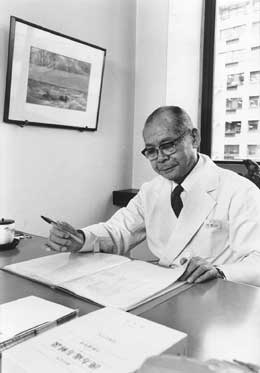
Dōmei Yakazu (1905-2002), was a Japanese physician born in Tokyo. Dōmei graduated from the Tokyo Medical College in 1930 and later studied Chinese medicine. In 1954, he conducted pharmacological research at Tokyo Medical University, obtaining his doctorate in 1959.
For over 50 years, Dōmei Yakazu, together with Keisetsu Ōtsuka, dedicated himself to the revival of Kampo (traditional Japanese medicine) in Japan, making significant contributions to the promotion and development of Eastern medicine. His notable works include; Explanation of Key Kampo Formulas from Later Generations, Explanation of the Clinical Applications of Kampo Formulas, Practical Kampo Diagnosis and Treatment, The Great Encyclopedia of Kampo Medicine, The Medical Encyclopedia of Kampo Diagnosis and Treatment, A Brief History of Kampo over the Past Century of the Meiji Era, and A Hundred Stories of Kampo Therapy.
 Eran Even, Ph.D., Dr. TCM.