5 Steps to ‘Shang Han’ treatment

I am currently reading a book titled ‘5 Steps to Shang Han treatment based on Pattern Identification”. It is a fascinating look at a very systematic approach to diagnosis and treatment using the formulary of Zhang Zhong Jing. The book is essentially centred around three very famous modern physicians, Hu Xi Shu (胡希恕), Liu Du Zhou (刘渡舟) and Fan Zhong Lin(范中林). The book includes numerous case studies by each one of them detailing their step-by-step process from diagnosis to treatment. The 5 step process is as follows;

I. TCM diagnosis (signs, symptoms, origin and constitution of patient)
II. List of disease mechanisms (6 channel differentiation, differentiation of principles, zang-fu, channels, etc…)
III. Comprehensive analysis (detailing process and location of disease)
IV. Formulas according to pattern
V. Medicinals according to pattern

I would like to offer a translation of one case from the book by Fan Zhong-Lin a prominent physician in the Fire God school of thought (火神派).

Mr.Yang, a 54 year old male from Cheng Du presented at the clinic.

Step 1: Chinese medical diagnosis
October, 1960. Over the last 2 years every day after breakfast, the patient felt very warm and feverish. His body temperature was always around 38 degrees celcius. He had relatively copious sweating that would go on for about 2 hours. Once the heat would decline, the sweating would stop and he would feel an aversion to cold. His daily symptoms included; dizziness, a bitter taste in the mouth, dry throat, chest and rib-side fullness as well as vexation and agitation felt in the chest. His tongue body was red and the coating was slightly yellow and greasy. Pulse was wiry-rapid. At his previous hospital examination the cause of his fevers were unknown and the medications administered had very little effect.

Step 2: List of disease mechanisms
The wiry pulse, alternating cold and heat, bitter taste in the mouth, dry throat, dizziness, chest and rib-side fullness and heart vexation are all obvious Shao-Yang channel signs and symptoms.

Step 3: Comprehensive Analysis

This is Shao-Yang channel disease heat effusion. Treatment methods should involve harmonizing and resolving the Shao-Yang.

Step 4: Formula according to pattern
Xiao Chai Hu Tang with additions and subtractions governs.
This condition has been going on for 2 years so as the Shang Han Lun says “When Chai Hu signs still exist, administer Xiao Chai Hu Tang”

Step 5: Medicinals according to pattern

Because the signs of heat effusion, sweating, thirst and a red tongue signify depressed heat, we remove Sheng Jiang (Rhizoma Zingiberis) and Da Zao (Fructus Jujubae) , and add Zhi Mu (Rhizoma Anemarrhenae) and Shi Gao (Gypsum Fibrosum) to clear heat.
In addition, because the chest and rib-side fullness were quite severe, this can signify that the pattern is interspersed with damp evils, therefore Mu Li (Concha Ostreae), Chen Pi (Pericarpium Citri reticulatae) and Fu Ling (Poria cocus) were added to percolate dampness, transform stasis and disperse bind.

Formula:

Chai Hu 24g
Huang Qin 10g
Fa Ban Xia 15g
Sha Shen 15g
Gan Cao 10g
Zhi Mu 15g
Shi Gao 30g
Mu Li 24g
Chen Pi 9g
Fu Ling 12g

After taking one package of the above formula, the heat declined and there was a reduction in most of his symptoms. After stopping the herbs he was instructed to rest and take care of himself for several days and afterwards he would recover. After much time the patient had come to visit Dr. Fan at his home and reported the condition had not recurred.

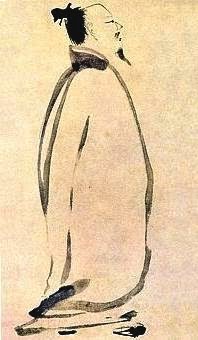
Thoughts on a Quiet Night

静夜思
李白
床前明月光,
疑是地上霜,
 举头望明月,
  低头思故乡。
Thoughts on a Quiet night
Li Bai
Before my bed the moon shines bright,
As frost upon the ground.
Raising my head I glare at the bright moon,
Lowering it I think of home.

Although this post is not Chinese medicine \’Per se\’, I have decided  to include my translation of a very short Poem by the very famous Tang dynasty poet Li Bai.
Li Bai is best known for the extravagant imagination and striking Taoist imagery in his poetry, as well as for his great love for liquor. He spent much of his life travelling, although in his case it was because his wealth allowed him to, rather than because his poverty forced him. He is said to have drowned in the Yangtze River, having fallen from his boat while drunkenly trying to embrace the reflection of the moon.

Can Major Buplureum Decoction treat panting & wheezing?

Occasionally when reading books written by clinical masters of our time regarding the usage of Jing Fang 经方 (classic formulas) we stumble upon what seems at first to be bizarre yet intriguing ways of using these formulas that in no way reflect any of the usages we were taught in school.  One in particular that comes to mind is Hu Xi-Shu’s usage of Major Buplureum Decoction (Da Chai Hu Tang) for wheezing and panting (what we may call modern day asthma).  In his ‘Popular Lectures on Cold Damage’ (伤寒论通俗讲话), Dr Hu explains that many patients presenting with wheezing and/or panting manifest a Shao-Yang, Yang-Ming combination disease.  Therefore, the cardinal Shang Han Lun formula Da Chai Hu Tang (Major Buplureum Decoction) may be used with quite astonishing results.   Many of Dr. Hu’s students would often ask him why when treating wheezing he wouldn’t just use Ma Huang (Radix Ephedra)?  He would simply state that unless the case presenting was a Ma Huang pattern, its use was not warranted.  In the Shang Han Lun (On Cold damage) it states that “In wheezing with chest fullness, Ma Huang is appropriate, but in wheezing with abdominal fullness, Ma Huang should not be used”.

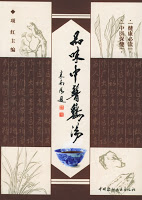
A taste of Chinese medical chicken soup, Xiang Hong (项红)

This is a translation of a case study from a great book titled ‘A Taste of Chinese Medical Chicken Soup’ written by Dr. Xiang Hong in Beijing. This is a case study book which presents several of her own cases as well as numerous by prominent modern Beijing physicians (老医). The case I will be translating is one by professor Fan Zheng-Lun (樊正伦), a great physician who I had the pleasure of observing while in Beijing.

8989278-1_o.jpg 

Pre-Menstrual headaches and heart vexation (treated by) calming the liver and clearing heat with the happy free and easy wanderer.

On July 15, 2000 it was professor Fan Zheng-Lun’s clinical day at the ‘Ping Xin Tang clinic’. A 47 year old female patient was presenting her case. Recently her menstrual cycles were arriving early and much heavier than ever with numerous large blood clots. She experienced headaches and distension in her head prior to her cycles along with heart vexation and a sore and achy low back. In addition she was seen in the Gynecology department where she was diagnosed with a uterine myoma and since menopause was approaching, surgery was unnecessary. She felt warm quite easily and found herself quite irritable prior to the cycle.
Professor Fan simultaneously felt her pulse and inspected her tongue. Only the tongues margins were red and there was a thin white coating. The tongue body was swollen with slight teeth marks on the margins. The left bar (guan) position of the pulse was wiry and the cubit (chi) weak. The right pulse had an overall slippery wiry manifestation.

Professor Fan believed this to be a case of Liver depression, Spleen vacuity with a Chong and Ren disharmony causing headaches. Therefore the treatment method would involve clearing the Liver, strengthening the Spleen and regulating the Ren and Chong vessels.
The formula administered was as follows:

(Mu) Dan Pi 9g
Chao Zhi Zi 6g
Chao Bai Zhu 9g
Dang Gui 9g
Fu Ling 9g
Cu Chai Hu 9g
Zhi Xiang Fu 9g
Gui Zhi 6g
Bai Zhi 6g
Zhi Gan Cao 6g
Man Jing Zi 9g
Chuan Xiong 6g
Tao Ren 9g
Bai Shao 12g
Chao Du Zhong 12g

7 Packages were given to be decocted in water.

The patient was explained that the basis of treatment was to regulate the cycle and therefore the formula should be taken one week prior to the start of her cycle.
A month later the patient said that after taking the weeks’ worth of herbs, her headaches and backache had clearly decreased, the menses was not as heavy and the clots were smaller. The patient was instructed to take these herbs again one week prior to her cycle in order to consolidate treatment. According to this method, taking these herbs for several months should have a positive effect on the uterine myoma as well.

This formula is a modified version of “Dan Zhi Xiao Yao San” (Moutan and Gardenia Free and Easy Wanderer powder) with “Gui Zhi Fu Ling Wan” (Cinnamon and Poria pills).
Dan Zhi Xiao Yao San is Xiao Yao San (Dang Gui, Bai Shao, Chai Hu, Huang Qin (1), Chao Bai Zhu, Zhi Gan Cao, Sheng Jiang, Bo He) with Dan Pi and Zhi Zi.
Xiao Yao San is from the ‘Imperial Grace Formulary of the Tai Ping Era’ (He Ji Ju Fang) and is a great Liver coursing, depression resolving, Spleen strengthening, blood nourishing formula. Adding Dan Pi and Zhi Zi increases its ability to clear Liver heat.
This patient had pre-menstrual vexation and headaches which are a manifestation of Liver channel depressive heat, therefore this formula was chosen.
Herbs are selected according to the pattern and re-analyzed if there is no reduction (of symptoms).

When seeing patients with uterine myomas the use of Gui Zhi Fu Ling Wan can be quite efficacious. Gui Zhi Fu Ling Wan is originally found in the 20th chapter of the \’Jin Gui Yao Lue\’ (Prescriptions from the Golden Cabinet) section on Diseases, Pulses, Patterns and Treatments of Pregnancy related (Obstetric) diseases. Gui Zhi Fu Ling Wan is a very famous and effective Gynecological formula.
Chinese medicine believes that concretions or abdominal masses are accumulations and gatherings in the abdomen becoming clots or accumulated blood creating a very typical heavy menstrual cycle with clots.
Within the formula, Gui Zhi warms and frees the vessels; Dan Pi and Tao Ren attack concretions and accumulations and break static blood. Using Fu Ling disinhibits dampness and Bai shao harmonizes the Ying (nutritive). Altogether these herbs achieve the function of breaking stasis and generating new (blood).

Generally headaches occurring prior to the menses are caused by Liver heat, while headaches occurring after the cycle are governed by blood vacuity. Clinical practice should be based on the system of treatment according to pattern identification.

(1) Huang Qin is not mentioned in the original formula. My initial assumption is that it is merely a typo, but was included in the translation in order to stay true to Dr. Xiang’s book.

Hu Xi-Shu (胡希恕) Case #3- Duodenal Ulcer (十二指肠溃疡)

Hu Xi-Shu, Shang Han Lun Tong Su Jiang Hua

 Bai, Male, 32 years old;

Initial diagnosis was on December 21, 1965: Patient presented with epigastric pain for over a year which has started to increase in severity over the last month. Pain is present prior to and after meals. Accompanying symptoms included belching, vomiting, epigastric focal distension, excessive worry and occasional abdominal fullness and distension. Tongue coating was white and his pulse was wiry and thin. Through a Barium meal investigation he was diagnosed with a duodenal ulcer and gastroptosis.
He was prescribed Inula and Hematite Decoction (Xuan Fu Dai Zhe Shi Tang) combined with Poria Decoction (Fu Ling Yin) and Fritillary bulb and cuttlebone powder (Wu Bei San):

Xuan Fu Hua 3 qian
Dang Shen 3 qian
Sheng Jiang 5 qian
Dai Zhe Shi 3 qian
Zhi Gan Cao 2 qian
Ban Xia 5 qian
Da Zao 4 pcs
Fu Ling 4 qian
Bai Zhu 3 qian
Chen Pi 3 qian
Zhi Ke 3 qian
Wu Zei Gu 3 qian
Chuan Bei 2 qian

Results: After taking three packages of the above formula his epigastric pain, belching, and vomiting decreased. After six packages his epigastric pain resolved and has had no obvious symptoms to this day.

Hu Xi Shu’s discussion and elucidation on cold damage 胡希恕, 越辩越明释伤寒

This is an excerpt from one of Dr. Hu’s books. It is an elucidation of clause 100 of the Shang Han Lun (On Cold Damage)

In cold damage (1), when the Yang pulse is choppy(2) and the Yin pulse is wiry(3), there should be acute abdominal pain (4) . First administer Xiao Jian Zhong Tang (5) . If there is no reduction (of symptoms), Xiao Chai Hu Tang governs (6).

Interpretation:
A pulse that is floating and choppy, is what is meant by the ‘Yang pulse is floating; at the deep level the pulse is wiry, which is written as ‘the Yin pulse is wiry’. A choppy pulse governs scanty blood and wiry governs cold exuberance. What we have here is cold damage with a floating choppy pulse and a deep wiry pulse, which signifies external blood vacuity and cold exuberance in the interior. According to these laws we should expect to see acute abdominal pain therefore Xiao Jian Zhong Tang is given.
After taking the decoction there is still no reduction of symptoms which means that the condition has yet to be resolved and because Shao Yang has the same pulse (wiry) this is considered a Tai-Yang Shao-Yang combination disease with interior cold. Xiao Jian Zhong Tang only partially treats this condition, therefore we administer Xiao Chai Hu Tang in order to resolve Shao Yang evils, and only then can we offer a cure.

Notes:
Acute abdominal pain originally belongs to both a Xiao Jian Zhong Tang pattern and to a Xiao Chai Hu Tang pattern. Ordinarily Shao yang harbors internal vacuity and central qi insufficiency and although there are Xiao Chai Hu Tang signs, we must first fortify the centre. First Xiao Jian (Zhong Tang), afterwards Chai Hu (Tang). In vacuity treating the interior first is a fixed concept, and rather than treating with the first rule of Xiao Jian Zhong Tang with no effect, it is treated with Xiao Chai Hu Tang. If in abdominal pain the pulse is wiry, this is only interior vacuity and Xiao Jian Zhong Tang can be administered without any relation to Shao Yang.

Xiao Jian Zhong Tang  小建中汤

Gui Zhi (remove skin) 3 liang
Shao Yao 6 liang
Sheng Jiang (cut) 3 liang
Da Zao (broken) 12 pieces
Gan Cao (honey fried) 2 liang
Jiao Yi 1 sheng

For the above six ingredients, use seven sheng of water. Boil until three remain, and remove the dregs. Add the malt sugar and put back on low heat until it melts. Take one sheng warm three times daily. People who vomit easily should not take this decoction due to its sweetness.

Formula interpretation:
The first five ingredients of this formula make up Gui Zhi Jia Shao Yao Tang (Tai-Yin, clause 284), which treats Tai-Yang disease abdominal fullness and periodic pain found after purgation. Adding Yi Tang which is warm and sweet makes it more supplementing. Shao Yao is bitter, sour and slightly cold and by adding the warmth of Yi Tang we have mild supplementation. This is Xiao Jian Zhong Tang.

Jiao Yi is sweet, warm, enriching, nourishing and strengthening. It relaxes tension, strengthens the Spleen and Stomach, boosts Qi and supplements vacuity cold. It governs acute abdominal pain and rumbling intestines (borborygmus). The nature and flavor of both Jiao Yi and Gan Cao are quite similar and are used for Yin, Yang, Exterior, Interior, Repletion and Vacuity, but are especially indicated in interior vacuity. They are unsuitable in abdominal pain due to excessive gastric acid.
Shao Yao is bitter, slightly cold and has the function of mild precipitation.
Jiao Yi and Bai Shao effectively treat abdominal pain, but differentiation must be made between cold, heat, vacuity and repletion. The abdominal pain associated with intestinal tuberculosis offers an opportunity to use this combination.

Notes:
Abdominal pain is found in both vacuity and repletion. Pain on palpation that is not severe even with stronger pressure belongs to Qi pain. Pain on pressure with hardness that refuses pressure is seen in accumulations and gatherings. Qi type pain should not be purged.

1. ‘Cold damage’ signifies Tai-Yang cold damage where the exterior has yet to be resolved. We do know that Xiao Jian Zhong Tang treats the abdominal pain and Xiao Chai hu Tang treats the disease if there is no reduction or lessening of symptoms. This clause is originally a Tai-Yang and Shao-Yang combination disease with interior vacuity cold.
2. ‘Yang pulse is choppy’ means the pulse is felt at a superficial level, plus liquids and blood are not filling and nourishing the exterior and the stomach is weak.
3. ‘Yin pulse is wiry’ means the pulse has a wiry quality at the deep level. A wiry pulse is thin and with strength
4. Acute pain and hyper-tonicity with pain. By the yang pulse being choppy and the yin pulse wiry, we are able to see that there is an insufficiency of liquids and blood and cold exuberance in the interior, so there should be hypertonic pain in the abdomen.
5. Xiao Jian Zhong Tang is a modified version of Gui Zhi Tang. Both these formulas can resolve the exterior, enrich and nourish the blood vessels and through its warm and sweet nature expel cold and stop pain. We can deliberate the meaning of ‘first administer’. In Tai-Yang Shao-Yang combination disease with the addition of vacuity cold in the interior, we should first save the interior and then resolve the exterior or half exterior, half interior aspect. This is the essence and spirit of clauses 93 and 94.
6. No reduction of symptoms, namely means that after taking Xiao Jian Zhong Tang the abdominal pain is not completely gone. Now because both Xiao Jian Zhong Tang and Xiao Chai Hu Tang symptoms exist, we first treat the interior and afterwards the exterior. Since Xiao Jian zhong Tang only treated half the condition we follow it with Xiao Chai Hu Tang to effect a complete resolution of symptoms

Hu Xi Shu (胡希恕) Case #2-Cough

38 year old female first seen on Feb 12 1966. Patient had suffered with a dry cough and itchy throat for over a hu xi-shu.jpgmonth. She had taken a modified version of Zhi Sou San (Stop Cough Powder), and modified versions of Sang Xing Tang (Mulberry Leaf & Apricot Kernel Decoction) and Mai Men Dong Tang (Ophiopogonis Decoction). The cough not only failed to improve but actually got worse. Currently she presents with a dry cough, itchy throat, dry mouth with no desire to drink, belching, chest oppression, loose bowel movements occurring once or twice daily, a thick slimy tongue coating and a slippery thin pulse.
Prescription given was Ling Gan Wu Wei Jiang Xin Xia Tang (Poria, Licorice, Schisandra, Ginger, Asarum and Pinellia Decoction) with additions and subtractions:

Fu Ling 4qian
Xi Xin 2 qian
Wu Wei Zi 4 qian
Ban Xia 5 qian
Zhi Gan Cao 2 qian
Chen Pi 5 qian
Sheng Jiang 3 qian
Xing Ren 3 qian
Ku Jie Geng 3 qian
Zhi Pi Pa Ye 3 qian

Results: After taking one package of the above formula, the cough had decreased. After three packages the cough stopped.

The above patient suffered from a dry cough, itchy throat and dry mouth commonly seen in Lung heat, Liver fire or yin vacuity. In addition this patient also had no desire to drink, belching, chest oppression, sloppy stools, a thick slimy tongue coating and a slippery pulse. All these signify a phlegm-rheum pattern. The dry cough is from phlegm-rheum invading the lung and impaired diffusion and downbearing of the lung. The dry cough and itchy throat are a result of stagnation and obstruction to fluids which are unable to bear upwards. Therefore when treating this type of dry cough, using bitter cold, heat clearing herbs or sweet cold Yin enriching herbs will only worsen the stagnation and obstruction of fluids and cause phlegm-rheum to harass the upper (burner) and delay recovery. Because phlegm was treated by restraint and the formula was chosen on the basis of the pattern, the use of only three packages were needed for recovery.


Hu Xi-Shu (胡希恕)Case #1-Cough

Case #1 Hu Xi-Shu, Shang Han Lun Tong Su Jiang Hua (伤寒论通俗讲话)
Huang, Female, 38 years old

Initial diagnosis was on Feb 12, 1966: Patient presented with a cough combined with expectoration of white phlegm, itchy throat, chest fullness, a dry throat with no desire for fluids and bilateral rib side distension. She has already taken several packages of herbal formulas to no avail. Her tongue coating was thick and slimy, and her pulse slippery-thin.

This pattern belongs to phlegm-rheum harassing the upper (burner), and impaired depurative downbearing of the lungs. This was treated by warm transformation and downbearing counterflow with a modified version of Ban Xia Hou Po Tang.

Ban Xia 4 qian
Hou Po 3 qian
Fu Ling 4 qian
Su Zi 3 qian
Ju Pi 5 qian
Xing Ren 3 qian
Jie Geng 3 qian
Sheng Jiang 3 qian

Results: After taking only 2 packages of the above herbs, the cough had stopped.

Ban Xia Hou Po Tang is originally from the Jin Gui Yao Lue (Essentials from the golden cabinet) in the miscellaneous gynaecological diseases section. Originally used for “female patients with the sensation of fried meat in the back of the throat”
Dr. Hu believed this formula to be Xiao Ban Xia Jia Fu Ling Tang with the additions of Hou Po and Su Ye. It is used in phlegm-rheum qi bind manifesting with chest fullness, throat blockage and cough. It warms and transforms phlegm-rheum, downbears counterflow and regulates Qi. The patient above was manifesting with a phlegm-rheum cough, therefore the use of this formula offered a quick resolution.
The original formula contains (Zi) Su Ye, but Dr. Hu prefers to use (Zi) Su Zi. If there are obvious exterior signs present, then (Zi) Su Ye may be added, and you may also add either Gui Zhi Tang or Ma Huang Tang. If there are obvious heat signs then Sheng Shi Gao may be added. If there is an enduring cough due to cold rheum, without any obvious exterior signs, then combine with Ling Gan Wu Wei Jiang Xin Xia Tang (Poria, Licorice, Schisandra, Ginger, Asarum, and Pinellia Decoction).

The Concept of ‘Survival with Tumors’ in the Treatment of Cancer

By DaiHan Zhou
Guangzhou University of Chinese Medicine, Guangzhou, Guangdong, China, 510405

Translated by Eran Even

Originally published in the International Journal of Integrative Oncology, Volume 3 No. 1, 2009

Cancer comprises more than 100 kinds of diseases, seriously endangers human health and can affect almost every aspect of the human body.
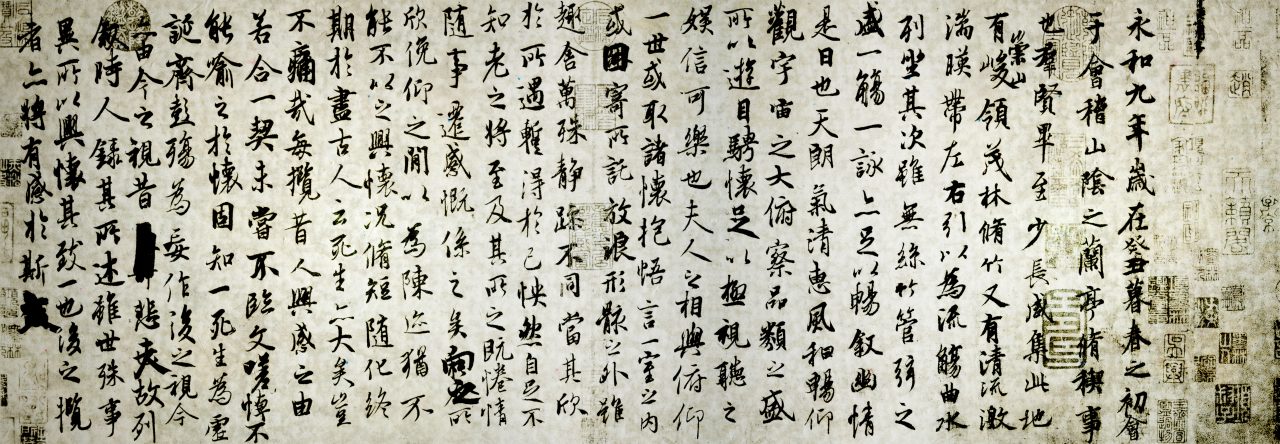
Traditional Chinese medicine (TCM) has a long history of identifying and treating cancer. As early as the Shang dynasty (1600 BC-1046 BC), there were records of “tumor diseases” written in oracles. The Classic of Mountains and Rivers, a book compiled in the Warring States Period (475 BC-221 BC), records diseases related to tumors, such as malignant boils, goiters, carbuncles, dysphagia, etc. In a Jin Dynasty calligraphy work, composed in 7 A.D. there is mention of the surgical removal of tumors. In the Book of Wei Ji and Prescriptions of Renzhai Zhizhi, both composed in the Song dynasty (960-1279), we see for the first time the Chinese character for cancer. There are numerous records of experiences in describing and treating tumors recorded in ancient TCM books, including abdominal masses,dysphagia and various other tumors.
Due to the limits of science and technology at that time, most of those records were usually quite literal in describing localized symptoms of cancer or tumors outside of the body, for example:
‘hard as a rock’, ‘ulcers unable to heal’ and even infecting the internal organs.

It wasn’t until modern times that TCM oncology developed an independent clinical discipline.
On the basis of his own experience and from a long clinical practice, Prof. Zhou emphasizes that the pathogenesis of cancer from the TCM oncology perspective, is as follows: “Cancer exists in or issues forth from the internal organs, and this toxicity harbors deep in the body”. Cancer existing or issuing from the internal organs means that, afflictions to the internal organs manifest with external localized changes. Toxicity harboring deep in the body simply specifies that these external manifestations are the result of internal changes.
Malignant tumors are a form of chronic disease, characterized by deficiency as well as excess. During long-term treatment, there may be a stage of so-called ‘survival with tumor’, if the pathogenic factor (cancer) cannot conquer the Vital Qi. During this stage, the focus of TCM treatment is based on pattern identification with the intent of relieving symptoms, improving the quality of life and prolonging survival
time. These are the characteristics and benefits of TCM treatment in cancer.

With the interpretation of tumor genomics and a profound understanding of their pathological changes, in 2006 the World Health Organization (WHO) began to define malignant tumors as a manageable disease, resulting in a gradual acceptance by the general public of tumors simply being a form of chronic disease.
Certain chronic non-contagious diseases such as hypertension and diabetes are characterized as so-called “survival with disease” conditions which to some extent is a similar concept to ‘survival with tumors’ in TCM oncology.
Modern medicine used to take ‘survival without tumors’ as the primary objective, which would often result in so-called ‘clinical over-treatment’, and even to the point where chemotherapy would not cease until the patient died. Nowadays, as most patients diagnosed with advanced cancer are unable to be cured, the treatment focus has changed, with the aim being the improvement of symptoms and extension of survival time and not only on tumor response. This shift of strategy in the treatment of advanced cancer is in fact, consistent with the concept of ‘survival with tumors’.
The TCM approach to the treatment of tumors is a form of holistic therapy based on pattern identification and disease differentiation and is a method of whole body, individualized treatment.
The use of Chinese herbal medicine can not only improve symptoms and control tumors, but can also reduce the side effects from conventional therapies, radiation and chemotherapy, when used in combination. In addition, Chinese herbal medicine can be used to prolong survival rates by reducing the chance of relapse and metastasis. Due to these above factors, TCM should be utilized in the early stages of cancer, and used throughout the entire course of treatment, and not just as a last resort for advanced cancer patients.
Popularizing the concept of, ‘survival with tumors’ and giving up the, ‘survival without tumor’ ideology is useful in avoiding overtreatment. Increasing the role of traditional Chinese medicine in a multi-disciplinary setting, will contribute to increasing the therapeutic efficacy of cancer treatments, and assist patients with advanced cancer in improving quality of life and extending survival rates, specifically, ‘survival with tumors’.
This is the Chinese method of treating cancer, which is characteristic of
traditional Chinese medicine.

A review on the objective treatment of Cancer with Acupuncture and Chinese Herbal Medicine – Part 1

A review on the objective treatment of Cancer with Acupuncture and Chinese Herbal Medicine – Part 1
By Dr. Kathryn Tian Dr. TCM, M.Sc
Translated by Dr Eran Even Dr. TCM

I recently attended a lecture where the discussion was about the recent rise in cancer rates associated with the grave state of environmental pollution. Consequently more and more people were turning to health food products to strengthen their bodies.

If we do get cancer, what really helps? Surgery is damaging and invasive, chemotherapy is toxic.

A cancer cell growing to the size of an egg could take 10 to 15 years to develop!
“Don’t worry, just look after your body” they said.

“Everybody knows that health food products are protective and strengthening, are a means of preventing illness and can be used for treating certain diseases”, however, if a person gets cancer how can you not let them receive standard medical treatment immediately? The patients biggest concern is living another day.
Having an objective place to evaluate these products as a viable treatment option will ensure that patients are receiving the greatest benefit, which of course is the most basic objective of the physician.

Since coming to Vancouver over 8 years ago, I’ve had the opportunity to see more and more cancer patients. I would like to take this opportunity to share a little of my experience.

Is there a secret formula that can effectively treat cancer?
Can this ‘secret’ formula be used in conjunction with chemotherapy, radiation and surgery?

In Beijing, due to the integrated use of Western and Chinese Medicine in the treatment of cancer, the opportunity to see cancer patients is quite high for the Chinese medical physician.
The majority of patients coming to see me here in Vancouver are not without their suspicions. The major reason for this, is that most patient’s oncologists are unaware of, or unclear on the benefits of Chinese Medicine, and do not allow them to take Chinese herbs, stating that they would not be responsible for treatment outcomes. When specialists say this to their patients very sternly, it instills a greater sense of fear in an already anxious and worried person.
There are some patients who come to me and say very straightforwardly, “I know that we Chinese use integrated methods to treat cancer, even my family knows this, but when my Doctor says this to me I get so scared.”
There are some patients who will come and see me with great hope. They’ll say, “Dr Tian, can you use your secret formula to treat me?” To a suspicious patient I might say, “The best method of treating cancer is using an integrated approach, which depends on your personal decision, as it is you alone that must grasp the end of your life”. To patients looking for a secret formula I would say that determining treatment based on pattern identification is the secret formula. You must not focus on the cancer but on your life.
I remember in Beijing doing clinical rounds with my mentor Dr.Sun Gui Zhi, and noticing that there was never anything really special about the herbal formulas she used. I wondered how could these uncomplicated formulas be extending the lives of all these late stage cancer patients? This one time I was unable to hold back any longer, so I asked. Dr. Sun said treating cancer is a lengthy battle. “You must always strengthen the right Qi. Beat it by focusing on living, and then how can it grab you? You see that although many of my patients are in late stages of cancer their quality of lives are good. The trick is to find the relative strength between the right Qi and the pathogenic factors. Grasping this well will ensure that the effectiveness of treatment will be greater and greater. Being unable to grasp this concept will only result in loss”.
So I try to learn these words by heart and put in great effort to truly grasp them.
I really have some great patients. There are two aspects to these patients. The first being the treatment results and the second being their desire to grasp onto their lives. I have this one patient with breast cancer that has metastasized to the lung. She is in a very advanced stage. She is doing chemotherapy, taking Chinese herbs and taking various health food products. Every time I see her I can’t believe my eyes. She looks beautiful and lustrous. I always say to her that I can’t believe she is in an advanced stage, and she says that everybody always says that. Even the nurse that was administering her injection had to ask if she was a patient, giving her more and more faith that she can beat cancer. “If things continue this way I could travel, cook delicious food for my family and make myself up even more beautiful. I’m so happy, I’m great”. From the bottom of my heart I truly admired her courage. I remember those days when she had just discovered that her cancer had spread to her lungs and she came to see me. She felt as if she would collapse, as her doctor told her she wouldn’t live longer than 6 months. I remember telling her that she must go on living. Treatments are being discovered and changing daily. She must keep on living! Immediately I made her a Chinese herbal formula to course and rectify Liver Qi, because in Chinese Medicine it is said that the Liver channel passes through the breasts, in addition, coursing and rectifying Liver Qi has the effect of calming the spirit and increasing immune function to directly resist cancer. She was very obedient. She drank her herbs and was very relaxed. To date, 3 years have passed and she is doing great. How could I not be ecstatic? In addition I would like to mention her husband. He was always so calm and so supportive. I really believe that family support is one of the most important aspects of effective cancer treatment.
Here I have an opposite case. Once while working at the Guang An Men hospital in Beijing in the oncology department, I was responsible for an elderly man with late stage liver cancer. Although he had jaundice and ascites, with his integrative therapy, his spirit and body were kept strong. He was able to look after himself. But this one day his son came to the hospital and didn’t know what was wrong with his father and ended up quarrelling with him. The next day I went to see this man and the nurse told me that he had already passed away. Although his chart said that he had died from liver cancer, we all believed that he died from a loss of hope and the will to live. Here I had also seen a late stage cancer patient who was taking Chinese herbs with good effect, but her son said to me that the oncologist said she could not be saved and that we should give up. It is a major blow when the family begins to give up. At that point what’s the use of having a doctor? To this date I can’t forget the look of doubt in that woman’s sons’ eyes. I thought to myself what if I was to say that your mother was in late stage cancer and there was no hope, you would not think I am a liar. However, I can’t say this, the reason being experience. Another day while doing a night shift in the oncology department, a patient had suddenly started to crash. He had late stage prostate cancer that had already spread to the bones and brain. He was sweating profusely and his blood pressure was dropping. His wife said to give up as he was in severe pain, but she was unwilling to sign a do not resuscitate form. We had no choice but to rescue him. We immediately administered a Ginseng and Aconite injection. The sweating stopped and his blood pressure returned to normal. The next morning during rounds we saw the patient who was unable to speak hold up both his hands to offer us thanks. I left the ward with tears in my eyes. His wife as well as all of us doctors didn’t expect that he had so much hope and reluctance to leave his life. From then on I knew that I would never tell a patient there is no hope.
The breast cancer patient mentioned above did not receive any additional treatments after conventional treatments. Two years later the cancer had returned and metastasized to the lungs.

I have another patient that while undertaking chemotherapy took Chinese herbs and to date there has been no relapse or metastasis. The following is her case history.

Female, 50 years old. In April 2004 she underwent a full mastectomy and in May began chemotherapy. Immediately following her first chemotherapy treatment she experienced a dry mouth and throat, which were worse at night. Concurrently she experienced hair loss, her tongue was dull-dark and her pulse was wiry. The pattern identification was damage to both Qi and Yin and blood-humor insufficiency. The formula administered contained: Yu Zhu, Sha Shen, Mai Dong, Gou Qi Zi, Fu Ling, Bai Zhu, Bai Shao, Chen Pi. After taking 5 days worth of the formula, the dryness in her mouth and throat had improved significantly, however the hair loss was still present. In June she undertook her second round of chemotherapy treatments. Once again she experienced dryness of her throat, with difficulty swallowing and extreme fatigue. She experienced very little desire to eat, her tongue body was swollen and pale and the tongue coating was thick and white. The pattern identification was major damage to the central Qi and internal generation of phlegm turbidity. Chinese Medicine holds that the Spleen and Stomach are the source for the generation and transformation of Qi and Blood. It is of upmost importance that cancer patients avoid damaging their Spleen and Stomach. It was urgent to strengthen her Spleen, boost Qi as well as enrich and nourish true Yin with: Mu Xiang, Sha Ren, Chen Pi, Fa Xia, Tai Zi Shen, Fu Ling, Huang Jing and Bai Shao. After taking this formula, her appetite increased, her energy had substantially improved, but the dryness in her throat was still present. The patient had the sensation of a hard substance obstructing her throat. The plan was to administer a formula to rectify Qi and transform phlegm combined with food therapy suitable to this patient with: Autumn pears, lotus root, milk, fresh ginger root and chives blended into juice. She was to drink one cup a day. After drinking this preparation the dryness in her throat was gone and her appetite had improved even more. In July the patient underwent her third round of chemotherapy. Due to toxic nature of the chemo drugs the patient experienced side effects of frequent belching, a decrease in energy, nausea, a bland-tasteless feeling in the mouth and tightness in her throat, all intensifying at night. Her tongue was pale and tender, the coating thick and slimy and her pulse was wiry and slippery especially on the right chi position. Her white blood cell count had dropped to 0.8. This is a very dangerous situation signaling a very vacuous or deficient right Qi and exuberance of pathogenic factors. I gave her three packages of one of my own formulations named ‘Chemotherapy Blood increasing decoction’. After taking this formula her white blood cell count increased to 4.5, and she was able to smoothly finish her round of chemo. On a recent follow up with this patient, there has been no relapse of the cancer and she is living a normal life.

In short, I believe that the most effective means of treating cancer is a comprehensive approach including rationality, specialized study and art. These methods should include Western Medical treatments, Chinese Medicine, health food products, food therapy and psychological treatments. We hope that one day all patients can say, “I got cancer, so what? I’m good. I’m happy!”