Original Work by Keisetsu Ōtsuka, with translation [from Japanese to Chinese] and commentary by Wang Ningyuan: Kampo and Abdominal Diagnosis
Primary Gangrene of the Left Big Toe
The patient is a 52-year-old male with a good complexion and obesity.
Two years prior, he began experiencing pain in the left big toe, which was diagnosed as primary gangrene. At the same time, there was swelling and hardness near the left lower abdomen close to the iliac fossa, accompanied by tenderness. After being examined by a renowned surgeon, exploratory laparotomy was performed but no abnormal lesions were found.
Initial Consultation: November 7, 1925
Pulse: Left side was deep and choppy; right side was deep and small.
Blood Pressure: 112/70 mmHg.
Symptoms: The left dorsal artery of the foot was undetectable. The left big toe appeared purplish, with blackened toenails. The degree of pain fluctuated and worsened after exertion, significantly impacting sleep due to the pain.
Abdominal Diagnosis
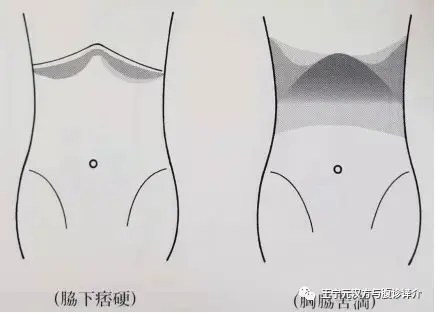
On the right side, there was fullness and discomfort in the chest and hypochondrium. In the lower left abdomen, at the site of the previous surgery, there was resistance and tenderness.
The patient had bowel movements once a day, but they were not smooth.
I considered the resistance and tenderness in the left lower abdomen to be an abdominal sign of blood stasis. The resistance and tenderness, which were previously suspected by the surgeon to indicate a tumor, may also have been due to blood stasis.
Based on the signs of right-sided chest and hypochondriac fullness and the abdominal sign of blood stasis, I prescribed a combination of Da Chai Hu Tang and Tao He Cheng Qi Tang.
Course of Treatment
One week later: No significant changes.
Ten days later: The affected foot felt lighter, and the pain lessened.
After about two months: The color of the toenails improved, and the patient reported almost no pain. However, the dorsal artery of the foot remained undetectable.
After about ten months: The affected toe started showing a reddish color, the toenails turned pink, and although weak, the pulse of the dorsal artery became palpable.
Later, the patient developed swelling in the right knee joint and was treated with Yue Bi Jia Zhu Tang for about three weeks, which resolved the condition.
It has now been eight years, and the gangrene has not recurred.
— From Thirty Years of Kampo Clinical Practice, authored by Keisetsu Ōtsuka, translated by Wang Ningyuan
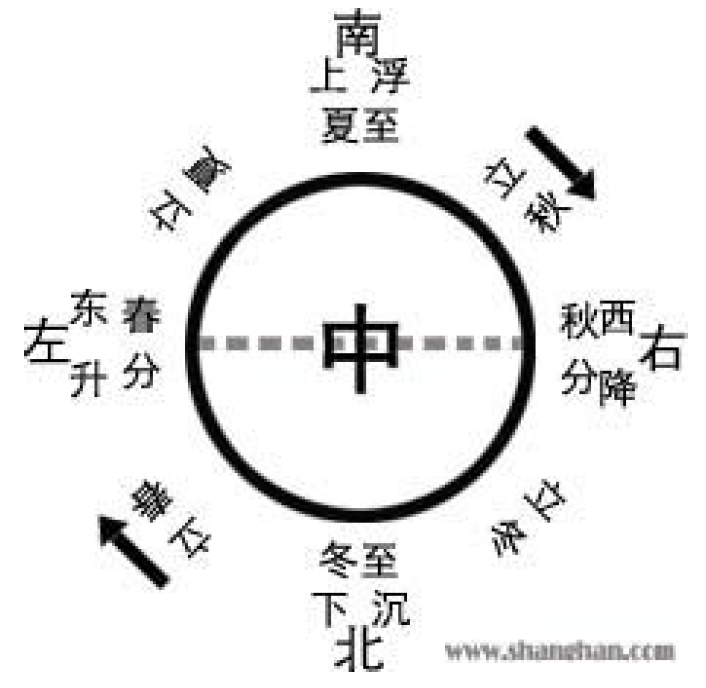
To learn Chinese medicine, one must first understand the terminology of the twelve channels. To understand these terms, one must first grasp the principles behind yin and yang, the five phases, and the six qi [atmospheric influences]. To understand these, one must first become familiar with the circular movement of the heat that reaches the earth’s surface from the sun during the twenty-four solar terms. This movement encompasses the directions of right, bottom, left, top, and center; descending, sinking, ascending, and floating; autumn, winter, spring, and summer; and northwest, southeast, and other compass points. In the diagram [shown below], the dashed line represents the earth’s surface; below it is below ground, and above it is above ground.
The upper part of the circle in the diagram represents the clouds, while the center represents the center of the circular atmospheric movement of a living environment. By observing from this center, one can see the universal scope of a living being’s habitat. The “center” character in the diagram signifies the reader. “Descending” refers to the heat that the sun emits to the ground during summer, which sinks into the earth. “Sinking” means this heat descends into the water beneath the earth. “Ascending” refers to the heat rising from below the earth to above the surface. “Floating” refers to this heat, which rises above the ground and coexists with the summer sun’s heat. “Center” represents the middle position among descending, sinking, ascending, and floating.
The point of descent begins at the start of autumn, the point of sinking begins at the start of winter, the point of ascent begins at the start of spring, and the point of floating begins at the start of summer. Before the autumn equinox, there is more heat above the ground than below. At the autumn equinox, the heat is balanced between above and below the ground. Before the spring equinox, there is more heat below the ground than above. At the spring equinox, the heat is again balanced between above and below. The winter solstice marks the peak of heat that has descended beneath the earth from the start of autumn. The summer solstice marks the peak of heat that has risen above the ground from the start of spring. When descending reaches its peak, ascending begins, and vice versa. This continuous rise and fall generate life force and are natural phenomena of the atmospheric circular movement.
In plants, leaves fall in autumn, indicating the descent of heat within the plant. Roots grow in winter, indicating the sinking of heat within the plant. Budding in spring shows the rising of heat, while thriving growth in summer shows the floating of heat. Observing the descending, sinking, ascending, and floating of heat in plants makes this concept easy to understand.
Discussing the descending, sinking, ascending, and floating of heat in plants is akin to discussing the heat’s behaviour in the atmosphere and, ultimately, within the human body. The dashed line in the diagram represents the ground in the universe and corresponds to the space between the chest and navel in the human body, specifically two inches above the navel. Heat naturally ascends and floats and does not descend or sink by itself. The force of autumn’s energy gathering leads to the descent and sinking of heat. Heat descending marks the beginning of life for living beings; if heat does not descend, it can lead to death. More details on the autumn energy gathering will be elaborated on in subsequent sections.
In the place where a living being resides, the sunlight that reaches and warms the ground represents yang. The period when this light and heat have passed and the new light has not yet arrived is called yin (as depicted by Fuxi in the trigrams: “—” for the yang trigram and “– –“ for the yin trigram, symbolizing this very principle). Yang naturally rises and expands, while yin naturally descends and compresses. The movement of yang is upward, while the movement of yin is downward. When yin and yang interact, they create a force of attraction, following one another and forming a circular movement.
The nature of Yang is movement, while the nature of yin is stillness. Stillness leads to sinking, while movement leads to floating.
The transition from stillness to movement results in rising, and the transition from movement to stillness results in descending. The cycle of ascending, floating, descending, and sinking completes a round of movement, which generates centre qi. This centre qi is [the essence] of life in living beings. This is the origin of the circular movement of the atmosphere and the fundamental process through which individual beings are formed. Humans are endowed with life through the circular movement of yin and yang in the atmosphere. The human body is an inheritance of this cosmic individual creation.
By first understanding the yin and yang of the cosmic atmosphere, one can naturally understand yin and yang within the human body. The Five phases (Wood, Fire, Earth, Metal, Water) represent the five types of material present within the entire cycle of ascending, floating, descending, and sinking of yin and yang energies. [The Chinese term] xing (行) [translated as phases] implies movement.
All living beings possess both yin and yang natures because the atmosphere contains these forces. This explains the origin of the terms yin and yang in Chinese medicine. The concept of creation (造化) refers to the universal atmospheric movement that nurtures living beings and can also be seen as another name for the cosmos itself.
The atmospheric conditions throughout the year align with the Five Phases. During summer, the atmosphere corresponds to fire, as the heat from the sun reaching the ground is at its peak. This heat is associated with fire. Since heat rises, the summer atmosphere is characterized by heat that floats upward, thus being classified as fire qi. In summer, the sun is at its strongest in the south, which is why the south is associated with fire qi. The noontime of a day is also linked to fire qi because the sun’s heat is most intense at this time.
The period from the spring equinox to the start of summer is called Sovereign [or Imperial] Fire (君火), while the period from Lesser Fullness of Grain (小满) to Lesser Summer-Heat (小暑) is called Ministerial Fire (相火). The meanings of Sovereign Fire and Ministerial Fire will be explained in more detail later.
Metal is associated with autumn. During this time, the sun shifts southward, increasing pressure on the earth’s surface, and metal qi permeates the sky, signifying the descent of atmospheric pressure. The presence of metal qi in the sky becomes evident in autumn, leading to a cool and descending atmosphere that characterizes autumn as metal qi. The qi of creation (造化之气) rises in the east and descends in the west, with descending energy being most potent in the west, which is why the west is linked to metal qi. The hour of Yǒu (酉时, around 5-7 p.m.) is also associated with metal qi, as its cooling and descending force is most significant at this time.
[The term] “between the sky” refers to the space above the earth’s surface. The nature and behaviour of metal qi will be detailed further in the meteorological proofs found in the section on cosmology.
Winter qi corresponds to water. The life of living beings is entirely dependent on the heat from the sun reaching the earth. The heat from the sun in the summer becomes the root of life for the following year. However, this fiery heat must descend into the earth during autumn and be stored in the water beneath the earth during winter before it can nourish life. In winter, the atmosphere sinks and has the ability to preserve; this ability to sink and preserve is characteristic of water. Warm air rises, while cold air sinks, so in winter, the atmosphere sinks due to coldness and is associated with water qi. The south is considered above the ground, while the north is considered below the ground; thus, the north is associated with water qi. The hour of Zǐ (子时, around 11 p.m. to 1 a.m.) is also linked to water qi as it marks the peak of atmospheric sinking. In the cosmic framework of life, the south is above and the north is below, with the direction of atmospheric ascent being southward and descent being northward.
Spring qi corresponds to wood. The annual circular movement of the atmosphere ends in winter and begins anew in spring, with the end serving as the root of the beginning. The heat absorbed by the ground during the previous summer is collected by metal qi in autumn and descends into the earth, where it is stored within the water during winter. The fusion of fire and water produces warm water qi, which rises. This warmth rises during spring, breaking through the soil and initiating the growth of vegetation, thus corresponding to wood qi. Wood represents the ascending release of fiery energy from water, emerging from dormancy into activity.
Center qi corresponds to earth. Throughout the year, the atmosphere follows the cycle of rising in spring, floating in summer, descending in autumn, and sinking in winter. Therefore, spring qi corresponds to wood, summer qi to fire, autumn qi to metal, and winter qi to water. The complete cycle of rising, floating, descending, and sinking forms a full year. Between summer and autumn lies the central qi, which is associated with the earth. The earth qi of the ground mediates the interactions of rising, floating, descending, and sinking in the atmosphere, making it the center of these transitions. Thus, central qi belongs to the earth phase. The five phases—metal, water, wood, fire, and earth—are materials within the circular movement of the atmosphere. [The Chinese term] xing (行) implies movement.
This is the origin of the term Five phases in Chinese medicine. Correspondingly, the human body experiences its own version of spring, summer, autumn, and winter, as well as its own directions of east, south, west, and north.
Each of the five phase substances possesses its own unique ability. Wood qi has the ability to course and discharge, fire qi perfuses, metal qi constrains, water qi stores and conceals, and earth qi transports and transforms. These abilities are also referred to as forces as well as functions.
The movement of spring qi comes from winter, hence it is said, “Water generates wood.” Summer qi follows spring, so “Wood generates fire.” The qi of late [or long] summer follows summer, so “Fire generates earth.” Autumn qi comes from the energy of late summer, hence “Earth generates metal.” Finally, winter qi comes from autumn, so “Metal generates water.” The transitional period between summer and autumn is called late summer.
The collecting function of metal restricts the coursing and discharging function of wood, therefore it is said that “Metal controls wood.” The perfusing function of fire restricts the constraining function of metal, so “Fire controls metal.” The storing function of water restricts the perfusing function of fire, so “Water controls fire.” The transporting and transforming function of earth restricts the storing function of water, so “Earth controls water.” The coursing and discharging function of wood restricts the transporting and transforming function of earth, so “Wood controls earth.” [The term] yunhua 运化 refers to transportation and transformation, involving movement and integration. [The term] xuantong 宣通refers to the perfusion of heat, enabling its circulation and dispersal. Earth controlling water refers to its ability to reduce [or contain] water.
Mutual generation represents the sequential order of the circular movement of atmospheric energy, while mutual control represents the balancing mechanism within this movement. Mutual generation supplements what is lacking, while mutual control prevents excess. Both mutual generation and control are ways in which the circular movement maintains its continuity and balance. When the qi of heaven and humanity are in harmony, there is no disease. Balanced circular movement brings peace, and peace maintains circular movement. Mutual generation promotes life, while mutual control ensures balance. These concepts form the basis of physiology, pathology, and treatment in Chinese medicine.
The annual cycle of the five-phase circular movement can be reflected in a single day, and the daily cycle can be further simplified to one breath. Each breath, encompassing one inhalation and exhalation, mirrors the rising and descending of atmospheric energy within the human body, forming a complete cycle. The term “heaven” in “heaven and humanity” refers to the entirety of nature’s creation.
The circular movement of atmospheric energy over a year follows a pattern where spring is governed by wood, signifying growth; summer by fire, signifying development; autumn by metal, signifying collection; winter by water, signifying storage; and centre earth signifying transformation. These five phases—growth, development, collection, storage, and transformation—represent the successful completion of the five-phase cycle.
The six qi are wind, heat, summer heat, dampness, dryness, and cold. They arise when the five-phase cycle is disrupted, reflecting an imbalance in the natural influences. While each phase corresponds to one of the five qi, fire has two variations, resulting in six distinct forms of qi.
Sovereign fire operates with an emphasis on upward movement, while ministerial fire focuses on downward movement. Ministerial fire descends into the water during autumn and rises again during spring to become sovereign fire. Meanwhile, sovereign fire follows the ministerial fire downward. This is termed the five phases, but in fact, it is a system of six phases. Since each of the six qi has its own functional role and observable phenomena, the concept is also known as the six phases and six qi.
In the Inner Classic (Huangdi Neijing), it is said: “On Earth, there are the Five Phases; in Heaven, there are the Six Qi.” However, this explanation alone is insufficient. The addition of ministerial fire (相火) to the Five Phases, referred to as the Five Phases and Six Qi, in fact [should be] the Six Phases and Six Qi.
The natural pattern involves the ascending of yang and the descending of yin. The intrinsic nature of yin is to descend, but the ascending of the three yin indicates the presence of yang within yin.
The intrinsic nature of yang is to ascend, yet the descent of the three yang indicates the presence of yin within yang.
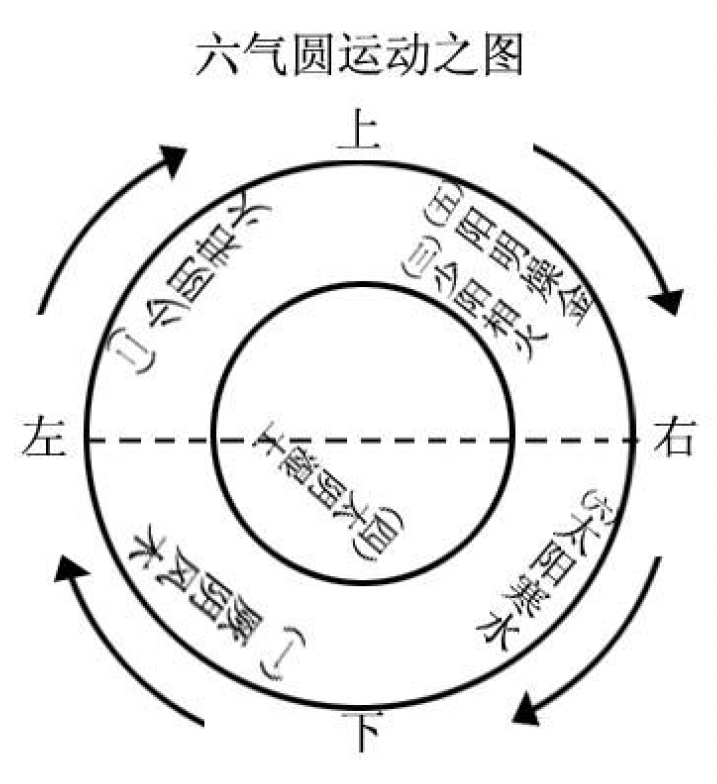
The phases—metal, wood, water, and fire—preside over the four cardinal directions, while ministerial fire and earth qi co-govern the central palace. The central palace corresponds to the surface of the Earth, while the four cardinal directions are more distant from the Earth. The circular motion of the Six Movements and Six Qi follows the sequence of four nodes for each qi phase:
These [divisions of the qi periods] mark the root and source of seasonal illnesses. The circular movement of qi that unifies heaven and humanity is most apparent in these seasonal diseases. While internal damage and complex diseases also relate to the Six Qi, they do not generally lead to the same rapid consequences as seasonal diseases. Seasonal illnesses are caused by the disruption of the six qi, which easily leads to the depletion of central qi, resulting in rapid fatality, due to the easy dissipation of qi balance when influenced by the changing seasons.
The surface of the Earth is associated with yang, while below the surface is associated with yin. During the initial qi period, the overall climate transitions from cold to warm. The yang heat stored in underground water during autumn begins to rise in early spring, combining with water to generate wood qi. This wood qi represents the source of yang for the entire year. The solar term Major Cold (大寒) marks the extreme of yin, hence it is referred to as Jueyin (厥阴), with “jue” meaning “extreme.” Wood qi governs movement, and if is impeded, it will generate wind. As such, this is referred to as Jueyin Wind-Wood (厥阴风木).
The second qi [period] arises from the underground yin position and manifests as the upward rising of wood qi. At this time, the atmosphere is relatively warm, not reaching the extreme of yin as seen in Jueyin, thus it is referred to as Shao [lesser] yin (少阴). The upward rising of wood qi represents the yang qi stored in water, which descended during the autumn of the previous year. This yang qi rises from the ground to the surface, illuminating the vast universe and spreading its brightness, which resembles the behavior of the sovereign; therefore, it is called Sovereign fire (君火). At this point, the atmosphere transitions from warm to hot, also referred to as heat-fire (热火).
During the third qi period of Shaoyang (少阳) and Ministerial Fire (相火), the surface of the Earth is filled with abundant yang heat. As the coolness of night descends, this cool air moves down into the underground water. However, when the summer heat rises, it alternates between descending and ascending. The water underground serves as the foundation for life. This yang heat is fundamentally the source of life; with the surface having an abundance of yang heat and the underground having less, it is termed Shao [lesser] yang. This yang heat descends into the underground water in order to generate central qi. When the central qi rotates, it creates a harmonious balance between the upper and lower realms, much like the role of a minister, hence it is called Ministerial Fire. This fire does not descend, and when the summer heat lingers, it is also referred to as Summer-Heat Fire.
During the fourth qi period of Taiyin damp earth, the surface of the ground is filled with abundant yang heat. The previously stored yang energy from below the surface also rises up. The surface experiences extreme heat, while underground, it remains extremely cold. Heat is associated with yang, and cold is associated with yin. Since there is an excess of yin in the atmosphere, it is referred to as Tai [greater] yin. In water, there is qi; when fire is above water, it generates dampness. At this time, the surface is filled with yang heat that has yet to descend into the earth. The clash of heat and cold leads to the drenching and proliferation of dampness. The earth’s qi is at the point of rising and falling, thus it is termed damp earth.
Yangming dry metal occupies the yang position on the surface. During the fifth qi period, the yang heat that fills the surface, influenced by the autumn’s collection, begins to descend. Below centre earth, yang qi is abundant. Dampness has receded, the great universe is bright, and yang is flourishing and luminous; hence it is called Yangming [Yang brightness]. [When] metal qi is vigorous and dampness has also receded, dryness and heat qi bind. At this time, the atmospheric metal qi is under great pressure, hence it is called dry metal.
During the sixth qi period of Taiyang cold water, the yang heat from the surface, having been gathered by autumn, completely descends into the water underground. The qi of creation has its roots in the lower regions. [Since] yang is copious below the centre, it is thus referred to as Tai [greater] yang. This yang heat descends into the water, where it is stored and not discharged. At this time, the atmospheric pressure drops, and the external water becomes cold. When it is cold outside, it means the yang is stored within the water, hence it is called cold water.
The circular movement of the five phases forms a single qi. Wood ascends [while] metal descends; [when] wood does not [suffer from] wind disease, metal [will not suffer] from dryness disease. Water ascends [while] fire descends; [when] fire does not [suffer from] heat or summer-heat disease; water [will not suffer] from cold disease. [When the] earth moves in the center; the earth [will not suffer] from dampness disease. If the movement is not circular and ascending and descending do not interact, each [phase] manifests its own qi, leading to diseases such as wind, heat, summer heat, dampness, dryness, and cold—these are diseases of the atmosphere. The qi of the human body is also like this.
In the period of initial qi, it is suitable to nourish wood qi. During the second qi period, it is suitable to nourish fire qi. In the third qi, it is suitable to supplement ministerial fire qi. During the fourth qi, it is suitable to nourish earth qi. In the fifth qi, [one should] nourish metal qi. In the sixth qi, it is suitable to supplement water qi. The ministerial fire descending into the water marks the beginning of the sovereign fire.The sovereign fire is the culmination of the ministerial fire’s qi, and it descends together with the ministerial fire.
Peng Chengzu (1871-1949), courtesy name Ziyi, was a member of the Bai ethnic group from Heqing, Yunnan. His father served as an official in Guizhou, where Peng Ziyi was born and raised in a family with a strict academic environment. As he grew older, he pursued studies with renowned scholars in Guizhou, developing a wide range of knowledge. Peng had a natural passion for medicine and delved deeply into medical studies. Later, he traveled to Beijing, where he served as a physician at the Imperial Medical Institute during the late Qing Dynasty. This position allowed him access to extensive medical archives and renowned medical texts in the capital.
Peng Ziyi’s book, Circular Movements in Ancient Chinese Medicine, builds upon the ideas from The ‘Sisheng Xinyuan’ text by Huang Yuanyu, an imperial physician of the Qianlong era in the Qing Dynasty. Huang’s work focused on the concept of the circulation and rotation of central qi, rising and descending in cycles. Peng Ziyi extended this concept by introducing the idea of “circular movements of rotating axles” as a view of Qi transformation. His book explains the principles of life movement within the human body and the foundational concepts of disease treatment in Chinese medicine through clear and straightforward reasoning.
Case taken from “Selected Readings on the Efficacy of Kampo Formulas”, by Yang Dahua
Chronic Hepatitis (A Case by Dōmei Yakazu)
A 48-year-old woman developed symptoms five years ago. She experienced chest discomfort, right shoulder pain, swelling in the right side of her neck, numbness in her right hand, and persistent mild fever. After being examined at a university-affiliated hospital, she was diagnosed with acute tuberculous lymphadenitis and treated with streptomycin and para-aminosalicylic acid. However, this led to severe stomach problems and the onset of serious jaundice. Alarmed, she was admitted to another hospital and diagnosed with acute hepatitis. After two months, she was discharged.
Over the following five years, her right shoulder pain, hand numbness, and swelling remained untreated. Her lymph nodes would swell with overwork, and she suffered from a persistent feeling of distention and fullness in her chest, with nausea when tightening her belt. Her physical condition and nutrition were average, her complexion was decent, and her pulse was weak but her blood pressure normal. She had tightness below her chest like a hard plate with intense tenderness on palpation, as well as quite noticeable pain below her right ribs. When the shoulder pain was severe, she would experience shortness of breath.
The symptoms observed closely align with the [Original] line of Dà Chái Hú Tāng [from the Shang Han Lun]: “Distress below the heart, a feeling of depression and slight vexation, fullness in the chest and rib-sides, hard glomus below the heart, vomiting, and abdominal fullness and pain.” Because of the connection between the right shoulder pain, hand numbness, and the tightness with tenderness below the right ribs, the fullness in the chest and rib-sides would fluctuate, sometimes improving and other times remaining unchanged. Although her pulse was relatively weak, Dà Chái Hú Tāng was prescribed with the addition of 5g of gé gēn (Pueraria root).
After taking this prescription for 10 days, the shoulder pain, hand numbness, and chest discomfort she had suffered with for five years was almost completely resolved. A month later, her motion sickness while traveling in cars and trains also resolved, and her hard glomus below the heart and fullness improved. After three months, her long-standing issues were completely resolved, so she discontinued the herbs. (Explanation of the Clinical Applications of Kampo Formulas by Dōmei Yakazu).
The severe stomach disturbance and jaundice should be considered an adverse reaction to para-aminosalicylic acid. Diagnosing it as acute hepatitis was inappropriate, [whereas] drug-induced liver damage would have been more accurate. After stopping the medication and undergoing treatment, her condition returned to normal, and her discomfort over the next five years had nothing to do with liver damage. The phrase “tightness below the chest like a hard plate, with intense pain on palpation, as well as quite noticeable pain below her right ribs” does not indicate symptoms of liver disease.
The patient’s case was a typical presentation of Dà Chái Hú Tāng, so it was appropriate to prioritize the abdominal symptoms without giving much attention to the limb symptoms. The addition of gé gēn was likely to address the limb symptoms of right shoulder pain and hand numbness. However, would the formula have been equally effective without adding gé gēn? Since the formula aligned with the Dà Chái Hú Tāng pattern, adding gé gēn might not have been necessary. It is also not common to add gé gēn to Dà Chái Hú Tāng, whereas herbs such as máng xiāo or hòu pò are more common.
The decision to use Dà Chái Hú Tāng despite the weak pulse reflects a preference for focusing on the abdominal signs as opposed to the pulse. In chronic conditions, the pulse may not react as strongly as in acute illnesses. In other words, when the pulse and abdominal signs do not align, it is necessary to prioritize the abdominal signs. The Essential Guide to Key Kampo Formulas: A Collection of Mnemonics (translated by Qiu Nianyong) states, “The pulse for the Dà Chái Hú Tāng pattern is usually deep and excess, or deep, slow and strong, yet [one] need not rigidly adhere to this pulse manifestation.” [The text] also gives examples of variances in the pulse when Dà Chái Hú Tāng is indicated in cases of abscesses, diarrhea, warm diseases, etc. This suggests that the abdominal signs associated with Dà Chái Hú Tāng are relatively stable, while the pulse can vary according to the disease.
Was the patient’s abdominal pattern caused by tuberculous lymphadenitis? It is unclear. Her limb symptoms were all on the right side—was the pain below the right ribs related? Perhaps from the perspective of a Kampo physician, the limb and abdominal symptoms could be manifestations of the same pathological change, like leaves and flowers on the same tree. Once Dà Chái Hú Tāng was administered, all these symptoms resolved, suggesting that the formula uprooted the tree, causing both the flowers and leaves to wither. In this case, the limb symptoms disappeared first, while the abdominal symptoms resolved more slowly, akin to the different timing of the leaves and flowers falling. The development of abdominal signs and limb symptoms is not necessarily the same, and their underlying causes are likely more complex.
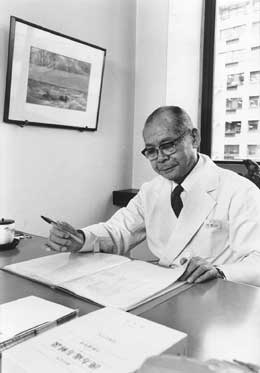
Dōmei Yakazu (1905-2002), was a Japanese physician born in Tokyo. Dōmei graduated from the Tokyo Medical College in 1930 and later studied Chinese medicine. In 1954, he conducted pharmacological research at Tokyo Medical University, obtaining his doctorate in 1959.
For over 50 years, Dōmei Yakazu, together with Keisetsu Ōtsuka, dedicated himself to the revival of Kampo (traditional Japanese medicine) in Japan, making significant contributions to the promotion and development of Eastern medicine. His notable works include; Explanation of Key Kampo Formulas from Later Generations, Explanation of the Clinical Applications of Kampo Formulas, Practical Kampo Diagnosis and Treatment, The Great Encyclopedia of Kampo Medicine, The Medical Encyclopedia of Kampo Diagnosis and Treatment, A Brief History of Kampo over the Past Century of the Meiji Era, and A Hundred Stories of Kampo Therapy.
1. Concept of Water Qi (here, water qi does not refer to edema). In ancient times, there were various concepts regarding water qi. Some believed that water qi was the cold qi of water, such as in the saying by Cheng Wuji in relation to the upward surging of water qi “when water and cold clash, cold in the lung [will result in] counterflow qi.” Others believed that water qi was simply water-rheum, as mentioned by Qian Tianlai: “Water qi belongs to water-rheum.” I believe they each seem to be partially correct because water and cold often jointly cause illnesses. Water represents its form, while cold indicates its qi, like a shadow following its form, inseparable. Therefore, the concept of water qi includes both water-rheum and cold qi.
2. Patterns and Mechanisms of the Upward Surging of Water Qi
The upward surging of water qi is a common and frequently occurring clinical condition. Physicians of various generations have attached great importance to it and have also made developments in its treatment. This condition originated from the “Shang Han Lun” and the “Jin Gui Yao Lue Fang Lun.” Zhongjing proposed the corresponding treatment mainly using the formula Linggui [Zhugan Tang], establishing the basis for the treatment of the upward surging of water qi in later generations. However, the original Linggui formula and its patterns, modifications, and variations are scattered throughout different chapters, making it difficult for people to grasp comprehensively and impossible to reference. To this end, a comprehensive summary is conducted, highlighting the essential points and incorporating personal insights, with the aim of making the characteristics of the upward surging of water qi and the related formula presentations clear to the medical community.
Line 67 of the Shang Han Lun discusses the treatment of the upward surging of water qi. I believe this section represents the concept of “water heart disease.”
The term “water heart disease” influenced the name “rheumatic heart disease” in Western medicine. The name highlights the focus of the disease, reflecting its essential problem, which is more direct than the name “water qi encroaching on the heart.”
The line in the original text says:
“In cold damage [disease] following vomiting or purgation, [if there is] counterflow fullness below the heart, qi surging upward into the chest, dizziness upon rising, and a deep and tight pulse; If sweating is promoted this will stir the channels and there will be quivering and trembling, and Fuling Guizhi Baizhu Gancao Tang governs.”
The phrase “[following] vomiting or purgation” indicates that the mechanism of the condition is related to deficiency rather than excess. It is precisely the deficiency of heart yang that leads to the occurrence of “water heart disease.”
The heart belongs to fire and is the Taiyang within the Yang. It resides in the chest, holding the authority of fire Yang, intimidating the evil of water cold in the lower jiao, not daring to step beyond the threshold of the Lei Chi [or beyond its limits]. Now, due to “the deficiency of Qi after vomiting or diarrhea,” when the heart Yang is deficient, the authority of restraining water cold in the lower jiao is lost. Therefore, there is an opportunity for the cold and Yin Qi in the lower jiao to take advantage, leading to the occurrence of “water heart disease.”
In modern times, influenced by Western medicine, many physicians only recognize that “the heart governs the blood vessels” and the occurrence of angina pectoris and coronary heart disease due to blood stasis in the heart where “all vessels converge.” However, they fail to recognize the physiological characteristics of the heart lying in its Yang Qi. The Suwen • Discussion on the Six Sections on the Organs” states: “The heart is the root of life, [it is responsible] for the changes of the spirit… It is the Taiyang within the Yang, connected with the Qi of summer.” This passage means that the heart is the foundation of life, governing the changes of the spirit. The heart’s extraordinary function is determined by its Yang Qi function. As the heart belongs to the fire organ and resides in the chest, both the chest and fire belong to Yang. Therefore, the heart is referred to as the “Taiyang within Yang.” The heart primarily governs Yang Qi, followed by governing the blood vessels. Both governing the blood vessels and the spirit are related to the dominant role of heart Yang. If heart Yang is lost, pulsation stops, blood circulation ceases, and consciousness disappears.
“Water heart disease” primarily manifests as deficiency of heart Yang, which triggers the invasion of water-cold pathogens from below, attacking the circulation of heart-chest Yang Qi and the blood vessels. At the same time, it should be noted that in ‘water heart disease,’ the spleen’s earth element, which acts as a dam against water in the middle burner, and kidney yang, which governs the water Qi in the lower burner, also show signs of laxity, failing to contain the upward movement of pathogenic cold-water. The term “逆” (nì), meaning “reversal” or “counterflow,” in “counterflow fullness below the heart” carries a dual implication. It not only indicates the pathological mechanism of water Qi rising in reverse but also conveys corresponding symptoms. “Fullness” refers to distension or fullness, also known as “glomus fullness,” caused by the blockage of the Qi mechanism and lack of free flow in the upper abdomen, resulting in distension and fullness.
“Counterflow fullness below the heart,” traditionally interpreted as a symptom between the epigastrium and the stomach, is actually one of the manifestations of heart Yang deficiency. It occurs because of the deficiency of Yang Qi ascending, resulting in fullness in the middle. It’s common in clinical practice to mistake heart-related pain and fullness below the heart as gastric epigastric disorders, which physicians must be vigilant about.
Now, considering the deficiency of heart Yang above and the movement of water-cold Qi in the middle, hence the manifestation of “qi rushing upwards to the chest,” directly affecting the palace of separation. Zhang Zhongjing did not specifically mention the manifestations of Qi rushing to the chest, so I’ll elaborate: the chest is where the heart’s Qi congregates, a place of harmony. As Gao Xueshan said, “Rays of light radiate from the center, sensing only a gathering of the great harmonizing source qi.” If heart Yang is invaded by water-cold, the patient may feel fullness and stuffiness in the chest, accompanied by breathlessness and pain. As the lungs reside in the chest, governing the command of cold, when water-cold intrudes upon the lungs, causing the condensation of cold fluids, symptoms such as coughing, wheezing, thick phlegm, facial edema, and so on may appear.
“Dizziness upon rising” refers to severe dizziness upon standing, leading the patient to remain lying down out of fear of exacerbating the dizziness. There are two causes of dizziness: first, heart-spleen Yang deficiency, where insufficient clear Yang Qi ascends to nourish the head; second, the upward rush of water Qi, Yin battling against Yang, resulting in both deficiency and suppression of clear Yang, thus causing dizziness.
我们结合临床观察,水气上冲头目尚不止此,每见视力下降,目见黑花,耳聋、鼻塞与不闻香臭等五官科疾患。
Based on clinical observations, the manifestations of water Qi rushing upward are not limited to those mentioned above. It is often associated with disorders of the five sensory organs, including decreased vision, seeing black spots, hearing loss, nasal congestion, and loss of sense of smell.
Mr. Li, a 56-year-old farmer from Xushui County, suffered from nasal congestion, particularly severe at night, forcing him to breathe through his mouth, resulting in severe dryness of the mouth. Occasionally experiencing palpitations, he sought treatment. Diagnosed with the syndrome of water Qi encroaching on the heart, he was treated with the formula Linggui Zhugan Tang. After taking [the formula], his nasal congestion completely recovered.
Mr. Li, a senior student at Changli High School, in his fourties, suffered from retinitis, with a dark object obstructing his upper right field of vision. He had previously tried various prescriptions such as Yiqi Congming Tang and Qiju Dihuang Tang, with little effect. Upon examination, his complexion was sallow, tongue was pale and swollen, and his pulse was wiry and irregular, [and he also experienced] palpitations and dizziness. Diagnosed with the pattern of water Qi rushing upward and obstructing clear Yang, he was prescribed Linggui Zhugan Tang with added Ze Xie. After approximately thirty doses, the dark spots in his vision disappeared.
Based on clinical observations, water Qi rushing upward often manifests as discomfort in the throat, resembling the pattern of “plum pit qi,” where there is a sensation of obstruction in the throat, as if something is stuck and cannot be swallowed or expelled.
Before the Cultural Revolution, I took students to intern at the Chengzi Mine. One student treated a woman surnamed Bai who had plum pit qi. She had undergone three courses of treatment with Banxia Houpo Tang from the “Jingui Yaolue” but showed no improvement, so she was referred to me for diagnosis. Upon palpating her pulse, it was wiry, and upon observing her tongue coating, it appeared moist and slippery. I diagnosed her with water Qi rushing upward, causing obstruction in the throat due to water-cold, rather than phlegm obstruction. I prescribed Guizhi 12g, Fuling 30g, Baizhu 10g, and Zhi Gancao 6g to be taken continuously for five doses. Afterward, her throat was clear and the condition was resolved. The student was amazed and asked, “Why was Banxia Houpo Tang ineffective?” I explained, “Banxia Houpo Tang is used for phlegm accumulation causing throat obstruction, while Linggui Zhugan Tang is for throat obstruction due to water Qi rushing upward. The characteristics of the wiry pulse and moist tongue coating were indicative of the latter, and mistaking it for phlegm led to the saying ‘a difference of a hair leads to a difference of a thousand miles.’ The student nodded in agreement.
[In regards to] “a deep and tight pulse.” The depth signifies the interior, also representing water diseases, while the tightness indicates cold. Deep tightness precisely reflects the condition of a water-cold pathology.
Professor Huang Shipei is a renowned traditional Chinese medicine (TCM) doctor in Guangzhou, a part-time associate professor at Guangzhou University of Chinese Medicine, a visiting professor at Nanjing University of Chinese Medicine, and an honorary director at the Thirteen Halls National Medical Museum. He is a contemporary expert in classical formulas (Jingfang) and a famous scholar in the field. Academically, he exclusively focuses on classical formulas, advocating the “correspondence between formula and symptoms” approach. His clinical practice is notable for using large doses, and he has authored several books, including “Huang Shipei’s Follow-up Records of Classical Formulas,” “Huang Shipei’s Follow-up Records of Classical Formulas (Continued),” “Dreaming of the Four Great Masters of Shanghan,” and “Huang Shipei’s Record of Teaching and Transmission of Classical Formulas.”
Senile dementia, long-term resident in a nursing home.
From July 13, 2010, she started experiencing vomiting immediately after eating, abdominal distension and fullness, as well as constipation. No chills, fever, abdominal pain, hematemesis, or melena were reported. Her family took her to a tertiary hospital in our city, where she was admitted. Blood tests showed WBC: 11.98*10^9/L and NE: 84.7%. Abdominal CT indicated partial intestinal obstruction. Due to her advanced age and inability to tolerate surgery, she was treated with fasting, antibiotics, fluid infusions, and given Taohe Chengqi Tang to open the stoppage as well as enemas.
Following the enema, she was able to pass a small amount of hard stool. However, after over ten days of treatment, her symptoms of vomiting after eating and abdominal distension did not improve, and her family requested a transfer to our hospital for further treatment. Upon admission, she had no vomiting but had abdominal fullness and distension without pain. Abdominal X-ray still indicated partial intestinal obstruction, so fasting and fluid infusions were continued.
The attending physician contacted Professor Huang Shipei via text message, asking whether the patient could continue taking a Chengqi Tang type of formula and the enemas. Professor Huang believed that this patient, who mainly suffers from bloating without abdominal pain, does not exhibit the symptoms typically treated by a Da Chengqi Tang pattern, such as glomus, fullness, dryness, and hardness. This elderly patient is physically weak and although experiences bloating, constipation, and vomiting, does not have obvious abdominal pain. The primary cause of the patient’s intestinal obstruction is likely intestinal paralysis, resulting in insufficient motility. The patient has undergone repeated purgative treatments at another hospital without recovery, which has further weakened her condition. Although there are symptoms of constipation that might suggest a purgative treatment, the patient does not exhibit the specific symptoms required for Da Chengqi Tang [such as] glomus, fullness, dryness, and hardness, nor the pattern described in line 106 of the Shanghan Lun [where it states] “Heat accumulation in the bladder, causing the person to be manic… with a tense and firm lower abdomen,” which would indicate a Taohe Chengqi Tang pattern of static blood in the lower burner. He suggested trying a combination of Houpo Shengjiang Banxia Gancao Renshen Tang and Xiao Chengqi Tang:
After taking the first dose, the next morning, she passed about 100ml of blackish-brown loose stool. After another enema, she passed about 200ml of blackish-brown loose stool again. She continued this treatment for five days, with daily bowel movements and reduced abdominal distension.
We originally planned to conduct an abdominal X-ray to assess the patient’s intestinal obstruction. However, due to the patient’s dementia and recent improvement in mental state, the patient became agitated and restless, making it difficult to cooperate for the imaging, so it was temporarily postponed. We attempted to give the patient a small amount of food, and there was no vomiting after eating. After the patient had a bowel movement, we switched to Xiao Chaihu Tang.
Chaihu 24g
Huangqin 15g
Banxia 24g
Dangshen 30g
Dazao 15g
Zhi Gancao 15g
Houpo (added later) 20g
Zhishi 20g
After 15 days of hospitalization, she could eat without vomiting and had daily bowel movements, leading to her discharge.
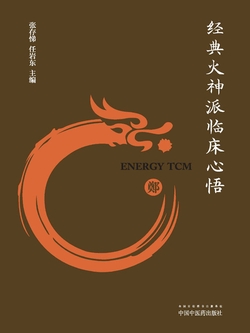
Taken from ‘Classical Clinical Insights from the Fire Spirit Current’ by Zhang Cun’ti [张存悌, 经典火神派临床心悟]
Yang qi is divided into upper, middle, and lower parts. The upper burner contains the Yang of the heart and lungs, the middle burner contains the Yang of the spleen and stomach, and the lower burner contains the Yang of the liver and kidneys. “The lower Yang is the root of the Yang of the upper and middle burners,” signifies that the Kidney Yang in the lower burner is the root of Yang qi in the upper and middle burners. In other words, among all types of Yang qi, Zheng Qin’an particularly emphasized the role of Kidney Yang. “A person’s life and destiny rely entirely on the single Yang [line] in the Kan hexagram,” indicating that Kidney Yang is the fundamental source of Yang qi in the human body and the root of life and destiny. This also forms the theoretical basis for his advocacy of using Fuzi and Sini-type prescriptions to warm and support Kidney Yang.
A friend named Mr. Huang suffered from abdominal pain in the ninth month of the Yiyou year. The pain lessened whenever he ate sweet foods. Doctors believed it to be dryness and used sweet and moistening medicines to no avail. Subsequently, they used purgative medicines, which worsened the pain. Upon examination, all six of his pulses were thin and small, he liked pressure on the abdomen, had a bland taste in his mouth, and felt fatigued. I diagnosed it as a cold condition. I prescribed Lizhong Tang with added Mu Xiang, which provided temporary relief but the pain recurred, especially at night. I said, “Night is Yin time, and Yin cold is prevalent, hence the pain worsens at night.” I then used Tongmai Sini Tang with added Baishao, and after more than ten doses, he fully recovered. (Case of Yi Jusun)
In this case of abdominal pain, the initial treatment focused on the Yang of the middle burner with “Lizhong Tang plus Mu Xiang,” which provided temporary relief. The key to the differentiating [factor of the] pattern was that “night is Yin, and Yin cold is prevalent at night, hence the pain worsens at night,” leading to the decision to specifically support Kidney Yang using Tongmai Sini Tang with added Baishao, resulting in the resolution [of the condition]. This approach is worth pondering.
Skin water is caused by spleen deficiency, which is unable to transport and transform water dampness. The blocked water dampness obstructs the middle burner, resulting in abdominal distension. If lung qi is deficient it is unable to free and regulate the triple burner, causing water dampness to accumulate. Consequently, there is swelling in the ankles and the lower limbs, with the characteristic of indentation when pressed, indicating a manifestation of dampness with a watery nature. The older generations say that the pulse of skin water is floating and shares similarities with wind-dampness, but it differs in the absence of symptoms such as aversion to wind and body pain.
Skin Water Treatment: In skin water, the pulse is floating, indicating that there is water in the surface, and in order to help it along its course, one should promote sweating. This can be achieved with the use of Yuèbì Jiā Zhú Tāng (越婵加术汤). In skin water disease, there is swelling in the limbs, and slight movements of the limbs, which indicates that water qi is in the skin, and one can use Fángjǐ Fúlíng Tāng (防已茯苓汤), [Fángjǐ 3 liang, Huángqí 3 liang, Guìzhī 3 liang, Fúlíng 6 liang, Gāncǎo 2 liang. Boil in six sheng of water, reduce to two sheng, and take warm in three doses].
According to Yóuyí, “[When there is] water qi in the skin, it seeps and spreads to the four limbs, and congests and obstructs the defense qi, leading to the mutual chasing of qi and water, [and thus] the limbs exhibit slight movements. Fángjǐ and Fúlíng are good for expelling water qi. Guì Zhī, enhances the effect of Fúlíng, and thus avoids effusing the surface but instead moves water. Moreover, the combination of Huángqí and Gāncǎo assists the qi in the surface to support the actions of Fángjǐ and Fúlíng.”
Regular water is due to the deficiency of spleen and kidney yang, which leads to the inability of qi transformation to evaporate pathogenic water dampness, to the extent where water settles internally and does not move, resulting in abdominal fullness and a deep-slow pulse. Copious water overflows into the surface resulting in generalized body swelling; Water qi rises upwards and distresses the lungs causing panting; If water intimidates the heart yang, it will result in generalized heaviness, shortness of breath, and an inability to sleep. [If] fire fails to warm the kidneys, water cold controls the lower [body] resulting in genital swelling as well as vexation, agitation, and disquietude; If pathogenic water invades the liver, the qi mechanism becomes obstructed, resulting in sub-costal and abdominal pain.
[If] the liver’s free coursing function is disrupted, the qi will occasionally surge upwards as well as occasionally descend. Fluids will follow the qi and ascend, resulting in the intermittent engendering of fluids. Fluids will [also] follow liver qi and descend, resulting in continuous and free urination. [When] the liver invades the spleen, [the spleen] will be unable to move and transform water damp, resulting in abdominal distention and enlargement. If pathogenic water invades the spleen, the spleen [function] of transformation will be abnormal, and it will be unable to upbear the clear and downbear the turbid. Water damp will accumulate in the centre, flow into the four limbs and lead to abdominal distention and enlargement, and the four limbs will suffer from heaviness and have difficulty moving.
The spleen, when encumbered by water, fails to generate bodily fluids, resulting in insufficient qi, which manifests with thirst and shortness of breath. [When] the spleen fails to distribute essence to the lungs, the lungs are unable to regulate the water ways in order to move and keep the sluices clear, which results in difficult urination. If pathogenic cold water is exuberant in the lower [body], kidney yang [becomes] depleted and is unable to warm and transform water qi. Water qi will increase, resulting in an enlarged abdomen, swelling of the umbilicus, lumbar pain, and an inability to urinate. [When] kidney yang fails to warm and yang qi is insufficient, this leads to the descent of damp with [conditions] such as ox’s nose, upper sweating and counterflow cold. [When] yang qi fails to [supply] luster to the upper, the face becomes thin.
The pathologies of pathogenic water in the five viscera differ due to their distinct physiological functions, resulting in varying patterns and symptoms. However, a commonality among diseases involving pathogenic water in the lungs, spleen, and kidneys is the deficiency and debilitation of yang qi in these organs. This deficiency hinders the proper movement of qi and transformation of fluids, which leads to the internal collection of water. Therefore, in the treatment of these conditions, prioritizing methods that free yang, transform qi, disperse yin, and disinhibit water are considered the optimal strategies.
Later generations of medical practitioners, categorized water into yin and yang. Yang water is considered hot and excess, and the primary focus in treatment is to expel pathogenic factors. For instance, if water and qi oppress the lungs causing wheezing or inhibit smooth flow leading to short and hesitant urination, treatments such as Sūtíng Wán (zi su zi and ting li zi) or Chénxiāng Hǔpò Wán (ku ting li zi, yu li ren, fang ji, chen xiang, chen pi, hu po, xing ren, su zi, chi fu ling, ze xie, and she xiang) are recommended. If there is generalized edema, inhibited urination and bowel movements, with a floating and slippery pulse, and the patient is strong, then Shūzáo Yǐnzǐ, a method that scatters the exterior and disinhibits the interior (containing jiao mu, chi xiao dou, bing lang, shang lu, mu tong, qiang huo, qin jiao, da fu pi, fu ling pi, ze xie) may be used. If the person’s constitution is slightly weak or they are elderly and frail, a combination of a surface scattering and internal disinhibition method may be used to resolve [the condition]. The ideal choice in such cases is Fúlíng Dǎoshuǐ Tāng (ze xie, fu ling, sang pi, mu xiang, mu gua, sha ren, chen pi, bai zhu, su ye, da fu pi, mai dong, bing lang).
Yin water is considered cold and deficient. If there are thin sloppy stools, a fear of cold, qi timidity, and a soft pulse with cold limbs, a warming and supplementing method is appropriate. For instance, Bǔzhōng Yìqì Tāng (ren shen, huang qi, zhi gan cao, bai zhu, chen pi, sheng ma, chai hu, dang gui, sheng jiang, da zao) can be used. Alternatively, Shípí Yǐn (bai zhu, fu ling, zhi [gan] cao, mu xiang, mu gua, fu zi, bing lang, cao guo, gan jiang) may be used. If the pulse is deep, complexion yellowish-black, [and there is] inhibited urination, palpitations, dizziness, and a cold back, Zhēnwǔ Tāng (fu zi, bai shao, sheng jiang, bai shao, fu ling) is recommended. If the chǐ pulse is deep and slow, or thin and small, with inhibited urination, accompanied by lower back pain and weak legs, Jīnguì Shènqì Wán is valued above else.
The Qing Dynasty physician, Wúqiān had [several] external treatment methods. Among them, his “Tiēqí Hǔpò Dān” was particularly ingenious, and its use was highly effective. To prepare, take 12 grams of Bādòu (with oil removed), 6 grams of Qīngfěn, and 3 grams of Liúhuáng. Grind evenly and form into cakes. First, a fresh piece of cotton is placed over the navel, the cake placed inside, and secured with silk. Over some time, malign water will naturally drain. After three to five drainages, remove the medicinal cake and replace it with a gruel dressing. Over time, the appearance will fade, and the treatment is administered once every other day. One cake can benefit three to five individuals.
Wúqiān believed that for swelling diseases, if they are attributed to deficiency and cold, the use of warm-supplementing medicinals alone may prove ineffective. He theorized that if there is no improvement with the sole use of supplementing medicinals, there must be excess pathogens within deficiency. While wanting to resort to offensive purgative [medicinals] is challenging, avoiding their use altogether is also not a feasible solution. He proposed a method of [using] supplementation for nine days followed by one purging day. This involves administering supplementing medicinals for nine days, and afterwards attacking the mechanism, by using draining medicinals for one day. The purgative medicinals should be administered gradually, starting with a small amount and increasing it as the disease progresses. It is essential to ensure that the medicine matches the [patients] original qi, expelling the pathogenic factor without damaging the right [qi]. Afterwards [one] may possibly supplement for seven days, attack for one; supplement for five days, attack for one; and supplement for three days, attack for one. Gradually seek it out, using the cure [as] the measure.
In the clinical setting, I deeply empathize with the challenges faced by Dr. Wú [Qiān] in treating this disease. Therefore, I have been diligent in seeking knowledge and when dealing with conditions of significant swelling, especially when supplementing medicinals prove ineffective and drastic attacking methods are not suitable, I have found great success in using a personal formula I’ve named “Báiyù Xiāozhàng Tāng [White Jade Distention Dispersing Decoction]”, which consists of fu ling 30g, yu mi xu 30g, bai mao gen 30g, chou hu lu 12g, dong gua pi 30g, da fu pi 10g, yi mu cao 15g, che qian zi 15g, tu yuan 10g, qian cao 10g, chuan lian zi 10g, yan hu suo 10g, zi wan 10g, zhi qiao 10g.
This formula frees qi, moves water, quickens the blood, and assists coursing. In the upper [body] it disinhibits lung qi in order to conduct management and regulation, and in the lower [body] it opens the water mansion and frees the triple burner. Although it possesses the ability to expel pathogenic factors, it does so without damaging the right [qi] and causing harm to the patient. It is particularly effective when used after supplementing medicinals have failed to reduce swelling, consistently yielding positive results.
Edema [water swelling] is a medical condition with numerous potential causes, such as ascites due to liver cirrhosis, edema due to nephritis, cardiac edema related to heart disease, malnutrition-induced edema, etc. It is beyond the scope of this article to comprehensively cover all possible causes of edema.
Stone-water is a condition resulting from the deficiency and debilitation of kidney yang, leading to the inability of warming and transforming water dampness. [Therefore] water qi is unable to be expelled from the body through the urine, causing binding in the lower abdomen, which manifests with abdominal distention, which is hard and rigid resembling a stone. The pathology is focused in the lower burner, and characterized by the internal binding of water qi, with a pulse that is deep and fails to rise. As the water binds in the lower region and has not reached the lungs, individuals with this condition do not exhibit wheezing. When water qi is in the kidneys and affects the liver, symptoms such as fullness, distension, and pain below the ribs may be observed.
In summary, among the four types of water [conditions], wind-water and skin-water are associated with the exterior, while regular-water and stone-water are associated with the interior. However, wind-water is associated with aversion to wind, while skin-water does not have this aversion. Regular-water may cause wheezing on its own, while stone-water does not. It is essential to differentiate between them in clinical practice.
For the treatment of stone-water, [one] may first use warming and supplementing medicinals for the spleen and kidneys, along with assistant medicinals to course the liver and free the network vessels. Examples include Zhēnwǔ Tāng with added gui zhi, chuan lian zi, yuan hu, shi nan teng, as well as aromatic herbs like xiao hui xiang.
From ‘Essential Points on Clinical Patterns in the Shanghan Lun’. [刘渡舟-伤寒论临证指要]
水气病脉证并治
Water Qi Disease, Pulses, Patterns, and Treatment.
[The following are lines found within the Jingui Yaolue Water Qi chapter]
《金匮•水气病脉证篇》:“少阴脉,紧而沉,紧则为痛,沉则为水,小便即难。
“[When] the shaoyin pulse is tight and deep, tight signifies that there is pain, while deep signifies that there is water, [with] difficult urination.” [JGYL 14.9]
脉得诸沉者,当责有水,身体肿重”。
“[When] all pulses are deep, this is the responsibility of water, and manifests with generalized swelling and heaviness.” [JGYL 14.10]
“跌阳脉当伏,今反紧,本自有寒疝瘕,腹中痛。医反下之,下之则胸满短气。
“The instep yang pulse should be hidden, but conversely now it is tight, this is because there is cold at the root with mounting conglomerations and abdominal pain. If a physician incorrectly purges, this will result in chest fullness and shortness of breath.” [JGYL 14.6]
跌阳脉当伏,今反数,本自有热,消谷,小便数,今反不利,此欲作水”。
“The instep yang pulse should be hidden, but conversely now it is rapid, this is because there is heat at the root, causing dispersion of grain and frequent urination. If the urination is inhibited, this means water is soon to rise.” [JGYL 14.7]
“寸口脉弦而紧,弦则卫气不行,即恶寒,水不沾流,走于肠间”。
“[When] the cun kou pulse is wiry and tight, wiry signifies that the defensive [qi] is not moving, which manifests with aversion to cold, and water that does not moisten and flow, [but is] running into the intestines.” [JGYL 14.9]
又“夫水病人,目下有卧蚕,面目鲜泽,脉伏其人消渴,病水腹大,小便不利,其脉沉绝者,有水,可下之。
“A patient with water disease has sleeping silkworms below the eyes, a bright sheen in the face and eyes, a deep pulse, and dispersion thirst. [If] water disease manifests with an enlarged abdomen, inhibited urination, and a deep and expiring pulse, [this indicates] water, which can be purged.” [JGYL 14.11]
又“水病脉出者死。”
“In water disease, [when] the pulse bursts out, [the patient] will die.” [JGYL 14.10]
The above quotes from the “Jingui” regarding the pulse diagnosis, color diagnosis, questioning, and the prognosis of edema have extraordinary significance in guiding clinical practice. Water qi can be classified into four types: wind-water, skin-water, true-water, and stone-water. As for five viscera water qi, they fall into the categories of true-water and stone-water. There are three effective therapeutic methods for excess and non-deficient major swelling, namely sweat effusing, urination disinhibiting, and offensive purging. This corresponds to the treatment principle mentioned in the “Neijing” as “opening the ghost gate and cleansing the mansion.”
Wind-water occurs due to the invasion of wind pathogens in the fleshy exterior, resulting in a floating pulse. If defensive qi is deficient and cannot secure the exterior, the pulse becomes floating and soft, accompanied by symptoms such as sweating and aversion to wind. The circulation of nutrient and defensive qi becomes obstructed, leading to water stagnation in the muscles, causing heaviness and reluctance to move.
[Treatment Method] Course wind, boost the defensive [qi], strengthen the spleen, and disinhibit dampness.
[Prescription] Fangji Huangqi Tang
Fangji (1-2 liang), Gancao (half liang, roasted), Baizhu (seven and a half qian), Huangqi (1 liang, husked)
Cut the above [ingredients] to the size of hemp seeds. Scoop up five qian-spoonfuls per dose [and add this with] four slices of shengjiang and one dazao to a cup and-a-half of water. Boil this down to eight tenths and remove the dregs. Take warm and wait a while before taking more. For panting, use an additional half liang of mahuang. For disharmony in the stomach, add three fen of shaoyao. For upward surging qi, add three fen of guizhi. For old cold in the lower body, add three fen of xixin. After taking [the formula, the patient should feel a sensation] like bugs crawling in the skin and icy coldness from the waist down. [Have the patient] sit on a bedcover and wrap another bedcover around them below the waist, to make them warm enough to cause a slight sweat. This will bring about recovery.
If wind-water manifests in generalized swelling with a floating pulse and aversion to wind, it indicates that wind pathogens have attacked the fleshy exterior. [Here] lung qi is hindered, leading to the loss of control [of water] with water overflowing into the skin, which results in generalized swelling. When wind pathogens settle in the exterior, there is aversion to wind, and [because] qi and blood move towards the surface to contend with the pathogen, the pulse becomes floating. Sweating is a manifestation of the free coursing nature of wind. [With] sweating, yang qi is discharged, therefore there is no major heat in the body. For the treatment of this condition, Yuebi Tang is used to diffuse the lungs, promote urination, and clear heat in order to scatter wind pathogens.
In 6 sheng of water, first boil the mahuang and remove the foam that rises to the top. Add the remaining ingredients and boil until three sheng remain. Separate and take warm in three doses. With aversion to wind, add one piece of blast fried fuzi.
Within the formula mahuang diffuses the lungs and disinhibits water. Shigao clears and resolves depressed heat, addressing the downbearing of lung qi.
Gancao supplements the spleen in order to support the right [qi]. Shengjiang and dazao harmonize the nutritive and defense in order to move Yin and Yang.
The two conditions above, though both involving “wind-water,” are differentiated based on deficiency and excess (similar to the differentiation between Guizhi Tang and Mahuang Tang). For deficiency, use Fangji Huangqi Tang to address the main symptoms of “body heaviness, sweating and aversion to wind.” For excess, use Yuèbì Tāng, focusing on the main symptoms of “floating pulse, aversion to wind, body swelling, and no thirst.”
When treating edema, it’s crucial to observe its location and treat accordingly. [When one] is able to “guide ones actions according to the circumstances”, [then] water pathogens can be addressed. Zhang Zhongjing said;
“In all cases of water, with swelling below the waist, one must disinhibit urination; for those with swelling above the waist, one must effuse sweat in order to resolve.”
All swelling above the waist is often caused by wind-cold-damp, which invade the fleshy exterior and block and depress lung qi, [which results in] the settling of water-damp. Therefore, suitable treatment is to diffuse and free lung qi, open and effuse the orifices, and cause the discharge of water on the surface though the sweat. For swelling below the waist, there is both deficiency and excess. Deficiency is due to insufficiency of yang qi, which is unable to transform qi and move water, which leads to the stoppage and residing of water pathogens in the lower body. Excess is the result of water-damp pathogens that have stopped and settled in the lower body with water swelling. Although the patients right qi is not deficient, the pulse is deep yet strong, and is accompanied by inhibited urination as well as abdominal distention and fullness signs.
For swelling above the waist, [one must] effuse sweat by using Yuebi Jiazhu Tang [Yuebi Tang with 4 liang of Baizhu]. For swelling below the waist, due to yang deficiency qi cold with inhibited urination, use Zhenwu Tang. When the pulse is deep and strong and the urination is inhibited, use Muli Zexie San [equal parts muli, zexie, guslougen, shuqi, tinglizi, shanglugen, and haizao pounded and sieved into a powder]. Work [the powder] in a mortar to blend with a white [rice] cool decoction. Take a square inch spoonful three times a day. [If] urination is uninhibited cease taking [the decoction].
There are two roads for the elimination of water: through the exterior by means of sweat effusion, and through the interior by means of percolation and disinhibiting. By guiding one’s actions according to circumstances, water qi can be expelled resulting in resolution [of the condition]. However, in clinic one may see [cases] with swelling above the waist and inward percolation to the interior; swelling below the waist and outward seepage into the exterior resulting in lung qi not diffusing, kidney qi not transforming and major qi not shifting.
In such cases, flexibility is needed for treatment, such as effusing sweat to eliminate the exterior pathogen, while at the same time using a percolating and disinhibiting [method] to ensure that water in the interior can be completely expelled. [For] swelling below the waist, we already want to percolate and disinhibit, and also apply the “lift the pot and remove the lid” [method] to open lung qi, which causes the upper orifices to be free and the lower orifices to be disinhibited, resulting in the complete expulsion of water pathogens.
Sweat effusion and disinhibiting urination are two magic weapons for treating water [diseases]. In addition, for those with deficiency patterns, there is the method of warming yang and transforming qi, strengthening the spleen and moving water, supporting the right and dispelling pathogens, and boosting qi to secure the exterior, among other techniques. One should be flexible in choosing and applying these methods, without adhering strictly to a single approach.
The following is a very small snippet of the common cold/influenza section from our translation of Professor Huáng Huáng’s latest book, which will be published and released in January 2024 by Eastland Press. I am so honoured to have been a part of the translation team for this beautiful book alongside Daniel Eng and Craig Mitchell. Hope you enjoy.
Indications: Used for deficient patients who have come down with the common cold. This formula is commonly used for common colds in patients who have had major illnesses, surgery, chemotherapy, excessive medications, are menstruating or are postpartum, have congenital weaknesses, are debilitated, elderly, or are frequently ill. It has been observed in clinical practice that many of these patients do not present with obvious fevers, but instead with fear of cold, weakness, a runny nose with clear mucus, and a pale and dark tongue; These patients commonly experience spontaneous sweating, an aversion to drafts, fever or a subjective sensation of being hot, a feeling of upward surging, palpitations, and a floating, weak and slack pulse.
Important Issues: After taking the formula, one should drink hot congee. The congee can be made of millet or rice, which should be cooked over a gentle heat until the grain has broken down completely. The second important issue is that drafts and cold should be avoided, and ideally one should cover up until a sweat has been obtained. The third is that the patient should be advised to consume light and bland food and drink in order to avoid any extra burden on the digestive system.
Usage And Modifications:
1. This is an ancient formula used for strengthening and fatigue recovery. It is applicable for diseases with signs and symptoms of palpitations, abdominal pain, spontaneous sweating, emaciation, a weak pulse, etc. It can also adjust and regulate a weak and deficient constitution. It is unsuitable for overweight patients or those with edema.
2. Modifications:
• For fatigue, profuse sweating, and cold and painful joints, add Aconiti Radix lateralis praeparata (zhì fù zǐ) 10g.
• For profuse sweating and a sallow complexion, add Astragali Radix (huáng qí) 15g.
With emaciation and a poor appetite, add Codonopsis Radix (dǎng shēn) 15g
With stiffness and pain in the nape and back, dizziness and headache, add Puerariae Radix (gé gēn) 30g.
Representative Case History:
Fifty-four-year-old female, 156cm/64kg.
Initial consultation on September 27, 2014.
History: Sinusitis for over 20 years, with a weekly tendency to catch a cold. With these colds she would experience headaches, frequent sneezing, an aversion to drafts, and sweating from the head. She would also be hungry easily, crave sweet foods, and have a difficult time falling asleep.
Signs: dark, red complexion; dark and dull lips; dark, red tongue; a thick tongue coating; and a moderate pulse, at 72 beats per minute.
Prescription: Cinnamomi Ramulus (guì zhī) 10g, Cinnamomi Cortex (ròu guì) 5g, Paeoniae Radix alba (bái sháo) 15g, Zingiberis Rhizoma (gān jiāng) 5g, Jujubae Fructus (dà zǎo) 30g, Glycyrrhizae Radix (gān cǎo) 10g, Astragali Radix (huáng qí) 30g; 10 packets; 5 days on and 2 days off.
Second consultation on October 7, 2014: After taking the formula, she did not sneeze, and had not contracted a common cold in 7 days. Her appetite and sleep were improved, yet she still woke easily. She continued with another 15 packets of the same formula, one packet taken every other day.
I’d like to share two cases from my personal clinic, involving patients I saw this week for follow-up after they started their Chinese herbal formulas. The first patient had never tried Chinese herbs before, so this was a new experience for her. The second patient, of Chinese descent, had grown up taking herbs her grandmother would prepare for her, so she was quite used to the ‘deliciousness’ of the herbs. The purpose of these two cases is to illustrate the remarkable effectiveness of Chinese herbal medicine, especially in situations where their allopathic physicians had few treatment options to offer.
In a follow up post, I will discuss my reasoning for the formula selections as well as the underlying mechanisms involved.
Case 1
Initial consultation on August 25, 2023.
A 43-year-old female presented with a longstanding issue of pain in her hands that had been bothering her for over 15 years, and it had recently worsened. This pain was significantly affecting her ability to work, as she is a sculptor and a professor. She had been managing the pain with Ibuprofen, but this approach had become less effective in recent times.
The pain was localized exclusively to her hands and would cause them to swell up easily, appearing “puffy” without any noticeable discoloration. This pain also had a negative impact on her range of motion and grip strength, which was affecting her ability to engage in activities such as swimming. Rest provided some relief from the pain. Additionally, she was experiencing edema in her feet and hands and had frequent and inhibited urination. She also reported occasional dry mouth and thirst, and her hands, feet, and nose would become cold while the rest of her body remained warm.
Despite these discomforts, she maintained a good appetite without experiencing bloating. She mentioned being a light sleeper and often woke up due to the pain. The patient also had varicose veins and spider veins, dry heels, and occasional headaches. She had a tendency to sweat easily.
Notably, there were no complaints of dizziness or palpitations, and while she experienced occasional nausea, it was not a frequent occurrence. Her bowel movements were regular. The consultation was conducted via video, so no pulse reading was performed.
Formula: Fangji Huangqi Tang + Wuling San + Guizhi Fuling Wan
Follow-up on September 29, 2023. The patient reported significant improvement. After just one week on the prescribed formula, the pain in her hands had subsided dramatically, and she has not experienced any soreness or flares since then. She has not needed any pain medication and was able to swim and work without any issues. The swelling in her hands and feet had also reduced, with a more substantial improvement in her hands. Urination was less inhibited and easier, and all other symptoms were under control.
The same formula was continued for the time being, with a follow-up scheduled for November.
Case 2
Initial consultation on August 25, 2023.
A 37-year-old female presented with a chronic issue of dry eyes that had been troubling her for several years. Notably, the condition had been progressively worsening over the past few months. Her eyes would frequently become red, feel gritty, and occasionally produce excess tears, although this excessive tearing did not alleviate the dryness. She found wearing contact lenses uncomfortable. She had undergone a procedure before COVID to address potential blockages, but it had provided limited relief, and she had not pursued any further procedures since then. She also experienced frontal headaches, which were related to eye strain. She had a tendency to feel cold easily, suffered from hot flashes preceding her menstrual period, and had regular bouts of constipation, with a bowel movement occurring every other day. Additionally, she complained of dryness in her mouth and throat. She had previously received treatment for dizziness, which was no longer a concern. There were no issues with nausea, night sweats, palpitations, sleep quality, or appetite, and she did not experience reflux. Pulses were deep-thin and wiry bilaterally.
Formula: Wen Jing Tang (standard doses), with the addition of Gegen (25g) and Juhua (20g). Raw herb powder – 8g daily.
Follow-up on September 29, 2023: the patient reported experiencing several good days over the past month when her eyes felt great. While there were still some bad days, these were often associated with increased screen time and the quality of her sleep the night before. The redness in her eyes had significantly reduced, and they were no longer gritty. She also noticed that she could lubricate her eyes more easily with a few blinks, whereas previously, it took several minutes. Although there was improvement in her bowel movements, they were not yet perfect. She had also observed a warm sensation throughout her body after drinking the formula, and her general sensitivity to cold had improved. The patient had recently experienced a canker sore outbreak, and had neglected to mention during the previous visit that this was a relatively common experience during times of stress. A week prior to the follow-up appointment, she had undergone an eye assessment, which diagnosed her with moderate-severe dry eye syndrome. Treatment options involving invasive procedures were offered, but given the positive effects of the herbs thus far, she opted to monitor her progress over the next few months before deciding on any further procedures. The same formula was continued, with Wuzhuyu reduced to 6g and the addition of Huanglian (6g) and Zhishi (18g).