Selected Clinical Case Histories of Liu Duzhou《刘渡舟临证验案精选》
Li X, a 38-year-old male.
He had suffered with persistent migraines for 2 years that remained unresolved despite long periods of treatment. He was introduced to Doctor Liu by a good friend and brought in for a consultation.
Chief complaint: right sided headaches, which commonly extended to the forehead and supraorbital ridge. This was accompanied by an absence of sweating, chills, a runny nose with clear mucus, irritability, a red complexion, dizziness, and poor sleep. The range of motion in his back was limited and he reported tightness in his neck and occipital area that became more severe during his headaches. His tongue was pale with a white coat, and his pulse was floating and slightly rapid.
This was differentiated as being cold pathogen lodged in the taiyang channels, resulting in symptoms of inhibited flow of channel qi.
Treatment required the promotion of sweat to expel pathogens, and unblock taiyang qi, so Kudzu Decoction (gé gēn tāng) was given:
Ephedrae Herba (má huáng) and Puerariae Radix (gé gēn) were to be decocted first with the froth removed before adding the other ingredients. After taking the decoction, the patient was covered up so a slight sweat could be obtained. He was to avoid drafts and cold.
After taking 3 packets, his back felt warm, which was followed by a mild sweat throughout the body, and a reduction in his headache and neck tension. 15 packets of the same formula were prescribed again, which completely resolved his headaches and neck tension.
History: Patient had a history of stomach disease for over 30 years, accompanied by an inability to eat much food, stomach distention following meals, poor appetite, no desire to eat, coldness in the lower abdomen, a fear of cold, constipation, difficulty falling asleep, and a shallow, dream-disturbed sleep.
Lab results: Gastroscopy on May 2, 2019, which revealed intermediate chronic atrophic gastritis with intestinal metaplasia in the lesser curvature of the gastric antrum and mild chronic atrophic gastritis with intestinal metaplasia in the greater curvature of the gastric antrum.
Signs: Sallow complexion, distinct abdominal pulsations, a long face, indifferent expression, slightly thin build, red tip of the nose, and a thin-slippery pulse.
Second consultation on July 2, 2019: Patient now had a desire to eat, daily bowel movements, and decreased coldness in his lower abdomen. If he overate then he experienced abdominal distention, still had a fear of cold, woke easily due to a dream-disturbed sleep, and was fatigued.
Prescription 1: Same formula; 1 packet to be taken over 2 days.
Prescription 2: Bupleuri Radix (chái hú) 15g, Paeoniae Radix alba (bái sháo) 15g, Aurantii Fructus (zhǐ ké) 15g, Glycyrrhizae Radix (gān cǎo) 5g, dried Lilii Bulbus (bǎi hé gān) 30g; 10 packets of each, to be taken on an alternating basis.
The formula presentation is a theoretical model of herbal formula application that lies between the herbs and formulas on one hand, and the disease pattern on the other. It is the arrow aiming for the target in relation to disease treatment. The formula presentation is the guiding principle behind how a formula is selected. ‘Zheng’(证) refers to evidence, proof, results or efficacy (证验), and also symptoms (症状). Therefore, when all these definitions are taken together, the formula presentation refers to a formula’s key presentation, or instance where a formula displays its main efficacy or results.
Currently in China, many consider the earliest recording of this concept to be found in the Wu Shi Er Bing Fang (五十二病方, Prescriptions for Fifty-Two Diseases), yet many scholars believe that it wasn’t until Zhang Zhongjing’s (张仲景) writings that the concept really took hold, only to be further developed by later generations of physicians. The idea of a formula correspondence (方证相应) is seen in the postscript for line 317 of the Shang Han Lun (伤寒论, Treatise on Cold Damage) which states:
[Only when] the disease corresponds to the formula [can the formula] be taken.
病皆与方相应者,乃服之。
This line offers the most succinct explanation and definition of a formula presentation and implies that all diseases have a corresponding formula, a ‘formula presentation.’ The Shang Han Lun also refers to specific ‘herb presentations’ (药证) such as a ‘Chai Hu (Bupleuri Radix) presentation’ (柴胡证), or a ‘Gui Zhi (Cinnamomi Ramulus) presentation’ (桂枝证). In addition, line 16 of the Shang Han Lun states:
Observe the pulse and signs, know what error [you] have committed, [and then] treat according to the signs.
观其的脉证,知犯何逆,随证治之。
The Shang Han Za Bing Lun (伤寒杂病论, Treatise on Cold Damage and Miscellaneous Diseases) was arguably the first text to suggest not just the concept of a formula presentation, but also the principle that became known as ‘determining treatment by patterns identified’ (辨证论治), which lays importance on not just simply knowing which formula treats specific signs, but also on having a clear understanding of the underlying pathomechanism involved. Once the pattern is clearly understood, the choice of the correct formula can be made. According to Professor Huang Huang (黄煌教授), once a formula presentation is clearly identified, not only will the formula be safe to use, but the treatment will also be effective. Following Zhang Zhongjing, physicians such as Sun Simiao (孙思邈), Zhu Gong (朱肱), Xu Lingtai (徐灵胎), Ke Qin (柯琴) and Yu Jiayan (喻嘉言) were highly influential in the ‘school of formula types’ (方类证派), adhering to the concept of ‘formula presentations with similar clauses’ (方证同条). Song dynasty Zhu Gong referred to a formula presentation simply as a ‘herb presentation.’ The Japanese physician Todo Yoshimasu (吉益东洞) was a strict adherent to the model laid out by Zhang Zhongjing, and was a major contributor to the Japanese Classical Formula School (日本古方派). Although many of these physicians adhered to the formula presentation model, there are some differences in their overall approach and in the method with which they arrived at the presentation. For example, Ke Qin wrote: “Patterns are differentiated from the conformations, therefore the pattern is named after the formula” (证从经分,以方名证), referring to the six conformations (六经), while Xu Lingtai wrote: “In order to [determine] the formula presentation type, [one must] not differentiate according to the conformations” (以方类证,方不分经). While both used the formula presentation model as their method to choose a formula, Ke Qin recorded signs and symptoms exactly as they appear in the Shang Han Lun’s six conformations, while Xu Lingtai worked with general signs and symptoms. Essentially, a formula presentation is experience: the experienced usage of herbs and formulas over thousands of years.
A treatment for when after taking xiǎo qīng long tāng there is copious spittle, a dry mouth, a deep pulse at the inch opening and a faint pulse at the cubit position. [In addition] there is reverse counterflow in the hands and feet, qi surging up from the lower abdomen to the chest and throat, impediment in the extremities, a red flushed face as if drunk, and because of repeated downpour into the groin, there is difficult urination, and periodically recurring muddledness. Give this decoction to treat the surging qi.
按: 脈沉微, 支厥痹, 面如醉, 氣衝時復冒, 似少陰陰陽不交之症, 學者可於臨症時參辨之則可。
Commentary: [When there is] a deep and faint pulse, propping [rheum] with reversal impediment, a face as if drunk, and qi surging with periodic muddledness, this resembles a pattern of non-interaction between the yīn and yang of shaoyīn. When arriving at these patterns, students can compare and differentiate these principles.
Xiǎo Qīng Lóng Tāng may cause (further) depletion to the original (qì) of the kidney. (Original kidney qi was debilitated, and (Xiǎo Qīng Lóng Tāng) was erroneously administered. This led to the stirring and surging of conception vessel fire, which changed into one of the various patterns (which follow) administration]. Ascending counterflow with downpour, in addition to periodic muddledness, [qi surging upward from the lower abdomen into the chest, or a red flushed face as if drunk, or warm qi flowing into the groin, or difficult urination, and clouded veiling, which fluctuate sharply, are (the result) of yáng not ruling, and is unpredictable like the flickering of lightening]. 100ml of wǔ wèi zǐ, twelve grams of fú líng and guì zhī, and nine grams of gān cǎo, are suitable to support earth and settle the surging.
Master (Zhàng) Zhōng Jǐng’s wǔ weì zǐ is always combined with gān jiāng (however) in this formula (gān jiāng) is not used. Following the erroneous administration of Xiǎo Qīng Lóng Tāng, there is major stirring of surging qì. Take this (formula) to tranquilize in order to control the stirring, and once it stops, there is no need to (continue) taking it. Yóu Zàijīng says: fú líng, and guì zhī are able to control surging qì allowing it to move downwards, and (if) counterflow qì fails to go down due to a lack of restraint, sour wǔ wèi zǐ is used to restrain it. (Once) earth is thickened, yīn fire will conceal on its own, and for this reason sweet gān cǎo is used to supplement earth.
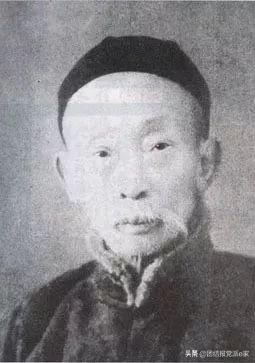
Master Cao was a pivotal force in the classical formulas school (经方派) and was a true master in using the underlying principles and formulas found in the Shang Han Lun and Jin Gui Yao Lue. Master Cao felt that the medical texts, which followed were too insignificant to study and discuss, and therefore he attached great importance to the thorough study of these texts to his students, and felt that Zhang Zhongjing’s theories and formulas were the perfect framework for successful medical practice. In addition to being skillfully versed in these medical canons, Cao Yingfu was also an accomplished poet, often interweaving the two when attempting to convey his thought process in clinic, often instructing his students to compose a poem and matching it with a relevant line from the classics. This kind of inquiry and thought process truly shows the breadth of his skill and how his mind rarely waivered from the classical Chinese medicine concept of the human body being a reflection of his environment, the microcosm of the macrocosm. However, master Cao was not completely strict in his formula choices and would often use formulas like Bu Zhong Yi Qi Tang, Xiao Yao San, and Liu Wei Di Huang Wan, in addition to herbs such as niu bang zi, qian hu and various others. This shows that he was obviously well read and did not quickly write off more modern formulas. His use of these non Zhang Zhongjing formulas displayed his deep understanding in the formula constructions and where they were applicable. He advocated that students must understand and study the root of the medical philosophies and not just pick the flowers, and it’s from this same feeling that he encouraged his students to read the Yue Fu (乐府诗集) poetry of the Han and Wei dynasties and specifically the poet Wang Yuyang (王漁洋).
When the Japanese invaded the south, his hometown of Jiangyin, Jiangsu province fell into enemy hands and on December 7th, 1937, he died heroically resisting the invaders. While master Cao died a hero, the world lost a great Chinese medicine master. We are very fortunate to have several of his books available in order for subsequent generations to learn from not just in China, but also around the world. It is my hope in translating some of his cases that this knowledge can spread. We are also very fortunate to have scholar-physicians like my teacher Dr. Huang Huang uphold this love and dedication to master Cao’s work and to classical literature.
Case 1 Female. Since delivering a child her cycles come every forty days, which are accompanied by distending pain in the epigastrium following meals. When the cycle arrives, there is pain extending from the stomach to the lower abdomen. During the pain she experiences a strong desire to have a bowel movement. After the bowel movement the pain would typically stop. Pain would return the following afternoon and stop during the menstrual flow, and once again come and go the following day. Both pulses were wiry. This is liver and gall-bladder exploiting deficiency of the spleen viscera. In this case Xiao Jian Zhong Tang with Chai hu and Huang Qin is appropriate.
Gui Zhi 3 qian Sheng Bai Shao 5 qian Zhi (Gan) Cao 2 qian Sheng Jiang 5 pcs Hong Zao 12 pieces Yi Tang 2 liang Chai Hu 3 qian Jiu (Huang) Qin 1 qian Tai Wu Yao 1.5 qian
After one package, her pain stopped and the menses ceased. Patient continued with two more packages, after which the condition resolved. The master (Zhang Zhongjing) in his great classic said:
“In cold damage, (when) the yang pulse is choppy and the yin pulse is wiry, as a rule there should be urgent pain in the abdomen. First give Xiao Jian Zhong Tang; if it does not reduce, Xiao Chai Hu Tang governs.” “伤寒,阳脉涩,阴脉弦,法当腹中急痛,先与小建中汤,不差者,小柴胡汤主之”.
Cao Yingfu (曹颖甫): Now here (in this case) I feel it goes without saying that there had not been a reduction and I immediately added Chai Hu and Huang Qin to treat her, why not? This woman’s situation was a menstrual disease and many belong to Chai Hu patterns, and so it was clearly obvious (to add it). The following day it was reported that the disease had resolved.
Case 2 Abdominal pain which liked pressure. During episodes of pain a distressing sensation of cold air was felt moving up and down (the body). Pulse was wiry-deficient. In addition there was an aversion to cold. This is due to the liver exploiting the spleen and Xiao Jian Zhong Tang governs. Gui Zhi 9g Bai Shao 18g Sheng Jiang 9g Zhi Gan Cao 6g Da Zao 6g Yi Tang 30g
Liáo Shēng annotation: “This case is a pattern of abdominal pain (due to) central yang insufficiency with interior deficiency. The patient experienced abdominal pain, which liked pressure, the pulse was wiry-deficient and an aversion to cold was present. This signifies the overabundance of yin cold-qi, central yang insufficiency, and liver wood exploiting spleen (earth). Therefore Xiao Jian Zhong Tang was used to treat and resolve the condition. The function of this formula is to supplement deficiency, quiet the center, moderate urgency and stop pain. The name of this formula is center fortifying (decoction). Fortify means to establish or set up, and because central qi is insufficient, it is very important to ‘establish’ or ‘set it up’. The formula contains sweat inducing (herbs) and not central effusing (herbs). It is referred to as a ‘minor’ (decoction) and only half (of the formula) resolves the exterior, so it does not completely secure the center. Xiao Jian Zhong Tang uses a heavy dose of Yi Tang, which is sweet, warm and serves as the sovereign to supplement the center. Bai Shao is the minister, which is sour and sweet to tonify yin. The assistant Gui Zhi is acrid-warm, which effuses and scatters. Combined with Bai Shao it regulates the nutritive and defense. In addition, Gan Cao, Da Zao and Sheng Jiang, which are sweet moderating and acrid warm, nourish the stomach and harmonize the center. Therefore (this formula) is able to warm and nourish central qi, calm and supplement yin and yang and regulate the nutritive and defense.”
*Xióng Liáo-Shēng (熊廖笙) style name Yǐ Xíng (以行) was born in 1905 in Ba County in Chongqing, Sichuan Province. Master Xióng was well versed in the classics, primarily the Nei Jing, Nan Jing, Shang Han Lun, and Jin Gui Yao Lue. The author of several books, Dr. Xióng possessed a deep and profound scholarship of the Shang Han Lun and was highly skilled in distilling the essence and precise details of various ancient doctors cases, which were found in his various annotations.
Don’t forget to join the Classical Chinese Medicine community by adding your email address to the bar on the right to be notified of any future publications, translations and writings!
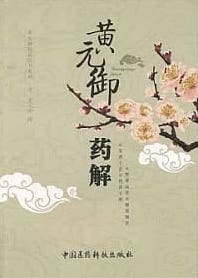
With today being the arrival of ‘Major Cold ‘(大寒 – the 24th solar term in the Chinese calendar lasting until Feb 3), what better day than today, to sit down with a cup of warm Wulong or Hongcha to translate passages from some of my favourite books. The following is a direct translation from the Bǎi Hé section of Huáng Yuányù’s (1705-1758) excellent ‘Interpretation of Medicinals’ (黃元御藥解).
Huáng Yuányù discusses Bǎi Hé
– Translated from Huáng’s Interpretation of Medicinals (黃元御藥解)
百合 味甘、微苦,微寒,入手太陰肺經。涼金瀉熱,清肺除煩。
Bǎi Hé – Sweet flavour, slightly bitter and slightly cold. Enters the hand Taiyin lung channel. Cools metal, drains heat, clears the lungs and eliminates vexation.
Bǎi Hé 7 pieces Zhī Mǔ 2 liǎng [listed as 3 liǎng in the Jīn Guì Yào Lüè]
Treats Bǎi Hé disease following the induction of sweat. Following cold damage, pathogenic qi shifts, and the hundred vessels are diseased. This is Bǎi Hé [disease]. Its symptoms present with disturbance to sleep and appetite, the occurrence of diarrhea and vomiting, difficulty differentiating between cold and heat, disquietude whether sitting or laying down, a bitter taste in the mouth, red urination, heart vexation, and a confused state of mind, with an inability to point to any specific channel or visceral disease. Now, the qi of the hundred vessels is received in the lungs, as the lungs are the ancestor of the hundred vessels. Thus, it is appropriate for the lungs to be clear. Following the promotion of sweat, the fluids [may be] desiccated and metal burned. Bǎi Hé clears the lungs and generates fluids. Zhī Mǔ cools metal and drains heat.
Bǎi Hé 7 pieces Huá Shí 3 liǎng (broken) Dài Zhě Shí (a pellet sized piece)
Treats Bǎi Hé disease following purgation. Purgation damages the yang of the central stomach duct, [resulting in] earth-damp counterflow [of the] stomach and depressed steaming lung heat. Bǎi Hé clears the lungs and drains heat; Huá Shí and Dài Zhě percolate dampness and downbear counterflow.
Bǎi Hé 7 pieces Boil the decoction and add one egg yolk, blend until smooth, and boil. Treats Bǎi Hé disease following vomiting. Vomiting damages the fluids of the lungs and stomach, resulting in the dryness of both metal and earth. Bǎi Hé clears the lungs and generates fluids. Jī Zǐ Huáng [egg yolk] supplements spleen essence and moistens dryness.
Bǎi Hé 7 pieces Shēng Dì Huáng juice 1 jīn [listed as 1 shēng in the Jīn Guì Yào Lüè] Add to Bǎi Hé decoction, boil and take. The stools should be like lacquer. Treats Bǎi Hé disease when neither sweating, vomiting or purgation have been used, and the disease appears as in the beginning. [Here] sweating, vomiting or purging have not been used and there is excess steaming of stasis heat [as well as] turbidity [which] has not been drained. Bǎi Hé clears the lungs and drains heat, while the juice of Shēng Dì cools and drains the stomach-intestines, and purges foul turbidity.
Bǎi Hé 1 jīn [listed as 1 shēng in the Jīn Guì Yào Lüè] Use 1 dǒu of water and soak overnight. Use [the liquid] to bathe the body. After bathing, eat boiled cake, and avoid salt. Treats Bǎi Hé disease, which has not resolved within a month, and has resulted in thirst. [Here] fire flares and dries metal, resulting in lung heat which fails to resolve, leading to thirst. The lungs govern the skin and hair, and the Bǎi Hé is used to wash the skin and hair, thereby clearing lung heat.
Bǎi Hé 1 liǎng Huá Shí 2 liǎng [listed as 3 liǎng in the Jīn Guì Yào Lüè] Powder [the ingredients], and take a square-inch spoonful in liquid, three times per day. When there is slight diarrhea, stop taking, as [this indicates that] heat has been eliminated. Treats Bǎi Hé disease, which has transmitted into heat effusion. [When] dampness is stirred, the stomach runs counterflow, resulting in lung depression that generates heat. Bǎi Hé clears metal and drains heat; Huá Shí disinhibits water and eliminates dampness.
Bǎi Hé is a superior medicinal, which cools metal, moistens dryness, drains heat, disperses depression, and depurates the qi layer. It’s various treatments include stopping tearing, stopping sadness, opening throat impediment, disinhibiting welling-abscess of the lung, clearing lung heat, treating vomiting of blood, disinhibiting urination, lubricating the large intestine, controlling deafness and ear pain, rectifying subcostal and breast welling-abscesses, and effusing the back of various sores. Steep Bǎi Hé in water overnight. [When] white foam appears, discard the water, and then decoct with spring water and use.
Don’t forget to join the Classical Chinese Medicine community by adding your email address to the bar on the right to be notified of any future publications, translations and writings!
Cinnamon Twig and Poria Pill (guì zhī fú líng wán)
Indications: Bronchial asthma, chronic obstructive pulmonary disease (COPD), pulmonary arterial hypertension, pleurisy, pleural effusion, interstitial pneumonia, pulmonary fibrosis, and recurrent pulmonary infections typically manifesting with a dark-red complexion, a stifling sensation and pain in the chest, purple lips and a dark tongue. This formula has a blood invigorating, stasis transforming effect, which can improve the blood supply of the heart and lungs.
Usage & Modifications:
1. Patients for whom this formula is suitable tend to have a red or purple-red complexion, abdominal fullness, resistance to pressure in the lower left abdomen with possible tenderness, headaches, dizziness, insomnia, irritability, restlessness, stirring palpitations, and a dark tongue body with possible purple spots.
2. For patients that experience diarrhea after taking the formula, have them take in after meals or decrease the dosage.
3. Use with caution in pregnancy.
4. Modifications:
If there is a stifling sensation and pain in the chest, a chronic cough, and a wan and sallow complexion, add Angelicae sinensis Radix (dāng guī) 15g, Chuanxiong Rhizoma (chuān xiōng) 15g, and Salviae miltiorrhizae Radix (dān shēn) 15g
If there is a stifling sensation in the chest, abdominal distention, and an oily complexion, add Citri reticulatae Pericarpium (chén pí) 20g, Aurantii Fructus (zhǐ ké) 20g, and Zingiberis Rhizoma recens (shēng jiāng) 20g
If there is a stifling sensation in the chest and constipation, add Aurantii Fructus (zhǐ ké) 20g, Allii macrostemi Bulbus (xiè bái) 20g, and Trichosanthis Fructus (quán guā lóu) 30g.
Representative Case History:
Yu, 74-year-old male, 160cm/70kg.
Initial consultation on June 5, 2018
Chief complaint: Recurrent cough and wheezing for 9 years, with dyspnea, an inability to climb stairs quickly, and abdominal distention following meals.
History: In April 2018 during a hospital visit, he was diagnosed with an acute exacerbation of chronic obstructive pulmonary disease (COPD), arrhythmia, atrial fibrillation, cardiac insufficiency, heart valve disease, and a fatty liver.
Signs: average build, dark, red and oily complexion, obvious bags under the eyes, purple-dark lips and tongue, stasis marks under the tongue, abdominal fullness, and resistance to pressure in the lower costal arch (flanks).
Second consultation on June 25, 2018: After taking the herbs, his breathing was smooth and easy, however cough and wheezing were still present, but he was still able to play mah-jong. The same formula was continued.
Third consultation on August 20, 2018: No labored breathing when walking and he was able to climb 3 floors. The stasis marks under his tongue had improved.
The following is a collection of notes gathered for research on a course I am developing on center earth physiology and pathology. This is a large subject, and therefore the following information is far from complete, but is merely presented here to provide a glimpse into this important concept of proper physiological movement and dynamics.
In the majority of Huáng’s books, great importance is laid on proper physiological movement throughout the body. Huáng’s interpretations of formulas and disease mechanisms are usually described through the lens of the proper or faulty movement and breakdown of this dynamic. The basic tenet of this medicine is based on proper movement and interaction of yin and yang, and when describing physiology or pathology, the terms Shùn (顺) translated as ‘normal’, ‘favourable’ or ‘to follow the course of’, and Nì (逆), typically translated as ‘counterflow’ are used. In very simple terms, when the body is running in ‘Shùn’, all physical processes are in harmony, running along their proper course, resulting in a state of health. When ‘Nì’ occurs and the natural movement or order of things are running against their proper course, physiological processes start to break down, resulting in dis-ease.
As can be seen from the image below, proper healthy movement in the entire human organism is dependant on this specific circular dynamic. Elucidation on this concept is not mentioned in many literary works, with the exception of Qing Dynasty scholar/physician Péng Zǐ-Yì’s (彭子益), Circular Movements in Ancient Chinese Medicine (圆运动的古中医学), a text primarily focused on these circular movements.
Physiological Implications
The following commentary is essentially a translation of Huáng’s original chart, with a few extra tidbits added from some of his other works.
“When ascending and descending are balanced, and yin and yang interact, this is referred to as center qi.”
Center Qi debilitation results in an obstruction to ascent and descent.
Foot Taiyin Spleen governs ascent on the left – Foot Yangming Stomach governs descent on the right.
When Kidney water is too cold, this results in diseases of the Essence.
When the stomach fails to descend, the heart is unable to descend as well leading to excessive cold of kidney water due to lack of fire.
Heart fire flaring results in diseases of the Shen.
When the spleen fails to ascend, both the liver and kidneys are unable to ascend. When water fails to ascend, fire flares.
** Proper movement of center qi ensures a good balance between water and fire.
When liver wood is depressed, this results in blood diseases.
When the spleen fails to ascend, wood is depressed. Because the liver stores blood, when wood is depressed, this results in blood disease.
When the lungs are obstructed on the right, this results in qi diseases.
When the stomach fails to descend, the lungs are also unable to descend. Because the lungs store the qi, obstructed metal leads to qi disease.
Spleen dampness is the result of center qi non-transformation resulting in a failure to ascend or descend. This leads to the improper movement of both the clear yang and turbid yin. Another possibility is a yang deficiency in the body which leads to the earth being unable to descend. As a result dampness forms.
[Upper] – Lung-Metal and Heart-Fire —> descend through stomach-earth —> When stomach earth fails to descend, this leads to counterflow ascent of both metal and fire.
[Lower] – Liver-Wood and Kidney-Water —> ascend through spleen-earth —> When the earth is weak or center earth yang is deficient this leads to earth dampness with a failure to ascend, and thus both wood and water sink.
Wú Zhū Yú (吳茱萸): Acrid and bitter flavor, warm nature; enters the foot Yángmíng stomach, foot Tàiyīn spleen, and foot Juéyīn liver channels. Warms the centre, drains dampness, opens depression, breaks congealment, descends turbid yin to stop vomiting, and ascends clear yang to stop diarrhea.
Cold Damage’s Wú Zhū Yú Tāng
Wú Zhū Yú (吳茱萸) 1 shēng
Rén Shēn (人蔘) 3 liǎng
Shēng Jiāng (生薑) 6 liǎng
Dà Zǎo (大棗) 12 pieces
Treats Yángmíng cold damage with a desire to vomit after eating. Normally, stomach qi descends, [which results] in the absence of vomiting on the intake [of food]. [When] stomach qi adversely ascends, this results in vomiting and reduced [food] intake. Rén Shēn and Dà Zǎo bank the earth and supplement the center; Wú Zhū Yú and Shēng Jiāng warm the stomach and descend counterflow. [This] treats Juéyīn disease with dry retching, vomiting of foamy drool, and headaches.
Due to deficiency of the earth, wood becomes stagnant, centre qi is harmed, the stomach ascends as opposed to descending, and turbid qi is upthrusted, resulting in headaches and dry retching.
When damp qi is congealed and stagnant, this results in vomiting of foamy drool. Rén Shēn and Dà Zǎo bank the earth and supplement the center; Wú Zhū Yú and Shēng Jiāng descend counterflow and course wood. [This] treats Shàoyīn disease with vomiting, diarrhea, reversal cold of the extremities, vexation, agitation and a desire to die.
When cold water rebels against the earth, the spleen sinks and the stomach [runs] counterflow, which leads to both vomiting and diarrhea. [When] center qi is depleted, the four limbs lack warmth, resulting in reversal cold of the extremities. [When] yang departs from its root, it disperses and strays without returning, resulting in vexation, agitation and a desire to die. Rén Shēn and Dà Zǎo bank the earth and supplement the center; Wú Zhū Yú and Shēng Jiāng descend counterflow and ascend that which is sinking.
In the Jīn Guì [this formula] treats vomiting and chest fullness. [When] the center is deficient and the stomach runs counterflow, turbid qi becomes congested in the chōng vessel, resulting in vomiting and chest fullness. Rén Shēn and Dà Zǎo bank the earth and supplement the center; Wú Zhū Yú and Shēng Jiāng descend counterflow and drain fullness.
History: Superficial gastritis with ulceration for over 10 years. Patient reported that he often experienced abdominal pain after taking western medications as well as abdominal discomfort after eating fruit. He felt a sticky sensation in his umbilicus, and also experienced abdominal distention, belching, poor appetite, difficulty falling asleep, and had no issues with his bowel movements. He was worried that his digestive disease will develop into cancer, and therefore, his mood was quite poor.
Signs: Robust build, double eyelids, frowning eyebrows, lively facial expressions, a red face, and dusky red lips. In addition, he procrastinated when he spoke. His abdomen was soft, there were purple stasis marks below his tongue, his throat was red, tongue coating slightly greasy, and his pulse was slippery.
Prescription: jiangbanxia 15g, houpo 15g, fuling 15g, sugeng 15g, zhike 15g, zhizi 15g, lianqiao 30g, huangqin 10g; 9 packets; 3 days on, 2 days off.
Second consultation on February 26, 2019: After taking the formula, his symptoms had improved. However, once stopping them, the symptoms returned, yet this time there was no abdominal pain, and only a feeling of discomfort, plus the location of the pain had now changed. He was also belching, had subcostal distention, and his sleep was reduced. 9 packets of the same formula with chenpi 20g was given; 3 days on, 2 days off.




 Eran Even, Ph.D., Dr. TCM.