Hú Xī-Shù-Guì Zhī Jiā Gé Gēn Tāng (Cinnamon Twig Decoction plus Kudzu)

C1889F76D1DD4A168D3241E3F09F193A.jpgHere’s a case of a wind strike pattern. Nothing too enlightening or complicated here, but sometimes we need to be reminded of the simple stuff!!

On December 10, 1965 a twenty one-year-old female presented at the clinic. Yesterday she had contracted a common cold manifesting with symptoms of headache, dizziness, sweating, aversion to cold, weak pain in her shoulders and back, and a tight obstructive pain in the left side of her neck on rotation towards the left. She had a thin white tongue coating, and her pulse was floating and slightly rapid.

A floating, slightly rapid pulse, thin-white tongue coat, aversion to cold, sweating, and headaches signify a Tài Yáng wind strike pattern. Shoulder and back pain, and neck pain on left rotation of the head signify a gé gēn tāng (Kudzu Decoction) pattern. The dizziness indicates that the exterior has not yet been resolved, with upward surging of qì.

Comprehensive analysis: This is a Tài Yáng wind strike pattern with simultaneous stretched stiff nape and back, seen in a guì zhī jiā gé gēn tāng (Cinnamon Twig Decoction plus Kudzu) formula presentation.

Formula:

guì zhī (Cinnamomi Ramulus) 10g

bái sháo (Paeoniae Radix alba) 10g

shēng jiāng (Zingiberis Rhizoma recens) 10g

dà zǎo (Jujubae Fructus) 4 pieces

zhì gān cǎo (Glycyrrhizae Radix preparata) 6g

gé gēn (Kudzu Radix) 12g

Results:  After taking 1 package of the formula, her symptoms decreased, and after 2 more, her symptoms had completely resolved.

Dr. Hú Xī-Shù’s approach in the treatment of coughs (Part 2)

Exterior cold and interior thin-fluids are common allies, therefore resolving the exterior and dispelling thin-fluids must be carried out simultaneously

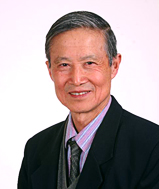
A patient who had once come to see Dr. Hú with a chronic cough was given xiǎo qīng lóng tāng (Minor Bluegreen Dragon Decoction) with the addition of fú líng (Poria). A senior physician asked the doctor whether he felt this gentleman’s cough was due to external contraction or to internal damage? Dr. Hú simply answered “this patient’s cough is the result of external contraction combined with interior thin-fluids, and fits a xiǎo qīng lóng tāng (Minor Bluegreen Dragon Decoction) with fú líng (Poria) presentation”. This is a complete formula, which is able to address the root cause, and treat the cough’s pattern of external contraction and interior thin-fluids. Zhāng Jǐng-Yuè pointed out that coughs can be divided into two main patterns, one being external contraction, the other being internal damage. This is how we classify them according to theory, however in clinical reality, these two patterns frequently simultaneously coexist. Internal damage can easily provoke external contraction, and external contraction can also easily bring about internal damage. Therefore, in clinical practice, one does not necessarily need to determine whether the cause is external contraction or internal damage, as long as there are definite symptoms of each, and treatment is based on pattern identification, that would be sufficient. Classifying coughs into either external contraction or internal damage is of course easy to remember for new practitioners or ones with little clinical experience, however, once faced with these presentations in clinic, one would run in to difficulties finding the right formulas. For example, if a patient presents with cough, and we were to use this aforementioned strategy, determining whether or not one should diffuse and resolve (the exterior), or supplement, and boost would prove difficult and would completely neglect treatment of one or the other pattern, prolonging and failing to treat the disease. The following case clearly elucidates this problem. hu xi-shu.jpg
Case Study 

On January 7th, 1966, a 32-year-old female patient presented at the clinic complaining of a cough that starts every winter for the last three years. The current cough has already been going on for the last two months. A previous physician had prescribed sān ǎo tāng (Three-Unbinding Decoction), and a modified version of xìng sū sǎn (Apricot Kernel and Perilla Leaf Powder), which offered her no relief. Afterwards, she was given over twenty packages of modified zhǐ sòu sǎn (Stop Cough Formula), which had very little effect, and finally, she was prescribed a formula containing èr chén täng (Two-Aged [Herb] Decoction) combined with sān zǐ yǎng xīn tāng (three seed decoction to nourish ones’ parents), which again offered very little effect. 

Current signs and symptoms: cough, spitting up of copious amounts of white colored phlegm, an aversion to cold felt over her back, cold extremities, dry mouth with little desire to drink, chest fullness, epigastric fullness and focal distention, poor appetite, loose stools, a white-slippery tongue coat, dark tongue body, and a deep-wiry-thin pulse. 

Dr. Hú’s formula: 

má huáng (Ephedrae Herba) 3 qián

guì zhī (Cinnamomi Ramulus) 3 qián

bái sháo (Paeoniae Radix alba) 3 qián

xì xǐn (Asari Herba) 3 qián

gān jiāng (Zingiberis Rhizoma) 3 qián

zhì gān cǎo (Glycyrrhizae Radix preparata) 3 qián

wǔ wèi zǐ (Schisandrae Fructus) 4 qián

bàn xià (Pinelliae Rhizoma preparatum) 5 qián

fú líng (Poria) 4 qián 

Results: After taking three packages, her chest fullness, and spitting up of phlegm had decreased substantially. After another six packages, the cough had obviously improved. The formula was continued for another two weeks, after which the cough had completely disappeared, and her overall condition was eliminated. 

At the end of treatment, Dr. Hú once again emphasized the treatment principles for external cold with interior thin-fluids; “This treatment principle has repeatedly been stressed in the explanations of specific formula presentations such as, guì zhī qù guì jiā fú líng bái zhú tāng (Cinnamon Twig Decoction Minus Cinnamon with Added Poria and Atractylodes), and xiǎo qīng lóng tāng (Minor Bluegreen Dragon Decoction) where the root is as such”: “There are cold pathogens in the exterior, and thin-fluids in the interior. These fluids create stoppage in the interior, whereas the interior is somewhat obstructed. At the same time nothing is able to penetrate the exterior and if water is unable to be disinhibited, the exterior would be unable to resolve. If a strong sweat is promoted, or if the exterior is diffused strongly, the interior thin-fluids will be agitated and numerous signs will appear. If we simply disinhibit water, pathogens will invariably enter the interior”. In this particular case, an exterior resolving formula with medicinals to disinhibit water, and drive out thin-fluids was used, thereby, affecting both the exterior and interior. The formula used contains má huáng (Ephedrae Herba), guì zhī (Cinnamomi Ramulus), bái sháo (Paeoniae Radix alba), and gān cǎo (Glycyrrhizae Radix) to promote sweating, in order to expel exterior pathogens. bàn xià (Pinelliae Rhizoma preparatum), gān jiāng (Zingiberis Rhizoma), wǔ wèi zǐ (Schisandrae Fructus), and fú líng (Poria) drive out cold in order to eliminate interior thin-fluids. Therefore, once the exterior is resolved and interior thin-fluids removed, the cough will spontaneously cease. 

A dry cough does not necessarily mean an absence of phlegm. A formula to transform phlegm and lower qì can arrest these coughs

Patients with dry coughs are commonly seen in clinical practice, and Dr. Hú would commonly treat these patients with phlegm transforming, counterflow descending medicinals such as, Bàn Xià Hòu Pò Tāng (Pinellia and Magnolia Bark Decoction), or Líng Gān Wǔ Wèi Jiāng Xīn Xià Tāng (Poria, Licorice, Schisandra, Ginger, Asarum, and Pinellia Decoction), which can quickly arrest coughing. Because this can seem quite puzzling many of us have asked, “Since many cases of dry coughs are due to yīn deficiency or hyperactive fire, and treatment should involve enriching yīn or clearing heat and descending fire, wouldn’t this be considered an adverse treatment?” Dr. Hú would just say, “This is actually the correct treatment and not an adverse treatment”. Furthermore, he shared with us his vast experience and clinical applications of their treatment. He would say that there are many patients with dry coughs who continuously take formulas, and the coughs fail to resolve even after several months. One would view the case and identify the pattern as lung fire, or liver fire, or yīn deficiency, and treat with medicinals such as huáng qín (Scutellariae Radix), zhī zǐ (Gardeniae Fructus), shēng dì huáng (Rehmanniae Radix), zhī mǔ (Anemarrhenae Rhizoma), bèi mǔ (Fritillariae Bulbus), etc, and even after extended periods of time, there is minimal effect. What is the reason? Actually this principle is quite simple; the Chinese medicine concept of treatment based on pattern identification is used for the whole body, and not just according to one individual symptom. Phlegm and thin-fluids harassment is one of the main causes of coughing and wheezing, and the coughing up of phlegm is one basis for pattern identification, but is not the only symptom. The Chinese medical concept of phlegm and thin-fluids is quite extensive, and there are numerous cases where in an absence of phlegm, there is an absence of cough, just as there are numerous cases of cough in the absence of phlegm. We must do an overall differentiation of patterns. The following case helps illustrate this point. 

Case Study 

A 38-year-old female was first seen on Feb 12 1966. This patient had suffered with a dry cough and itchy throat for over a month. She had taken a modified version of zhǐ sòu sǎn (Stop Cough Formula), and modified versions of sāng xìng tāng (Mulberry Leaf and Apricot Kernel Decoction) and mài mén dōng tāng (Ophiopogonis Decoction). The cough not only failed to improve, but was actually getting worse. Currently she presents with a dry cough, itchy throat, dry mouth with no desire to drink, belching, chest oppression, loose bowel movements occurring once or twice daily, a thick slimy tongue coating and a slippery thin pulse. 

She was prescribed a modified version of Líng Gān Wǔ Wèi Jiāng Xīn Xià Tāng (Poria, Licorice, Schisandra, Ginger, Asarum, and Pinellia Decoction)

fú líng (Poria) 4 qián

xì xǐn (Asari Herba) 2 qián

wǔ wèi zǐ (Schisandrae Fructus) 4 qián

bàn xià (Pinelliae Rhizoma preparatum) 5 qián

zhì gān cǎo (Glycyrrhizae Radix preparata) 2 qián

chén pí (Citri reticulatae Pericarpium) 5 qián

shēng jiāng (Zingiberis Rhizoma recens) 3 qián

xìng rén (Armeniacae Semen amarum) 3 qián

jié gěng (Platycodi Radix) 3 qián

zhì pí pá yè (Eriobotryae Folium preparata) 3 qian

Results: After taking one package of the above formula, the cough had decreased. After three packages the cough stopped. 

The above patient suffered from a dry cough, itchy throat and dry mouth commonly seen in lung heat, liver fire or yīn deficiency patterns. In addition this patient also had no desire to drink, belching, chest oppression, sloppy stools, a thick slimy tongue coating and a slippery pulse. All these signify a phlegm-thin-fluids pattern. The dry cough is from phlegm-thin-fluids invading the lung and impaired diffusion and downbearing of the lung. The dry cough and itchy throat are a result of stagnation and obstruction to fluids, which are unable to bear upwards. Therefore when treating this type of dry cough, using bitter cold, heat clearing medicinals or sweet cold yīn enriching herbs will only worsen the stagnation and obstruction of fluids and cause phlegm and thin-fluids to harass the upper (burner) and delay recovery. Because phlegm was treated by restraint and the formula was chosen on the basis of the pattern, only three packages were needed for recovery. 

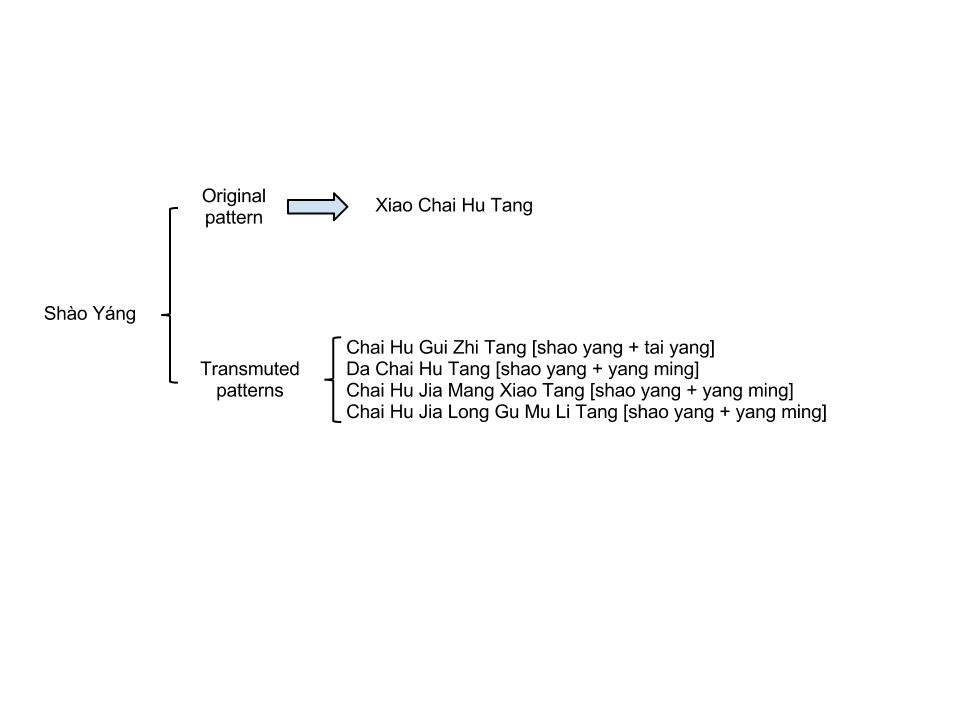
When diffusing the lungs and transforming phlegm is ineffective, harmonizing and resolving shào yáng can achieve surprisingly remarkable results

A common cause for coughs is the upward harassment of phlegm and thin-fluids, with the lungs losing their ability to diffuse and downbear. Therefore, a major method of treatment is to diffuse the lungs, and transform phlegm. However when treating according to this law, and our effectiveness is less than satisfactory, this is mainly because of failure to analyze the cause, poor pattern identification, or failing to use medicinals and formulas according to the pattern. There are some cases of coughs where pathogenic factors are neither in the exterior, nor the interior, but are half-exterior, half-interior. If we use methods such as diffusing the lungs, transforming phlegm, resolving the exterior and transforming thin-fluids when treating these kinds of coughs, then of course we won’t see positive results. Here, we must use the method of harmonizing and resolving the shào yáng, in order to obtain quick resolution of the condition. There is a very clear-cut account of this in the Shāng hán lùn (傷寒論 Discussion of Cold Damage) where it states in line 96: 

“When in cold damage or wind strike that has lasted for six or seven days, there is alternating chills and fever, chest and subcostal fullness, dejection with no desire to eat or drink, irritability, and frequent vomiting, or possibly irritability in the chest with no vomiting; or thirst, or abdominal pain, or sub-costal hard focal distention, or palpitations below the heart with difficult urination, or absence of thirst with mild generalized heat, or cough; xiǎo chái hú tāng (Minor Bupleurum Decoction) masters it”. 

Where it says ‘or cough’, it is mentioning it alongside the numerous signs of a xiǎo chái hú tāng (Minor Bupleurum Decoction) presentation. When we see cases of coughing, in combination with some of the other representative signs and symptoms of a xiǎo chái hú tāng (Minor Bupleurum Decoction) presentation, this formula may be used. Therefore, Dr. Hú commonly used this formula in the treatment of coughs. 

Case Study 

On March 12, 1965, a thirty-four-year old female patient presented at the clinic, complaining of a cough that has lasted for well over two years. It had previously started after contracting a common cold, and presents all year: worse in the winter, and mild in the summer. She explained that the cough would typically manifest in the late morning (10:00am), late afternoon (between 3:00pm and 4:00pm), and again in the early evening (8:00pm). She was seen at another hospital where she was given over thirty packages of a formula (containing various lung diffusing, phlegm transforming medicinals such as xìng rén (Armeniacae Semen amarum), jié gěng (Platycodi Radix), bàn xià (Pinelliae Rhizoma preparatum), guā lóu (Trichosanthis Fructus), pí pá yè (Eriobotryae Folium), qián hú (Peucedani Radix), etc.) all to no avail.  

Current symptoms: spitting up of white-frothy sputum, nausea, dry throat, absence of sweating, bilateral subcostal distension and fullness, a red tongue body, a thin white tongue coat, and a wiry-slippery pulse. In addition, she was diagnosed with tuberculosis in 1962. 

Dr. Hú prescribed a modified version of xiǎo chái hú tāng (Minor Bupleurum Decoction) 

chái hú (Bupleuri Radix) 3 qián

dǎng shēn (Codonopsis Radix) 3 qián

bàn xià (Pinelliae Rhizoma preparatum) 3 qián

huáng qín (Scutellariae Radix) 3 qián

dà zǎo (Jujubae Fructus) 4 pieces

zhì gān cǎo (Glycyrrhizae Radix preparata) 2 qián

shēng jiāng (Zingiberis Rhizoma recens) 3 qián

jié gěng (Platycodi Radix) 2 qián

bái sháo (Paeoniae Radix alba) 2 qián 

Results: After taking six packages of the formula, her cough had decreased. bái sháo (Paeoniae Radix alba) was removed from the formula, and 2 qián of zhǐ shí (Aurantii Fructus immaturus), and 4 qián each of shēng lóng gǔ (Fossilia Ossis Mastodi), and mǔ lì (Ostreae Concha) were added. After six more packages, the subcostal distension and fullness was gone. Afterwards, she was given over ten packages of a modified version of Bàn Xià Hòu Pò Tāng (Pinellia and Magnolia Bark Decoction), and her cough had completely resolved. 

The characteristics signs of this case were the cough, which occurred at specific times, the subcostal distension and fullness, nausea, and dry throat, which are all typical of a Shào Yáng presentation. We can say that with this case, the pathogenic factors were neither in the exterior, nor the interior, but lay in the half-exterior, and half-interior aspects of the body. It can also be said that in cases of enduring coughs, both the stomach qì and the defensive qì are deficient, which explains why lung diffusing, phlegm transforming medicinals would be ineffective, and unable to expel the pathogenic factors. Here we must use medicinals such as dǎng shēn (Codonopsis Radix), bàn xià (Pinelliae Rhizoma preparatum), shēng jiāng (Zingiberis Rhizoma recens), dà zǎo (Jujubae Fructus), and gān cǎo (Glycyrrhizae Radix) in order to supplement the center and strengthen the defense. Only then can the pathogens be expelled into the exterior, and once they are eliminated, the cough can resolve on its own. 

Commentary: The five cases above (see part 1 here) introduced us to five different formula presentations, and Dr. Hú’s main strategies and experience in treating coughs. Dr. Hú always utilized the method of differentiation according to formula presentations, and in the treatment of coughs, there are numerous such as, guì zhī jiā hòu pò xìng zǐ tāng (Cinnamon Twig Decoction Plus Magnolia Bark and Apricot Kernel), má xìng shí gān tāng (Ephedra, Apricot Kernel, Gypsum and Licorice Decoction), sāng jú yǐn (Mulberry Leaf and Chrysanthemum Decoction), má xìng yǐ gān tāng (Ephedra, Apricot Kernel, Coicis and Licorice Decoction), xiè xīn tāng (Drain the Epigastrium Decoction), mài mén dōng tāng (Ophiopogonis Decoction), líng gān wǔ wèi jiāng xīn xià xìng dá huáng tāng (Poria, Licorice, Schisandra, Ginger, Asarum, Pinellia, Apricot Kernel, and Rhubarb Decoction), etc. With that being said, once we encounter a specific formula presentation, we are able to employ specific formulas and medicinals to treat the condition, and must not be limited by the idea of one formula – one method.
A Case of Lumbar and Neck Pain-Professor Féng Shì-Lún (冯世纶)

Gé Gēn Jiā Bàn Xià Tāng (Kudzu Decoction with Pinellia)

On December 21, 1965 a twenty one-year old female presented at the clinic. The previous day she had contracted a common cold manifesting with symptoms of headache, dizziness, generalized body pain, lumbar pain, nausea with a desire to vomit, aversion to cold, and frequent abdominal pain with loose bowel movements. Her pulse was floating-rapid, and she had a thin white tongue coating.

The white tongue coat, floating-rapid pulse, aversion to cold, headache, generalized body pain, and lumbar pain signify Tài Yáng cold damage. The frequent abdominal pain with loose bowel movements indicates Tài Yīn (disease). The dizziness, and nausea with desire to vomit show that there is interior rheum invading upwards, which is a bàn xià (Pinelliae Rhizoma preparatum) presentation.

Comprehensive analysis: This is a Tài Yáng Tài Yīn combination disease, which fits with a gé gēn jiā bàn xià tāng (Kudzu Decoction with Pinellia) presentation.

Formula:

gé gēn (Kudzu Radix) 12g
má huáng (Ephedrae Herba) 10g
guì zhī (Cinnamomi Ramulus) 10g
shēng jiāng (Zingiberis Rhizoma recens) 10g
bái sháo (Paeoniae Radix alba) 10g
dà zǎo (Jujubae Fructus) 4 pieces
zhì gān cǎo (Glycyrrhizae Radix preparata) 6g
bàn xià (Pinelliae Rhizoma preparatum) 12g

Results: After taking 1 package of the formula, her symptoms decreased, and after 2 packages, her symptoms had completely resolved.

Huáng Qín Tāng [Line 172]

Chéng Wú-Jǐ 成无己

From ‘A commentary on the Annotated Shāng Hán Lùn’ (注解伤寒伦) by Chéng Wú-Jǐ

Line 172 

In a Tài Yáng and Shào Yáng combination disease with spontaneous diarrhea, give huáng qín tāng (Scutellaria Decoction); if there is retching, huáng qín jiā bàn xià shēng jiāng tāng (Scutellaria Decoction plus Pinellia and Fresh Ginger) rules it. 

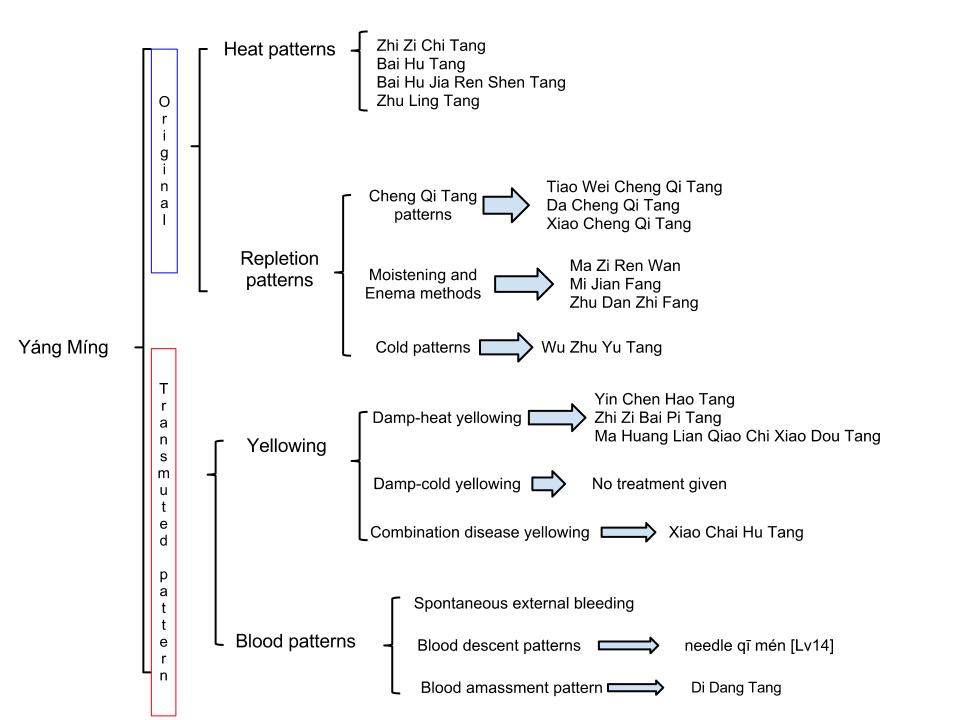
Commentary: In a Tài Yáng and Yáng Míng combination disease, spontaneous diarrhea is coming from the exterior, and gé gēn tāng (Kudzu Decoction) is given to effuse sweat. In a Yáng Míng and Shào Yáng combination disease, spontaneous diarrhea is coming from the interior, and a chéng qì tāng (Order the Qi Decoction) formula is used to precipitate it. This is a Tài Yáng and Shào Yáng combination disease, and the spontaneous diarrhea is a result of the condition being half in the exterior and half in the interior. Here it would be inappropriate to promote sweat or precipitate, so huáng qín tāng (Scutellariae Decoction) is given to harmonize and resolve the pathogens laying half in the exterior and half in the interior. Retching indicates counterflow of stomach qì so bàn xià (Pinelliae Rhizoma preparatum) and shēng jiāng (Zingiberis Rhizoma recens) are added to dissipate counterflow qì.

Huáng Qín Tāng (Scutellariae Decoction)

huáng qín (Scutellariae Radix) 3 liǎng (9g) [acrid-cold]
zhì gān cǎo (Glycyrrhizae Radix preparata) 2 liǎng (6g) [sweet-neutral]
sháo yào (Paeoniae Radix) 2 liǎng (6g) [sour-neutral]*
dà zǎo (Jujubae Fructus) 12 pieces, broken [sweet-warm]

*In the Běn Cǎo Jīng, sháo yào (Paeoniae Radix) is classified as bitter, and is considered to be mildly cold in the Míng Yī Bié Lù.

Commentary: In vacuity and non-repletion, (the) bitter (flavor) is used to harden, and sour is used to contract. huáng qín (Scutellariae Radix) and sháo yào (Paeoniae Radix) are bitter and sour, and are used to harden and constrain the qì of the stomach and intestines. In weakness and insufficiency, (the) sweet (flavor) is used to supplement. gān cǎo (Glycyrrhizae Radix) and dà zǎo (Jujubae Fructus) are both sweet and can supplement and secure stomach and intestinal weakness.

Simmer the four ingredients above in 1 dǒu of water (2,000ml) until reduced to 3 shēng (600ml). Remove the dregs and take 1 shēng (200ml) heated, twice during the day and one at night. If there is retching, add ½ shēng (100ml) of bàn xià (Pinelliae Rhizoma preparatum) and 3 liǎng (9g) of shēng jiāng (Zingiberis Rhizoma recens)*.

*The Sòng dynasty version does not include this modification but has a separate line for huáng qín jiā bàn xià shēng jiāng tāng (Scutellaria Decoction plus Pinellia and Fresh Ginger).

Dr. Hú Xī-Shù’s approach in the treatment of coughs

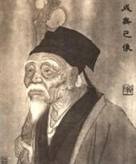
For the last few years I have been engaged in quite extensive research and study in the unique methods and index.jpgtreatment style of Dr. Hú Xī-Shù.  Although I have never personally studied with him (I was only eight years old when he died), I have always felt a very deep connection to his approaches.  To be a student of the Jīng Fāng current one must become intimate with the classic writings of Zhòng-Jǐng (仲景),  Fāng Yǒu-Zhí (方有执), Xú Líng-Tāi (徐灵胎), and the modern writings of Hú Xī-Shù (胡希恕), Liú Dù-Zhōu (刘渡舟), Fàn Zhōng-Lín (范中林), and Huáng Huáng (黄煌), to name just a few. There are obviously countless physicians of the past and present that have contributed to this fascinating and clinically relevant specialty however; these are the physicians that have exerted the greatest influence on my practice. 

There are currently very few books available on the Jīng Fāng current available in the English language, and it is for this exact reason that my colleague Michael Max and I are in the process of translating a very important clinical text exemplifying the strategies and methods utilized by some of these doctors mentioned above.  It is my hope that this text will assist in raising the level of study in North America, and contribute to the ever-evolving state of Chinese medicine in the west.

The following is the first part of a translation with commentary on the treatment of coughs, taken from Dr. Hú’s ‘Popular Lectures on Cold Damage’ (伤寒论通俗讲话).  It includes his various theories on treatment and includes representative case studies to illustrate these methods.  Part two will follow in the next issue. 

Coughing is mainly caused by the invasion of phlegm and thin-fluids.  Treatment should involve warm transformation, descending counterflow and calming

There are numerous formulas that are able to effectively treat coughs, some may even say that there are ‘thousands upon thousands’ (成千上万).  However, when treating coughs, Dr. Hú would most commonly use the formula Bàn Xià Hòu Pò Tāng (Pinellia and Magnolia Bark Decoction), taken from the Jīn Guì Yào Lüè (Essentials from the Golden Cabinet), where it clearly illustrates an intimate relationship between coughing and phlegm and thin-fluids. Numerous cases of coughing are due to the upward invasion of phlegm and thin-fluids, causing qì to run counterflow and not descend.  The treatment of phlegm and thin-fluids is clearly elucidated in the Jīn Guì Yào Lüè where it states:

“In diseases of phlegm, and thin-fluids, one should harmonize with warm medicinals”.

This is a very important treatment principle in addressing phlegm, thin-fluids, and coughs.  Adhering to these principles when selecting suitable formulas, will increase our clinical effectiveness.

Case Study

Huang, Female, 38 years old                                                                                                              

Initial diagnosis was on Feb 12, 1966:  Patient presented with a cough combined with expectoration of white phlegm, an itchy throat, chest fullness, a dry throat with no desire for fluids and bilateral rib side distension.  She has already taken several packages of herbal formulas to no avail.  Her tongue coating was thick and slimy, and her pulse was slippery-thin.

This pattern belongs to phlegm and thin-fluids harassing the upper (burner), and impaired depurative downbearing of the lungs.  This was treated by warm transformation and downbearing counterflow with Bàn Xià Hòu Pò Tāng with additions and subtractions.

Bàn Xià 4 qián,                      

Hòu Pò 3 qián,                       

Fú Líng 4 qián,                       

Sū Zǐ 3 qián,      

Jú Pí 5 qián,

Xìng Rén 3 qián,          

Jié Gěng 3 qián                       

Shēng Jiāng 3 qián

Results:  After taking only 2 packages of the above herbs, the cough had stopped.   

Bàn Xià Hòu Pò Tāng is originally from the Jīn Guì Yào Lüè in the miscellaneous gynaecological diseases section.  Originally used for “female patients with the sensation of fried meat in the back of the throat”

Dr. Hú believed this formula to be Xiǎo Bàn Xià Jiā Fú Líng Tāng with the additions of Hòu Pò and Sū Yè.  It is used in phlegm-thin fluids qì bind manifesting with chest fullness, throat blockage and cough.  It warms and transforms phlegm and thin-fluids, downbears counterflow, and regulates qì.    The patient above was manifesting with a cough due to phlegm and thin-fluids, therefore the use of this formula offered a quick resolution.

The original formula contains (Zǐ) Sū Yè, but Dr. Hú prefered to use (Zǐ) Sū Zǐ.  If there are obvious exterior signs present, then (Zǐ) Sū Yè may be added, and you may also add either Guì Zhī Tāng or Má Huáng Tāng.  If heat signs are present then Shēng Shí Gāo may be added.  If there is an enduring cough due to cold thin-fluids, without any obvious exterior signs, then combine with Líng Gān Wǔ Wèi Jiāng Xīn Xià Tāng (Poria, Licorice, Schisandra, Ginger, Asarum, and Pinellia Decoction).

Enduring depressed phlegm and thin-fluids frequently transform into heat, and therefore true cold, and false heat signs need to be clearly distinguished

In clinical practice, numerous patients with coughs are frequently seen.  Quite often they have taken several decoctions yet their symptoms fail to improve, even to the point where some of these patients symptoms intensify.  One of the main reasons for this is the inability to clearly differentiate between cold and heat.  The following case study illustrates this problem.

Case Study

A 63-year-old male presented at the clinic on January 4, 1966 complaining of a cough accompanied by spitting up of yellowish-white sputum that has been going on for the last four months.  This initially started last year in October with symptoms of a productive cough and throat pain, for which he had taken various medicinals that offered no relief and in fact caused some wheezing.  The main formula he was initially prescribed was a modified version of Sāng Xìng Tāng (Mulberry Leaf and Apricot Kernel Decoction). He had also mentioned that in this time he has consumed over one kilo of Chūan Bèi Mǔ (Fritillariae cirrhosae Bulbus). 

Current signs and symptoms:  Cough with copious amounts of yellowish-white sputum, irritability, chest fullness, aversion to cold in the back, dry mouth with a desire to drink, yet after every time he drank water, his abdomen would be uncomfortable.  He had a yellow slimy tongue coat, red tongue tip, and a wiry, slippery, thin pulse. 

Dr. Hú prescribed Xiǎo Qīng Lóng Jiā Shí Gāo Tāng (Minor Blue-Green Decoction plus Gypsum)

Má Huáng3 qián

Guì Zhī 3 qián

Xì Xīn 2 qián

Gān Jiāng 2 qián

Bái Sháo 3 qián

Zhì Gān Cǎo 3 qián

Wǔ Wèi Zǐ 3 qián

Bàn Xià 5 qián

Shēng Shí Gāo 1.5 liǎng

After writing this formula a question was posed to Dr. Hú asking why so many warm natured herbs were used, if heat signs were so obvious?  Dr. Hú replied: 

“This patient has already taken numerous formulas containing heat clearing medicinals, and his symptoms have only gotten worse.  The medicinals were not prescribed according to the presentation.  We can see from his current symptoms that he has an aversion to cold in his back, and abdominal discomfort after drinking water.  This is a pattern of thin-fluids collecting in the interior, and specifically cold thin-fluids.  Now if we were to administer bitter cold medicinals in order to clear heat and transform phlegm, not only would we fail to remove the phlegm, but we would further damage this patients’ yáng qì and the phlegm would in fact get worse.  When there is a substantial amount of phlegm and thin-fluids, that collect and stagnate for long periods of time, they will inevitably transform into heat, which invades the heart and chest causing irritability and chest fullness.  Therefore, by not removing the phlegm and thin-fluids, we would be unable to eliminate the heat, and the cough would fail to subside.  This is a pattern of exterior cold, with thin-fluids collecting internally, accompanied by upper (burner) heat.  Xiǎo Qīng Lóng Jiā Shí Gāo Tāng matches the presentation.  Xiǎo Qīng Lóng Tāng is used to resolve the exterior and eliminate phlegm in order to treat the root.  Shēng Shí Gāo is used to clear upper burner heat to expel the branch. Whether or not we can achieve a positive outcome will be determined after the formula is taken”.

Results:  after taking three packages of the formula, his irritability and chest fullness were reduced, as was the yellow phlegm and dry mouth.  His tongue coating was slightly slimy, so Xì Xīn, and Gān Jiāng were increased to 3 qián, and Shēng Shí Gāo was decreased to 1 liǎng.  This was continued for six more packages in which time his aversion to cold in the back was gone, the spitting up of phlegm was reduced, and no yellow sputum was seen.  Shēng Shí Gāo was removed from the formula and he was given twelve more packages, after which his condition completely resolved. 

Xiè Xīn Tāng (Heart Draining Decoction)-泄心汤

From the ‘Interpretation of the Jīn Gùi Yào Lüè’ by Sòng Jiàn-Píng (2009)

I am currently in the process of translating the second volume of the Jīn Guì Fāng Gē Kuò (金贵方歌括) by Chén Xiū-Yuán. I have been so immersed in it lately, that I feel I’ve been neglecting this site, and figured I should work on something to put up. Because of the intense amount of work and dedication this book requires, I figured it would make more sense to translate something I’ve been using as reference, helping myself and others elucidate the deeper meaning behind the formulas discussed in the text. The following is the small section on Xìe Xīn Tāng, for which I recently worked on. I’ve had a bit of a hard time with the line “heart qi insufficiency” (心气不足), as I’ve read several commentaries, including the Qiān Jīn Fāng, which state that this is a typo, and the actual line should read, 心气不定 (heart qi instability/unsettled). Neither one of these still make immediate sense to me, but I am getting closer to understanding what it means and it’s pathological/physiological implications. Since I am still processing and working with this line, I’ll share my thoughts on a later date. I’d love to get other perspectives in the comments section.

[Original Text]  
“(When) heart qì is insufficient, with blood ejection and spontaneous external bleeding, Xiè Xīn Tāng masters it”. (JGYL 17)

Xiè Xīn Tāng also treats sudden turmoil (cholera) disease

Dà Huáng 2 liǎng
Huáng Lián 1 liǎng
Huáng Qín 1 liǎng

Use 3 shēng of water for the three ingredients above, boil until reduced to one shēng, and take in one single dose.

[Comparisons] Heart qì vacuity: In the Qiān Jīn Fāng it is written as heart qì instability/unsettled) (心气不定)

[Presentation] A treatment for patterns of blood ejection and spontaneous external bleeding due to exuberant heat.

[Explanation] Both blood ejection and spontaneous external bleeding are categorized as exuberant heat patterns. The heart stores the shén, and governs the blood vessels. If heart fire is exuberant, it will cause frenetic movement of the blood, which results in blood ejection and spontaneous external bleeding. If the spirit is harassed there will be vexation and disquietude. Xiè Xīn Tāng is the treatment of choice, which clears heat and discharges fire. Within the formula, Huáng Lián and Huáng Qín clear heat, downbear fire, and discharge heat from the heart channel, so heart blood can quiet down on it’s own. Dà Huáng is bitter, cold, downbearing and discharging. It causes the descent of fire qi so blood can be calmed and stop moving frenetically. When these three medicinals are combined, they directly break heat, downbear fire, and stop bleeding.

[Commentary] Xiè Xīn Tāng and Bǎi Yè Tāng both treat blood ejection, however, Bǎi Yè Tāng mainly treats blood ejection due to central qì vacuity cold. Typical signs seen with this presentation are a somber white facial complexion, lassitude of spirit and fatigue, pale tongue body with a white coating, and a vacuous weak pulse. Xiè Xīn Tāng treats blood ejection due to exuberant heat, which is typically accompanied with heart vexation and disquietude, a red complexion, red tongue body, vexation thirst, constipation, a rapid pulse, etc. The two prescriptions above introduce us to two major methods and treatment principles for the treatment of blood ejection. One to warm yáng and restore qì, and one to discharge fire and clear heat in order to stop bleeding. In regards to Xìe Xīn Tāngs’ treatment of blood heat with frenetic movement, bleeding can manifest in several different ways including, vomiting of blood (hematemesis), external bleeding, blood in the urine (hematuria), blood in the stools (hemafecia), etc. which can all be treated quite effectively.

This is a commonly used formula for treating exuberant heat in the three burners, and is used clinically for the congestion of pathogenic-toxic fire and heat causing disorders in either the upper or lower burners, or the exterior or interior. Examples being, the upward harassment of toxic heat causing a red complexion and tongue, ulcerations of the mouth and tongue, tooth swelling and pain, vexation heat, and oppression in the chest, or toxic heat manifesting on the exterior with skin damage due to swollen and toxic sores.

[Case Example] A sixty-year-old female patient presented on April 20, 1994. She has a history of a duodenal ulcer for many years, and has recently been quite fatigued, with unbearable epigastric pain. This morning after eating breakfast, she immediately felt nauseous and had a desire to vomit. Soon after she vomited approximately 300ml of fresh blood, which contained stasis clots but no food from her digestive tract. She has continued to feel nauseous and has been vomiting blood quite frequently up until the time of her consultation. Her tongue was red, with a thin yellow coating, and she had a wiry-slippery-rapid pulse. The diagnosis was blood ejection. The pattern belonged to heat accumulation in the stomach causing frenetic movement of the blood. Treatment involved clearing the stomach, discharging heat, transforming stasis, and stopping bleeding.

Formula:

Dà Huáng 30g
Huáng Qín 9g
Huáng Lián 9g
Dài Zhě Shí 30g

The medicinals above were to be decocted (and drunk) quickly

After taking the formula, the vomiting of blood stopped, and the epigastric pain decreased. She was continued on two more packages of the formula to clear the remaining pathogens.

(Luó Wèi Dōng: Effective Treatments with Classical Formulas, vol. 4.)

Reflections on the patterns and treatment of Liver cancer

The following is an article I translated a couple years ago for a mainland Chinese medical journal, I just found while digging through my hard drive. While I (luckily) don’t treat lots of liver cancer, there’s still some juicy content in the article, and some great classical reference. Enjoy!

Reflections on the patterns and treatment of Liver cancerflower painting.jpg

Dr. Su San-Leng

Translated by Eran Even

Summary:

In regards to the analysis and grouping of liver cancer signs and symptoms, we attach great importance to spleen deficiency patterns according to the manifestation and to the developmental process of the patients’ individual physical factors. While the basic overall objective of treatment is in the regulation of spleen deficiency following a holistic ideology, we must also take into account the various disease mechanisms and simultaneous accompanying symptoms. By adhering to these factors and to the spirit of Chinese medical pattern differentiation we are able to achieve positive results and outcomes.

Keywords:

Liver cancer, spleen deficiency, holistic ideology, treatment based on pattern identification.

Introduction:

Liver cancer is a very harmful condition, which is generally difficult to treat.  The prognosis for most cases is quite poor [1] [2], usually requiring more diverse treatments.  There are several pieces of literature in existence which discuss the treatment of liver cancer, with discussions about disease aetiology and pathology, yet most are focused in the wrong direction.  From the perspective of the symptoms at the onset of the condition, in reality particular importance should be focused on the pattern of spleen deficiency [3]. In conforming to the science and study of organ manifestations, and treatments according to pattern identification, we are able to treat the whole disease and obtain relatively high clinical effectiveness [4].

However, there is certainly no doubt that liver cancer is a growing concern amongst cancers.  The intent of this article is to simply illustrate the usage of the theory of treatments based on pattern identification according to the theories of organ physiology and pathology as the starting point, so as to draft proper and effective treatment guidelines.  With that being said, in regards to treatment according to pattern identification, [liver cancer] does not fall within the theory of organ manifestations, but instead we should expound on the idea of the [spleen organ] being the core of this clinical reality.

Examining the past:

(1)  Disease mechanism and disease location:

From our document analysis, we can see the commonly seen mechanisms involved in liver cancer are; qi stagnation, blood stasis, congealing of phlegm, damp turbidity, toxic heat, and deficiency damage. [5]. Although these patterns can offer an explanation as to the progression and state of the patients’ condition, they are all however, established and known to be based on the premise of liver cancer and are simply used as a method of classification.  In reality, according to the initial clinical manifestation of the patient, they are almost always based on the organ manifestation signs and symptoms of the spleen and stomach, even to the point where, prior to the emerging of any concrete patterns, we see various symptoms of the digestive system.  Therefore, if we eliminate preconceived thoughts and ideas, we are able to see that the disease mechanism and location of liver cancer is in fact related to the spleen and stomach, and by this we would be able to determine our treatment [6].  Even within the developmental process of the late stages of the disease, the signs and symptoms of the spleen and stomach are still inevitably linked.  Moreover, with a spleen deficiency pattern, there can be simultaneous patterns such as, blood stasis, qi stagnation, congealed phlegm, damp turbidity, toxic heat, etc. In other words, the presence of cancer (in liver cancer) is always anatomically found in the liver, however, the nature and occurrence of the condition is found in the spleen according to the study of traditional Chinese medical organ manifestations.

   (2) Treatment Methods:

According to traditional methods, most treatments involve some element of clearing heat, resolving toxicity, invigorating blood, transforming stasis, softening hardness, scattering binds, attacking toxins with toxins, etc, in order to disperse and eliminate tumors [7], but in reality the results are usually unsatisfactory.

The clearing heat and resolving toxicity method is utilized in cancer therapy when the cause of the cancer is heat or fire, so therefore, the treatment principle is to eliminate and drive out pathogenic heat. However, treatment efficacy must be assessed.  It is quite common in folk medicine to use secret recipes to treat liver cancer consisting of bitter cold medicinals which if used for extended periods of time can damage stomach qi, creating digestive dysfunctions and invariably decreasing immunity.

The method of invigorating blood and transforming stasis is considered in cases of liver tumors accompanied by cirrhosis [8] [9] [10].  It is of common belief that  a definite relationship between liver cirrhosis and blood stasis exists [11].   Due to this reason, blood invigorating medicinals are commonly used as part of a treatment plan to transform stasis and eliminate tumors.  However simply using blood invigorating, stasis transforming medicinals in order to disperse tumors bears very little significance, and in addition there exist varying levels of controversy surrounding these medicinals.

The method of softening hardness and scattering binds is also commonly used, based on the belief that tumors are simply congealed phlegm nodules, and so therefore medicinals are used to transform phlegm and soften hardness.  However, these types of medicinals are more suitable for certain types of abnormal glandular dysfunctions (resembling tumors), as it is not easy to disperse hyperplastic growths or solid tumors.

It is believed that cancer is caused by the amassment of toxic pathogenic factors of a stubborn nature, and therefore another method used is the administration of toxins to treat toxins. Using general herbs to achieve this function is quite difficult, so we must therefore use toxic medicinals in order to conquer these toxins.  When using these types of medicinals we must take two issues into consideration.   The first is that many of these toxic substances are harmful to the organisms’ cells and tissues, so it is imperative that we find strong and distinctive medicinals specific to cancer cells, otherwise we run the risk of damaging the right qi.   The second issue is that we must be certain that the dosage administered is adequate in order to be effective, but must question whether or not there is the possibility of damage to the body due to accumulation (of the toxic medicinal) after reaching the desired dose.

Looking to the future

(1)  The importance of strengthening the spleen

In the early stages of liver cancer, symptoms are generally not perceived, and once these symptoms develop they are usually associated with the centre (spleen and stomach organs).  In the later stages of the condition, the  commonly seen symptoms include epigastric fullness and focal distention, torpid intake, nausea, vomiting, abnormal bowel movements, weight loss, fatigue, swelling in the upper right abdomen, pain, splenomegaly, heat effusion, ascites, jaundice, etc.  Nearly all of these symptoms are related to a spleen deficiency pattern.  Li Dong-Yuan of the earth supplementation school declared:  

“In cold deficiency and weakness of the spleen and stomach, there is inability to transport and transform the essence of food and grain, which will gather and give rise to distention and fullness.  If there is an abundance of dampness, distention and fullness will also be present with non transformed food.  In spleen diseases there will be fatigue and somnolence, loss of use of the limbs, and sloppy diarrhea.  If food damage affects the Tai-Yin or Jue-Yin (channels), there may be vomiting, or focal distention and fullness, and perhaps even dysentery or intestinal aggregation”.  

Essentially a pattern of spleen deficiency losing the ability to transport and transform will give rise to the aforementioned symptoms.

According to his famous treatise, Li (Dong-Yuan’s) discussion of swellings and lumps in the abdominal cavity is considerably similar to the description of liver cancer.   

“When the spleen is diseased, there should be stirring qi around the umbilicus, which is firm and painful on palpation.  This stirring qi is solid and fixed, hard as if an accumulation, with vague pain or, in the extreme, even great pain.  Presence of this stirring qi leads to the disease of spleen deficiency”.

  In the Classic of Difficulties (Nan Jing) it is said;  

“Accumulations in the spleen are named focal distention.  They are present in the epigastrium; the abdomen is large resembling an inverted bowl, and the condition endures without recovery. The four limbs are unable to receive, jaundice develops, and foods and drinks fail to build the skin and flesh”. 

  It is written in the Comprehensive Recording of Divine Assistance from the Zhenghe Era (Sheng Ji Zong Lu):   

“Accumulated qi in the abdomen failing to recover over an extended period, which is firm when pressed, and immobile, is called a concretion.  This is caused by cold and dampness, and/or unseasonal foods and drinks causing spleen deficiency weakness. If foods and drinks are not reduced, (the abdomen) will feel firm like a bowl when pressed and the condition will seem endless. This will cause the body to become thin and the abdomen large. Death will most certainly ensue, if this is not eliminated”.   

Regarding abdominal water (ascites), our predecessors also believed that the cause was a spleen earth deficiency.  In the 4th century text, ‘Emergency Formulas to Keep Up One’s Sleeve’ it is written:  

“Water diseases are the result of deficiency and damage following a major disease such as the aftermath of diarrhea or dysentery.  Fluids are unable to be dispersed, the triple burner is diseased and urination is inhibited, gradually producing amassment and finally spreading throughout all the channels and collaterals”.  

The fever associated with liver cancer can be due to various factors, such as the general feverishness associated with cancer, fever due to an infection, or the result of a deficiency of the body, which are similar to Li Dong-Yuan’s description of restrained and obstructed spleen yang.   

“Heat in the four limbs, heat of the muscles, sinew impediment heat, heat in the bone marrow, drowsiness, and heat in the hands which feel like being burnt with fire.  In most cases, this is caused by blood deficiency.  Or it may be caused by restrained and obstructed yang qi within spleen earth due to stomach deficiency and eating too many chilled foods.  This will result in the effusion of depressed fire”. 

Hua Tuo’s ‘Central Treasury Classic’ says:  

“In diseases of the spleen, blood and qi will be unsettled.  With this unsettling, there will be unceasing alternation of cold and heat, which resembles malaria”. 

Currently, the formula Artemisia Yinchenhao Decoction (Yin Chen Hao Tang) is used to treat jaundice associated with liver cancer, as most physicians ascribe this to damp heat in the liver and gall bladder.  In reality, this goes against (Zhang) Zhong-Jing’s original intention.  Zhong-Jing said:  

“In Yang brightness disease there is heat effusion and sweating.  This is (due to) straying heat which is unable to cause yellowing.  If there is only sweating from the head, and not from the body, stopping at the neck, along with inhibited urination and thirst with intake of fluids, this indicates stasis heat in the interior which will cause yellowing and therefore, Yin Chen Hao Tang governs” [12].  

This illustrates that in the treatment of jaundice, the use of Yin Chen Hao Tang in reality treats diseases of the spleen and stomach earth and not of liver and gallbladder wood.

It can be seen from a great deal of the quotes mentioned above, and although they cannot cover the whole story, a pattern of spleen deficiency is a solid explanation of the majority of cases seen with this condition.  According to this explanation following the principles of strengthening the spleen is often the correct strategy to use.

(2) Whole treatment supplementation    

Holistic ideology is one of the characteristics of Traditional Chinese medicine [13].  Although liver cancer is a liver disease, it is not seen as completely independent from the other organs.  Although the treatment of malignant tumors is difficult, by understanding the basic elements of the condition such as the bodies’ yin and yang, cold and heat, deficiency and excess factors we see how these imbalances can create specific conditions.  Therefore, by looking at the manifestations of the various viscera and bowels and treating according to pattern identification, we are able to devise a treatment strategy, harmonize the body and bring about equilibrium to the whole system.  This is the same basic strategy that is applied to the clinical treatment of tumors.

Due to the refractory nature of this condition, we must employ other treatment methods, and this is the part that needs to be further explored and investigated in depth.  However, considering the holistic ideology present in Chinese medicine, we must adapt a comprehensive treatment rationale which conforms to this ideology.    Under the premise of spleen deficiency, every patient will have individual physical characteristics, and the disease may develop in a different matter with various outcomes.   There may be accompanying patterns such as qi stagnation, blood stasis, congealing of phlegm, damp turbidity, toxic heat, and insufficiency of yin fluids.  In the later stages these fluids may be completely damaged similar to a pattern of spleen and kidney dual deficiency.  When treating, we must not overlook harmonization, and from experience we know that treating the whole is of utmost importance.

Conclusion:

  According to this paper and to various clinical reports, we see that there are numerous methods used to treat liver cancer.  However, many of these treatment effects are rather undesirable.  Paying particular attention to the onset, location and mechanism of the condition we find that although the symptoms are namely in the liver according to anatomical study, the clinical manifestations and symptoms are found in the spleen.  With regards to the traditional Chinese medical theory of treatment based on pattern identification, in reality it is the spleen that should be the main focus, and because the condition is usually in a chronic state, one must attach great importance to treating the deficiency.  With that being said, the core of treatment should be on spleen deficiency and addressed throughout the entire course of therapy, remaining mindful of any simultaneous patterns the patient may be presenting with.  By adhering to this comprehensive treatment strategy, we may be able to acquire excellent treatment outcomes.

References:

[1] Liao Ji-Ding. Clinical Oncology. He Ji Publishing.  (2003); p. 499

[2] Yu Ren-Cun, Jiang Ting-Liang, Yu Er-Xin.  Tumor Research. Zhi Yin Publishing House, Republic of China, (1983); p. 386.

[3] Tang Jian-You, Yu Ye-Qin. The Origin, Development, and Characteristics of Liver Cancer. Shang Hai Science and Technology Press, (1999); p. 374-375

[4] ibid: p. 375

[5] Zhang Chi-Zhi, Zhou Zhen-Xiang, Wang Ru-Feng.  The Essentials of Patterns and Treatments of Tumor Diseases. Science and Technology Documents Publishing, (1999); p.146-147.

[6] Xu Yi-Yu, Yu Er-Xin, Unique Experiences in the Treatment of Late Stage Liver Cancer. Shang Hai Journal of Traditional Chinese Medicine, (1996) (1); 10

[7] Gao Jin.  Foundations and Research Methods in Oncology. People’s Medical Publishing House, (1999); p. 447-449.

[8] Su Wu-Xiong.  Cancer.  Shui Niu Publishing, Republic of China, (1980); 192.

[9] Tang (1999):  p. 123

[10] Liao (2003): p. 491

[11] Wang Bai-Xiang. Study of Chinese Medical Liver & Gallbladder disorders. Chinese Medicine Science and Technology Press. (1993): p. 615

[12] Li Pei-Sheng. Selected Readings on Cold Damage.  Zhi Yin Publishing House, Republic of China, (1991): p. 178.

[13] Wang Xin-Hua.  Foundational Theory in Chinese Medicine.  People’s Medical Publishing House.  (2001): p. 12-15